![]() |
Search |
|||||||||||||||||||||||||||||||||||||||||||||||||
![]() |
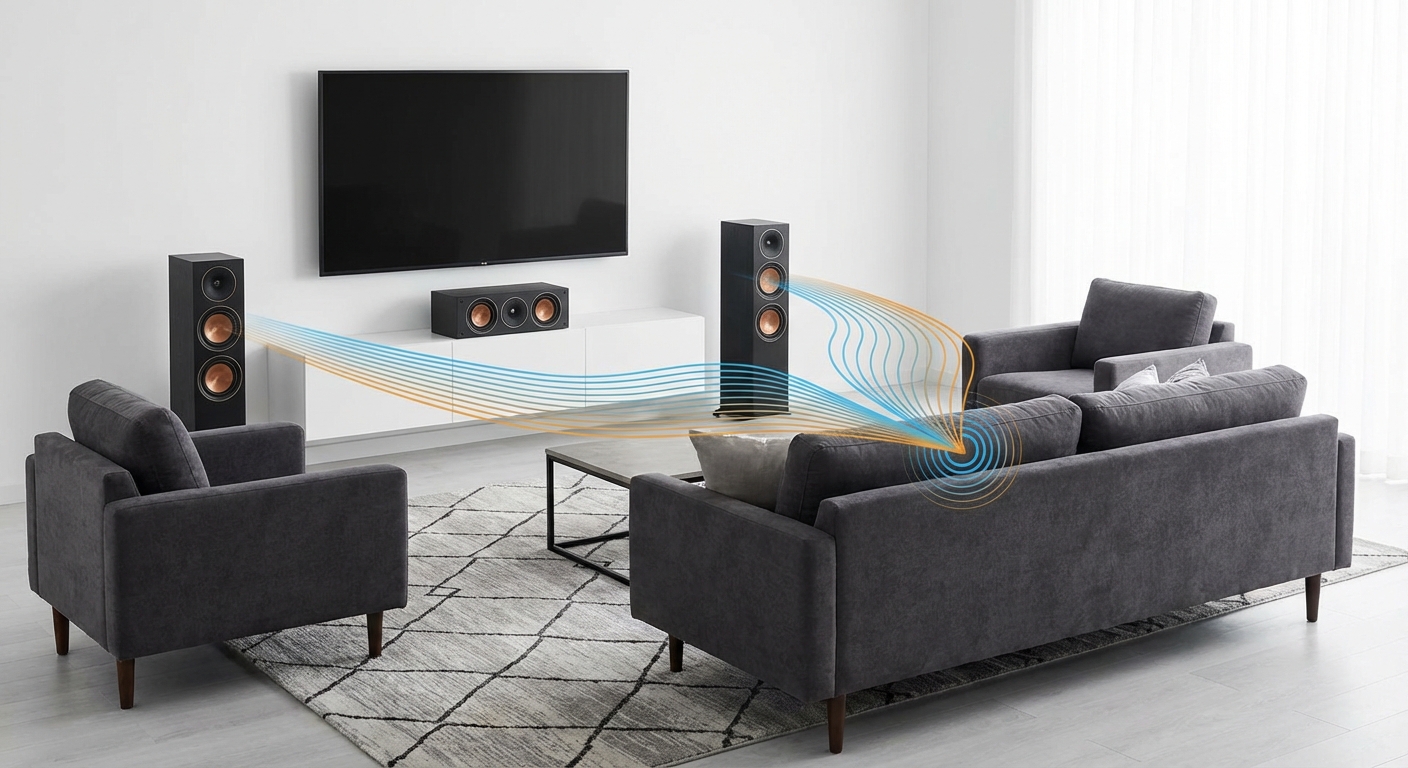
Surrounding Yourself with Sound Up to the mid-50's, home audio was still the good old single channel - or mono - format. The first multi-channel audio appeared in the 60's with stereo sound, a two-channel sound format making use of left and right front speakers. While this represented considerable improvement over monaural sound, yet it still lacked the ability to envelope the audience during movie watching or music listening. In other words, it still lacked that surround soundfield so important to help you feel immersed into the middle of the movie action or concert. The first surround sound playback systems appeared in the late 80's with the advent of Dolby Surround. Dolby Surround is a 4-channel matrix-encoded format that continued to build on the successful two-channel stereo format by encoding the sounds for two extra channels - the front center and the rear surround - over the two stereo left and right channels. It is the addition of this single rear surround channel, played over two identical speakers placed on either side of the listener, which made it possible for this format to surround the audience with sound. Dolby Surround was to mark the first of a never ending list of home theater surround sound formats that soon followed in the process. Since then, the world of surround audio has got somewhat complicated. Most of today's surround formats incorporate a minimum of six discrete rather than matrix channels, meaning that each channel is unique and independent of the rest. You haven't experienced a Movie until you hear it in Surround Sound! Surround Sound Basics Irrespective of the sound format in use, surround sound always rely on the use of dedicated speakers that literally and physically surround the audience. Thus, in addition to the main front left and right speakers which carries most of the soundtrack, any surround audio format always incorporate a center front speaker to carry the on-screen dialogue and thus 'pin' the dialogue to the screen, and a number of surround speakers to help create the enveloping effect. During playback, it is essential that sounds from the different speakers arrive at the listening position in a timely and co-ordinate manner. The number of surround speakers depends on both the number of playback channels supported by your audio setup as well as the sound format in question. This leads to an added complexity with surround sound - namely that the number of speakers in use does not necessarily match the number of audio signals supported by the surround format. Thus, though Dolby Surround is a 4-channel format, yet it is played over a five-channel playback audio setup where each of the surround speakers is actually playing the same identical sound. Similarly, as we will see further on in this article, while Dolby Digital EX is a 6.1 surround format, yet it can be played over a 7.1 playback system with the two back surround speakers playing the same identical sound. At this point, it is important to understand that when we refer to the maximum number of speakers/channels in an audio setup, e.g. 2.0, 5.1, etc., we are referring to the number of front and rear speakers that the respective playback audio setup use. The .1 in any surround sound playback system refers to the low frequency effects (LFE) channel, also referred to as the sub-woofer channel. Strictly speaking, this is optional in that if you are making use of full range speakers for your main front left and right, then you might either pass all low frequencies either to them, or to both your LFE channel and the two main front speakers. This depends on the bass management features supported by your home theater A/V receiver. The diagram below depicts the various speakers under different multi-channel audio playback setups. Note that to enjoy the full benefit of a 6.1 or 7.1 surround sound playback setup, your prime listening position should not be located near a wall. For the exact speaker placement requirements associated with the different audio setups, please refer to our Home Theater Speaker Placement guide.
What about Single Speaker Surround? It is true that there are a number of single speaker surround systems such as the Polk Audio SurroundBar Speaker System that can do a fairly accurate job, in creating an immersive soundstage that is very close to what you actually experience with a real 5.1 speaker setup. These single speaker surround sound solutions are normally adequate for people with small rooms who for some reason, do not want either to get surrounded with speakers, or want to avoid the clutter and installation hassle normally associated with a 5.1 speaker set-up. Single speaker systems rely on virtual surround technologies - based on powerful digital signal processing techniques that can simulate the enveloping soundstage created by a 5.1-channel home theater surround sound loudspeaker system, over a two-speaker setup. The Polk Soundbar makes use of a Polk's proprietary SDA (Stereo Dimensional Array) technology in an attempt to simulate the effect of side and rear speakers. But there are others technologies as well and including the Dolby Virtual Speaker and SRS TruSurround. These virtual surround technologies manipulate audio signals with sonic spatial cues by applying varying delays and phase-shifts between the different channels, based on extensive room-modeling technologies to reproduce the sonic spectrum and dynamics of a properly placed 5.1 speaker system in a typical room environment, but... While these single speaker systems do produce more than just an expansive soundfield, yet their performance comes nowhere close to that of a true surround sound speaker setup. In other words, they provide the convenience of zero clutter at the expense of audio performance. Dolby, DTS, DVD-Audio, SACD, THX... As already indicated, the many different surround sound formats that have mushroomed since the first Dolby Surround appeared on the scene in 1982, have surely complicated matters to many home theater enthusiast. Luckily, some DVDs come with multiple sound formats, for example Dolby Surround, Dolby Digital, and DTS - on a single disc. Further more, some standards are backward compatible, yet it remains a fact that you need different processors to enjoy the full surround sound potential offered by the different formats. In this guide, we look at the two most popular lineups of audio formats, Dolby, and DTS. Dolby is considered by many as the king of surround sound, while DTS (Digital Theater Sound) is the second-most-popular surround company that has its own surround audio line-up. To complement this whole discussion, we also discuss the two most popular multi-channel high-resolution audio formats designed for music listening, DVD-Audio and SACD. Directly related with multi-channel audio is correct speaker placement and time delay settings in surround sound systems. Both topics are covered under the Home Theater Design section of the site - however the respective links are also being reproduced here for ease of reference. Last but not least, we are also presenting a short article that gives a brief overview of the THX certification program and related technology; in the process, we also see how THX relates to surround sound and home cinema in general. The links below will take you straight to the respective articles.
|
Copyright © - Practical-Home-Theater-Guide.com All rights reserved. |
More Information at Practical Home Theater Guide
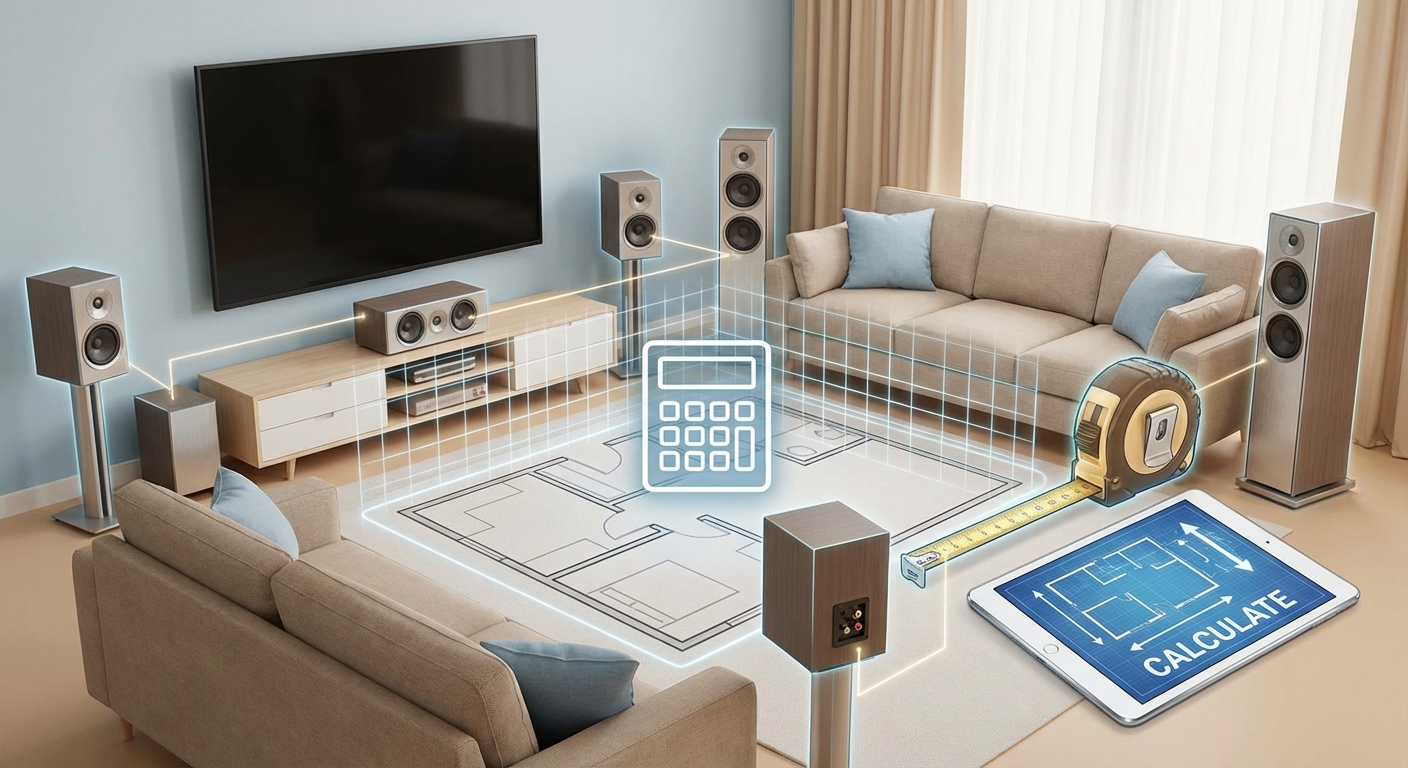
Speaker Placement in Multi-Channel Audio Correct home theater speaker placement plays a critical role towards achieving that seamless ‘enveloping’ sound so important in the overall home theater experience.
Time Delay
Settings in Surround Systems
TV Viewing Distance
Home Theater room design basics (1):
Room acoustics and lighting
A
Guide to Home Theater Seats
Home
Theater Equipment Placement
Selecting and Installing Speaker Wire
To access the full range of home theater design guides appearing on our site, click here.
Books & Magazines
Home Theater
Practical Home
Theater
Great Escapes
Home Theater Design e-Book A complete home theater design guide on how to research, design and build your own Home Theater. by Duncan McClelland
Featured AV Receivers
Sony STR-DA5200ES - AV receiver - 7.1 channel A friendly graphical user interface, three HDMI inputs, and excellent sound make this Sony an outstanding and innovative A/V receiver.
Denon AVR-4306
The AVR-4306 offers one of the best combinations of cutting-edge features and superb sound quality.
More AV Receivers are available at our Online Store.
|
|||||||||||||||||||||||||||||||||||||||||||||||