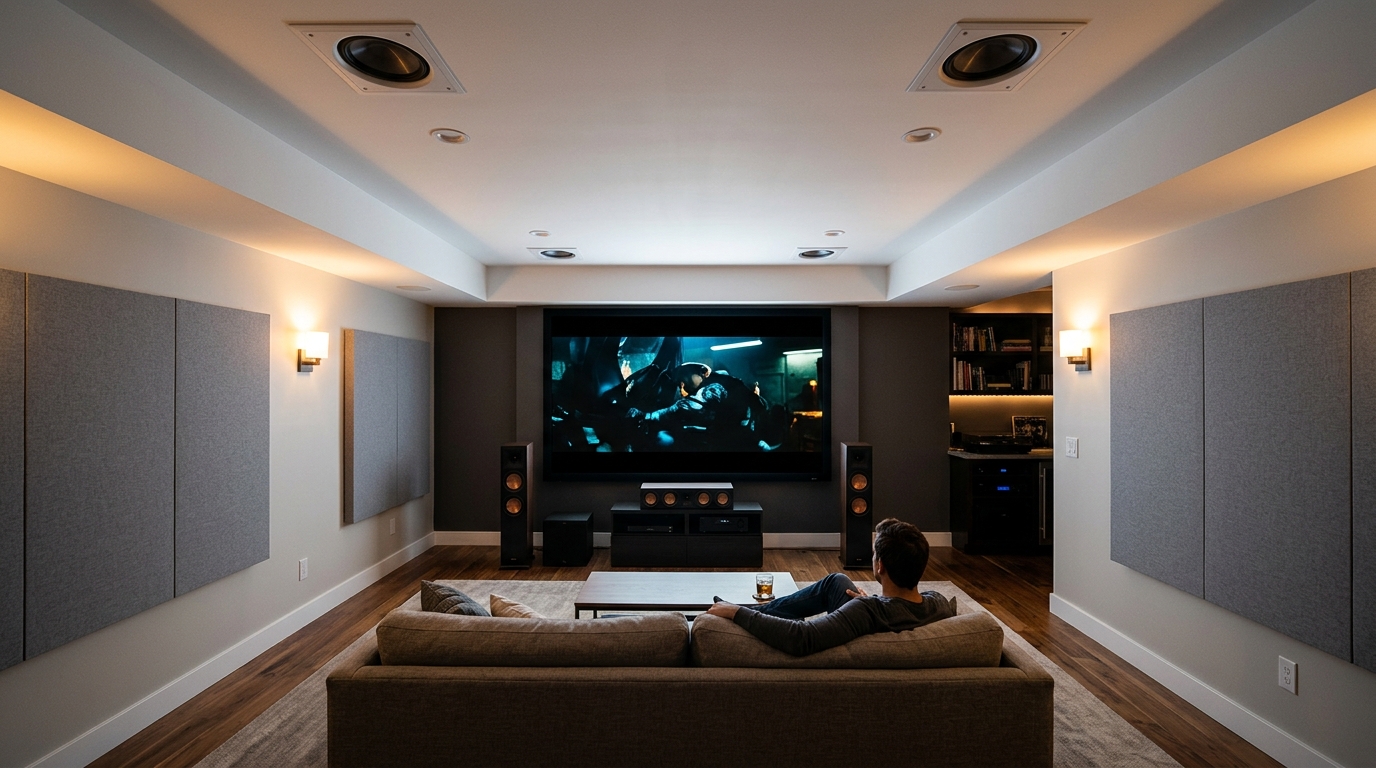
left image


Home - Surround Sound - Speakers Guide: Speaker Systems Basics

Date: 11th April 2011


Guide to
Home Theater Design

Step-by-step process to a successful home theater design.

Home Theater Design e-book

Discover how to research, install and build your own home theater within the limits of your budget.

e-book by Duncan McClelland
More information HERE


KEF KHT5005.2 Home Theater Speaker System

KEF KHT5005.2 Home Theater Speaker System

This KEF comes with 3-driver aluminum satellite speakers and a 250W dual 10-inch powered subwoofer. It is one of the few speaker systems that combine excellent sound with a refreshing lifestyle-type design. (Buy from amazon US)


Also available from Amazon UK


Surround Yourself with Sound: Speaker systems and surround sound

Irrespective of the audio format, surround sound always use multiple speakers that surround the audience to generate an expansive soundfield.

Thus, while a stereo speaker system consists of the front speakers only, in surround sound, there are additional speakers apart from the two fronts placed at specific positions within the room.

These include a center channel speaker placed above, below, or behind the screen to carry the on-screen dialogue; it is used mainly to 'pin' the dialogue to the screen. Equally important is the role of a number of surround speakers placed towards the rear of the room to create the enveloping effect. 

Sound from all these speakers should arrive at the listening position in a timely and co-ordinate manner. Failure in this respect leads to an unrealistic, disjointed soundfield


Surround Speakers Systems: Number of speakers and playback channels

Earlier on in our introduction, we indicated that the number of surround speakers in a multi-channel speaker system setup depends on both the number of playback channels supported by your audio setup as well as the sound format in question.

This leads to an added complexity with surround sound - namely that the number of speakers in use does not necessarily have to match the number of audio signals supported by the surround format.

This explains why a four-channel sound format like Dolby Surround, is played over a five-channel playback speaker system. In this case, each of the surround speakers is actually playing the same identical sound. Similarly, despite that Dolby Digital EX is a six-channel surround sound format, yet it can be played over a 7.1 playback speaker system with the two back surround speakers playing the same identical sound signal.

And inasmuch as it is possible to play a multi-channel audio format over a larger number of speaker channels, it is equally possible to play multi-channel audio over a reduced number of speakers. Thus, it is possible to setup a multi-channel speaker system without the center channel speaker; all you have to do is to run the surround processor or AV receiver in phantom center-channel mode. This sends the signal intended for the center speaker equally over the front left and front right speakers.

Admittedly, such a set-up would not lead to the best listening results; the center channel speaker is one of the most important channels in a surround speaker system setup. But with a properly setup speaker system in a small room and with the viewer seated at the best spot, it is still possible to enjoy a good sound stage even without the center channel speaker.

At this point, it is important to understand that when we refer to the maximum number of speakers in an audio setup, e.g. 2.0, 5.1, etc., we are referring to the number of front and rear speakers that the respective playback speaker system use.

The .1 in any surround sound playback system refers to the low frequency effects (LFE) channel, also referred to as the subwoofer channel.

Strictly speaking, a dedicated subwoofer is optional; if you are making use of full range floor-standing tower speakers with multiple 8-inch or 10-inch subwoofers for the front left and right speakers, then you might either pass all low frequencies to them, or to both your LFE channel and the front speakers. This depends on the bass management features supported by your home theater receiver or AV amplifier.

Speaker Systems setups for multi-channel audio formats

These diagrams depict the different speaker system layouts for 5.1, 6.1, and 7.1 surround sound playback setups.

The 5.1 speaker system setup is the most common and is the one most suitable for the small to medium size room. The reason is that it would be hard to benefit from the added one or two extra speaker channels supported by 6.1 and 7.1 playback setups in the small room environment.

6.1 and 7.1/7.2 speaker systems add additional surround speakers at the back of the room. In a medium to large home theater environments, these extra speaker channels help deliver a more realistic surround soundfield.

5.1 Audio Setup
6.1 Audio Setup

But to enjoy the full benefit of a 6.1 or 7.1 or even 7.2 surround sound playback speaker system, your prime listening position should not be located near a wall.

For additional information on home theater speakers - from speaker choice, to buying tips, speaker placement, and speaker specs, please refer to the additional home speaker guides appearing under this section.

7.1 Audio Setup
Additional Guides to Home Theater Speaker Systems appearing under this section:

Understanding Speaker Specs: The best way to choose your speakers is by listening to their sound but speaker specs tell a lot about a speaker's ability to deliver a great sound. This article explains the most important terms you would come across when researching audio speakers.

Speakers for Multi-Channel Audio: Discussing the exact speaker requirements associated with the different audio channels - main fronts, center-channel speaker, and surround speakers - as well as the type of speakers available.

In the process, we also discuss home theater subwoofers, and ceiling/in-wall speaker systems as applicable to a home theater set-up.

Home Theater Speaker Systems - Buying Tips: Presenting tips on how to shop for the best speakers. 'Best' does not necessarily imply exceptionally expensive. More important is that your speakers will be able to deliver good quality sound that you like, with a unified soundfield within your home theater room.

Speaker Placement in Multi-Channel Audio: Correct home theater speaker placement plays a critical role towards achieving a seamless ‘enveloping’ sound so important in the overall home theater experience.


Looking for affordable Home Theater Speaker Systems?

Amazon offers an extensive range of home theater audio at significantly reduced pricing. In addition, the various buying options available from the different retailers present on the amazon storefront make amazon one of the most comprehensive online sources in this respect. 

Prior to any decision, we advise to do some research of your own. Look at what other customers had to say about their purchase especially with respect to product quality and customer support. A good starting point is the customer feedback posted on amazon. 

You can search the amazon storefront without leaving our site by using the amazon search box below; your search results will appear here under.


Home Theater Sound

Articles covered under this section 

SUBMIT a Home Theater Receiver Review
Would you would like to submit a review of your latest home theater receiver purchase to be featured on our site?

Rest assured that your first-hand experience will be of value to many others.

Click here for details

Speaker Systems

Home Theater Speaker Basics: An introduction

Understanding Speaker Specs: Explaining the different terms associated with audio speakers.

Selecting Speakers for Multi-Channel Audio: Discussing the different types of speakers and the speaker requirements associated with the different surround sound channels.

Ceiling and In-Wall Speakers Guide: More speaker options for your home entertainment

The Subwoofer Guide: Complete guide to passive and powered subwoofers

Home Theater Speakers Buying Tips: What to look for when shopping for audio speakers for use in multi-channel audio

Speaker Placement in Multi-Channel Audio: Discussing the home theater speaker placement associated with both music listening and movie watching

Surround Sound Formats

Dolby Sound formats including High-definition Audio Formats and Virtual Surround Technology

DTS Sound formats including DTS High-definition Audio

High Definition Audio for Music Listening covering DVD-Audio and Super Audio CD - including DualDisc and Hybrid SACD.

AV Receiver & Amplifiers

Buyer's Guide to Home Theater Receivers: What to look for when planning an AV receiver purchase.

5.1 vs. 7.1 Home Theater Receivers: Which multi-channel home theater receiver represents the better option?

Understanding Amplifier Specs: How different specs relate to an amplifier's ability to deliver adequate audio power and sound quality.

Amplifier Power: Matching the amplifier power output to your expected level of loudness.

Time Delay Setting in Surround Systems: Correct delay settings are essential for a unified sound-field.

Best AV Receivers: Reviewing the best midrange home theater receivers for home entertainment.

Additional Articles:

Tips for Better Sound: Simple steps you can take to a better sound.

Dolby vs. DTS - Which is better?  Discussing the differences between these surround sound formats.

THX Home Cinema - An Overview: This short guide to THX explains this certification system, together with the different certification logos, and related technology..


 Home Theater Guides:

Recommended Technical Guides 

TV Viewing Distance
Buying a big screen TV? Care should be taken as you may easily fall into the trap of buying a too large TV.

Room acoustics and lighting
Acoustics & lighting are dependent on the shape, size and layout of your room – a fact often overlooked by many during their home theater design stage...

Home Theater Seating
Don’t underestimate the importance of proper home theater seating - the layout of home theater seats play a determining role in your home theater experience.

Equipment Placement
Just as important as which equipment to buy, is deciding where to put them. Correct placement of system components is a major contributor towards...

Selecting and Installing Speaker Wire
A correct home theater wiring approach is important for your home theater sound. Poor workmanship and low quality speaker wire will surely impact...

HDMI Cable Guide
To many, HDMI is still an unfamiliar term. This easy-to follow home theater guide explains all you need to know about HDMI.

Understanding HDTV Formats
Discover the strengths and weaknesses of the different HD formats - 720p, 1080i, and 1080p - in this HDTV Guide.

Featured Home Theater Speakers & AV Receivers

Check out the latest reduced pricing  at amazon

Home Theater Speakers

Find us on Facebook

Follow us on twitter


Subscribe To This Site [?]

XML RSS

Add to Google

Add to My Yahoo!

Add to My MSN

Subscribe with Bloglines


Please Note:

Double-underline links represent additional info related to the page content supplied by Kontera. To view this info, place your cursor over these double-underline links.


Back to: Top of Page

Next:: Understanding Speaker Specs


Sound Formats

Home Theater Receiver Guide

Surround Sound - Main Index

Home Page