|
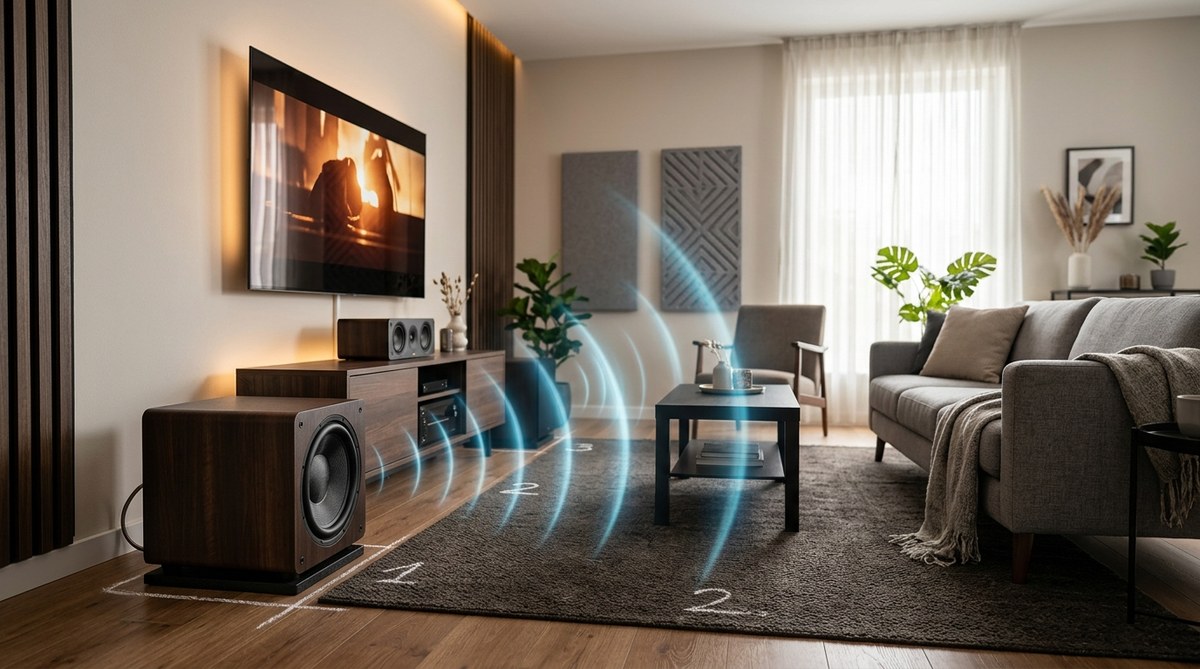
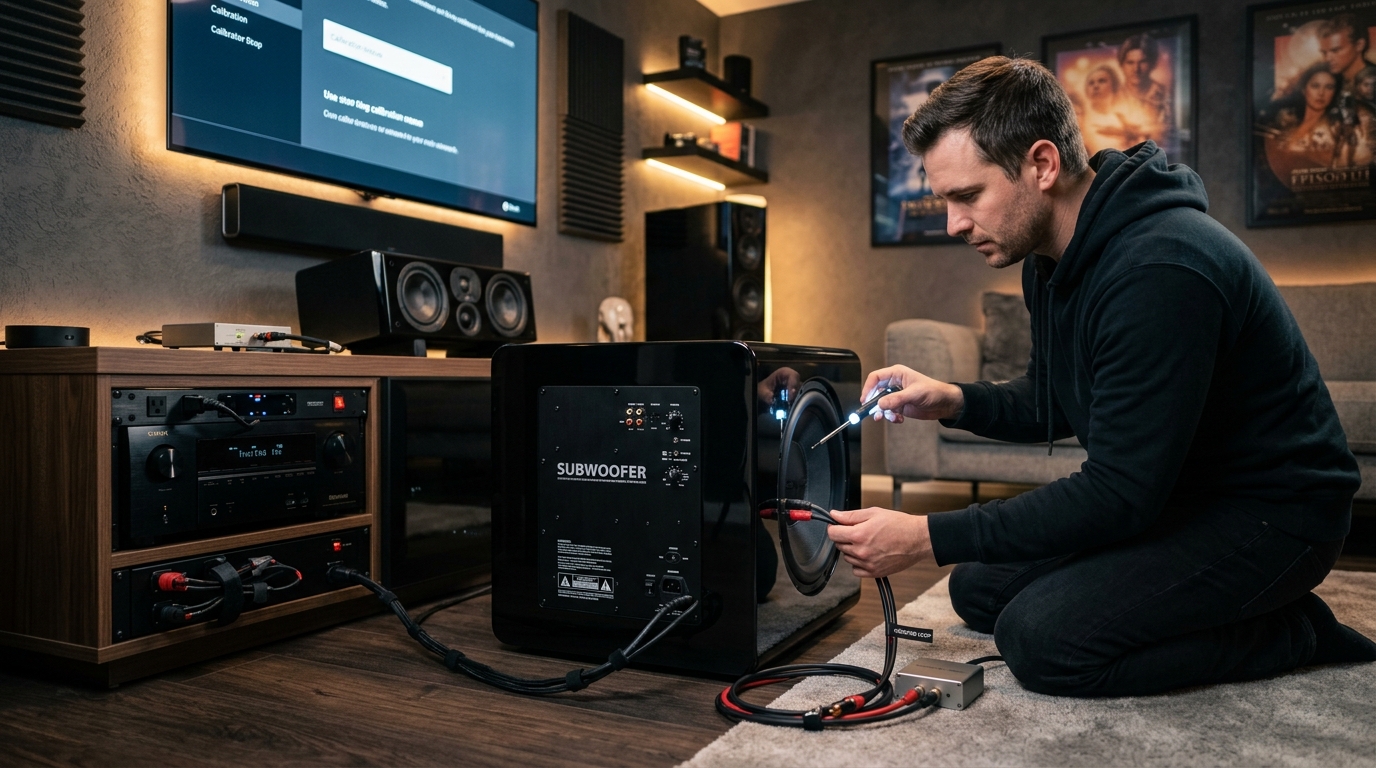
A 12-Inch 300W cont. powered subwoofer - one of the best-rated subwoofers in customer feedback - with 5-star out of 5 in 184 user reviews posted on amazon.com. (available from amazon US) An affordable option from amazon UK is the 150W RMS Wharfedale Diamond SW150 Subwoofer, rated as a true champion of subwoofers by What Hi-Fi Sound and Vision magazine. |
A Buyer's Guide to Speaker Specifications
Definitely, the best way to buy good speakers is to listen to a lot of them before you buy. But...
Let's face it, very few will have the possibility to listen to as many speakers they would like in an ideal non-echoing environment at their local retail store.
In these circumstances, a specs sheet can tell you a lot about a speaker's ability to deliver good sound. In particular, online buyers need to have a good understanding of speakers specifications.
Even if you are buying from your local retail store, perusing an audio speaker specs sheet can help you get to know more about a speaker performance or its compatibility with the rest of your speaker system than any sales rep would ever be able to tell you.
It is true that for some, perusing technical specs can be frustrating if not confusing. After all, what matters for many in the market for audio speakers is simply pure, good quality sound.
|
|
However, perusing speaker specifications should not be that difficult. As we will further explain in this article, there are not that many numbers to look at when it comes to home theater speakers - at least when it comes to the most important specs like speaker size, power handling, driver type, enclosure construction, speaker sensitivity, and yes, speaker weight! Weight of the overall speaker unit also tells a lot about both a speaker buildup structure and its ability to deliver solid clear sound; a heavier speaker for the same driver size would normally deliver better overall sound than a lighter unit.
Understanding Speaker Specifications - Article Index:
Speaker Anatomy - What constitutes am audio speaker
Speaker Specifications - Most important speaker details
Speaker Anatomy Basics
As indicated in our introduction, before we delve into the most important speaker specifications, we will first discuss the basics of speaker anatomy. Having an understanding of what constitute a speaker is important as it helps you better relate some of the terminology often included in both the manufacturer speaker description and speaker specifications.
|
A speaker unit can be defined as a sound driver or a set of multiple drivers contained within an enclosure. In other words, a speaker unit does not exist without its enclosure. The latter can be a dedicated wooden or plastic box in the case of free standing speakers, or the cavity created between a drywall and a concrete wall in the case of in-wall speakers. |
Speaker Anatomy Click on image to enlarge Picture Credit Infinitysystems.com |
The driver is the central element of any speaker system as it is that which converts the electrical energy from your amplifier into audible energy via internal driver movement. It can take various forms - from the common reinforced paper cone shape to a metal dome diaphragm - all housed within a metal basket.
The driver diaphragm is fixed to the metal basket via a flexible surround at one end and a spider type acoustic suspension at the other. The whole assembly is rigidly connected to a voice coil suspended in a strong magnetic field created by a suitably shaped permanent magnet. The whole diaphragm/voice coil assembly is free to move in accordance with the movement created by the voice coil in response to the electric signal. This movement moves air in the room to create sound.
In the case of multiple drivers within the same enclosure, cross-over circuitry is used to determine which frequencies are directed to the individual speaker drivers. Two-way designs use a woofer and tweeter while three-way designs add a mid-range driver. Multiple-driver designs with a woofer less than 6 inches would not produce a solid enough bass and would therefore require a subwoofer to supplement the overall bass response. The ideal woofer size in full-size tower speakers is 8 inches.
Directly related to a speaker cross over circuitry are the cross-over frequency cut-off points; these determine which sound to route to the different speaker drivers. These vary depending on whether you will be using two-way or three way designs as well as on the size of the woofer speaker. With an 8- to 10-inch woofer, the woofer cut-off point for the cross over should be limited to less than 2kHz; a woofer of this size would not be able to produce clear sound above this frequency limit.
All the elements constituting a speaker unit impact speaker performance; these affect both the supported frequency range and the speaker tonality. The whole issue for one in the market for a set of home theater speakers is therefore to understand how speaker specifications relate to speaker performance. The whole issue is therefore one of correctly interpreting speaker specifications.
Speaker Specifications in detail
Speaker enclosure:
No speaker exist without its enclosure; the size of the enclosure determines the volume of air movement, and therefore the sound energy that such a speaker system can create in a given room. This also means that the volume 'or size' of a speaker enclosure should be related to the room size. So do not just buy the biggest speaker you can afford; a speaker designed for a much bigger room than what you have will not sound good in your room. The same holds true for a too small a speaker in a big room.
Speaker enclosures come in various forms such as bass reflex designs, or ported enclosures that have a hole in the front or back to leak more bass into the room. Others are completely sealed; well designed sealed enclosures tend to produce more accurate sound.
Well-made speaker enclosures use a reinforced structure - referred to in speaker specifications as a braced enclosure, to ensure that the enclosure vibrate as little as possible. Enclosure vibration adds undesirable coloration to sound - especially at the resonant frequency of the enclosure; this often tends to be closer to the upper bass frequencies.
Diaphragm material:
The type of material used for the driver impacts speaker performance, in particular the speaker covered frequency range as it impinges on the speed with which the driver moves. Faster high quality drivers use either aluminum or titanium; these are mainly employed in high-end tweeters. However, there are other cheaper materials - such as reformed silk, paper and certain plastics - that also produce excellent sound and therefore may be used to make speaker drivers.
Driver material also impacts speaker tonality as further detailed under our speaker timber matching discussion - hence the need to match driver material when buying separate speakers for use as part of a multi-channel home theater audio set-up.
Power rating:
This is often defined in either nominal or continuous power (Watts RMS), and short-term peak input power a loudspeaker can handle before destroying the loudspeaker. However, keep in mind that a speaker driver may be destroyed with a lot less power than its peak rating if its continuous power handling capability is exceeded for a sufficient length of time.
In addition, even driving an amplifier into clipping may also destroy your speaker drivers, and especially the tweeters. In a similar manner, an amplifier struggling to drive a speaker may produce a high level of distortion which may also destroy your speakers. In either situation, more energy is passed onto the speaker, especially at high frequencies which may easily damage a speaker driver unit.
This implies that more amplifier power is better than less, and the cleaner the better.
Speaker impedance:
Directly related with speaker power handling capacity is speaker impedance; this is defined in Ohms. Typically, home theater speakers come with 8 Ohms but speaker impedances of 6 Ohms, 4 Ohms and even 2 Ohms are also available.
2-Ohm impedance speakers are mostly used in low voltage supply applications such as in cars.
Impedance represents the resistance a speaker puts to its electrical signal; the lower the impedance, the more power a speaker will withdraw from an amplifier for a given output voltage. This means that a 4-Ohm speaker will load more an amplifier for the same output signal level. Inexpensive amplifier systems would generally find it hard to drive speaker loads less than 6-Ohms.
So do not just buy your speakers without first taking into account your AV receiver or amplifier specifications.
Sensitivity:
One of the most critical speaker specifications often ignored when it comes to speaker choice, is speaker sensitivity. This is normally specified in dB (decibels), using a one-watt test tone (a 2.83 rms volts into 8 Ohms) measured one meter away from the speaker. It is a measure of the sound pressure produced and will tell you tell you how loud a speaker will play in a non-reverberant (i.e. non-echoing) environment.
A higher value would imply a louder speaker for the same input signal. This means that sensitivity affects how much power your system needs to perform well within your set-up. Typical average speaker sensitive stands at around 87 to 88 dB. Note that this measure is logarithmic not linear, meaning that a 3dB reduction in speaker sensitivity requires doubling of the amplifier power to produce the same sound volume in the room.
Some speaker manufactures define sensitivity at two or more frequency points, while others may define sensitivity in terms of room efficiency - that is by taking the average room environment rather than a non-reverberant environment. Doing so however would generally inflate the resultant efficiency measure by at least 2 to 3 dB over a non-echoing measure.
Speaker frequency response:
This represents the speaker output over a frequency range for a constant input level varied across the specified frequency range. In view that speaker frequency response is not constant over the entire range, response is often specified within a variance limit - typically ±3dB. This ±3dB represents reasonable consistency; some manufactures also specify an extended frequency response at ±6dB but this in itself is meaningless as it would require up to four times the amplifier power for the lows in the speaker response to sound as loud as the highs within the range.
A speaker having a specified frequency response ranging from say 40Hz to 22kHz ±3dB can be considered to have pretty good coverage ranging from good bass to a high frequency response that is just in excess to what is considered the average human hearing upper limit.
Speaker dispersion, or Directivity:
If speaker efficiency is one of those speaker specifications that are hardly considered by the would-be buyer, speaker dispersion forms part of that category of speaker specifications that are hardly indicated by speaker manufactures. Yet this is a very important speaker specification to the home theater designer as it enables for a more precise placement of home theater speakers.
Speaker dispersion specifies the speaker sound radiation pattern along different angles. It tells you how sound varies as you move away from the speaker main axis. As such, it enables you to determine the best listening position, as well as how sound would vary across the different seating positions in a home theater. The best speakers are those that can maintain a uniform response for a more consistent sound as one moves around the room further away from the speaker main axis.
In the case of a home theater set-up, speaker placement should be designed such that the best spot for your listening should be made to coincide with the best viewing position.
Magnetically shielded speakers:
The permanents magnets used in speakers are extremely strong magnets that may interfere with your CRT TV picture when placed at close distance to the TV screen; this would distort the TV image. For the many home theater owners who use an LCD or plasma TV, this is not an issue worth worrying about but in the case of CRT TVs, these use an electro-magnetic field to deflect the electron bean across a tube screen. Placing a speaker close to the TV set would interfere with the TV screen electromagnetic field, so speakers intended for that purpose should use magnetic shielding. Magnetic shielding is also used to counter similar distortion on CRT-based computer monitors.
Magnetic shielded speakers are more accurately referred to as 'negligible stray field' speakers. This means you can place it as close as you want to a television, a computer monitor, or even magnetic computer media without fear of distorting the image on the screen or corrupting the data on the disks. It is not possible to remove the resultant stray magnetic fields completely - hence the term 'negligible' should not be taken to mean zero stray field - but it still can be taken to mean as such within the practical limits to how close you can move to a speaker.
Magnetic shielding is carried out either through the use of a magnetically conductive assembly around the speaker driver magnet, or through the use of additional magnets that surround the driver magnet such as to cause the stray magnetic field to turn on itself. Some magnetically shielded speakers use both methods for a more effective shielding.
Looking for affordable Multi-channel Audio Speaker Systems?
Amazon offers an extensive range of home theater audio at significantly reduced pricing. In addition, the various buying options available from the different retailers present on the amazon storefront make amazon one of the most comprehensive online sources in this respect.
Prior to any decision, we advise to do some research of your own. Look at what other customers had to say about their purchase especially with respect to product quality and manufacturer customer support. A good starting point is the customer feedback posted on amazon.
You can search the amazon storefront without leaving our site by using the amazon search box below; your search results will appear here under.