|
|||||||||||||||||||||
|
Home Page - LCD TV Reviews - 2009 Sony LCD TV Sets: XBR9 Series XBR9 Series of Sony LCD TV SetsStylish, feature-rich Sony BRAVIA high-end
LCDs
|
|||||||||||||||||||||
|
Sony XBR line of Bravia HDTVs represents Sony top series and the same holds true for the new Sony BRAVIA XBR9. Aimed to deliver the ultimate in Internet-enabled TV entertainment, this Sony series comes in a new stylish design, and is bundled with plenty of features, including streaming capabilities and DLNA support. This is also one of the best performing Sony CCFL-based Bravia LCD TVs for 2009, and while it cannot match the performance of the best plasmas and LED TVs, yet it is good enough to be among the top. As expected, Sony's XBR series are somewhat expensive but the latest price drop makes the Sony XBR9 LCD HDTVs more of a compelling option to those in the market for what the best cutting edge HDTV technology has to offer. Discover more in this LCD TV review article. |
Quick Guide to Home Theater Design
Easy-to-follow e-book on how to design and build your Home Theater
by Duncan McClelland
More information HERE.
Review date:
25th
October 2009
Sony's high-end 240Hz HDTV |
The new Sony XBR 9 line for 2009 represents Sony high-end CCFL-based LCDs. It comprises four models ranging in size from 32-inch up to 52-inch.
The larger three models, namely the 52-inch KDL-52XBR9 ($1,950), the 46-inch KDL-46XBR9 ($1,575), and the 40-inch KDL-40XBR90 ($1,350) all share exactly the same specifications and therefore we expect similar picture performance. Top-selling within this series is the 52-inch followed by the 46-inch model.
On the other hand, the smaller in the series, the 32-inch KDL-32XBR9 ($670) Sony LCD TV comes with a few differences. These include a slightly different styling, lower 40,000:1 dynamic contrast ratio, reduced color gamut, 120Hz instead of 240Hz supported refresh rate, and a different menu structure. Still, despite the lower specs, this 32-inch is doing quite well in HDTV sales.
Sony XBR9 LCD series is equivalent to Samsung Series 7 LCD TVs we reviewed earlier this year. Both series share very similar features and sets from both the XBR9 and Series 7 are practically selling online at the same price for the same screen size.
Due to its extensive streaming capabilities and DLNA networking support, Sony defines the XBR9 as the 'ultimate in Sony video technology'.
In fact, top in the list of extensive features found on XBR9 Sony LCD TVs is a full suite of interactive options termed BRAVIA Internet video/widgets.
These let you enjoy both premium and free on-demand online entertainment directly to your HDTV. Services supported include Amazon Video-on-Demand, YouTube™, Sports Illustrated, Sony Pictures, Sony Music, Slacker, and Epicurious.com.
Additional features include Sony's MotionFlow 240Hz refresh rate, 100,000:1 dynamic contrast ratio, DLNA support, and x.v.Colorwide technology for a wider color gamut. There are also plenty of connectivity options - including four HDMI inputs, three of which are placed on the side instead of the rear connection panel. Interesting is also the presence of a TV Guide on-screen EGP for antenna and cable TV channels as well as the possibility to receive firmware updates straight to the TV.
These Sony LCD HDTVs come with a smart eco menu that includes a room light sensor to automatically adjust the screen brightness accordingly. This is somewhat similar to the intelligent light sensor functionality found on premium LG LCD TVs we recently reviewed on our site.
It is interesting to note here that Sony's XBR9 represents just a minor step-up over the marginally less expensive 2009 Z5100 Sony LCD TV series. The two series share almost an identical feature set - including a 100,000:1 dynamic contrast ratio, the same Internet/video widgets, DLNA support, 240Hz refresh rate, and the same connectivity - including four HDMI inputs.
The few real differences between the two relate to a slightly different design. Z5100 HDTVs feature a somewhat wider frame at the bottom of the screen and a minimal reduction in the supported color gamut. However, the marginally wider color range of the XBR9 is not much of use with today's available program content.
We did not review the Z5100 series but we expect similar performance to the XBR9. However, with the present reduced pricing, Z5100 HDTVs yields a price advantage over XBR9 sets only at the 52-inch, namely the KDL-52Z5100. At the other screen sizes, the price difference between the two is negligible.
![]() |
Design:Sony has gone for a totally new design concept with its XBR9 series. Up to now, Sony's LCD HDTVs were characterized by a rather wide frame around the display that did somehow competed with the overall display. The new XBR9 series design comes with a thinner glossy black frame that is the same width along the four sides of the display panel. |
The only highlight in the XBR9 Sony LCD TV design is a subtle but elegantly designed transparent protruding edge that covers a blue gray metallic border along the set glossy black frame. To further enhance this minimalistic but stylish design, Sony went for an invisible speaker system.
Unfortunately, as is typical of Sony, the provided TV stand with the XBR9 HDTVs do not swivel. But otherwise, the all glossy black stand integrates well with the rest of the XBR9 Sony LCD TV design.
The XBR9 series comes with a backlit remote control that is
larger than average. It is basically the same remote provided with the 2008
XBR8 LED series of Sony LCD TVs. However, the many buttons on the remote make it rather cumbersome in use.
The menu system uses the latest version of Sony's XMB interface - short for XrossMediaBar. It is more of a Media Center or PSP style menu than a traditional TV menu - with items arranged horizontally and vertically on a sort of cross structure. The XBR9 version comes with seven main categories: Settings, Photo, Music, Video, TV, External Inputs, and Network.
Originally adopted on 2007 models, this year version of XMB as applied on the XBR9 series of Sony LCD TVs comes with a number of improvements in particular with respect to the grouping of picture controls. There is also onscreen help information describing the main functions available under the various menu topics.
While this type of menu structure does not always result in the shortest path to access sub-menus, the overall effect is still a clean and easy to navigate menu system. At the same time, we cannot but remark that the menu structure as adopted by Samsung on its LCD TVs is more straightforward and feels easier in use.
Without doubt, one of the top features found on XBR9 Sony LCD TVs is Internet enabled TV content accessible through the set Ethernet connection. Sony do not provide a wireless network solution but any third-party wireless bridge will do.
We have already touched upon this in our introduction. In this respect, the XBR9 offers a most extensive interactivity suite with BRAVIA Internet Widgets. These are Sony's version of Yahoo widgets that let customize your entertainment experience by selecting widgets to access the latest in news, weather, stock info, and more right on your BRAVIA XBR9 HDTV.
In addition to widgets, these Sony LCD TVs come with built-in
BRAVIA internet video capabilities - with very similar features to
Sony Bravia Internet Video Link
add-on module - that let you view select on-demand movies, TV
shows, music and more. With BRAVIA Internet Video you can enjoy one of the
largest collections of premium and free on-demand entertainment directly to your
HDTV. The most compelling being access to Amazon Video-on-Demand even though the
Sony implementation does not support previews as is the case instead with
Panasonic VieraCast.
Other content includes YouTube, Sports Illustrated, Sony Pictures, Sony Music, Slacker, and Epicurious.com. Worth noting however that most of the free content available online is designed for the Web and not the big screen - so do not expect the best video quality with YouTube, Sports Illustrated, style.com and the like.
To complement these sets interactive menu, XBR9 Sony LCD TVs come with DLNA support to stream photos, music, and video from networked PCs that are running compatible DLNA-compliant software e.g. Windows Media Player. You need to connect your TV to your home network for these interactive features to work. Sony do not provide a wireless adaptor but any third-party wireless bridge will work.
Worth mentioning here that Sony has included a dedicated picture setting for online video content, like for other inputs. The system is not completely bug-free - with the occasional instance when the screen will fail to load. But overall, this is one of the most interactive content-rich HDTVs that will surely provide hours of entertainment.
Other than this interactive support, these XBR9 high-end Sony LCD TVs come with an extended feature set over the less expensive series. These HDTVs use an advanced WCG-CCFL backlight that provides a slightly extended color range. This however would not result in any added benefit with available program content.
As expected, the XBR9 series also includes 240Hz refresh rate technology. Same as Samsung, Sony interpolates three extra fames for every video frame using the so called ME/MC (motion-estimation/motion-compensation) system to generate the 240Hz frame rate for a virtually blur-free motion. Sony includes its Motionflow™ dejudder processing with its 240Hz technology. This can be set to either 'Standard' or 'High' apart from being switched off, with the 'High' setting providing a higher level of smoothness, rendering film-based content more video-like.
Unfortunately Sony's MotionFlow 240Hz processing does not support separate blur reduction and smoothness control as is the case with the dejudder processing implemented on Samsung's 2009 premium HDTVs. This means that you cannot really enjoy the benefits of blur reduction without the added smoothness of dejudder - thus rendering film-based content more video-like.
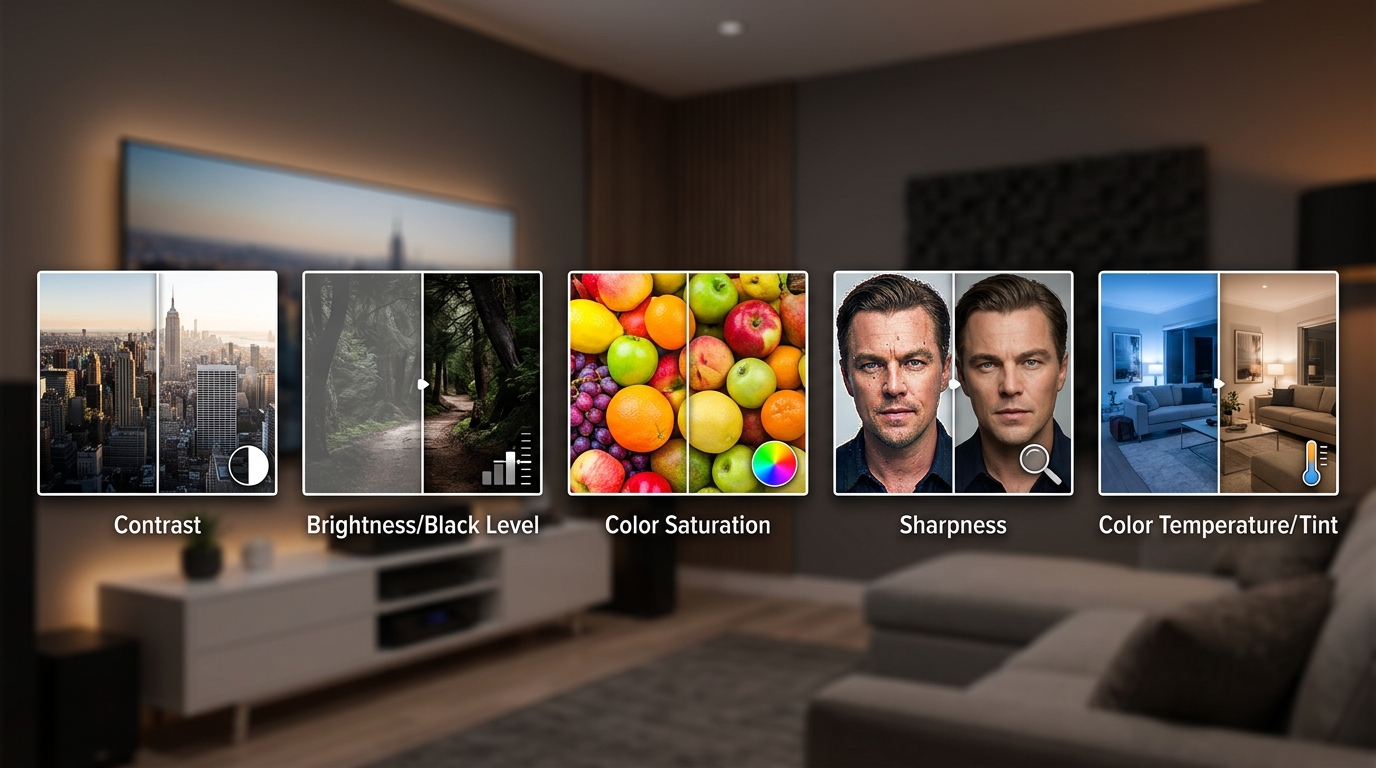
Picture Controls: The Picture adjustment menu offers the usual picture settings. There are three picture preset modes in the main menu, each of which can be adjusted independently per input. An additional Scene Select menu adds more presets - labeled Cinema, Sports, Photo, Music, Game, Graphics, General, and Auto - that are also adjustable per input. In total, the XBR sets come with eleven picture modes - including Standard, Cinema, Sports, Game, Graphics, and four photo picture settings. The Game option removes most of the advanced video processing to minimize delay.
Each of these picture modes come with two noise reduction settings and four color temperature presets. Among the available picture controls, there is a white balance control to fine tune color temperature, and a gamma setting. These Sony LCD TVs include four aspect ratio modes for HD sources and a zero-overscan mode for full 1080p 1:1 pixel mapping.
XBR9 Sony LCD TVs have a rated 100,000:1 dynamic and 3,800:1 on-screen contrast ratio. In this respect, Sony is one of the few brands that lately are specifying also the more important on-screen contrast ratio in addition to the more common dynamic contrast. The latter larger numbers are often quoted by TV makers to help them drive sales.
Additional features include x.v.Colorwide technology for a supported wider color gamut over HDMI. Interesting is the presence of a TV Guide on-screen EGP for antenna and cable TV channels which is powered by the Sony's Ethernet connection. The latter also provides firmware updates straight to the TV in a similar manner to what Samsung has done on its 2009 HDTV lineup.
As indicated in our introduction, this is one of those 2009 HDTV series that come with a smart eco menu and includes a room light sensor that automatically adjust the screen brightness accordingly. There is also a mode to turn off the screen but leave the sound on, and another to turn the TV off automatically after a set period of inactivity.
Power consumption of XBR9 Sony LCD TVs in default setting is approximately 190W for the 46-inch - but this can easily be reduced by close to 40% once properly calibrated. These figures are in line with other 2009 CCFL-based LCD TVs from other brands.
|
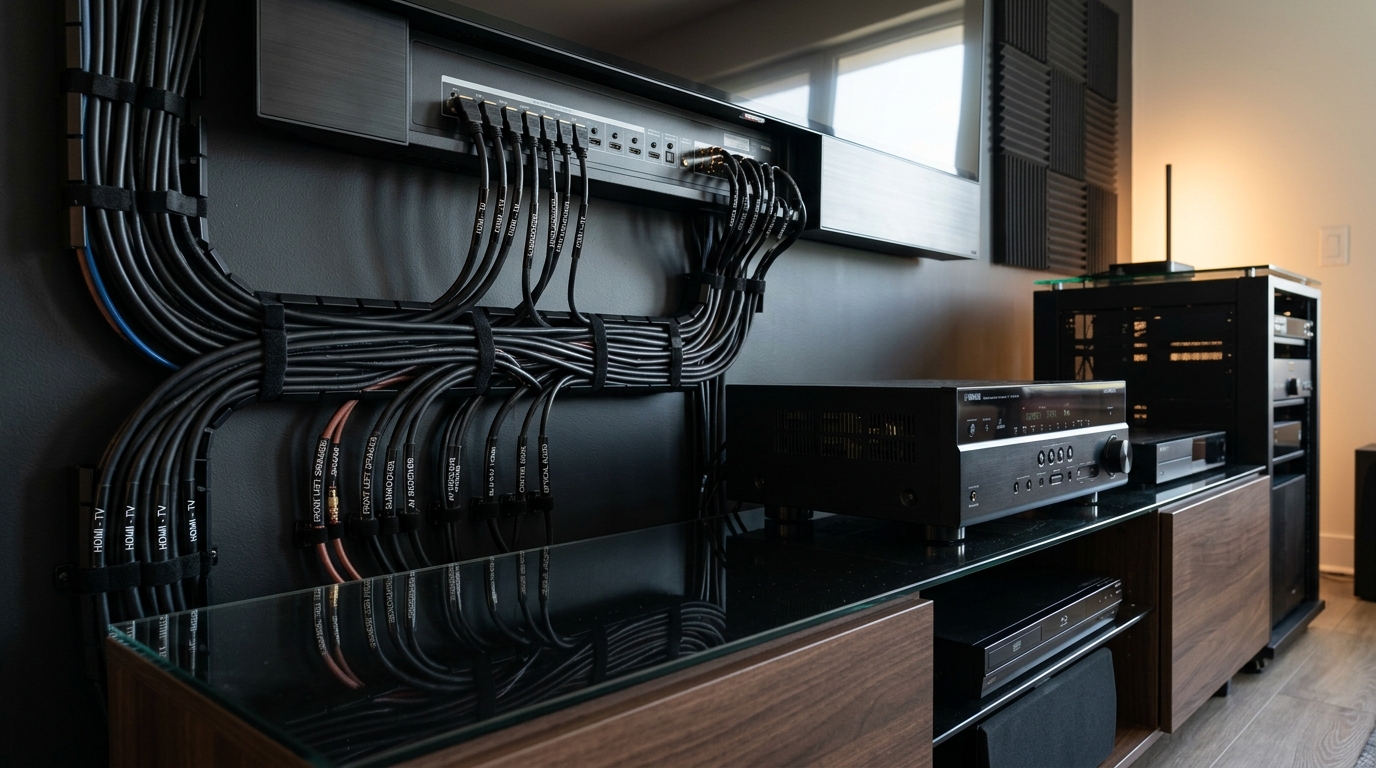
These Sony LCD TVs come with plenty of connectivity options - including four HDMI inputs, three of which are placed on the side instead of the rear connection panel as seen in the adjacent picture. This approach - while surely appreciated by those that are constant swapping gear, is not ideal for those that have a fixed system layout. Apart from the HDMI ports, other connections include two component video, two composite video, one USB2.0, VGA-style PC input, analog audio in for HDMI/PC, Digital Audio out, analog audio out, Ethernet connection and RF input. There is also a USB1.1 port for servicing only.
|
![]()
|
Sony XBR9 LCD HDTVs are capable of very good overall picture performance with deep blacks that are very much in line with the best conventional LCD TVs from Samsung. However, the XBR9 black levels and shadow detail still does not match those of the best LED LCDs and premium plasma HDTVs - though shadow detail on the XBR9 Sony LCD TVs is quite natural.
Most accurate out-of-the-box picture mode is the Cinema picture setting; this can be conveniently activated via the remote using the Theater 'hot' button. Color temperature in Cinema mode however is somewhat on the bluish side; this can be partially corrected through proper calibration. Shadow detail in the brighter areas is very good though things in the darker parts are a bit different; activating the Advanced Contrast Enhancer would help here as it considerably improves shadow detail in the dark parts of the image.
Color accuracy: Accuracy of the Sony primary colors is close to perfect; secondary colors accuracy is not ideal, but still better than most HDTVs. But as we often say in these product evaluations, when it comes to overall color accuracy, Samsung is definitely king; premium LG LCD TVs and the PS80 LG plasma TV are also capable of extremely accurate colors.
View Processing: MotionFlow 240Hz dejudder processing do add that slight improvement over 120Hz based systems. However, most users would not discern any difference between the two with standard program content. In a review of the Sony KDL-52XBR9, Cnet notes that motion resolution is close to the full resolution supported by the 1080p standard with dejudder activated - thanks to the 240Hz processing. Dejudder is clean as long as you keep it in standard mode. As expressed earlier on, with these Sony HDTVs, it is not possible to adjust blur reduction and judder separately - which may not be ideal with film-based content.
With 1080p/24 content, these Sony LCD TVs preserve the judder of film when the 2:3 pull-down CineMotion is set to Off. These sets are also capable of properly deinterlacing 1080i film- and video- based content. Proper deinterlacing of film-based content however requires the CineMotion to be engaged.
With standard definition sources, video performance is average - resolving every detail from DVD content but showing more jaggies with diagonal lines than Samsung or LG HDTVs.
On the other hand, PC picture performance is very good with crisp clear text both via HDMI and also with the set VGA input.
Screen Performance and Uniformity: There is a slight issue with screen uniformity where large dark areas on the screen appear somewhat brighter in the middle. However the real problem with the Sony screen is a rather poor off-angle performance - to the point that according to results published on TelevisionInfo.com, it is slightly worst than that of the Samsung UN46B6000. And considering, LED LCD TVs are renowned for their below average off-angle performance. Mind you, it is still good for home viewing but these Sony LCD TVs would not represent the ideal option where wide angle viewing is necessary.
On the other hand, as expected, the matte screen on these Sony LCD TVs handles bright lighting well - better than plasmas and the 'Ultra Clear' shinny screen on Samsung LCD HDTVs.
Sony's XBR9 HDTVs do not come cheap but these Sony LCD TVs are definitely capable of a great picture. This is all thanks to their deep blacks and good shadow detail even though they do not match the best plasmas from Samsung and Panasonic, nor the deep blacks of the latest LED TVs. Color accuracy is also generally good. All is complemented by an attractive style and plenty of connectivity.
But the Sony high-end XBR9 HDTVs real strength is in their extensive set of interactive internet-enabled features and DLNA support. It is not that they come with the perfect interactive suite but Sony's Bravia Internet video capabilities are definitely more responsive and a joy to use in comparison to Samsung slow Medi@2.0 Internet-based functionality.
And for those in the market for a top performing HDTV, the latest reduced pricing makes these Sony LCD TVs an even more attractive option from a top TV maker; these sets deliver the best that the latest cutting-edge HDTV technology has to offer at a not so expensive price for a tier-1 brand, premium LCD HDTV.
Before taking any decision, we advise to do some research of your own - in particular, see what other customers had to say about these Sony LCD TV sets following their purchase.
A good starting point is the customer feedback posted on the amazon website. Just click on the following links to access the respective Sony LCD TV product page at amazon.com. Then follow through the 'Customers Reviews' section on the same webpage; this will give you extensive insight about the product of interest:
Sony Bravia 52-inch KDL-52XBR9
Sony Bravia 46-inch KDL-46XBR9
Sony Bravia 40-inch KDL-40XBR90
Sony Bravia 32-inch KDL-32XBR9
|
Reference Material TelevisionInfo.com: Review of the KDL-52XBR9 by Alfredo Padilla, June 30, 2009; this is a highly technical review with possibly too much info for the average HDTV buyer, but definitely a very good source for videophiles. Cnet Reviews: Review of the KDL-52BXR9 by D. Katzmaier, dated May 7, 2009. Customer feedback posted at amazon and Best Buy Sony website for the latest technical specs and product manuals for XBR9 Sony LCD TVs. |
|
|
|
Featured LCD Television Reviews for 2010 |
The latest LED HDTV and LCD TV reviews featured on PHTG
|
This Samsung LED TV review evaluates each of these series for features and performance, to see what's on offer for 2010.
|
|
Other LCD TV Reviews |
LED / LCD TV reviews & product guides featured under this section
Samsung B8500 LED TV Series Detailed Product Evaluation
Samsung Series 6 LCD TVs: Full product guide covering B610, B630, B640, and B650 LCD HDTVs
Sony Bravia KDL-V5100 120Hz 1080p HDTVs - full product review
Sony Bravia KDL-XBR9 240Hz 1080p HDTVs with internet-enabled content and DLNA support - full product review
LG LCD TV Reviews covering LG LH50, LH55, and LG LED TV series LH90
Samsung LED HDTVs vs. LCD TVs:
Which is Better?
Now that we have reviewed both Samsung latest LED HDTVs and Samsung Series
7 LCDs, it is only natural that we discuss this LED vs. LCD TV issue.
Samsung 2009 LCD TVs: The B750 Series:
Series 7 Samsung LCDs have all it takes to become the best selling HDTVs for
2009. More in this LCD TV review.
2009 Samsung LED TVs - the Complete Lineup: Product Evaluation
LED LCD TVs - Sony vs. Samsung:
Best HDTVs Roundup: Picking up the best plasma and LCD TVs for 2009
|
Home Theater Guides: |
Recommended Technical Guides
The Complete LCD TV Guide:
LCD HDTVs are turning out sharper, bigger, better, and cheaper. Discover all you
need to know about LCD TV sets in this series of articles on LCD televisions.
Plasma Television
Discover all you need to know about plasma TVs - from the features to look for
when purchasing a plasma television, to installing and protecting your plasma TV
investment.
Digital TV
A complete guide to Digital Television - DTV converters, TV antennas, and DTV
transition.
Guide to
Digital Satellite TV
Covering satellite TV basics - with a special emphasis on satellite TV decoder
choice and satellite dish installation.
Equipment
Racks:
There is more to equipment racks than a storage space for your system
components. More in this informative home theater guide.
The HDMI Cable Guide
To many, HDMI is still an unfamiliar term. This easy-to follow home theater
guide explains all you need to know about HDMI.
TV Viewing Distance
Buying a big screen TV? Care should be taken as you may easily fall into the
trap of buying a too large TV.
Should You Opt for a 1080p
HDTV?
Discover the strengths and weaknesses of the different HD formats - 720p, 1080i,
and 1080p - in this HDTV Guide.
Home Theater
Design:
A series of articles covering all aspects of a home theater from design to
realization.
|
HT Books and Magazines |
Recommended Home Theater Reading
Sound & Vision
Provides good reviews on the latest home theater gear.
Practical
Home Theater
Well-written home theater guide
- a useful reference to anyone interested in home theater.
|
Featured Sony LCD TVs |
Check out the latest special offers on Sony LCD TV sets at amazon
Latest 2010 Sony LED TVs
XBR9 Series
Sony's best-selling 46-inch LCD HDTV
Sony's best-selling 32-inch LCD HDTV
For the full range of LCD HDTV sets at AMAZON, check here:
|
Please Note: Double-underline links appearing on this site represent additional information and special deals related to the page content; this added information is being supplied directly by Kontera. To view this information, please place your cursor over these double-underline links. |
Subscribe
to our free e-zine to remain abreast with the latest additions to our website.
Click here for details.
|
Looking for a Cheap flat-panel HDTV? Would you like to save anything between 50% and 80% on your HDTV purchase? Visit RefurbDepot.com to see their vast range of plasmas, LCDs, and Projection factory-direct refurbished HDTVs |
Would You
like to get the best out of your
Sony LCD TV?
There is no better way to make the most out of your new LCD panel HDTV then to invest in a set-up DVD.
A great calibration disc is the Avia II Home Theater Set-up DVD, an exceptional AV calibration tool for both the novice and the expert.
Another interesting
calibration disc is the
Digital Video Essentials HD,
but this is more suitable for advanced users.
For more information, please check our Guide to HT Set-Up DVDs.
|
|
...return from XBR9 Sony LCD TV Review
|
...back to LCD TV Guide - Main Index ...back to LCD TV Reviews |
About
Me
|
About the
Site Content
|
Terms
of Use / Disclaimer
|
Privacy Policy
Contact Form
|
Advertise on this Site
|
Site Search
Information on this website represents the author's opinion and does not constitute professional advice; please read our terms of use and privacy policy before using this site.
Copyright © - Practical-Home-Theater-Guide.com All rights reserved.