|
|
|||||||||||||||||||||||||||||||||||||||
PHTG RPTV Review Archives
|
|
||||||||||||||||||||||||||||||||||||||
|
|||||||||||||||||||||||||||||||||||||||
Introducing the Sony Grand WEGA 'KDF' Range of LCD Rear Projection TVsAll products in the 'KDF' range of Sony rear projection TV sets share similar features and specifications. The real major differences between the various models are different product dimensions and weight - which vary according to the product screen size. The smallest in the Sony's line of Grand WEGA LCD RPTV's is the Sony KDF-42WE655 - a 42-inch wide screen rear projection HDTV. The other extreme in terms of screen size
is the 70-inch wide screen SONY KDF-70XBR950 Other popular products in the range of Sony Grand WEGA LCD rear projection TVs include: Sony KDF-50WE655 Sony KDF-55WF655 Sony KDF-60XS955: this 60-inch HDTV set is a step-up version of the KDF-60WE655. All sets include an integrated HDTV tuner that is capable of receiving over-the-air broadcasts, as well as digital cable TV. There is also a cable card slot, a memory slot to view your digital camera pictures, and 2:3 pull-down. In addition, all models except for the KDF-70XBR950 come with a HDMI™ interface as standard. Thanks to the use of Sony proprietary WEGA light engine and the latest LCD micro-display projection technology, these Sony rear projection TV sets are capable of delivering exceptional picture detail and vivid bright colors across the full screen surface. In addition, though not as slim as a wall hanging Plasma TV, yet these Sony LCD projection TV sets are stylish, relatively lightweight, and slim - requiring no more than 15 to 20 inches in depth - depending on the screen size. The only except is the 70" Sony LCD rear projection TV with its 25.5" depth - yet it is still compact in comparison to what would be required for a CRT RPTV. Surely, Sony are the undisputable leaders in the field of home entertainment and video technology - their products have always been synonymous with quality and reliability. However the real seller for these great feature rich Sony LCD projection TV sets is not the Sony brand name but the price. They do not come cheap - maybe a bit more expensive, but still compete well with similar products from other brands. In fact, the smallest in this range of Sony LCD rear projection TVs - the Sony 42" KDF-42WE655 is selling online at around $1,900. If one were to take into account the slight difference in screen size, this would fall in line with the slightly bigger 46-inch Toshiba 46HM94 DLP HDTV. Similarly, the Sony 50-inch and the 55-inch models are within the same price bracket of the Toshiba 52HM94 52" DLP HDTV. Sony LCD projection TVs only start to get somewhat more expensive than the average with the larger 60-inch and 70-inch wide-screen models, with the 60-inch model selling on amazon at $3,300. Even so, these prices for the Grand WEGA range of Sony LCD projection TVs still contrast heavily with the prices of plasma TV sets, which at $5,000 for a new 50-inch HDTV plasma model, renders plasma a relatively expensive big screen option.
Sony LCD Projection TVs: A Detailed Technical Analysis
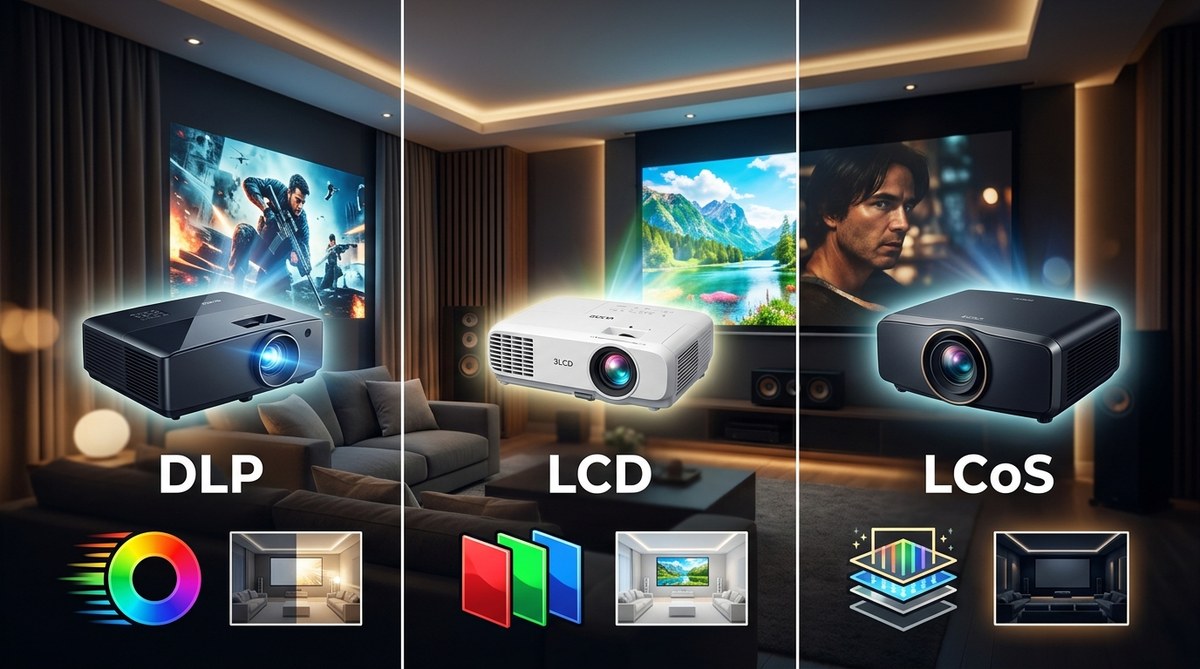
All sets feature a wide 16:9 aspect ratio screen and offer compatibility with standard-definition 480i, enhanced-definition 480p, and high-definition 720p and 1080i signals. Integrated HDTV Tuner: These Sony LCD projection TVs come with a built-in HDTV tuner which can receive both over-the-air broadcasts as well as digital cable broadcasts (ATSC and QAM). This means that there is no need to spend a few hundred dollars in an external HDTV decoder to feed in high definition signals. The tuner supports picture-in-picture through Sony's TwinView PIP, a feature that lets you view any 2 sources simultaneously - side by side, even at different image resolutions, These Sony LCD projection TV sets are also capable of making a good show out of a standard-definition video signal through Sony proprietary Digital Reality Creation MultiFunction Circuitry. This raises standard definition signals to HD quality to display clear, stable images from any video source. MID-X Multi Image Driver Circuitry scales all incoming standard and high definition signals to the configuration of the panel without degrading signal quality. Sony WEGA LCD Light Engine: Sony rear projection TVs utilize LCD technology in their light engine. Sony make use of 3 different 1,366 x 788 wide-XGA format, high-resolution LCD panels, one for each of the RGB color component (resulting in a total of 3.28 million dots of resolution). This calls for a more complex optical setup but at the same time, it gets rid of the color wheel found in most DLP sets - often associated by some with the rainbow effect. The WEGA Engine system maximizes picture performance from any video source by minimizing the number of digital-to-analog conversion processes. The optical engine used in these Sony LCD projection TV sets also features a special 11-element lens system responsible for the lightweight, ultra-slim cabinet. The lens system bends the light path, creating an ultra-short focal point while maintaining high brightness. A 100W or 132W user-replaceable ultra-high-pressure lamp is used as the light source; lamp wattage varies according to model. This proprietary system delivers vivid images from the center of the screen all the way to the edges. This set-up frees the user from having to make any convergence adjustments. In addition, as with other micro-display projection technology, these Sony LCD projection TV sets do not suffer from burn-in; this is not the case with phosphor-based CRT and Plasma displays. When it comes to these Sony LCD projection TV sets image quality, our only minor complaint is their black-level performance, or rather their ability to accurately render black and very dark picture areas. Surely there has been a huge step-up from some previous models, something which brings Sony LCD rear projection TV sets on par with most competing DLP models - but still not as good as some CRT-based RPTV's. Sony's Digital Reality Creation (DRC) circuitry ensures high picture resolution, while proprietary Direct Digital Circuitry increases the video signal's signal-to-noise ratio before it reaches the DRC circuit, ensuring rich, natural-looking images from any source. 3:2 Pulldown: Sony's CineMotion 3:2 pulldown detection and reversal is a handy feature for watching progressive-scan movie programs in their native 24-frame format. Digital video mastering introduces a common distortion when adjusting 24 frames-per-second movies to 30 fps video; 3:2 pulldown digitally corrects this distortion, removing the redundant information to display a film-frame-accurate picture. Other features include:Built-in Memory Stick media slot allows quick, easy viewing of digital photos (JPEG images) and MPEG-1 video. It can also display customized slide shows using MP3 files for background music. Channel Fix lets you select a specific TV channel (3, for example) for cable box reception. Then you can control a compatible cable box via the TV remote without inadvertently changing the TV from Channel 3. A CableCARD slot gives you the option to connect to cable TV without a set-top box, giving you access to analog, digital cable, HDTV, and premium cable channels like HBO and Cinemax (if supported by your cable company). Sony's exclusive S-Master 1-bit digital amplifier produces 15 watts per channel (x 2), ensuring high power for superb, clear dialog. HDMI (High-Definition Multimedia Interface) - a lossless, uncompressed, all-digital audio/video interface to link the set with any audio/video source (such as a set-top box, DVD player, or AV receiver). HDMI supports standard-definition (SD), enhanced definition (ED), or high-definition (HD) video, plus multi-channel digital audio - all using a single cable. It transmits all ATSC HDTV standards and supports up to 8-channel digital audio, with bandwidth to spare to accommodate future enhancements and requirements. Note that HDMI Interface is not available on the Sony KDF-70XBR950; this is a slightly older Sony LCD projection TV model that was released in late 2003; in comparison, the other models were released in late 2004. A few minor differencesWe have stated that these Sony rear projection TV sets share very similar specifications - with the real major difference being a different screen size. This doesn't mean that there aren't any differences in the supported features and enhancements between the various series. For example, the XS955 Series of Grand WEGA Sony LCD projection TVs offers additional features over other products in the 'KDF' range of Sony LCD projection TV sets, including advanced menu functions that are typically found only in service menus: Gamma correction (bright and dark balancing), Black correction (enhances contrast), White balance (fine-tunes white intensity), Detail enhancement (sharpens the picture), clear white (emphasizes whites), and Live Color with an assortment of enhancement option levels - this is an innovative circuit that emphasizes blues and greens without affecting reds for a more natural, vivid picture. Product Dimensions and Weight:The table below lists the respective product dimensions and weight for each of the Sony LCD projection TV sets referred to in this review article:
What's in the BoxAll Sony LCD projection TV sets come with a remote control, remote batteries, a user's manual, product registration information, and a limited manufacture's warranty. Concluding RemarksPros: Affordable sets from the leader in the field. These Sony LCD projection TV sets represent a huge leap forward in the performance of LCD rear-projection televisions - in particular when it comes to the black-level performance. Still not exactly in line with the bulkier CRT-based RPTV's, yet these Grand WEGA line of DLP RPTV products compete well with their DLP counterparts. In addition, the use of three different LCD panels - one for each color component - in place of the typical color wheel used in some other rear projection TVs ensures that viewers will not suffer from any rainbow effect. Cons: These Sony LCD projection TV sets do not come with lamp brightness adjustment - a feature available on the Toshiba range of DLP rear projection TV sets. This may render a too bright a picture for viewing in a darkened room - in particular with the smaller screen size sets. Fan noise may be noticeable especially during passages of low volume sound. Our final complaint concerns channel labeling - no matter how much time it takes to label all your favorite channels, at the instant you perform a scan to update the channel programming on your Sony LCD projection TV, all your labeling work goes down the drain as the scan process seems to erase all channel labels! Are you looking for a DLP Rear Projection 3D HDTV?
However, prior to any decision, we advise to do some research of your own; look at what others had to say following their purchase with respect to quality, functionality, customer support, etc. A good starting point is the customer feedback posted on the amazon site. |
HDTV reviews published on Practical HT Guide
In this 2012 update, we first discuss the rear projection market to see if it is still worth investing in this technology when the industry is actively pushing the more expensive 60-inch+ LED TVs. We then look at available Mitsubishi RPTV options for big screen home entertainment.
In the process, we also discuss each of the lineups from Panasonic, Samsung and LG.
Recommended Technical Guides The Complete LCD TV Guide:
Plasma
Television Projection Television
Guide to Digital
Satellite TV Guide to Digital TV TV Viewing Distance
Contrast Ratio - Playing with Numbers!
Guide to Digital
Satellite TV HDTV Formats Explained
The HDMI Cable
Guide
Feel the Shake! Home Theater Design:
Would you like to get the best out of your Samsung LED TV? There is no better way to make the most out of your new HDTV then to invest in a set-up DVD. Interesting calibration Blu-ray discs include Disney WoW and Spears & Munsil High-Definition Benchmark. Disney WoW is one of the easiest to use and one of the most complete calibration discs for beginners and intermediate users while Spears & Munsil is more for the expect user. For more information, please check our Guide to HT Set-Up DVDs
Larger, better, and more affordable than ever... Check out the latest offers at
Suitable for 73-inch and 82-inch rear projection HDTVs
|
||||||||||||||||||||||||||||||||||||||
|
|
|||||||||||||||||||||||||||||||||||||||
|
|
|||||||||||||||||||||||||||||||||||||||
|
|
|
||||||||||||||||||||||||||||||||||||||
|
HOME |
About Me |
Site Content |
Terms of Use / Disclaimer |
Privacy Policy
Information on this website represents the author's opinion and does not constitute professional advice; please read our terms of use and privacy policy before using this site. |
|||||||||||||||||||||||||||||||||||||||