|
|||||||||||||||||||||
|
Home Page - Plasma TV Reviews - B860 Samsung Plasma TV
Samsung Series
8 versus Panasonic V10
|
A Quick Guide to Home Theater Design
An easy-to-follow e-book on how to research, design, and build your own
by Duncan McClelland
Article Date:
|
||||||||||||||||||||
|
|
|||||||||||||||||||||
2009 Best Plasma TVs: Samsung vs. Panasonic - an introductionInasmuch as Samsung and Sony have always battled for the top spot in LCD HDTV sales, with plasma, it is Samsung versus Panasonic. And now that Pioneer is out of the plasma HDTV market, Samsung and Panasonic are not only battling for the top spot in plasma television sales, but also for the best plasma TV title. In this respect, the two plasma TV series under review surely constitute two of the very best plasma TV lineups the plasma TV industry has ever delivered. The B860 Samsung plasma TV series comprises the 50-inch PN50B860 ($1,800), and the 58-inch PN58B860 ($2,700). This is the most interesting series and the most expensive within Samsung 2009 plasma TV lineup. Its main characteristic is an ultra-slim 1-inch thin profile. Like the Samsung, the V10 Panasonic plasma TV series chosen for our best plasma TV discussion represents Panasonic high-end plasma series. It comes with a very similar feature set. And like the 50-inch Samsung PN50B860, the Panasonic V10 50-inch TC-P50V10 ($1,825) plasma HDTV comes with at just about the same price to that of the Samsung. It is not the most expensive within the Panasonic lineup - that spot has been reserved for the Panasonic Z1 series 54-inch TC-P54Z1 HDTV - which like Samsung Series 8 plasma TVs is just an inch thick. But with its present reduced price of around $4,000, the Panasonic Z1 still costs more than twice the 50-inch V10 and almost $1,300 more than the Panasonic 58-inch TC-58V10 plasma HDTV. In this first part of our 'Samsung versus Panasonic' discussion, we present the main features of Series 8 Samsung plasma TVs. In the second part, we take an equally detailed look at the Panasonic V10 Series. In the final part, we confront the two with the scope of determining which HDTV deserves the 'Best Plasma TV' title for 2009. In the process, we also analyze what other expert reviews are saying about these Samsung and Panasonic HDTVs. Equally important, we see what customers are saying in their feedback at online forums and major retail stores. Editor's note: Many of the features detailed in this article for each of the models under review have already been discussed in our Panasonic G10 and Samsung Series 6 plasma HDTV product guides. However, this discussion takes a more detailed approach to better bring out the main differences between the two. Part 1: Samsung Best Plasma TV for 2009 - in detailB860 Series 8 Samsung Plasma TVsSamsung Series 8 comprises four models - the two B860 already referred to in this article and the slightly less expensive 50-inch and 58-inch B850 sets.
The latter, termed Cinema Smooth, allows the user to turn on or off a higher refresh rate for proper display of 24p signals - similar to the 96Hz refresh rate setting on Panasonic V10 plasma HDTVs. Series 8 Samsung plasma TVs come in an extremely stylish package and a never-ending list of features. If there is one thing missing, it's that Series 8 plasma TVs miss the THX display certification found on some of the latest LG and Panasonic - including the V10 under review in this discussion. But the B860 picture quality is still superb and is surely one of the most suitable candidates for the best plasma TV title. Design:
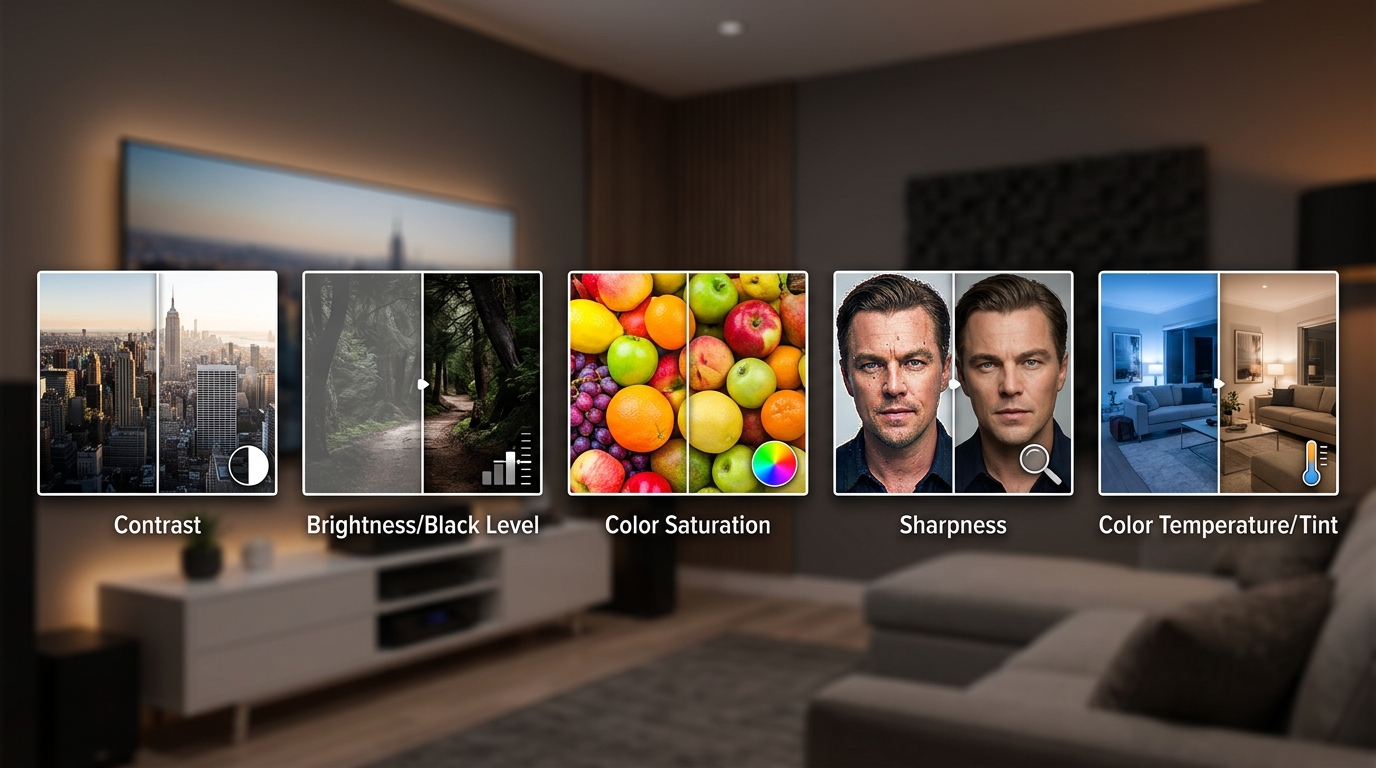
Samsung flagship HDTVs come with an improved anti-glare filter coating, termed Ultra FilterBrightTM Plus that is capable of maintaining a higher image contrast even in very bright rooms. The menu system on 2009 Samsung plasma TVs is basically the same as that used on 2008 sets. This is surely one of the best - with big, highly legible text placed against a transparent background. Navigation is easy and intuitive while helpful explanations are available along the bottom of the menu screen. One welcome extra over last year menu system is a built-in 'Product Guide' that takes you through the load of features available on these Samsung plasma TVs. Equally functional is Samsung's backlit remote control. It comes with big bottoms that are easily identified by their shape and size even in a darkened environment. It does not include a hot key to enable users access the Game mode directly as instead is the case with Panasonic. Instead, it comes with a dedicated 'Tools' button on the remote to get direct access to frequently used functions such as the E-manual, sound, video controls and timer. Main Features:Other than the features detailed above, Samsung B860 HDTVs are basically the same as Series 6 plasma TVs. Like Series 6, Series8 Samsung plasma TVs come with the latest Samsung E-Panel. This new panel technology boasts a similar 40% reduction in power consumption over previous panels for the same brightness level as Panasonic new NeoPDP panels. Samsung do not mention anything about projected panel half-lifetime but in line with the latest panels from LG and Panasonic, we expect this to stand at close to 100,000hrs. This new E-panel is also responsible for these sets improved color saturation and 3,000,000:1 dynamic contrast rating. As impressive as the latest mega-contrast ratings might be, yet as explained in our Contrast Ratio article, these mega numbers have significantly less impact in picture performance than what TV makers would like you to believe. Like all 2009 plasma display panels, the new Samsung E-panel also supports the latest big number in plasma HDTVs, 600Hz refresh technology - which Samsung refers to as 600Hz Subfield Motion Technology. As expressed in our 2009 Samsung Plasma TV product guide, this results in improved motion resolution for sharper, clearer images during fast action events like games and sports. This is Samsung's equivalent to Panasonic 600Hz sub-field drive system. But the two implementations are not exactly the same in that while Panasonic 600Hz 1080p HDTVs achieve 1080 lines of motion resolution, Samsung Series 8 plasma HDTVs get close to 900 lines. This is still exceptional in practical terms; the eye would not detect any difference between 900 lines and 1080 lines of motion resolution without the use of test patterns. Other than improved motion resolution, the latest big number in HDTV technology can be simply ignored. You see, improving motion resolution helps reduce blurring, yet plasma is inherently less susceptible to burring of images than LCD. The real issue here is that 600Hz technology was developed by plasma TV makers to combat the latest 240Hz number game in LCDs. Instead, more appealing despite its somewhat slow response (compared to Panasonic VieraCast) is Samsung interactivity suite. Termed Medi@2.0™, this includes 'Internet@TV' in the form of widgets, built-in content such as recipes, games, workout guides, and a slideshow, and the capability to stream multimedia content from a networked PC. Widgets include stocks, weather, news, YouTube, Yahoo videos, sports scores and more; more of these widgets are expected to be available in the near future. Plus, you get DLNA CERTIFIED™ connectivity to access your PC's personal media - downloaded music, video, and photos - and enjoy these from anywhere in the home with your TV; but you will have to install the supplied Samsung DLNA application on your PC first. Finally, Samsung USB 2.0 multimedia center lets you connect a thumb drive or a digital camera quickly and easily. User-adjustable picture controls on these Samsung plasma TVs abound and by far surpass Panasonic. These Samsung plasma TVs come with one of the most complete sets of picture settings besides the usual standard basic adjustments for contrast, brightness, sharpness, color, and tint. As part of the usual basic picture adjustments, Samsung adds a cell light setting to adjust the panel brightness (at the pixel level). Properly setting this parameter can help reduce the set running costs while still maintaining a bright enough picture. Four adjustable picture modes are available - Dynamic, Standard, Eco, and Movie - with the Movie being the most accurate out-of-the-box picture setting. Each of these modes comes with independent memory inputs; this greatly eases optimization of picture parameters for different connected devices. The Eco mode is basically the Standard mode but with a default lower light output to reduce energy consumption. Five selectable settings are available for color temperature; these can be further customized via the 'White Balance' menu. Additional picture adjustments are also available under the 'Advanced' menu. These include a Black level adjustment that affects shadow detail. A Dynamic contrast control lets you adjust the picture contrast on the fly while a seven-position gamma adjustment gives you fine control over the progression from dark to light. Three Color Space settings - including a custom setting - adjusts the Samsung plasma TV color gamut response. And noise reduction comes in three user-selectable pre-sets. The B860 also includes three Film modes to engage 2:3 pull-down and that works also with 480i and 1080i sources. This is apart from Samsung Cinema Smooth setting for smooth playback of film-based content with no jerky movement when working with 24p signals from an external source over HDMI. The aspect ratio menu provides six settings - including a 'Wide Fit' mode to display the picture over the entire screen and a 'Screen Fit' mode to display 1080i and 1080p content on a pixel-by-pixel mode without any cutoff (overscan). And as with other high-end Samsung HDTVs, Series 8 Samsung plasma TVs come with a convenient Blue Only Mode setting to help you adjust the color and tint to the preferred values by switching off the red and green colors. For an explanation of how to adjust the color and tint using the Blue Only Mode feature, please refer to our Samsung LED TV review. Conveniences:Top of the list on these Samsung plasma TVs is an 'Energy Saving' mode. It comes with three presets - 'low', 'medium', and 'high' - apart from an 'off' setting. These settings mainly affect the TV brightness level to reduce the set power consumption. Worth mentioning that as with other 2009 plasma HDTVs, Samsung Series 8 TVs qualify for Energy Star 3.0 when set to the default Standard or Eco picture mode. Average energy consumption for the 50-inch set in default Standard mode is 200W; this is in line with that of equivalent 1080p Panasonic plasma TVs using the latest NeoPDP panels. Power consumption falls considerably in Eco picture mode but the already dim picture in Standard mode would become too dim for normal viewing in the Eco picture mode preset. However, consumption is still higher than the latest 52-inch LCDs. Samsung Series 7 LCD consume some 100W in high energy saving mode and just 130W when properly calibrated against 250W for the Samsung 50-inch plasma TV. But thanks to the new greener plasma panels, the difference between LCD and plasma is becoming less of an issue. An equally important convenience and new for this year, is the possibility to download firmware updates direct to your Samsung plasma TV when the latter is connected to the Internet. With previous models, you had to visit the Samsung website on your PC and then transfer the update using a thumbdrive. Samsung provides a basic picture-in-picture feature on Series 8 (and Series 6) plasma TVs. In view that these Samsung plasma TVs come with one tuner, you can only use the PIP feature together with an external source. Specifically, you can view TV broadcasts on the PIP screen (sub-picture) only when the main picture is from an external device connected to one of the four HDMI inputs, Component and PC. It does not work the other way round. Despite this basic functionality, Samsung PIP is an added bonus over its main competitor. Picture-in-picture functionality is totally non-existent on the 2009 Panasonic plasma lineup - including the V10 model under review as part of this 'Best Plasma TV' discussion. As with most HDTVs from other brands, Samsung includes a Game mode on all its 2009 plasma TVs. When activating the Game mode, the TV would default to the Standard picture mode while most of the video enhancement processing is eliminated to minimize the delay between player input and action displayed on the TV screen. With its 2009 line of HDTVs, Samsung includes an E-manual on the provided thumb drive, which can be viewed on the TV screen. Interesting is the customer care screen that includes the firmware version of your HDTV - info which you will require when you need to call the company for support. Samsung does provide various options to help minimize the possibility of screen burn and eliminate image retention should the latter occurs - apart from the fully adjustable default pixel shift function. A 'Side Gray' function allows you to set the side bars along 4:3 program content to either the preferred default light gray, or dark gray. There is also a remedy for image retention (IR) should it occur. Image retention is not the same as burn in, and unlike burn in, it is totally reversible. All it takes is to engage the provided 'Scrolling' function for a few hours - depending on the level of image retention; this scrolls a ramp pattern along the screen to remove IR. Worth mentioning that like Series 6 Samsung plasma TV, the B860 Samsung plasma TV under review also exhibited a little bit more susceptibility to image retention than corresponding 2009 Panasonic plasma HDTVs. This is something however which the scrolling function did clear up completely. We expect this image retention to become less of an issue after the first few hundred hours of use. While the use of new phosphors and pixel-shift technology has reduced susceptibility to burn-in, yet the new brighter phosphors used on the latest plasma panels are more susceptible to slight image retention especially during the first few hundred hours of use. As stated, image retention would clear up completely by applying the scrolling function for a few hours. Yet it is worth mentioning that you can do a lot to help protect your plasma TV investment by simply keeping the brightness and contrast levels down, especially during the first 200 hours of use. During this period, the fresh phosphors in plasma display panels burn more intensely as they are ignited; this makes plasma screens more prone to suffer both permanent burn-in and even more so temporary image retention. More on protecting your plasma TV investment is available on our site here. Connectivity:As with most HDTVs within this category, B860 Samsung plasma TVs offer a complete suite of connectivity options. However, the limitations associated with the ultra-slim inch-thin profile and the shallow connectivity bay present on these plasma TVs do have their own impact in particular with the set analog inputs. The latter consists of just one component video which can be transformed into a composite video input. In this respect, the less expensive Series 6 Samsung plasma TVs present a more complete connectivity suite. Other than this, you get the usual connectivity options - including four HDMI inputs ver. 1.3 inputs with CEC support - which in view of the thin profile, are all positioned along the vertical on the side of the TV; HDMI 1 may also be used as a DVI input. Additional inputs include an audio analog stereo output, a digital audio out, a PC VGA-style input, PC/DVI audio input, an Ethernet port, antenna input, two USB inputs for multimedia playback, and Samsung's ex-Link port for servicing purposes. One interesting aspect of Samsung rear connectivity panel is that unlike Panasonic, all connections on the B860 rear panel points downwards; this surely better complements the thin profile of these sets and represents a better cable hook-up option especially in the case of a wall mounted installation.
Unfortunate, as with some of the latest 2009 flat panel TVs, there is no S-video input on B860 Samsung plasma TVs, which may be a bit limiting for some. Audio:Series 8 Samsung plasma TVs come with down-firing speakers - delivering 15W per channel. Unlike the B650 HDTVs, Series 8 plasma TVs also include a built-in sub-woofer for enhanced bass response. This also explains why any sound streamed from a networked PC via the TV DLNA is downmixed to 2.1 audio. To help get a more immersive soundstage over the set stereo speakers, Samsung provides SRS TruSurround. Sound quality is relatively better than that of the less expensive Samsung models. Sound does not deteriorate with an increase in sound volume as is often the case with most flat-panel TVs but it still does not match the very good picture quality of these Samsung HDTVs. If you want to enjoy these Samsung plasma TVs at their best, a proper surround sound setup is necessary. As can be seen from the above, Series 8 Samsung plasma TVs excel in overall features. And as you will see in our performance analysis in the final part of this discussion, these plasma TVs are also capable of excellent picture quality. Definitely these are the best plasma TVs within the 2009 Samsung plasma TV lineup but... how do Samsung Series 8 HDTVs stand against Panasonic V10 THX display certified plasma TVs? We try to help answer this question by first taking a deeper look at Panasonic V10; we then proceed to confront the two for the Best Plasma TV title.
|
Featured Reviews and Product Guides 2009
Samsung plasma TV Reviews:
Samsung
Plasma TV Lineup:
Samsung
Series 6:
2009 Panasonic Plasma TV Reviews: Panasonic Viera 2009 Plasma Line-up - full product guide. Review: X1 entry-level 720p HDTVs - covering also the X14 and the C1 Review: S1 entry-level 1080p HDTVs - covering also the S14 and the U1 Review: G10 THX-certified Premium 1080p HDTVs - covering also the G15 series The Panasonic V10 in detail - Reviewing the best-rated Panasonic plasma TV for 2009 More Plasma TV Reviews
Cheap Plasma TV Reviews - 2009 Update: 2009 Best Plasma TVs
- Samsung B860 vs. Panasonic V10:
LG Plasma TVs: Best Plasma TVs - 2008: 2008 Cheap Plasma TVs Roundup: Budget-class plasma TV reviews within the 32 to 50 inch screen size.
2008 Panasonic Plasma HDTV Product Guide
Recommended Technical Guides The Complete LCD TV Guide:
Plasma Television Digital TV
Guide to Digital Satellite TV The HDMI Cable Guide TV Viewing Distance Should You Opt for a 1080p
HDTV?
Check out for the latest offers on Samsung Plasma TVs at amazon
Samsung best selling plasma TV for 2009
Samsung cheapest plasma HDTV - the 720p PN42B450
Affordable premium plasma TV with a great picture. For our B650 Samsung plasma TV review, please click here.
A Samsung stylish 1-inch ultra-thin plasmas for 2009.
Samsung massive yet affordable plasma HDTVs for 2009
For the full range of
|
||||||||||||||||||||
|
[?] Subscribe To This Site
Subscribe
to our free e-zine to remain abreast with the latest additions to our website.
|
|||||||||||||||||||||
|
|
Would You like to get the best out of your HDTV? There is no better way to make the most out of your new HDTV then to invest in a set-up DVD. A great calibration disc is the Avia II Home Theater Set-up DVD, an exceptional AV calibration tool for both the novice and the expert.
Another
interesting calibration disc is the
Digital Video Essentials HD For more information, please check our Guide to HT Set-Up DVDs. |
|||||||||||||||||||
|
|
||||||||||||||||||||
|
next... Part 2: Panasonic V10 Series - in detail Part 3: Which is better - Samsung B860 or Panasonic V10? |
|||||||||||||||||||||
|
About
Me
|
About the
Site Content
|
Terms
of Use / Disclaimer
|
Privacy Policy
Information on this website represents the author's opinion and does not constitute professional advice; please read our terms of use and privacy policy before using this site. Copyright © - Practical-Home-Theater-Guide.com All rights reserved. |
|||||||||||||||||||||