|
|||||||||||
|
Home Page - LCD TV Reviews - Samsung LED TV Line-up for 2009 - Product Evaluation LED TV Reviews: 2009 Samsung LED TV Sets
B6000,
B7000/7100, and B8000 edge-lit LED LCD TVs
|
|||||||||||
|
There is no doubt the latest Samsung LED LCD TV sets represent an impressive bundle of features, cutting edge technology, and stylish design. And at a time when everyone is becoming more conscious of the world's sustainability in the use of available resources, these are also among the greenest HDTVs presently available on the market. Yet Samsung edge-lit LED lighting technology does come at a relatively expensive price tag. But... does the new Samsung LED TVs overall performance justify their high price? |
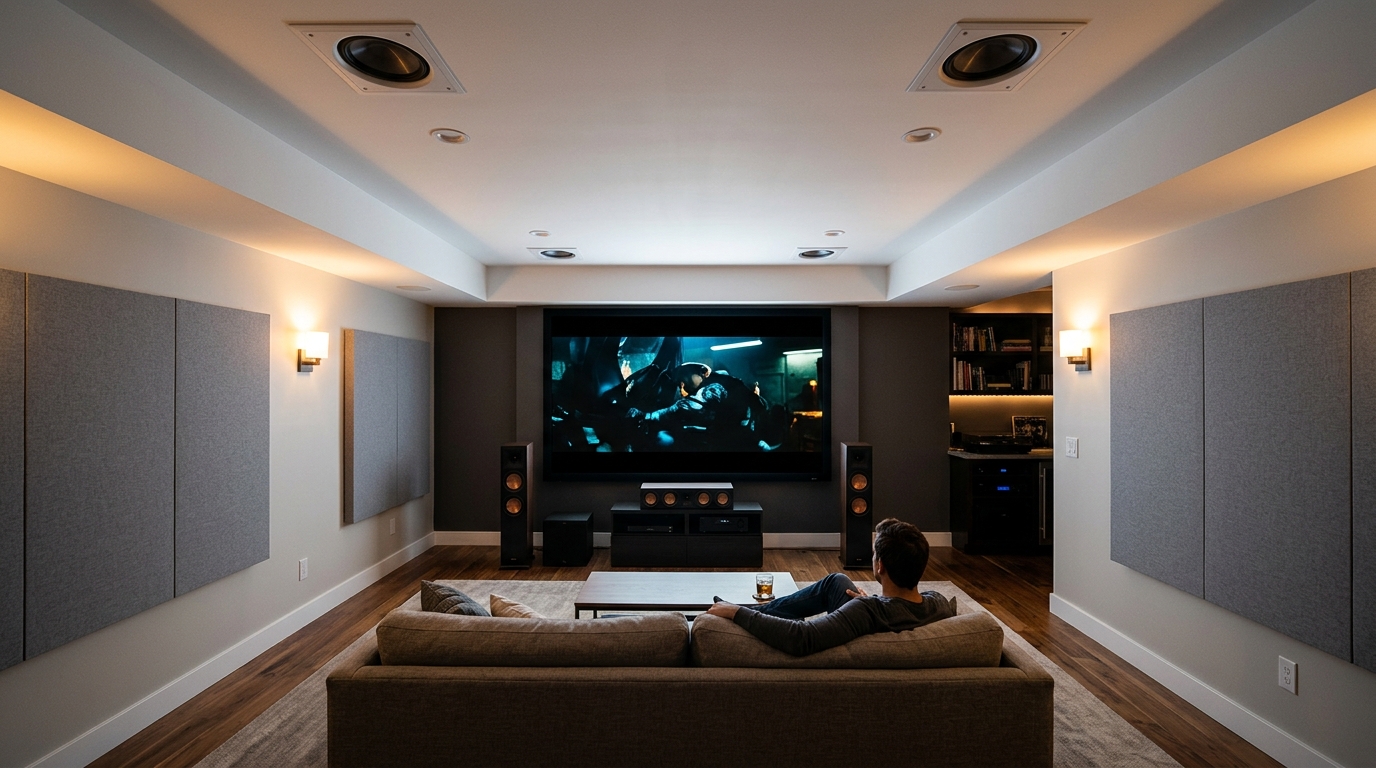
A Quick Guide to Home Theater Design
Discover how to research, design, and build your own Home Theater.
by Duncan McClelland
More information HERE.
Article date: 14 May 2009
Update: 5 November 2009
Samsung 55-inch UN55B8000 1080p edge-lit LED LCD HDTV with 240Hz processing
|
The latest cutting edge LED-lit LCD technology offers a number of advantageous over conventional CCFL-lit LCDs, yet these Samsung LED TVs are relatively expensive.
If you were to compare 46-inch models from within the 2009 Samsung LED TV lineup with equivalent (in terms of feature set) conventional Samsung LCD TVs, you would find that the Samsung LN46B650 LCD TV is selling at amazon at a reduced price tag of $1,360 at the time of this write-up, while the UN46B6000 Samsung LED TV is selling at $1,850; that's almost $500 more. And the UNB6000 represents Samsung's entry-level LED TV series.
Move on to the step-up series and you will find that there is a similar price difference between Samsung LN46B750 LCD TV and Samsung UN46B7000 LED HDTV with the LED TV selling at $2,030 while the LN46B750 is selling at approximately $1,630.
And considering, the UNB7000 LED TV comes with 120Hz dejudder processing while the B750 comes with 240Hz refresh rate technology.
Even more expensive is the UNB8000 series which represents the latest Samsung LED TV release for 2009, with a price tag of $2,300 for the 46-inch UN46B8000 and $3,020 for the 55-inch UN55B8000 LED HDTV.
So the whole issue here is...
Does the overall performance of these Samsung LED TV sets live up to their relatively high price in comparison to conventional LCD TVs?
To help us better answer this question, we confront our technical analysis we presented in the first part of this write-up with what other professional reviewers are saying about these Samsung LED TVs. We also see what customers are saying about these LED LCD TVs following their purchase. This customer feedback is extremely important as there is no better test to a product overall performance than in every day use.
In terms of pure picture quality, we expect all three series of Samsung LED HDTVs to deliver very similar performance since features apart, all edge-lit Samsung LED TVs for 2009 share basically the same picture specifications.
This is also confirmed by Cnet, which is the only professional review source that managed to carry hand-on reviews on sets from all the different edge-lit Samsung LED TV series.
There is only a slight exception to this and this is the higher 240Hz dejudder processing found on rate UNB8000 premium line HDTVs. While it would surely be close to impossible to perceive the added benefit of 240Hz processing over 120Hz systems with normal program content, yet Cnet notes that video processing on B8000 HDTVs is significantly better than that on the less expensive models - eliminating more of the video artifacts while making the processing look more natural. Furthermore, in its review of the 46-inch UN46B8000, HDguru says that the 8000's shines in the area of signal processing, motion resolution, noise reduction and gray scale accuracy, passing all the standard definition HQV tests for 3:2 Film detection, detail and noise reduction.
This in itself does not take away the fact that dejudder implementation on the less expensive series is still one of the very best around - thanks to the way Samsung separates blur reduction and dejudder control.
In other words, the approximately $200 to $300 difference between sets of the same screen size among the entry-level UNB6000 and the set-up UNB7000 Samsung LED TVs as well as between the latter and the UNB8000 premier line relates more to a difference in the features between these three series than any marginal difference in picture quality. If you do not need the extra features found on the step-up or premier line Samsung LED TVs, then you might very well opt for the UNB6000 lineup and still enjoy almost the same picture quality as that of the more expensive series.
More specifically, you are paying an extra $200 for the UNB7000 over similar sets from the UNB6000 series for the added interactive suite; this includes streaming of music, video, and photos from DLNA-certified devices via the network connection, Internet@TV with its various TV widgets from Yahoo, Flicker, ebay, and the recently introduced video-on-demand services from amazon and Blockbuster, as well as a fully pre-loaded content library with recipes, games, workout guides, an a slideshow of high-definition art and photos with music.
We cannot but remark here that while Internet TV and DLNA support are great to have, yet we find the pre-loaded content library more of a gimmick feature thrown by Samsung to help further justify the high price. In addition, as most users will tell you, Samsung Internet-enabled TV content - in particular video-based widgets - are extremely slow to load.
Add Auto Motion Plus 240Hz to the full feature set of the UNB7000 and you will just step onto the UNB8000 premium series of Samsung LED TVs.
Other than this, all the three series of Samsung LED TVs share the same LED edge-lit technology with its 3,000,000:1 dynamic contrast ratio rating, 1080p native resolution, fast 4msec response time (2msec for the B8000), and the same glossy Ultra-Clear panel.
As expected, all expert reviews agree that these Samsung LED TVs offer very good picture quality, with relatively very deep black levels, accurate color, and excellent overall video processing. Cnet however in their reviews adds that shadow detail on the entry-level series is just a bit better than that of the UNB7000 Samsung LED TV series.
However, the UNB7000 is then capable of doing a little better than the entry-level when it comes to rendering a deep level of black. But the difference between the two is minimal and only noticeable on a side-by-side comparison. However, Cnet compares the black levels on the UNB6000 series with that of the 2008 Samsung LED LCD TV flagship line, the Samsung A950. In other words, while it says that blacks on the UNB7000 series are better, yet black levels on the entry-level series are still exceptional dark despite that they are not as dark as that of the more expensive Samsung LED TV series.
What is disappointing with the new LED TV lineup is not picture quality but rather the lack of screen uniformity. Further more, when first released in April this year, the new LED TVs suffered from annoying fluctuations in the backlight when dynamic contrast was activated. This has now been almost completely rectified via a firmware update released in September. But this firmware update seems to have also somehow lightened slightly the blacks. Overall results still yield a much better picture with more shadow detail and a stable backlight.
The fluctuations in the image brightness were a sort of a trade off as a result of the way these LED TVs are achieving their mega-contrast levels. Dynamic contrast works by dimming the LED backlight level in line with the average picture content - thus lowering the light intensity when displaying dark content and vice versa. This delivers deep blacks and rich saturated colors. However, it also makes bright objects on a predominantly dark background appear much darker than they should - which in itself also leads to loss of shadow detail. This also explains the slight lightening of the blacks following the firmware updates on these series since this improvement is most probably being achieved by applying less dimming to the backlight level when presenting dark content.
The issue with screen uniformity referred to above can turn out to be annoying mainly with certain content like when using these LED TVs as a computer monitor as well as when viewing predominantly dark content. In dark areas, the corner areas on these Samsung LED TVs appear brighter than the rest of the screen. The lack of uniformity is even more evident over a gray background. With typical broadcast content, these brightness uniformity issues would be hardly noticeable; the main reason being that program content contains a more balanced mix of dark and bright areas.
While these uniformity issues are typical of all LED TVs, yet expert reviews state that the ultra-thin edge-lit Sony KLV-40ZX1M LED LCD TV exhibits worst screen screen than these Samsung LED TVs.
Directly related to these screen variations is the performance with off-axis viewing - in which case, screen variations seem to intensify as one moves to either side of the screen away from the ideal viewing position. Cnet here says that moving even just one seat away from the best position would result in a noticeable reduction in contrast. The deterioration in contrast ratio leads to colors that wash out out quicker than most conventional LCD TVs with off angle viewing. Cnet also adds that dark content tends to take a bluer tint with an increase in viewing angle. But then this is more of a common problem with many LCDs.
On the contrary, customers seem to have a more positive attitude towards these LED TVs viewing angle performance - with most saying that they did not notice any noticeable deterioration in picture quality with an increase in viewing angle.
TelevisionInfo.com comes with more factual results - by measuring the fall in contrast ratio with an increase in viewing angle. Results show that measured on-screen contrast would fall to less than 50% of its peak value at just 23 degrees on either side of the center. This goes to show that while these LED TVs are capable of very deep blacks, yet conventional CCFL LCD TVs may prove to be a better option for a large room where people will be viewing the television from a wide range of angles; otherwise, with normal home viewing at not too close a distance, viewing performance will not be an issue.
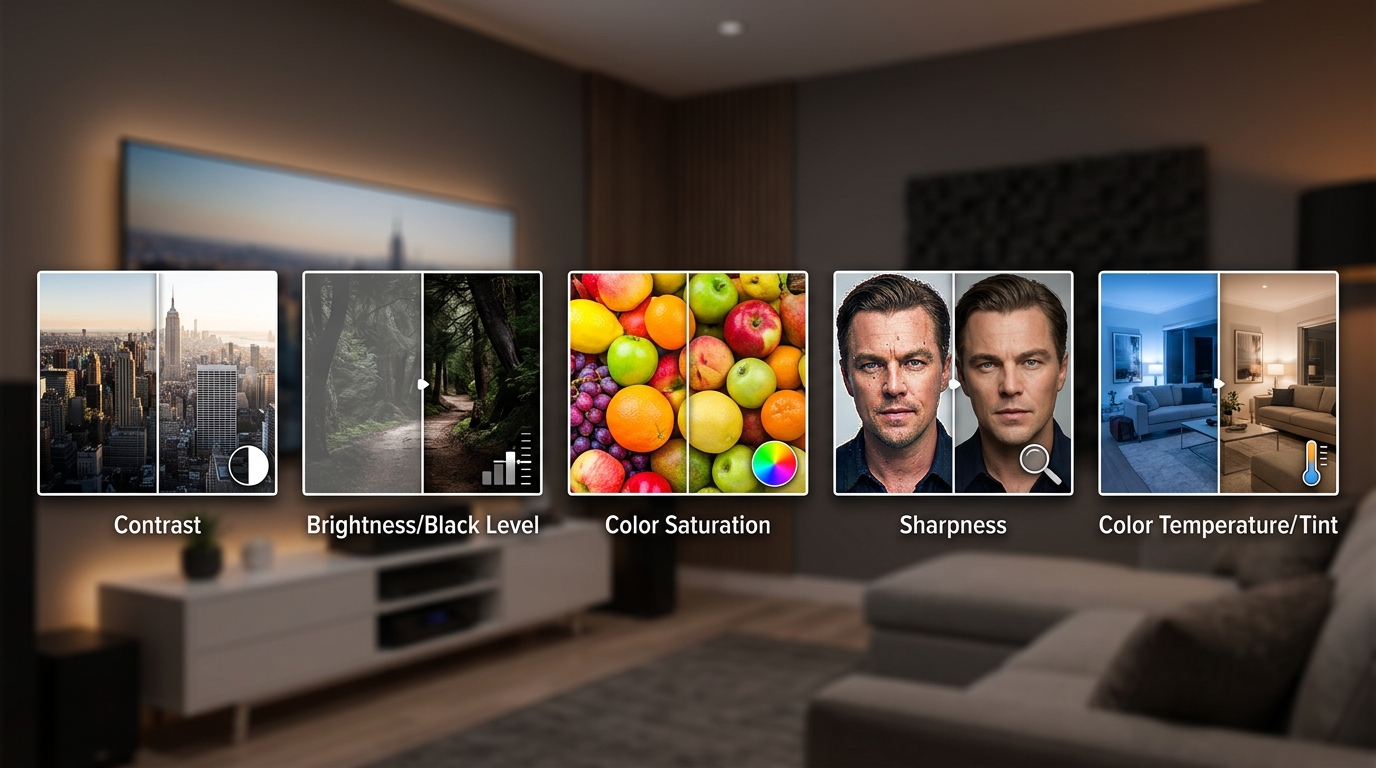
On the other hand, the new Samsung LED TV lineup offers accurate primary colors and excellent grayscale once calibrated - thanks to Samsung numerous picture controls; grayscale remains accurate except in very dark scenes. This is typical of all Samsung HDTVs; in this respect, Samsung is one of the top leaders in the field.
Video processing on these Samsung LED TVs is practically free from artifacts and noise. When it comes to motion blur, these Samsung LED HDTVs can prove to be top performers as long as you engage the set Auto Motion Plus dejudder processing. Samsung's Auto Motion Plus has always proved to be one of Samsung HDTVs strengths. Furthermore, Samsung has added a Custom mode whose adjustability features of Blur reduction (this affects video-based sources) and Judder reduction (for film-based sources) make this one of the very best dejudder processing ever.
These Samsung LED TVs delivered every line of 1080i and 1080p sources with still test-patterns, correctly deinterlacing 1080i film and video based material. Cnet stated that motion resolution tests on the reviewed UNB6000 and UNB7000 Samsung LED TVs is between 600 and 700 lines - with is typical of 120Hz LCDs; instead, UNB8000 LED TVs scored close to 900 lines - mainly because of the 240Hz processing. This is in line with the 2008 Samsung A950 LED LCD TVs - though a bit less than the full 1080 line of motion resolution supported by 2009 Panasonic plasma HDTVs.
Similarly, standard definition content looks good on the Samsung LED TVs - producing sharp images without any jagged diagonals while resolving every line in the DVD format.
Equally significant is that like their 2008 predecessor, these new Samsung LED TVs can very well serve as big PC monitors, thanks to the 'Screen Fit' aspect ratio mode and their ability to display crisp clear text both via the set PC input and the HDMI ports.
These 2009 ultra thin Samsung LED TVs do not come cheap. And considering the relatively expensive price tag, one would have surely expected better off-axis viewing performance and amore consistent brightness uniformity across the full screen area, though the latter would be hardly noticeable with broadcast content.
Yet we say that... if you do not mind forking out the extra expense for one of these Samsung LED TVs, then you will definitely be rewarded with a feature-rich HDTV whose ultra slim stylish design surely stands out from the competition. Even more important is that expert reviews show that these Samsung LED TVs are capable of delivering very good picture quality that should prove superior to many other premium HDTVs from other brands.
We cannot but remark that a few conventional premium LCD TVs - including Samsung Series 7 LCD TVs from this year line-up - can do a much better job with screen uniformity and off-axis-viewing for less, but otherwise, these LED TVs can deliver an excellent picture.
The bottom line: The main selling point of these Samsung edge-lit LED TVs is not their picture performance - true that these Samsung LED TVs are capable of very deep blacks. Rather it is their ultra sleek design coupled with cutting-edge LED technology, exceptionally low power consumption that makes these HDTVs among the greenest around, and an impressive feature set that is hard to beat, that make these LED LCD TVs a most compelling option for those in the market for the latest in HDTV technology.
...back: Part 1 Samsung edge-lit LED TVs Features - evaluation
...next: 2009 Samsung LED TVs vs. Samsung Series 7 LCD TVs
Buying online?
Why not check for the latest price offers on Samsung edge-lit LED TVs at amazon. Generally, prices at amazon are among the best due to the various price options available from different retailers. All you have to do is to click on the following links to access the respective product page for details:
Amazon
32-inch Samsung UN32B6000
40-inch Samsung UN40B6000
46-inch Samsung UN46B6000
55-inch Samsung UN55B6000
40-inch Samsung UN40B7000
46-inch Samsung UN46B7000
55-inch Samsung UN55B7000
46-inch Samsung UN46B8000
55-inch Samsung UN55B8000
Best Buy (retailer specific B7100 Series):
46-inch Samsung UN46B7100
55-inch Samsung UN55B7100
Reference Material / Further reading
Cnet Reviews: Reviews of the Samsung UN46B6000, UN46B7000, and UN46B8000, all by D. Katzmaier, dated May 1, April 10, and September 25, 2009 respectively.
HDguru with Michael Fremer: Detailed technical review of the Samsung UN46B8000.
TelevisionInfo.com: Review of the UN46B6000 by . Padilla, dated May 20, 2009; this is an extremely detailed and highly technical review with possibly too much info for the average HDTV buyer.
Customer feedback posted at amazon and Best Buy
Samsung websites for the latest technical specs and product manuals for 2009 Samsung LED TVs.
|
Featured LCD TV Reviews |
LCD TV reviews & product guides appearing under this section
Samsung B8500 LED TV Series Detailed Product
Evaluation
![]()
Samsung Series 6 LCD TVs: Full
product guide covering B610, B630, B640, and B650 LCD HDTVs
![]()
Sony Bravia KDL-V5100 120Hz 1080p HDTVs - full product review
![]()
Sony Bravia KDL-XBR9 240Hz 1080p HDTVs
with internet-enabled content and DLNA support - full product review
![]()
LG LCD TV Reviews covering LG LH50, LH55, and LG LED TV series
LH90
![]()
Samsung LED HDTVs vs. LCD TVs:
Which is Better?
Now that we have reviewed both Samsung latest LED HDTVs and Samsung Series
7 LCDs, it is only natural that we discuss this LED vs. LCD TV issue.
![]()
Samsung 2009 LCD TVs: The B750
Series:
Series 7 Samsung LCDs have all it takes to become the best selling HDTVs
for 2009. More in this LCD TV review.
LED LCD TVs - Sony vs. Samsung Part 1: Samsung A950 Series
LED LCD TVs - Sony vs. Samsung Part 2: Sony XBR8 series
LED LCD TVs - Sony vs. Samsung Part 3: Which is Better?
|
Home Theater Guides: |
Recommended Technical Guides
The Complete LCD TV Guide:
LCD HDTVs are turning out sharper, bigger, better, and cheaper. Discover all you
need to know about LCD TV sets in this series of articles on LCD televisions.
Plasma Television
Discover all you need to know about plasma TVs - from the features to look for
when purchasing a plasma television, to installing and protecting your plasma TV
investment.
Digital TV
A complete guide to Digital Television - DTV converters, TV antennas, and DTV
transition.
Guide to
Digital Satellite TV
Covering satellite TV basics - with a special emphasis on satellite TV decoder
choice and satellite dish installation.
Equipment
Racks:
There is more to equipment racks than a storage space for your system
components. More in this informative home theater guide.
The HDMI Cable Guide
To many, HDMI is still an unfamiliar term. This easy-to follow home theater
guide explains all you need to know about HDMI.
Home
Theater Set-Up DVDs
See how these calibration discs can come in handy during equipment setup.
TV Viewing Distance
Buying a big screen TV? Care should be taken as you may easily fall into the
trap of buying a too large TV.
Should You Opt for a 1080p
HDTV?
Discover the strengths and weaknesses of the different HD formats - 720p, 1080i,
and 1080p - in this HDTV Guide.
Home Theater
Design:
A series of articles covering all aspects of a home theater from design to
realization.
|
Featured LCD 1080p TVs |
Check out the latest special offers on LCD HDTV sets at amazon
Best LED LCD TVs
2009 Samsung LED TVs with local dimming
Edge-Lit Samsung LED TVs
A complete product guide of edge-lit Samsung LED TVs for 2009 is available on our site here.


Subscribe
to our free e-zine to remain abreast with the latest additions to our website.
Click here for details.
Would You like to get the best out of your LCD HDTV?
There is no better way to make the most out of your new LCD panel HDTV then to invest in a set-up DVD.
A great calibration disc is the Avia II Home Theater Set-up DVD, an exceptional AV calibration tool for both the novice and the expert.
Another interesting
calibration disc is the
Digital Video Essentials HD,
but this is more suitable for advanced users.
For more information, please check our Guide to HT Set-Up DVDs.
|
|
...back: Part 1 Samsung edge-lit LED TVs Features - evaluation
...next: 2009 Samsung LED TVs vs. Samsung Series 7 LCD TVs
|
...back to LCD TV Guide - Main Index ...back to LCD TV Reviews |
About
Me
|
About the
Site Content
|
Terms
of Use / Disclaimer
|
Privacy Policy
Contact Form
|
Advertise on this Site
|
Site Search
Information on this website represents the author's opinion and does not constitute professional advice; please read our terms of use and privacy policy before using this site.
Copyright © - Practical-Home-Theater-Guide.com All rights reserved.