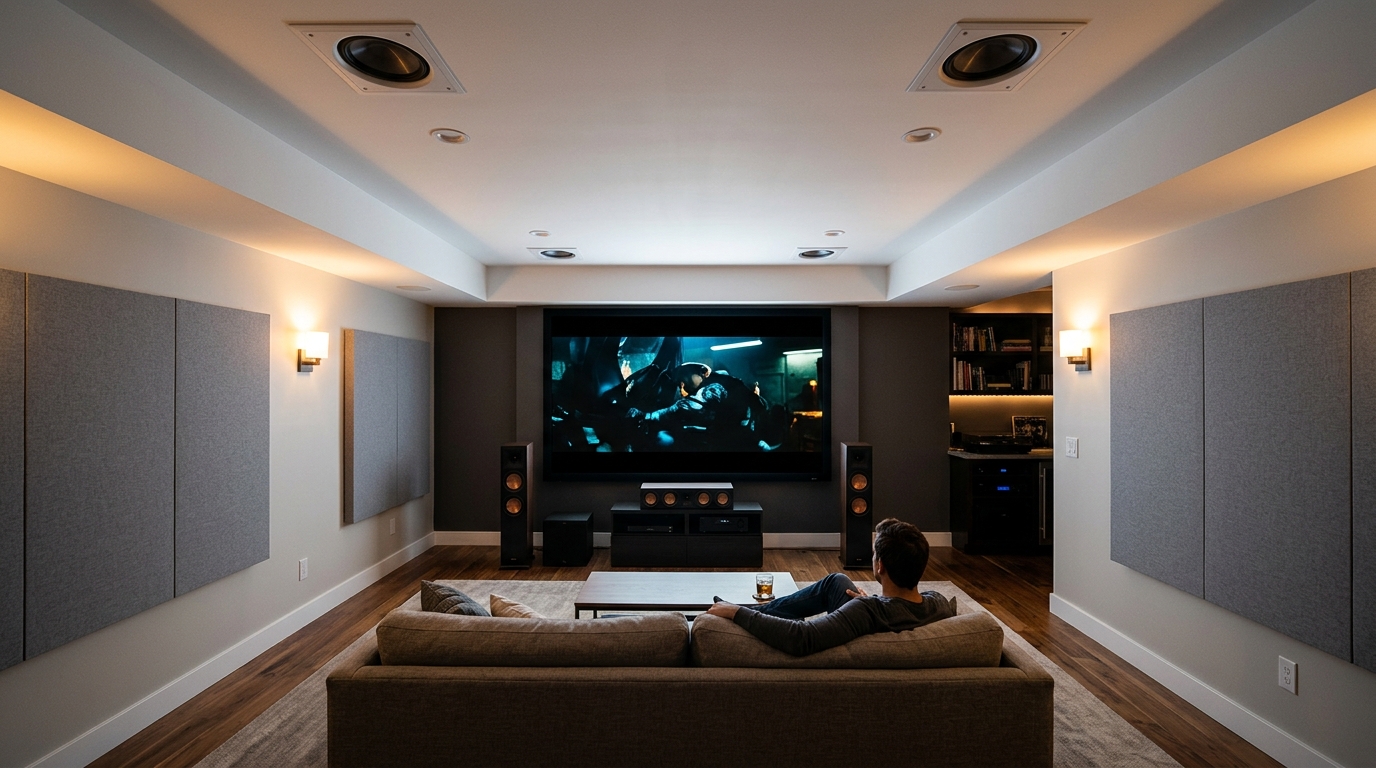
left image


Home Page - LCD TV Reviews - 2010 Samsung LED HDTVs Part 3: Series 7 and 8

Date: 20th June 2010


Home Theater Design

Quick guide on how to research, design, and build your Home Theater.

Home Theater Design e-book

by Duncan McClelland
More information HERE

 
Samsung UN46D6000 LED HDTV with Smart TV

Samsung 46-inch UN46D6000 LED HDTV

The D6000 step-up Samsung LED TV series comes in a stylish sleek design, is capable of solid picture performance, and its 46-inch model represents the best-selling Samsung LED TV for 2011 thanks to a most affordable price and the latest hot spec for 2011Smart TV.


Available from Amazon US


Stepping into a new dimension!

Samsung 2010 Series 7 and Series 8 LED TVs, together with Samsung flagship C9000 HDTVs - are the new Samsung LED HDTVs that are capable of delivering the latest and much-touted advancement by TV makers in home entertainment - 3D TV.

Despite what the media is trying to say, we think that 3D in the home is still in the making.

Mind you, it is big FUN and pleasant but it still has a few limitations to overcome. And this apart from a 3D experience in the home that is a far cry from what one enjoys at the movie theater.

At the same time, we have to make it clear that irrespective of 2D or 3D, these are the TVs that aim to deliver the best picture. They are also the LED TVs that come with the most technologically advanced features within the new Samsung LED HDTV line.

These are not the TVs that deliver the best bang for your buck but they are definitely the ones that have the potential to deliver the best picture among the full Samsung 2010 HDTV line - bar the very best plasmas.


Speaking of 3D TV...

All 3D Samsung LED HDTVs come with a 2D-to-3D converter to help you create an impression of depth to standard 2D content. This is more of a necessity due to the present lack of 3D TV content - both broadcast and on disc.

However, converted 3D content from a 2D material will never give the same impression of depth possible with original 3D content. A good analogy here is the resultant expanded sound field produced by Dolby Pro Logic of standard two channel stereo recording, or the virtual sound field produced by 2-speaker virtual surround  sound technology over a 5-speaker surround sound setup. There is lack of detail and the 3D effect is less realistic. In other words, the resultant 2D-to-3D conversion is more surreal than anything else; but still, it is one that most customers seem pleased with.

In effect, many would tell you that 3D performance is impressive but not as impressive as movie-goers would expect it to be.

This is not an issue with these 3D Samsung LED TVs but rather because of the unnatural way 3D TV technology is being implemented. As we show in our 3D TV Technology article, this all leads to various ill effects, effects which calls for new and more demanding production techniques which unfortunately does not always work, nor do they work for everyone.

In fact, most of the issues highlighted in customer reviews such as image cross-talk or breakdown of the 3D image leading to double images - are mainly the result of these limitations.

These 3D Samsung LED HDTVs come with a few 3D settings that should help optimize your 3D viewing experience. These settings adjust the overall 3D view point, or perspective, 3D depth control, and 3D picture correction to adjust the images for the left and right eye.

But even all these 3D settings can fail in eliminating 3D viewing problems. You see, 3D TV technology has still a lot to catch up with to be able to deliver the 3D effect many are looking for. It is far from being that robust technology many expect to get for the price. It is still too easy for the 3D image to break-up into an unwatchable double 2D image, and it is still too tricky and much dependent on the user settings and seating to get the best 3D image.

Admittedly, much of the issues encountered by viewers with 3D in the home arise as few realize that with the present 3D TV technology, the viewer seating is very much limited to a rather small sweet spot to enjoy the best 3D effect. But more on this in our 3D TV viewing distance guide.

And what about 240Hz refresh rate technology?

One major upgrade common to all high-end Samsung LED HDTVs over the rest of the 2D Samsung LED TV series - apart from 3D - is the 240Hz refresh rate technology. This higher refresh rate enjoys similar advantageous to 120Hz except that it provides additional processing to further eliminate annoying artifacts and make the processing look more natural.

Termed 'Auto Motion Plus', this higher refresh rate is brought about by interpolating frames between real content for a smoother movement when viewing fast-motion video sequences. There are four pre-set settings to choose from in addition to an 'off' setting. The latter is important as the extra smoothness brought about by the 120Hz/240Hz refresh rates is not for everyone; some may consider this extra smoothness when viewing movie content as unnatural.

While the benefits of 240Hz dejudder processing over 120Hz are extremely difficult to discern with the unaided eye when it comes to 2D content, this is not the case with 3D.

The reason is that the way 3D TV works means that what each eye will in effect see with a 240Hz 3D TV is a 120Hz refreshed image. Each eye will only see half the number of generated frames. 120Hz is the minimum refresh rate necessary to eliminate judder with film-based sources without resorting to the otherwise necessary 2:3 pull-down processing. The latter process would also make it possible to play 24-frames-per-sec film-based content over a 60Hz video frame rate. B 2:3 pull-down processing also leads to judder - a jerky movement which is most noticeable in scenes that incorporate slow camera pans or in scenes shot with a handheld camera.

In other words, 240Hz refresh rate technology is more of a necessity than an enhancement when it comes to 3D.


C7000 and C8000 Samsung LED HDTVs in detail...

Stepping into 3D: C7000 High-end Samsung LED HDTVs

Samsung UN55C7000 55-Inch 1080p 240 Hz 3D LED HDTV (Black)

Samsung C7000 series is the series that introduces 3D TV; these are the most affordable 3D TVs within the Samsung 2010 LED TV lineup. These were also the first 3D LED TVs to be released this year, irrespective of brand.

The C7000 Samsung LED HDTV series covers three screen sizes, the 40-inch UN40C7000, the 46-inch UN46C7000, and the 55-inch UNC7000. On-line prices at the time of this write-up range from $1,650 for the 40-inch, to anything between $2,300 and $2,700 for the 55-inch. Best-selling model is the 55-inch, followed by the 46-inch.

At the present prices, stepping into the third dimension with the C7000 Samsung LED HDTVs represents an additional expensive of around $200 over the C6500 series - which is the 2D equivalent to Samsung Series 7 LED TVs.

But stepping into 3D is not just a matter of a new 3D-enabled TV. On top of this, you have to add at least the 3D starter pack (selling online at $250); this comes with two pairs of 3D shutter glasses apart from the first 3D demo Blu-ray Monsters vs. Aliens animation disc.

And if you have children, you will need to spend another $150 for each child in different-size 3D glasses designed specifically for children. The latter is necessary as the smaller interpupillary distance in children calls for a different set of 3D glasses.  OK, Samsung is promoting its 3D LED TVs by offering the Samsung 3D Starter Kit SSG-P2100T for free with its 3D LED TVs. But this offer may end anytime.

In addition, you still need to have a compatible Blu-ray player or a home theater system with a Blu-ray disc player capable of reading 3D content. Some newer players such as the Samsung BD-C6900 1080p 3D Blu-ray Disc Player and Samsung HT-C6930W 3D Blu-ray Home Theater System will be able to do so straight out of the box.

Samsung BD-6900 3D player

Samsung BD-C6900 1080p 3D Blu-ray Disc Player

However, most of the present players will need a firmware upgrade - including Sony's Playstation 3. Whether that will be available depends however on the player itself and the manufacturer. Still, we expect any BD player with Profile 2.0 to play 3D discs once a firmware upgrade is available.

In any case, if you have the budget and would like to invest in 3D, the Samsung C7000 series is the least expensive option within the 2010 Samsung LED HDTV line that can deliver the fun.

But other than 3D - which as expressed comes at a price - C7000 Samsung LED TVs do not offer much. To a certain extent, the similarly priced C6800 series is capable of delivering an even better picture as the C7000 series misses out on a most important picture quality feature, precision dimming technology. 

What you get with the C7000 Samsung LED HDTV series are standard edge-lit LED TVs. This also partly explains why most consumers are generally not very much  impressed with the C7000 picture quality when considering the relatively expensive price tag one has to pay for these 3D LED TVs.

Do not blame this to the slightly lower rated dynamic contrast ratio of the C7000 series compared to the C6800. As expressed elsewhere on this site, the latest mega contrast ratings have become more of a marketing tool than a picture quality indicator. In other words, this difference is insignificant when it comes to picture quality. Rather, it is the overall feature and performance that makes you feel like you want a better deal for the price.

Overall: As reported in a review appearing on lcdtvbuyingguide.com, these TVs tend to lose some of the shadow detail in the darker parts of the image while blue tone is somewhat inconsistent across gray scales. This is similar to what FlatpanelsHD.com reports in their review of the C6000 series.

In addition, as noted in the Cnet review for the C8000, the lcdtvbuyingguide.com guy observed that the 240Hz dejudder processing on the C7000 tends to produce a too smooth an image with film-based material - one that removes the natural cadence of film even with the Judder reduction slider set to zero. For best results, the 240Hz feature with film-based content should be turned off.

But otherwise, these eco-friendly Samsung LED HDTVs are still very good TVs, with superb color saturation, inky blacks, and good overall black level performance. Their real issue is price.

Series C8000 High-end Samsung LED HDTVs with Precision Dimming

Samsung C8000 LED HDTV - Side View

The C8000 3D Samsung LED HDTV series covers two screen sizes, the 46-inch UN46C8000, and the 55-inch UN55C8000; on-line prices at the time of this write-up range from $2,300 for the 46-inch to $3,150 for the 55-inch.

Both screen sizes are proving to be popular among those in the market for a high-end LED HDTV, with the 55-inch doing a bit better in sales than the 46-inch version.

Samsung Series C8000 HDTVs share a similar feature set to the C6800 2D equivalent but adds 3D support. As expressed earlier on, both come with the latest Samsung 'precision dimming' LED backlight technology - thus explaining the slightly higher rated dynamic contrast ratio with respect to the rest of the Samsung LED HDTV line-up.

We have already referred to the Cnet review of the C8000 (which is the only professional review we came across for this Samsung LED HDTV series so far) when discussion the performance of the latest Samsung precision dimming technology under the C6800 series.

Precision dimming is not the perfect backlight technology despite Samsung's promotion; it still has its limitations with respect to full-array local dimming backlights.

In particular, its major limitation is the less localized brightness control and backlight brightness intensity variations which may become evident with certain content. This also explains why the UN55B8500 Samsung LED HDTV did perform better than the Samsung UN55C8000 during the Cnet review in overall picture performance and shadow detail.

But then precision dimming is possibly the best compromise TV makers manage to come up with, between the added expense of a full-array local dimming LED backlight and improved black level performance that is very much in line - though to a less extent - to that supported by the more expensive local dimming LED technology.

In addition, being edge-lit technology means there are no issues with blooming or stray illumination between adjacent screen segments - so typical with local-dimming sets.  And this apart from having a LED TV that is more eco-friendly (just 63W in power saver mode for the 55-inch set), and that comes with an even slimmer profile; the C8000 series Samsung LED HDTVs are just 0.9-inches thin!

Apart from the slimmer profile, C8000 LED HDTVs includes the latest design innovation - the four-legged table-top stand, and a thin bezel finished in brushed titanium edged with clear plastic strip.

As expected, you get all the frills and trills found on the less expensive series, including the latest and much improved Internet@TV application - referred to as Samsung Apps, Media Play, and AllShare - Samsung's updated DLNA connectivity.

These sets are complemented by an extensive array of connectivity options, from four HDMI to a dedicated PC input, composite and component video inputs, audio outputs, USB 2.0 ports, and an Ethernet port. Due to the shallow connectivity bay afforded by the thinness of these HDTVs, Samsung design engineers had to resort to the use of mini  break-out cables.

As is typical of Samsung, these LED TVs come with numerous picture setting options that would surely enable the user to adjust the set for the best picture. Interesting here is the judder/blur reduction setting associated with the Auto Motion Plus feature, and LED Motion Plus originally introduced on the A950 series way back in 2008. This latter feature scans the LED edge backlight from top to bottom at very fast rates to further improve motion resolution and virtually eliminates any motion blur during fast action movement, so much common with LCD TVs.

According to Cnet, measured motion resolution on the Samsung LED HDTV under review with the Auto Motion plus activated is between 900 and 1000 lines; this exceeds the 1080 line supported by the 1080p HD TV standard with the LED Motion plus engaged.

One issue which has been highlighted by both the Cnet review and customer reviews relates to Samsung's 240Hz dejudder processing. This has always been one of the best dejudder implementations every found on any TV - thanks to a two-slider custom setting under the Picture Options Menu. These settings let you adjust the desired blur and judder reduction controls separately. Increasing the Blur reduction slider towards the maximum increases the number of lines of motion resolution while increasing the Judder reduction leads to more action smoothness - making 24p movie content more video-like. In general, increasing blur reduction towards maximum and reducing judder control towards the minimum gives the best results. And if this smoothing action is not for you, you can always set the judder slider to zero.

But here is the problem with this year Samsung dejudder implementation. Even when setting the Judder reduction slider to '0', movie-based content will still look a little bit more like video than film. This implies that there is still some smoothing action going on which does affect the natural cadence of film-based content.

The Cnet review praised these sets overall color saturation and color accuracy, with the only real problem being the near-black areas which turned into a bluish discoloration. Video processing on the C8000 under review did not de-interlace 1080i film-based sources properly. This is typical of most HDTVs and is not much of an issue since in most cases, you can set your source to output directly in progressive mode. But contrary to most HDTVs, Series 8 Samsung LED HDTVs can do an excellent job with standard definition material - in addition to HD.

Screen uniformity and off-angle viewing have so far proved problematic with most edge-lit LED TVs. The C8000 Samsung LED HDTV is no exception though it performs better than the latest edge-lit Sony or LG LED TVs and better than 2009 sets.

Finally, the glossy Ultra-Clear Screen on these Samsung LED HDTVs can do a very good job in preserving black levels in dark scenes even under bright lighting, while delivering an image that looks brighter and that exhibits fuller color clarity. As many expert reviews would tell you, Samsung Ultra Clear panel is a lot better than most of the competition in this respect.

But as expected, glossy screens do pick up reflections of bright objects in the room more than matte screens especially when displaying predominantly dark content. The ultra clear panel found on these Samsung LED HDTVs is no exception. The reality is that if you really want to enjoy the very best picture, you need to enjoy your TV viewing under a controlled light environment - and this applies to any HDTV irrespective of the screen finish.

Overall, C8000 Samsung LED HDTVs are without doubt among the best flat-panel HDTVs around - capable of deep blacks, superb shadow detail and accurate colors - and this apart from a pleasing 3D effect.

Picture quality wise, the C8000 does not match the more expensive B8500 Samsung LED HDTVs released in October 2009. But then the new 2010 Samsung series is more affordable. Samsung's edge-lit precision dimming technology is definitely a valid option that does a very good job in merging the benefits of the cheaper LED edge backlight technology with the improved performance afforded by the more expensive local dimming technology.

It is thus no surprise that many consumers are simply impressed with the Samsung C8000 LED TVs overall performance - assigning an average of 4.5 stars out of 5 in consumer reviews at amazon and Best Buy. The real complain many have is the expensive price - but here we are dealing with one of Samsung's high-end 3D LED TVs.


Looking for an affordable Samsung LED HDTV?

Prices quoted in this 2010 Samsung LED TV review article refer to either the MSRP, or to the lowest online price at the time of this write-up; however online prices vary considerably. So do research for the best price deals.

We also advise to look at the customer feedback posted on sites such as amazon, Best Buy, B&H Video, J&R, and ABT Electronics to see what customers had to say following their purchase about quality, functionality, customer support, etc.

In most cases, we find amazon is the one with the best deals thanks to the various buying options from the different retailers appearing on the amazon storefront. You can search amazon without leaving our site by using the amazon search box below; search results will appear here under.


2011 LCD TV Reviews and Product Guides

Featured product reviews on PHTG

new

Sony LED TVs - 2011 Product Guide:
Sony LED TV line for 2011 is among the most interesting thanks to the extensive features, refined styling, solid picture and a price that is more within reach of the average household budget.

This Sony LCD TV review discusses the features on offer, review entry-level and premium Sony LED TVs, and pick the best Sony HDTVs at the different price brackets.

Note: You may join our Sony LED TV discussion by submitting your comments here.

2011 LG LED TVs - Full Product Guide:
The latest LG LED TVs are among the most in demand thanks to a slim attractive design, extensive features, and a price that is often below that of the competition.

We review the 2011 LG LED TVs to see what's on offer, from entry-level sets to Infinia HDTVs. In the process, we highlight the pros and cons of each LED TV series. In the final part of this review, we pick the best LG LED HDTVs at the different price brackets.

Note: You may join our LG LED TV discussion by submitting your comments here.

2011 Samsung LCD TV Product Review:
Samsung HDTV lineups have always been characterized by one of the largest range of models available from a single brand; this year lineup is no exception, with forty-six different LCD/LED TVs.

Check our Samsung LCD TV review to discover more and see which are the best Samsung HDTVs for 2011 at the different price brackets.


LCD HDTV Installation Guides

For a professional installation job!

LCD Television Installation Basics:
Thanks to the use of LCD mounts, installing an LCD TV should be a fairly straightforward task, but... Help is on the way. This installation guide looks at various installation issues from placement to running cables and safety considerations.

Guide to Choosing the Right LCD Mount:
The different types of LCD TV mounts give rise to mounting options undreamed of with CRT and RPTVs. In this second part of our TV installation guide, we discuss the various LCD mounts - identifying their pros, cons and use.

Installing an HDTV over the Fireplace
Mounting a flat-panel HDTV over the fireplace is a great way to display your new flat-panel TV. Discover more in this Plasma TV Installation Guide.


For additional information on how to install a flat-panel TV mount the professional way, please check also our guide to Installing a Plasma TV Wall Mount. The information contained in this guide applies to both plasma and LCD HDTVs.


Use of Wiring Channels for flat-panel TV Installations: Designed for the home installer with basic DIY skills, wiring channels make for ease of TV installation and a professional looking job.

TV Viewing Distance Guide: Discover how the TV screen size and image resolution relate to your viewing distance for a truly immersive viewing experience.

Note: This guide deals with 2D TV viewing; for 3D HDTVs, please refer to our article 3D TV Viewing Explained.

 Home Theater Guides:

Recommended Technical Guides 

LCD/LED HDTV Guides:

Developments in LCD flat-panel Technology:
Discussing some of the latest advancements in flat-panel display technology - including improved CCFL backlights, LED LCDs, and Color Field Sequential technology.

The LCD Display Panel: How-it-works
What is LCD Display technology? How does LCD panels work?

LCD Response Time, Image Lag and 240Hz/480Hz LCD HDTV Sets:
The latest LCDs claim 1msec LCD response time.  Is this fast enough to display fast-action content? Is faster always better? How does this compares with plasma TVs? Is it possible to compare LCD TV response times between different TV manufactures? What about 240Hz and 480Hz LCD TVs - are these really better at eliminating motion blur?

Image Sticking in LCD Televisions: 
Image sticking is surely one of the least known phenomena associated with the use of TFT LCD panels, yet image retention is not just an issue with plasma televisions. Discover what causes image retention in LCD and LED TVs. What can you do to avoid it?

Plasma vs. LCD vs. LED TVs:
A detailed 3600 comparative guide to choosing between plasma, LCD and LED TV display technology.

Miscellaneous Articles

The Smart TV Guide:
Smart TV promises a whole new experience in the world of TV entertainment. But what exactly is smart TV? Is it really more than just a PC experience over a big screen? Discover more in this guide to smart TV.

HDMI Cable Guide
An easy-to follow guide that explains all you need to know about HDMI.

3D Television FAQs
Questions always crop up with a new technology. We do our best to answer most of the common questions in this FAQ.

AV Equipment Racks for the Home Theater:
AV racks range from industrial style EIA 310-D compliant 19-inch rack enclosures to the more decor friendly rack solutions.

Understanding HDTV formats
Discover the strengths and weaknesses of the different HD formats - 720p, 1080i, and 1080p - in this HDTV Guide.

Contrast Ratio Explained
To what extent high contrast ratios affect the performance of a home theater projector or an HDTV?

 HT Books and Magazines

Recommended Home Theater Reading

Sound & Vision

Provides good reviews on the latest home theater gear.

Practical
Home Theater
Well-written home theater guide - a useful reference to anyone interested in home theater.

Featured Samsung HDTVs

Check out for the latest offers on Samsung LCD TVs at amazon


Would you like to get the best out of your HDTV?

There is no better way to make the most out of your new HDTV then to invest in a set-up DVD.

A great calibration disc is the Avia II Home Theater Set-up DVD, an exceptional AV calibration tool for both the novice and the expert.

Other interesting calibration discs worth considering include Digital Video Essentials HD Basics and Spears & Munsil High-Definition Benchmark, both of which come in Blu-ray edition.

For more information, please check our Guide to HT Set-Up DVDs.

Suggested TV Mounts & AV Cabinets

LCD Mounts and Media Cabinets Solutions for your HDTV

Find us on Facebook

Follow us on twitter


Subscribe To This Site [?]

XML RSS

Add to Google

Add to My Yahoo!

Add to My MSN

Subscribe with Bloglines


Please Note:

Double-underline links represent additional info related to the page content supplied by Kontera. To view this info, place your cursor over these double-underline links.


References:

Samsung website for the latest technical specs and product manuals for 2010 Samsung LED TVs.
http://www.samsung.com/us/

Cnet reviews - UN55C8000 55-inch Samsung LED HDTV by David Katzmaier, dated April 7, 2010.
http://reviews.cnet.com

LCD TV Buying Guide - Samsung UN55C7000 review by Jack Burden Spring 2010
http://reviews.lcdtvbuyingguide.com

Customer feedback posted at amazon, Best Buy, B&H Video, J&R, and ABT Electronics for the different Samsung LED TV models


Next: Series 9 Samsung LED HDTVs

Back to Samsung Review Article Index

LCD TV Guide

LCD TV Reviews

Home Page