![]() |
||||||||||||||
![]() |
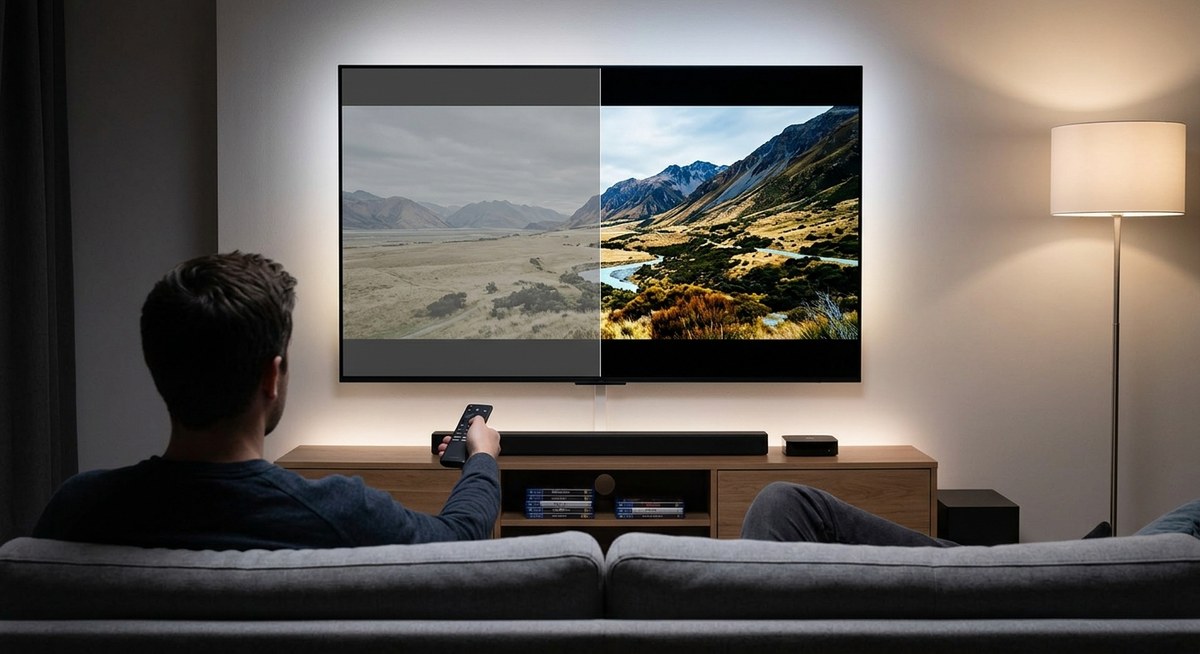
Plasma vs LCD: Picture PerformanceIntro: Are there any major differences between these two different flat-panel display technologies when it comes to contrast ratio, black level performance, color accuracy, viewing angle, and supported picture detail?Surely, a different technology is driving the end result. To a certain extent, this has its impact on the resultant picture quality.We look at each of these aspects to discover more.Picture Quality: Contrast, Black Level, and Color AccuracyThis is one of those areas in this plasma vs LCD TV shoot-out, which is becoming increasingly difficult to determine where to go. This in view that the latest generation plasmas and TFT-LCD flat panel displays are both capable of producing excellent picture quality – with bright, crisp clear images. Yet there is still significant difference in picture quality when it comes to plasma vs LCD that renders one display technology more suitable than the other, depending on the lighting environment. Plasma TV sets are generally more suitable for basic home theater use than LCD TVs. In other words, their picture quality characteristics render plasma TV sets more suitable for use in controlled lighting environments. The gas cell structure within a plasma display is such that there is no light leaking between adjacent cells (or pixels). This makes plasma displays capable of displaying deeper blacks. Improved black levels help render better those difficult-to-define quality attributes like picture depth, scene detail - especially in television and movie scenes where lots of dark and light content is shown simultaneously, and color richness. Indirectly, a better black level also leads to better rendering of picture contrast. In comparison, the nature of LCD technology – where a backlight shines through the LCD layer – makes it hard for it to achieve true blacks, i.e. true absence of light. There is always some light leakage from adjacent picture elements in an LCD panel. In fact, the darkest images on a plasma TV can be as dark as a fraction of a candela. This corresponds to the 'brightness' of the turned-off phosphor. In the case of an LCD television, the 'brightness level' of the darkest picture scenes can be as high as 2 to 3 candelas, and this when viewed just right in front of the LCD display. View the LCD screen at an angle, and you will find that its black level performance deteriorates significantly. It is true that the latest improvements in LCD technology (more on this in our article on New LCD Technology), are doing a lot here, but plasma still enjoys a technological advantage. Similarly, color accuracy of LCD panels is still not exactly on par with that of the best plasma televisions. The reason is that color in LCD displays is produced by filtering white light through micro color filters build in sub-pixels. This LCD transmissive method of controlling color is an inherently difficult process for maintaining color accuracy and vibrancy - even though most LCD displays manage quite well. In general, plasma displays continue to exhibit more richness in color information and more natural coloration; on the other hand, LCD display panels would normally tend towards over-saturation. However, the inherent anti-glare technology employed in LCD panels, and their relatively bright screen, render LCD panels more suitable for use in brightly lit rooms. This does not mean that LCD panels are not suitable as TV screens. Some of the latest generation LCD TV sets make use of intelligent backlight units that are capable of delivering even greater color freedom, thus yielding more true to life colors. In particular, the latest developments in LCD panel backlight units using LED and color field sequential technology (to eliminate the filters in sub-pixels), are set to deliver more accurate rendering of color detail. And what about contrast ratios? We are seeing some really high contrast LCD panels that can display very deep blacks. Most LCD TV sets come with a contrast ratio of around 3000 or 4000:1, yet some manufactures have started to quote ratios as high as 7000 to 10,000:1. This is in line with that of the latest plasma TV sets. Still, plasma televisions have a slight edge over LCD displays in this respect. Why? When it comes to comparing plasma vs LCD TV for contrast ratios figures, the real problem with LCD televisions is not insufficient contrast with respect to plasma TVs. Rather their real problem is the deterioration in picture quality due to a noticeable lowering in contrast and black levels with off-axis viewing. This is not the case with plasma TVs. A word of caution here about high contrast ratio ratings: Manufactures like to impress with excessive high ratings. Yet keep in mind that it is not possible for the human eye to perceive any difference in contrast between a ratio of 4,000:1 and another of 10,000:1, even in pitch darkness. Further more, the perceived contrast level depends on the level of ambient light; anything above 50 to 70:1 may become just academic even in moderately lit rooms. More info on this issue of contrast ratio is available in our Contrast Ratio article appearing under the Projection TV section of the site. Plasma vs LCD - Picture Quality ADVANTAGE: Here our thumbs up in this plasma vs LCD comparative analysis go to plasma televisions, even though both technologies are extremely close in terms of overall picture performance, but... In general, Plasma color richness and naturalness will prevail in rooms with lower to normal lighting, while LCDs will be better in brightly lit rooms due to their inherent anti-glare technology and higher brightness levels. Plasma vs LCD: Viewing-angleWe continue our discussion on plasma vs LCD technology by looking at how picture quality behaves with a change in viewing angle. The viewing angle represents how far one can sit on either side of the screen away from the center, without experiencing significant deterioration in picture quality – mainly because of color shifts and reduced contrast. Plasma televisions typically have a better viewing angle than LCD TVs. Plasma televisions holds the black levels from off-axis, while LCDs lose black level intensity more as the off-axis angle increases. This usually occurs at around 100 degrees, i.e. at some 50 degrees on either side of a line drawn normal to the center of the screen. The main reason for this difference between these two technologies arise out of the fact that each pixel in a plasma display panel produces its own light, rather than light being spread across the screen from one central backlight source. Hence, each pixel is more readily visible because its brightness is consistent with every other pixel on the screen. Recent developments in LCD technology mean that this is less of an issue - rather it is becoming a non-issue especially with the latest generation of LCD televisions. These boost viewing angles in the region 170 to 178 degrees vertically and horizontally. Some of the latest LCD TV sets from major manufactures like Samsung and Sony are making use of S-PVA (Super Patterned Vertical Alignment) liquid crystal solution for a super wide 178° viewing angle both horizontally and vertically. Plasma vs LCD - Viewing Angle ADVANTAGE: What used to be a clear advantage for plasma displays is becoming more and more a non-issue especially with the latest generation of LCD televisions, however... Do not always assume that viewing angle is no longer important when comparing plasma vs lcd, especially if the viewing angle is not specified. The tendency – in particular with cheaper LCD TV sets from unknown brands - is that the deterioration in picture quality is more accentuated with LCD than with plasma displays. Our advice when buying some cheap 'unbranded' LCD TV is to inspect the LCD display performance with a change in the viewing angle at your favorite brick-and-mortar store. If you are buying online, always check first the return policy, and opt only for a reputable brand. Buying online is cheaper and safe, but ensure that you follow the recommendations detailed in our Online Buyer's Guide. Plasma vs LCD: TV Viewing distanceThe pixel size and display build up structure of an LCD panel render a smoother picture than that from equivalent size plasmas for the same pixel count. Now, the minimum recommended viewing distance for HDTV viewing is approximately twice the screen width. Yet, due to this pixel structure issue, if the viewing distance is less than at least nine feet, probably you will be better off with an LCD TV. For a detailed discussion on TV viewing distance considerations, check our article here. Plasma vs LCD - Viewing Distance ADVANTAGE: None if you are within normal viewing distance for your screen size - as long as your viewing distance is more than approximately 9 feet away from the TV screen. If you have a too short TV viewing distance, an LCD television may render itself a better option as its pixel structure is less visible. Plasma vs LCD: Picture ResolutionDue to the pixel structure in an LCD panel, LCD displays generally support a higher resolution for the same screen size than plasma TVs.
A case in
point is the affordable
Samsung LNT4061F 40" 1080p LCD HDTV This contrasts somehow with Plasma displays of the same screen size where the typical maximum native resolution is 1024x720 pixels. This is not even true 720p HDTV resolution though admittedly, it would be difficult for the eye to detect any significant difference at this screen size. At 50-inch, most plasma TVs will typically have a maximum screen resolution of 1366x768 pixels. To a certain extent, this is another reason behind the higher price tag normally associated with LCD HDTV sets; these extra pixels on LCD panels cost more money to produce. However, thinks are starting to change. This supported higher pixel resolution is no longer an LCD advantage. Mid-size plasmas supporting full 1080p have already started to appear on the market. The Panasonic 50-inch TH-50PZ700U model just released this month supports full 1080p HDTV resolution. Panasonic will also be releasing a 42-inch model (TH-42PZ700) supporting 1920x1080-pixel resolution in June 2007. Plasma vs LCD - Picture Resolution ADVANTAGE:
Up to very recent, LCD
televisions used to deliver more in terms of pixels per screen size. When
comparing plasma vs LCD TV sets, it was only at the extreme larger end of the
scale that plasma and LCD display resolutions met. However, thinks are starting
to change with 42 and 50-inch plasmas also supporting full 1080p native
resolution.
Next: Plasma vs LCD (3) - Functional Considerations ...back to Plasma vs LCD Comparative Summary
|
Copyright © - Practical-Home-Theater-Guide.com All rights reserved. |
||||||||||||
|
Last Update: Lots more info at Practical Home Theater Guide Suggested Further Reading:
Choosing a
Plasma Television
TV Viewing Distance
The
Contrast Ratio Game!
Should You Opt for
a 1080p HDTV?
Quick
Guide to DVI
HDMI
Cable Guide
RGB &
Component Video, or DVI & HDMI?
HDCP and HDTV:
Home Theater
Set-Up DVDs
Home Theater Design:
Audio Video
Equipment Racks
A Quick Guide to A complete e-Book on how to research, design and build your own Home Theater. by Duncan McClelland
Plasma and LCD @ amazon
|
||||||||||||||
|
|
||||||||||||||