site logo    

Home
E-zine Subscription
CRT TVs
LCD TV Guide
LCD TV Reviews
Plasma TV Guide
Plasma TV Reviews
Projection TV
DIY Projection TV
RPTV Reviews
Projector Reviews
Projection Screens
Digital TV Guide
Satellite Television
Surround Sound
HT Cables
HDCP
Set-Up DVDs
Home Theater Design
HT Pictures Gallery
Equipment Racks
MoviePoster Guide
The Poster Store
Headphone Guide
Wireless Speakers
Media Players
Books & Magazines
Catalogs
Power Protection
Home Theater Sites
Useful Links
Refurbished Products
Price Search
HT Online Store
Advertise on this Site
About Me
Contact Form
Privacy Policy
Site Search
Site BLOG

XML RSS
What is this?
Add to My Yahoo!
Add to My MSN
Add to Google


More on Plasma Television Sets will follow soon.


Subscribe to our free monthly e-zine to remain abreast with the latest additions to our website. 

Click here for details.


side navbar picture

Installing a Plasma Television Set (1)
Where to Place and How to Hang your Plasma TV


Once you have considered your plasma Television set options, it is time to look at where you plan to display your new flat-panel plasma HDTV.

In this first part of our plasma television installation guide, we show you how to select an optimal place for your new TV. We also discuss related mounting considerations and cabling issues to complement your plasma television.


Panasonic TH-50PZ700U 50" 1080p Plasma HDTV

Panasonic TH-50PZ700U 50" 1080p Plasma HDTV

Sit Back and Enjoy the SHOW!

Surely, one of the greatest features of plasma TVs is their slim footprint - with most plasma displays being no more than 4-inches thick.

It is this peculiarity that opens new mounting options - through the use of appropriate plasma TV mounts - otherwise impossible with bulkier CRT and rear projection TVs. You can literally hang your plasma TV set on the wall or above the fireplace, just like a picture, go for a standard table-stand, or even opt for a ceiling mount in the case of a bedroom installation.

Of course, a plasma display is not just a picture; hence all these mounting options are accompanied by a number of constraints that one has to be aware of when placing and mounting a plasma television set.

Plasma TV Installation: Issues to Consider

It is true that the many different plasma TV mounts available on the market make mounting of a plasma television set, a relatively easy process that can be handled by the end user under most circumstances.

Still, the whole process should not be under-estimated; it is not as easy as it seems, and the person handling the job should still have an average level of DIY skills. 

In particular, if you are going to wall mount your plasma, you need to know how to operate a drill and use a spirit level to level off the TV panel. Fixing the mount perfectly level is critical. Later, it would be hard to fix a poorly done job.

Installing a ceiling mount is even more difficult, and in most circumstances, this is best left for the professional installer.

You would also need at least a good pair of extra hands. Plasmas are relatively heavy beasts - substantially heavier than their LCD counterparts; a 50-inch plasma television set can easily weigh over 100 pounds. This has to be taken into account when handling and mounting your new screen.

And... Do make it a point to read the installation instructions that come with your flat panel television and the plasma TV mount. This may seem too obvious, yet many fail to do so. Keep in mind that this is essential since you will have to plan your work accordingly.

Furthermore, there is also the need of some planning to go into the process to:

  • Identify an optimum location for your flat-panel TV.

  • Determine how best to run and hide cables from the various sources to your television.

  • Select the right plasma TV mount for the job.


Note: Though this discussion focuses on the installation of plasma television sets, yet the steps detailed in this guide apply to LCD TVs as well. There are a few minor differences though - in view that plasmas are generally heavier and generate more heat.

For a detailed discussion on the installation of LCD TVs, please check our LCD TV Installation Guide.


Where to Place and How to Hang Your Plasma TV

Placement Issues

Before deciding on your mounting options, you first need to consider where in the room you are going to place your plasma television set.

One major advantage of plasma television sets over regular TVs is that the screen is generally viewable even in a brightly lit room. However, for best results, you still need to avoid setting up the plasma TV facing large windows or doors - or any other place in the room - where sunlight will fall directly across the screen.

The best way to decide is to make a note of how sunlight travels across the room you plan to use; in particular, this is especially important if you have large windows with no curtains.

Place your seating along the wall where the light hits, and the plasma television set on the opposite wall. That way, the light never interferes with your ability to see the picture.

Special care should also be taken with artificial lights in the room. The rather glossy glass surface makes plasma television sets more susceptible to glare than LCDs.

The next consideration is available wall space, or floor area in case you will be making use of a pedestal-type plasma TV stand. Try to find enough clearance to allow for the proper positioning of the left and right channel speakers. Typically, you need a minimum of twice the screen width.

How close is too close for Your Screen Size?

Once you decide on where you want to place your plasma television set, it is time to take a few measurements - it is all a matter of viewing distance. For a detailed discussion on this subject, check our TV Viewing Distance article appearing under the Home Theater Design section of the site.

For those who do not have the time to go through our viewing distance guide, it is important to ensure that you go for the right screen size for your room. It is quite tempting to buy the biggest screen you can afford, especially with the latest new low prices for plasma television sets. Yet a bigger TV does not always equate to a better viewing experience.

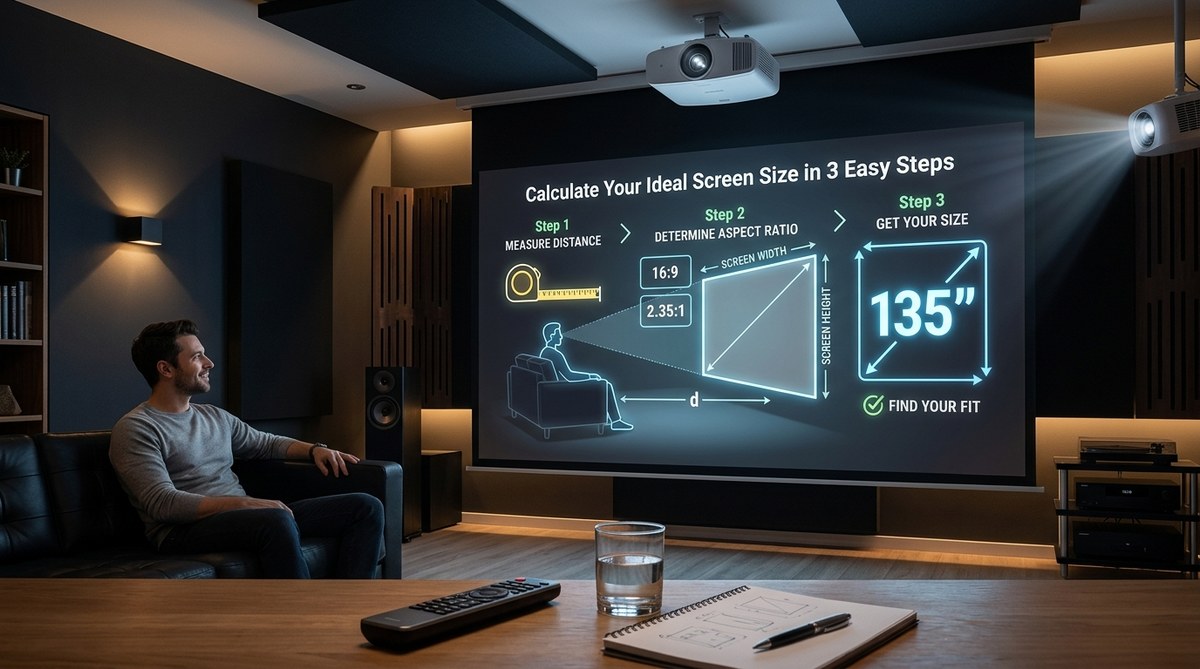
As a rule-of-thumb, you need between two to three times the screen width as your minimum viewing distance for screen sizes 42-inch and over. However, this depends on the signal quality; viewing 720p or 1080i content over an HDTV set would allow for a closer viewing distance than standard or enhanced TV content.

This means that you need around 9 feet viewing distance for a standard 42-inch plasma television set. This can be reduced in the case of an HDTV though we prefer not to cross the 7 feet mark with 42-inch plasmas due to their typical slightly lower native pixel resolution at this screen size. Similarly, 7.5 feet is the absolute minimum viewing distance in the case of 50-inch plasma HDTV sets; this is best increased to around 12 feet for standard definition TV.

Surely you can sit closer but in practice, you need these minimum distances - as measured from your eyes to the screen surface - so don't just measure wall to wall.

If you have less than this minimum distance to play with, go for a smaller plasma television set though 37-inch plasmas are literally disappearing from manufacturers line-ups. If this is the case, your best bet then will be an LCD HDTV.


Tip: A way to gain some extra viewing distance is to re-arrange your room layout on a diagonal line. This may yield enough distance to allow you to go for a larger screen size.


Mounting Considerations: Do not mount it too high!

Directly related to this placement issue is whether you will be making use of a floor-type TV stand or a plasma TV wall mount. If you opt to hang your flat-panel TV on a wall, then you also need to determine the optimum height at which you will fix your plasma TV mount.

It is tempting here to mount your plasma television set at picture height. Remember that a plasma TV is more than just a picture - it is also a TV, hence it should be placed at a height that would enable relaxed viewing when seated.

There are a number of considerations that come into play when setting the screen height. The idea is to come at a level that proves comfortable on your neck. Again, more on this in our TV Viewing Distance article. Ideally, the center of the screen should be at eye level when seated. Typically, this would correspond to the center of the display panel at 40-45 inches off the floor. This is the position that will result in a minimum of eye and neck movement during TV viewing.

Many would consider that aesthetically, this will result in a too low placement for a wall-mounted display. The alternative is to place the TV wall mount such that the bottom part of the screen is no higher than eye level when seated, while the top of the display is no higher that eye level when standing.  Anything in between these limits would normally lead to a comfortable viewing experience.


Running and Hiding Connecting Cables

Plasma television sets look at their best when all connecting cables are completely hidden. The solution is either to run your connecting cables through the wall, or hide cables by camouflaging them behind suitable surface mounted channels such as the 'Superb Home Theater' wiring solution featured on our site.

Running cables through a wall is the best approach as aesthetically it yields a better result. Running cables through drywall is relatively easy. It requires cutting two holes - one behind your TV, and the other where you want them to come out; once these holes are completed, just fish the cables through the wall.

Running cable through a brick wall can be a little bit trickier - you may need to hire an electrician though you can do it yourself if you're handy with that kind of construction project.

'Future-Proofing' your installation

While running cables through walls has a visual advantage, yet it has a disadvantage when it comes to adding cables later. The only way to tackle this issue is to future-proof your installation by looking at the inputs available on your plasma television set; then try to identify the inputs you will most likely be using in the future. For example, include a second or a third HDMI cable if your set has two or more HDMI inputs even if for the time being, you will only be using one.

This may appear as an unnecessary expense, but it is easier to put in an extra cable while the respective holes are still open than to fish extra cables later. Furthermore, with the rapid advancement in AV technology, there is a big chance that it would not take long before you put that extra cable into use.


Tip: Keep in mind that while the use of good quality AV cables is always essential, yet this is even more so when it comes to running cables through walls. Buy only quality cables that will prevent interference from power wires and other wiring in the walls. Once you get this mounted, you do not want to find out that you have a problem.

Note however that quality does not necessarily equate to an expensive price tag. For more information on AV cables, check our Home Theater Cable Guide.


Mounting Options for Plasma Television Sets

The fact that plasma television sets are no more than 4-inches deep gives rise to a number of mounting options otherwise impossible with bulkier TV sets.

So let's see what you can do:

Floor Stand:

You can invest in a column styled plasma TV floor stand for an ultra modern look, such as the Sanus PFFP Universal flat-panel TV floor stand featured here.

Sanus Univeral pedestal-type plasma/LCD TV mount

These stands would normally enable you to hide all interconnecting cables through the support column. This mounting option is a great straightforward option for spaces without small children.

This option is no different from installing an ordinary TV. You just need an extra pair of helping hands to lift and place the plasma television set on the stand. All that remains then is to connect the inputs and outputs by following the installation instructions that come with your plasma television.

Plasma TV Wall Mounts:

These vary from the standard flat wall mount to tilting mounts and articulated swivel-arm mounts. The use of a tilting wall mount is ideal for hanging the plasma television set above eye level - say, if you're going to watch TV while lying in bed, while the articulated swivel-arm mount lets you swing your plasma TV either side for better viewing from different angles.

Ceiling Mounts:

Finally, you can also go for a ceiling mount - another good bedroom option. Note however that this is the most difficult to do it yourself. Unless you are a professional, we do not recommend that you try installing a ceiling mount on your own, as you need to take the structural integrity of the ceiling into account.


Additional Plasma TV Installation Guides available under this section:

Installing a Plasma TV Wall Mount
Discover all you need to know on how to install a plasma TV wall mount the professional way.

Installing a Plasma TV over the Fireplace
Mounting a plasma over the fireplace is a great way to display your new flat-panel TV.

Wiring Solutions for Flat Panel TVs - Superb Home Theater Wiring Channels
The Superb Home Theater wiring solution concept is easy home theater installation.

For details on available flat-panel TV mounts, please check also our LCD TV Mounts Guide; the info contained in this guide applies to both plasma television sets and LCD HDTVs.


More on Plasma Television Sets will follow soon!


 Copyright © - Practical-Home-Theater-Guide.com  All rights reserved.


Search
Practical HT Guide
 in collaboration with

Google

Web

Practical HT Guide

Last Update:
29th October, 2007

Suggested Further Reading:

Choosing a Plasma Television
Features to look for when buying a Plasma Television.

Installing a Plasma Display Panel
Where to place and how to hang your plasma TV

Protecting your Plasma TV Investment
Simple steps you can take to keep your plasma TV unit performing at its best.

TV Viewing Distance
Buying a big screen TV? Care should be taken as you may easily fall into the trap of buying a too large TV.

The Contrast Ratio Game!
Contrast ratio ratings affect the performance of a display device, but to what extent?

Should You Opt for a 1080p HDTV?
Discover the strengths and weaknesses of the different HD formats - 720p, 1080i, and 1080p - in this HDTV Guide.

Quick Guide to DVI
The DVI Cable Guide - explaining the different flavors of DVI interconnects

HDMI Cable Guide
A short guide explaining all you need to know about HDMI cables & connectors.

HDCP and HDTV:
What is HDCP, and why it impacts HDTV viewing?

Home Theater Set-Up DVDs
Discover how these calibration discs can come in handy during equipment setup.

Home Theater Design:
A series of articles covering all aspects of a home theater from design to realization.


A Quick Guide

to

Home Theater Design

A complete e-Book on how to research, design and build your own Home Theater.

Home Theater Design e-book

by Duncan McClelland

More information HERE.


Featured
Plasma HDTV Sets


Sharper, Better, Bigger

CHEAPER

Check out the latest special offers on HD Plasma TVs
@

Amazon.COM


Recommended
LCD and Plasma TV Mounts


To access the full range of plasma and LCD TV mounts available at amazon.com, please follow through this link:

Flat-Panel TV Mounts