Home
E-zine Subscription
CRT TVs
LCD TV Guide
LCD TV Reviews
Plasma TV Guide
Plasma TV Reviews
Projection TV
DIY Projection TV
RPTV Reviews
Projector Reviews
Projection Screens
Digital TV Guide
Satellite Television
Surround Sound
HT Cables
HDCP
Set-Up DVDs
Home Theater Design
HT Pictures Gallery
Equipment Racks
MoviePoster Guide
The Poster Store
Headphone Guide
Wireless Speakers
Media Players
Books & Magazines
Catalogs
Power Protection
Home Theater Sites
Useful Links
Refurbished Products
Price Search
HT Online Store
Advertise on this Site
About Me
Contact Form
Privacy Policy
Site Search
Site BLOG

[?] Subscribe To
This Site

XML RSS
Add to Google
Add to My Yahoo!
Add to My MSN
Add to Newsgator
Subscribe with Bloglines

Are you being faced with the dilemma of choosing ...

A Plasma HDTV or an LCD TV Set?


Discover the pros and cons of plasma HDTV versus LCD. We present a set of guidelines to help you determine where either of these two flat panel display technologies fit best.


Which is better - A Plasma Television or an LCD TV?


This is a rather difficult and complicated comparison between two technologies that process the image in a totally different manner. 

This article highlights the pros and cons of plasma versus LCD as applicable to a television display.

In the process, it also presents a set of guidelines to help you determine where either of these two flat-panel display technologies fit best.


Plasma or LCD – Which type of display is right for you?

Though both LCD and plasma HDTV displays come in the form of slim flat panel screens, yet from a technology perspective, these two flat panel displays process the image in a totally different manner.

Plasma uses a matrix of tiny gas plasma cells that are charged by precise electrical voltages to emit light and hence to create the picture image.

Liquid Crystal Displays (LCD) panels - work by trapping a liquid crystal solution between two sheets of polarized glass. When an electric current is passed through the liquid crystals, they change the polarization of the light passing through them in response to the electric voltage – as a result of which, more or less light is able to pass through the polarized glass on the face of the display.

It is not the scope of this article to go into the actual details of how these different display technologies work– after all, what really matters is not what is going behind the screen but rather how these different display technologies perform as a television screen.

At the same time, it is worth taking note that it is these same differences that gives each of these display technologies, its strengths and weaknesses, and that therefore renders one more suitable than the other in certain circumstances.


The list below highlights the most important differences between these two flat panel display technologies:


Size: For the time being, collision between LCD and plasma HDTV sets occur in the 40 to 50 inch screen range. In reality, LCD TVs top out at around 45” – meaning that for bigger screen sizes, a plasma HDTV is your only real option if what you are after is a direct-view TV system. On the other hand, at the smaller end of spectrum, namely 15” to 36” TVs, LCD is the way to go if what you want is something stylish and slim (at under 4-inches in depth).

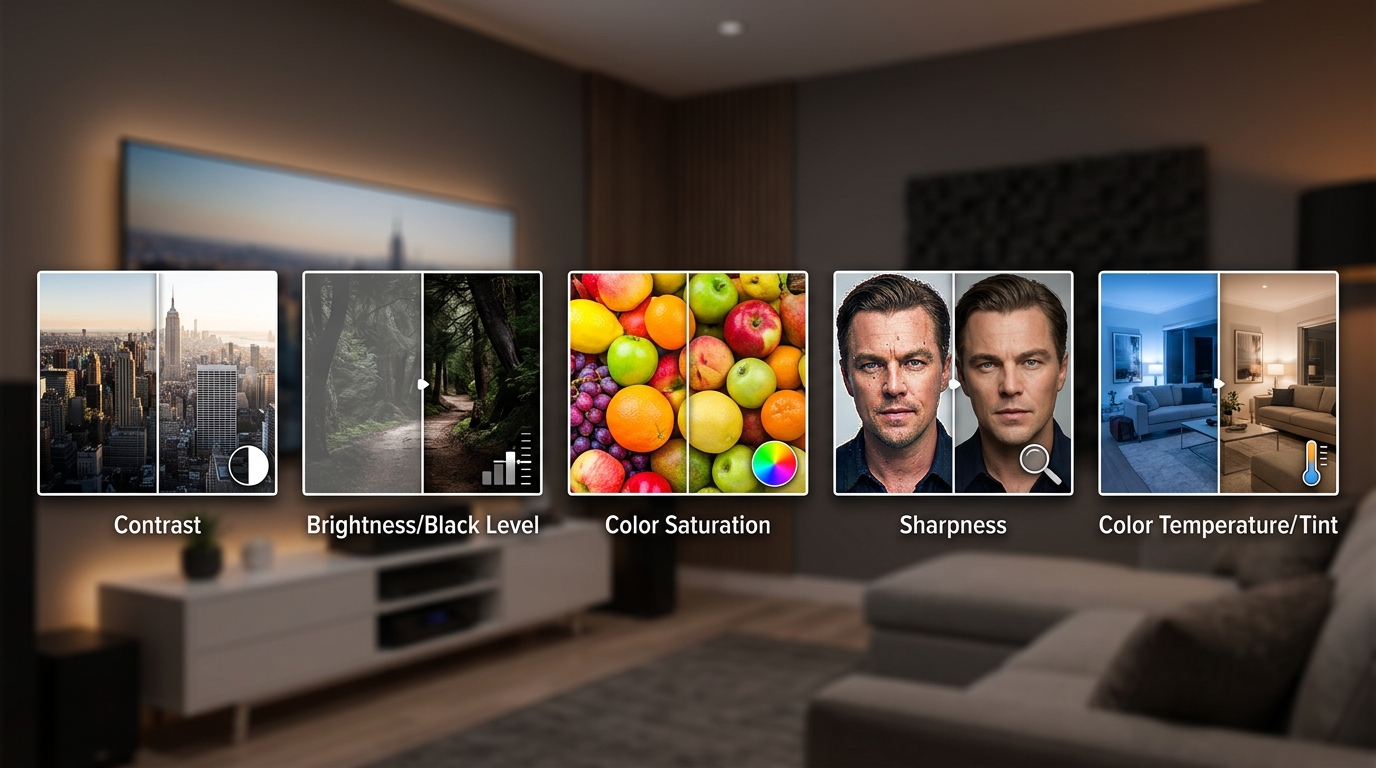
Picture Quality, Contrast and Color Saturation: Both plasma and the latest TFT-LCD flat panel displays are capable of producing excellent picture quality – with bright, crisp clear images.

However, plasma HDTV sets are generally more suitable for basic home theater usage than LCD TVs. The gas cell structure within a plasma display is such that there is no light leaking between adjacent cells (or pixels). This renders plasma displays capable of displaying deeper blacks – hence better contrast and detail in television and movie scenes where lots of dark and light content is shown simultaneously.

In comparison, the nature of LCD technology – where a backlight shines through the LCD layer – means that it is hard for it to achieve true blacks (i.e. true absence of light) as there is always some light leakage from adjacent pixels.

This does not mean that LCD panels are not suitable as TV screens; today’s LCD TV sets make use of extreme high contrast panels that are capable of displaying deeper blacks, yet the latest plasma TV sets still have a slight edge over LCD when it comes to contrast levels.

The situation is somewhat similar when it comes to color saturation. Again, it is the different display structure between LCD and plasma that is the reason behind the difference between the two technologies in this respect, and though both are capable of handling color in an exceptional manner, yet plasma displays still lead in this respect - producing more accurate and vibrant colors.

Viewing-angle: Plasma HDTV's – like their CRT TV counterpart - typically have better viewing angles than LCD. The viewing angle represents how far one can sit on either side of the screen away from the center, without experiencing significant deterioration in picture quality – mainly as a result of color shifts and reduced contrast.

Though recent developments in LCD technology means that this is less of an issue with some of the latest LCD TV sets boosting a viewing angle of 160 to 170 degrees vertically and horizontally, yet it is always best to check. The tendency – especially with cheaper sets – is that the deterioration in picture quality is more accentuated with LCD than with plasma displays.

Burn-In: As with all phosphor-based displays, plasma displays are prone to burn-in, or image retention. Screen burn-in occurs when an image is left for too long on the screen – resulting in a ghost of the image burned on the screen. Surely, keeping the brightness and contrast levels down will help reduce the risk of burn-in.

While some brands of plasma HDTV sets are more prone than others to burn-in, yet in general, plasma screens are more prone to suffer permanent burn-in during their first 200 hours of use; the reason being that fresh phosphors burn more intensely as they are ignited.

Technically speaking, burn-in is the result of a damaged pixel, whose phosphors has been prematurely aged and therefore glows less intensely than those of surrounding pixels. The presence of a static image for more than half-an-hour is enough to cause temporary burn-in; temporary burn-in or image ghosting, should not be cause for alarm as normally this will wash out after several hours of use.

Worst still is the prolonged presentation of static displays, such as the use of black or gray bars to view a 4:3 picture in its original format on a wide screen display; this will result in a permanent burn-in. Once permanent burn-in occurs, the damaged phosphors cannot produce the same levels of light output as the other phosphors around them do.
In these circumstances, an LCD display may be a better choice.
 

Viewing distance: It seems that the pixel size and shape of an LCD panel renders a smoother picture than an equivalently sized plasma panel for the same pixel count.

This means that even if your viewing distance falls within the recommended distance of approximately twice the screen width, if this is less than at least nine feet, most probably you will be better off with an LCD TV.

Life-time: The rare gases used in plasma display panels have a life and will fade over use. Earlier plasma displays had a quoted half-lifetime of between 20,000hrs, following which the image brightness will fall to half its original value. However, the flat-displays used in the latest plasma HDTV sets can boost anything between 30,000 and 60,000 hours. On the other hand, LCD displays have a guaranteed lifetime of between 50,000hrs and 60,000 hours. This degradation in image brightness takes place gradually over time.

Now, statistics show that the average household in the US replaces their TV set every 7 years. Taking a conservative figure of 30,000 hours for either technology, this corresponds to well over 6hrs usage a day - every day - for over a period of 14 years! In other words, both plasma HDTV's and LCD TV sets make use of extremely stable and reliable display devices. This means that when it comes to television usage, life-time should not be an issue with either display technology.

At the same time, keep in mind that there is no way to re-generate the gases in a plasma display or to repair any ‘dead’ pixels in an LCD display – the only option in such circumstances will be to replace the display.

Response: Some LCD panels – especially on older generation models - had a tendency to blur images particularly during fast moving scenes in movies and sports. However, recent advancement in LCD technology means that response times are such that there is no noticeable difference in performance between LCD TVs and plasma HDTV sets in this regard.

Power requirements: The advantage here goes to LCD TV sets. LCD panels consume less electricity. Estimates show that the use of LCD panels in television sets can result in some 30% power savings over plasma for the same screen size.

Price: Price is always a big issue when it comes to choosing your TV. Although prices online vary considerably, yet LCD TV sets tend to be more expensive than Plasma HDTV sets. The main reason behind this price gap is that the production process for plasma displays still supports a better yield and thus carries a pricing advantage – especially at the large screen end of the market.

This contrasts heavily with LCD display technology where an estimate 30 to 40 per cent of all manufactured panels will have to be discarded as a result of defects leading to what are known as 'bad-pixels'.


Making the Choice:

There is a market for both plasma HDTV sets and LCD flat-panel TVs:

Plasma gives you a bigger screen for your dollar, deeper blacks, but then LCD do not suffer from burn-in and at the smaller end of the market (less than 40-inch screen size), LCD is your only way forward if you want something slim and stylish.

It is all a question of knowing what are the advantages and limitations of each with respect to your specific needs.


Are you looking for an affordable Plasma HDTV?


We have put together an interesting selection of plasma displays HDTV displays at our online Home Theater Store. The links below will take you straight to the respective stores section:

Before leaving our site, please remember to subscribe to our free monthly e-zine to remain abreast with the latest additions. Click here for details.

             Last updated on: 6th July 2005
  Practical-Home-Theater-Guide.com RSS Feed
Add to My Yahoo!
Subscribe to NewsGator Online

...back to Section Index

...to next topic: Plasma displays - how it works?


return from  Plasma HDTV vs LCD TV                     to                   Home Page