|
|||||||||||||||||||||||
| Home Page - Plasma TV - Plasma TV Reviews Plasma TV Reviews & Product GuidesReviewing some
of the Best Plasma TVs
|
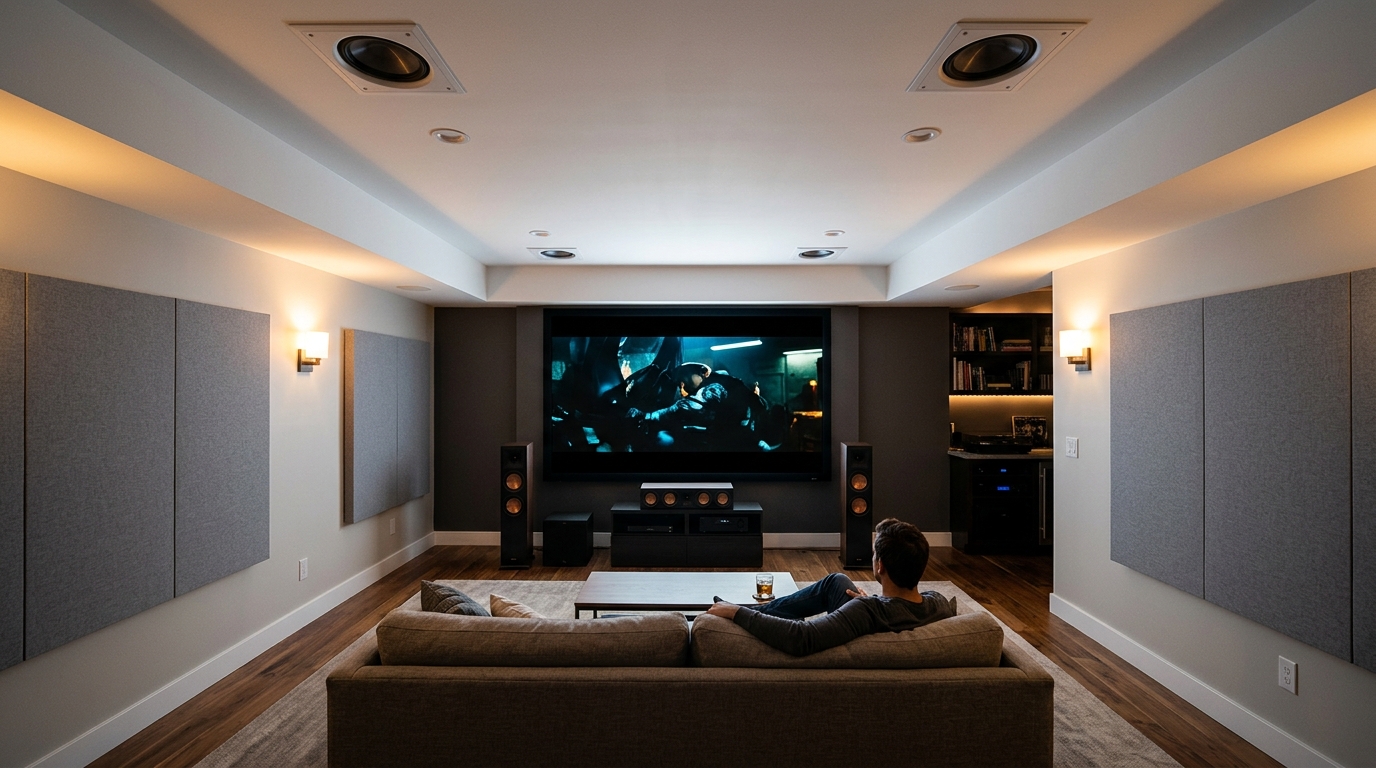
A Quick Guide to Home Theater Design
An easy-to-follow e-book on how to research, design, and build your own
by Duncan McClelland
Last Update:
|
||||||||||||||||||||||
|
|
|||||||||||||||||||||||
Plasma Televisions - still among the HDTVs most in demandWith Pioneer and Vizio out of the Plasma TV market, there only remain three plasma display panel TV makers, Panasonic, Samsung, and LG. It was in February this year when Pioneer announced that it was leaving the plasma HDTV market. At the time, many started to ask if plasma is dead. Yet plasma display technology is far from dead and plasma HDTVs are still among the most in demand - representing approximately 30 percent of the world global market for 40-inch to 50-inch HDTVs and 50 percent of all HDTVs above 50-inch. In addition, with the recession, what turned out to be bad economy for some has also turned out to be good economy for others. The recession seems to have forced consumers to reconsider plasma against LCD. A study by Quixel Research shows that with the arrival of the latest 2009 models, plasma TV sales during Q2 were up 31 percent in volume and 35 percent in total sales value ($910 million) compared to Q1 2009 sales. During the same period, sales of 40-inch+ LCDs were flat and revenues were down 7 percent. Consumers are starting to realize that plasma is far from an outdated technology and are reverting back to plasma to enjoy the larger screen size at lower price levels. The continued developments in plasma technology - thanks to the millions being invested in R&D by plasma TV makers - and the present pricing strategy, still make plasma a most viable display technology for flat-panel HDTVs for the years to come. Plasma's real problem during these last few years was never the 'newer' LCD technology. Rather, it has always been those sales representatives at retail stores who continued to recommend LCD over plasma on the basis of plasma's reputation for burn-in and excessive power consumption. However, these are no longer issues worth worrying about with the latest plasma HDTVs. The truth is that sales representatives do not understand the technology and simply continued to favor LCDs till the economy sustained their policy - as these generally carry a higher price, mostly because of the higher markup by retail stores. Nonetheless, for informed buyers - home theater enthusiasts, sports fans and consumers desiring a larger screen size - plasma has always remained the technology of choice. Discerning consumers appreciate the strengths of plasma over LCD such as the deeper black levels and its ability to display subtle shadow detail in predominantly dark content, in addition to its rich color reproduction, smooth motion and wide viewing angles. And now - thanks to the bad economy - even uninformed HDTV buyer in the market for a 40-inch+ big screen HDTV are equally reconsidering plasma as an equally viable HDTV option. Editor's Note - Feb. 5, 2010: Are Panasonic Plasma TVs having problem with their deep black levels? According to a thread on the AVS Forum site, some Panasonic plasma TV owners have experienced a sudden unexplained lowering in the black level performance of their Panasonic plasma TVs. We decided to discuss the matter and give you a chance to submit your opinion. Click here for more information. It's not just more screen estate for your money...Despite the much touting by LCD TV makers about their latest and greatest LED TVs, the latest plasmas still have the upper hand when it comes to a deep shade of black. Plasma TV reviews published on authority HDTV review sites for the Panasonic 50-inch TC-P50G10, the 50-inch TC-P50V10, and Samsung 50-inch PN50B650, all show that even the latest LED TVs find it hard to beat plasmas in this respect. And here we are talking about a very important picture performance parameter because a deep shade of black helps render dark scenes better while making colors look richer and more saturated. The latest innovations in plasma display technology - in particular the new NeoPDP display from Panasonic and the new E-panel design from Samsung, also means that the latest 2009 plasma HDTVs are significantly more energy efficient. These plasma display panels can produce a much brighter image than their predecessors while consuming some 40% less energy. Additionally, all 2009 plasma TVs from Panasonic, Samsung, and LG qualifies for Energy Star 3.0, thus closing the gap between plasma and LCD in this respect. Furthermore, plasma TV makers are coming up with improved feature sets. Panasonic VieraCast, Samsung Medi@2.0 with its Yahoo Widgets and built-in content, and LG NetCast represent the respective TV makers IPTV functionality and interactive content; Samsung also provides DLNA support on some of its HDTVs. The latest 600Hz sub-field drive - referred to as 600Hz sub-field motion technology by Samsung - featured on Panasonic, LG and Samsung plasma TVs helps deliver sharper images with improved motion resolution. In the case of Panasonic, this means a full 1080 lines of resolution on its 1080p HDTVs. This 600Hz sub-field drive technology has been developed mainly to help combat the latest 120Hz and 240Hz refresh rates on LCDs. Additionally, both LG and Panasonic offer a full range of HDTVs with THX display certification. As further detailed in our plasma TV review of the Panasonic G10 series, Panasonic THX implementation is the best one-step calibration we have ever come across in this respect. It is no surprise therefore that sets such as the relatively affordable Panasonic 50-inch TC-P50G10 and the 46-inch TC-P46G10 are among the best-selling HDTVs at major online stores irrespective of any HDTV category. We say affordable because these higher-end models are selling at an online price that hovers between $1,300 for the 50-inch and $1,170 for the 46-inch. A detailed plasma TV review of Panasonic G10 HDTVs appears on our site here, while a review of the Panasonic V10 is available here.
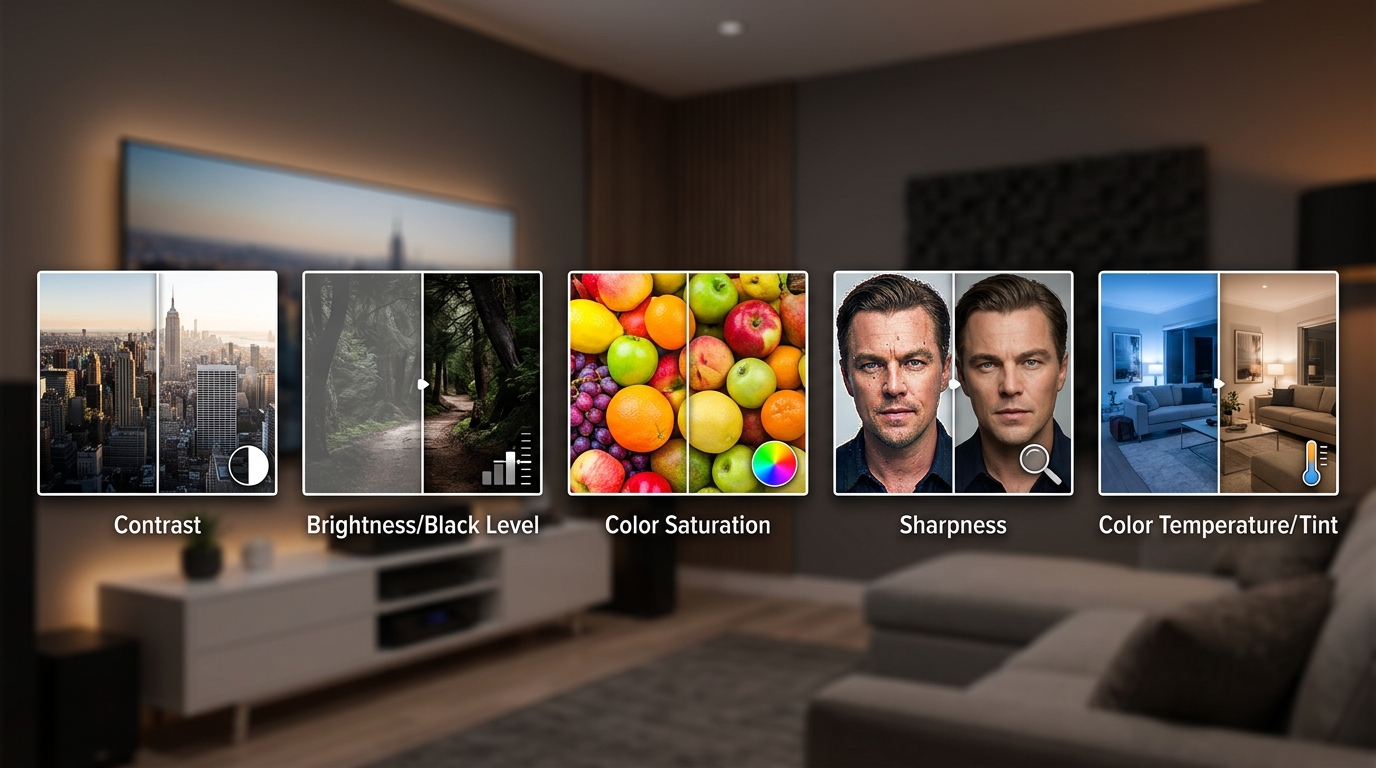
Both the LG PS60 and the LG PS80 series include a 60-inch version, the LG 60PS60 ($1,800) and the LG 60PS80 ($2,000). All HDTVs in these LG plasma HDTV series come with LG single layer design. This is sort of the single sheet of glass design found on the more expensive Panasonic V10 series. It gives these LG plasma HDTVs an extremely high-end look that differentiates them from the equivalently priced competition. Furthermore, these LG plasma HDTVs come as ISFccc ready and includes a 'Picture Wizard' which makes for ease of self-calibration by providing on-screen reference points for key picture quality elements like black level, color, tint, sharpness and backlight level. The more expensive from these series, the PS80 also includes LG NetCast for the latest IPTV features to stream Netflix videos, YouTube and Yahoo TV Widgets straight on your TV. A detailed LG plasma TV review of the PS80 high-end series appears on our site here.
This Samsung plasma HDTV uses significantly less power thanks to Samsung's new E-panel while still delivering a brighter image. Samsung also equip its new E-panel on Series 6 and higher-end HDTVs with its Ultra FilterBright coating for improved anti-glare performance. And as expected, these premium plasma HDTVs from Samsung also include the latest 600Hz sub-field drive for a full 1080 lines of motion resolution. Samsung HDTVs often represent the best overall deal for features, performance, and price - a price that is often below that of the competition. This is all thanks to their extensive feature set and an equally extensive set of user-adjustable picture controls. The latter makes it easy for anyone to fine-tune an HDTV for the best picture. The PN50B650 comes with Samsung Medi@2.0™ and DLNA support. It also features extended color gamut, improved dynamic contrast ratio of 3,000,000:1, excellent connectivity completed by 4 HDMI and a PC input, and Samsung's much debated Touch of Color styling that this year takes a more subtle approach. Overall design is extremely innovative with its crystal clear pedestal stand that gives the impression that the panel is suspended in mid-air. For our detailed plasma TV review of Samsung Series 6 HDTVs, please click here.
As stated, the Z1 is one of the most expensive plasmas for 2009 at this screen size. However, more affordable slim plasma HDTVs are also available from both Samsung and Panasonic - though these are not as thin as the Z1 HDTV. Panasonic V10 and G15 series HDTVs hardly exceeds the 2-inch mark - when excluding the lower protruding portion of the panel. Upgrading from the standard 4-inch thick Panasonic G10 to the slim version of the same series - the G15 - would cost close to an extra $100, with the 50-inch TC-P50PG15 selling online at under $1,400. Models within this series include the Samsung 58-inch PN58B860 ($2,800) and the 50-inch PN50B860 ($1,800). One minor but useful feature found on Series 8 Samsung plasma HDTVs is the picture-in-picture feature. Unlike previous years, Samsung seems to have followed on the footsteps of its main competitor and decided not to offer this feature on the less expensive series. In this respect, Panasonic went a step further in that it is not offering picture-in-picture on any of its series; it is even lacking on Panasonic most expensive Z1 HDTV. Instead, LG takes a step in between and offers a simple but equally useful single frame-freeze function on all of its models and including its least expensive 720p PG20 series. For a summary of the features and performance of Samsung Series 8 plasma HDTVs, please refer to our 2009 Samsung plasma TV product guide. For a detailed plasma TV review of the Samsung B860, please refer to our article here; there we also confront the B860 with Panasonic best rated plasma HDTV for 2009, the Panasonic V10 to see which of these two plasma series deserves the 'Best Plasma TV' title for 2009. A Plasma TV... for every budgetIn our introduction to this series of plasma TV reviews and product guides, we already touched upon a number of step-up and high-end 2009 plasma HDTV sets within a price bracket that hovers between $1,300 and $6,000. The reality is that there is a plasma HDTV for every budget! Even if you are after a 50-inch cheap plasma TV at under $1,000 - this is also readily available. And this time, not only from a budget brand like Best Buy in-house brand Insignia, but also from the major players in plasma display technology. Despite the lower price associated with budget plasma TVs, the relatively large number of cheap plasma TVs available on the market can still make the whole selection process equally challenging inasmuch as when looking for higher-end models. What follows are just but a few of best options available within this category.
As stated in our Panasonic X1 plasma TV review, despite the inexpensive price and a somewhat reduced feature set, Panasonic X1 HDTVs still offer adequate connectivity and excellent blacks with good shadow detail. There color accuracy is somewhat lacking but not enough to tarnish an excellent overall picture performance. Most important, Panasonic X1 plasma HDTVs gives you the possibility to enjoy a picture that pops out with a lot of depth and well saturated colors at a price that is a pittance for a top-brand, big-screen plasma TV. Equally affordable from Panasonic is the 42-inch Panasonic TC-P42G10, which at an online price of $950, is among the most affordable premium 1080p HDTVs. This is not another ordinary TV but one that comes with the latest eco-friendly Panasonic NeoPDP display panel and THX display certification. Surely, at this price bracket, this premium Panasonic Viera HDTV represents a great deal worth every single dollar. Samsung:From within the Samsung lineup for 2009, similarly affordable HDTVs include the 42-inch PN42B450 ($680) and the 50-inch PN50B450 ($900). Both HDTVs just happen to strike the right balance between features, performance and a budget price. It is therefore no surprise that these are already among the best sellers at major online stores. Like Panasonic X1, Samsung B450 series HDTVs are entry-level 720p TVs. Despite being entry-level, these Samsung plasma TVs come with the latest Samsung E-Panel with 600Hz sub-field drive for improved performance and lower power consumption. They also offer a wider color gamut support and more than adequate connectivity for an entry-level TV that includes 3 HDMI, and PC and USB inputs; the latter two are both missing on the Panasonic X1 series. LG:Within the same price bracket falls LG entry-level 720 HDTVs, namely the 42-inch LG 42PQ30 ($650) and the 50-inch LG 50PQ30 ($875). These HDTVs also come with the latest 600Hz sub-field drive technology, a swivel stand, and an extended connectivity based with 3 HDMI inputs, a PC connection, and a USB2.0 port for JPEG and MP3 files. Other useful features present on these relatively cheap plasma TVs from LG include a sound leveler - useful to help avoid excessive sound level discrepancies especially during commercials, and a freeze-frame function which will enable the viewer to temporary freeze a single frame to say catch a phone number or an address. Best-Buy In-house brand - Insignia:
Do not expect any frills but these plasma HDTVs rate very good among customer plasma TV reviews posted on the Best Buy website. In the majority, customers are generally very happy with their inexpensive purchase and these plasma sets overall good picture quality. In line with the latest trend in plasma HDTV technology, these HDTVs come 600Hz sub-field drive and adequate connectivity complemented by 2 HDMI and a stereo analog output apart from the usual digital audio out, component video and composite video. Note: For our 2009 Budget-class plasma TV roundup, please refer to our Cheap Plasma TV - 2009 Update article. A few things worth taking note of when buying a plasma HDTV:Do not spend more money than you need. Despite what sales representatives at retail stores say, at anything smaller and including 50-inch, the eye is not able to perceive the added picture detail afforded by the higher pixel count of 1080p resolution from a normal viewing distance. If you do not need the feature set of an upscaled product at these screen sizes, you may easily save a few hundred dollars just by opting for a lower resolution 720p HDTV. For more information on viewing distances, please refer to our TV Viewing Distance guide. Do not let the latest mega-contrast numbers impress you! The latest 2009 plasma HDTVs all come with mega dynamic contrast ratings that range from 1,000,000:1 to even 3,000,000:1. The resultant impact in picture quality between these different contrast ratio ratings is not as much as TV makers would like you to believe with their latest impressive ratings. For more information, read our article: The Contrast Ratio Game! We also advise to check the various plasma TV guides appearing under our Plasma TV section for more information on selecting and purchasing your plasma HDTV, plasma TV installation tips, and ways to help you protect your plasma TV investment.
More Plasma TV Reviews will follow soon. |
Buying a new HDTV - Buy now or wait
till later?
Should you wait for 2010 HDTVs or buy now to enjoy the present reduced pricing on 2009 sets? Following the CES, many end up engulfed in the dilemma of whether they should opt for a premium line plasma TV from 2009 at a heavily discounted price, or simply wait for the new models to start filling stores shelves and get the latest... at a significantly higher price. We discuss this hotly debated issue to help you make a better choice.
Featured Reviews and Product Guides
Panasonic Plasma TVs: Are these having a
problem with their black levels? 2009 Samsung plasma TV Reviews:
Samsung
Plasma Lineup:
Samsung
Series 6:
Samsung
Series 8: 2009 Panasonic Plasma TV Reviews: 2009 Panasonic Plasma TV Line-up - full product guide. Review: X1 entry-level 720p HDTVs - covering also the X14 and the C1 Review: S1 entry-level 1080p HDTVs - covering also the S14 and the U1 Review: G10 THX-certified Premium 1080p HDTVs - covering also the G15 series The Panasonic V10 in detail - Reviewing the best-rated Panasonic plasma TV for 2009 More 2009 Plasma TV Reviews
Cheap Plasma TV Reviews - 2009 Update:
2009 Best Plasma TVs - Samsung B860 vs. Panasonic V10:
LG Plasma TVs:
Best HDTVs Roundup:
Recommended Technical Guides The Complete LCD TV Guide:
Plasma Television Digital TV
Guide to Digital Satellite TV
The HDMI Cable Guide TV Viewing Distance Should You Opt for a 1080p
HDTV? Home Theater
Design:
Check out for the latest offers on Plasma TVs at amazon Panasonic
Best-selling Panasonic plasma TV for 2009. More info on the G10 is available at our Panasonic plasma TV review here.
The most affordable 'slim' styled plasma from Panasonic at this screen size.
Panasonic best plasma TV for 2009; V10 plasma TV review available here. LG Electronics
Inexpensive 1080p THX certified plasma TV from LG
Refer to our LG PS80 review here Samsung
Samsung best selling plasma HDTV; for more information, please refer to our B650 Samsung plasma TV review here.
Best-selling 58-inch big screen option from Samsung
Largest plasma HDTV within the Samsung 2009 lineup - the 63-inch PN63B590 Samsung stylish 1-inch ultra-thin plasmas for 2009.
Samsung B860 plasma TV review available on our site here.
For the full range of
Wall Mounts and Media Cabinets
|
||||||||||||||||||||||
|
|
|||||||||||||||||||||||
|
|
Would You like to get the best out of your HDTV? There is no better way to make the most out of your new HDTV then to invest in a set-up DVD. A great calibration disc is the Avia II Home Theater Set-up DVD, an exceptional AV calibration tool for both the novice and the expert.
Another
interesting calibration disc is the
Digital Video Essentials HD For more information, please check our Guide to HT Set-Up DVDs. |
|||||||||||||||||||||
|
|
||||||||||||||||||||||
|
|
|||||||||||||||||||||||
|
About
Me
|
About the
Site Content
|
Terms
of Use / Disclaimer
|
Privacy Policy
Information on this website represents the author's opinion and does not constitute professional advice; please read our terms of use and privacy policy before using this site. Copyright © - Practical-Home-Theater-Guide.com All rights reserved. |
|||||||||||||||||||||||