left image


Home Page - Plasma TV Reviews - 2010 Panasonic Plasma TVs - Product Overview

Review Date: 11th August 2010


2011 Plasma TV Reviews and Product Guides

Featured plasma TV reviews and product guides

2011 LG Plasma HDTVs: A valid alternative often overlooked by many

Samsung Plasma HDTVs: Extensive features and solid overall picture quality

Panasonic Plasma HDTVs: Rated among the best in black level performance but...


Panasonic Best-selling Plasma TV for 2011: TC-P50ST30

Panasonic VIERA TC-P50ST30 50" 1080p Plasma HDTV

This is the best-selling Panasonic plasma HDTV for 2011. This entry-level 1080p Panasonic plasma HDTV delivers excellent picture quality; it comes with adequate connectivity, Easy IPTV for direct access to a number of Internet TV services, DLNA support and is Wi-Fi ready. The latter means all it takes to access your broadband Internet connection or home network is the optional Panasonic DY-WL10 Wi-Fi adapter.


Also available from amazon UK as the 50-inch TX-P50ST30B


Introducing the new line of Panasonic Plasma HDTVs:

Panasonic plasma HDTVs are often the preferred choice among demanding consumers looking for the best picture performance. No wonder premium Panasonic Viera plasma TVs are often the bestselling plasma HDTVs irrespective of brand and category.

Since Pioneer left the plasma TV market, many started considering Panasonic as the new king of plasma TVs - or rather the new king when it comes to the best black level performance. Plasma TV reviews published on major HDTV review sites continue to confirm that year after year Panasonic plasma TVs are consistently delivering the deepest blacks at all price brackets.

And this year Panasonic plasma TVs are no exception, from relatively cheap plasma TVs such as the 42-inch Panasonic TC-P42S2, to affordable premium models such as the 50-inch TC-P50G25, and the expensive TC-P50VT25 3D plasma TV. These are all being rated among the best within their class for their solid blacks and excellent overall picture quality.

Definitely, there are plenty of reasons to buy a Panasonic plasma TV if picture performance is at the top of your list. But for 2010, Panasonic has one very series obstacle to overcome, and that is the exceptionally deep blacks we saw on 2009 Panasonic HDTVs! Rather, it is a performance issue which cropped up with 2009 Panasonic Viera plasma TVs in February 2010 when the first reports appeared with consumers complaining that their new Panasonic plasma TVs were losing their deep blacks after just a few months of use.

Panasonic said they have resolved the issue for 2010. But that will definitely take time to prove. In the meantime, many who do not feel bound by brand, will definitely find it hard to take the plunge with a Panasonic plasma TV. But irrespective of this black level issue, Panasonic plasma TV line for 2010 is definitely one of the most exhaustive, and we add interesting - covering eight different series - from some of the cheapest entry-level  bare-bone 720p HDTVs to very expensive top-of-the-line 3D plasma TVs.

No slim designs for 2010 as instead we saw in 2009. If slim is what you are after, take note that the new 2010 Panasonic plasma TVs are somewhat chunkier than the competition. Mind you, they still look aesthetically pleasing, but Panasonic 54-inch TC-P54Z1 we saw last year will for the time being remain the slimmest Panasonic plasma HDTV ever produced. Otherwise, the new lineup is one of the most interesting in terms of features; it is also one that delivers significantly improved performance over 2009 Panasonic plasma HDTVs.


2010 Panasonic Plasma TVs - Full Product Evaluation What's covered in this product review article

Editor's Note: This Panasonic plasma TV review is being divided into three parts, including this introduction; this is necessary because of the extensive range of models covered in this year line of Panasonic plasma TVs. Each of the remaining two parts takes detailed looks at Panasonic premium and high-end series.

For those going through these review articles, some of the information may appear as repeated content due to a number of similar features found on the different HDTV series. We opted to include the relevant feature details under each of these write-ups for completeness shake - thus avoiding the need for the reader to keep shifting between different pages for the relevant details.

2010 Panasonic Plasma TV Review
Article Index:

Panasonic Plasma TVs for 2010 - An Overview
A comprehensive overview covering the different series of Panasonic plasma TVs for 2010 - highlighting the main features while explaining the differences between the different models.

Panasonic G20/G25 Premium Plasma TVs in detail
We review Panasonic's best-selling premium plasma TV series for 2010 - Panasonic Viera G20 and G25 HDTVs, to see what is on offer from Panasonic at the more affordable price bracket.

Panasonic 3D plasma TVs: Series VT20 and VT25
3D Panasonic plasma TVs are relatively expensive but they promise superior 2D and 3D performance. Are these Panasonic Viera plasma TVs worth their expensive price? More in this plasma TV review.

Should you prefer you can join in our discussion on the latest Panasonic plasma TVs by submitting your opinion to be included on our site.


2010 Panasonic Plasma TVs ...an overview

Main Innovations for 2010

One cannot discuss the new Panasonic plasma TVs without first mentioning something on the two most innovative features for 2010 - the new NeoPDP panel with its much improved picture performance and energy efficient, and 3D; the latter is possibly the feature most touted by Panasonic for 2010.

A new NeoPDP Plasma Display Panel

Flagship and premium series of Panasonic plasma TVs, namely the VT20/VT25 and the G20/C25 get Panasonic new NeoPDP plasma panel - termed Infinite Black panel for the G20/G25 series and Infinite Black Pro panel for the VT20/25 series. Both boast a 5,000,000:1 contrast ratio. The new panel construction is very similar to Pioneer’s Kuro design and is fact the first Panasonic plasma design aided by former Pioneer plasma engineers.

Comparision between conventional and the new Panasonic Infinite Black Panel

Main improvement relates to the cell structure itself; the new cell comes with a deeper cell design, complemented by new gas mixtures, fast, short throw phosphors, and new electrode layout. The required electrical pre-discharge has also been reduced - leading to greatly enhanced black gradation; the higher levels used on conventional plasma display panels lead to graying of what are supposed to be black areas on the screen.

The new panel design also dispense of the second front glass panel used on previous generation plasma displays; this cuts down on image degradation from internal reflections while increasing contrast.  Bonded onto the top glass panel itself is a new anti-reflective coating that drastically reduces glare from external light sources while increasing the contrast when viewing under bright lighting.

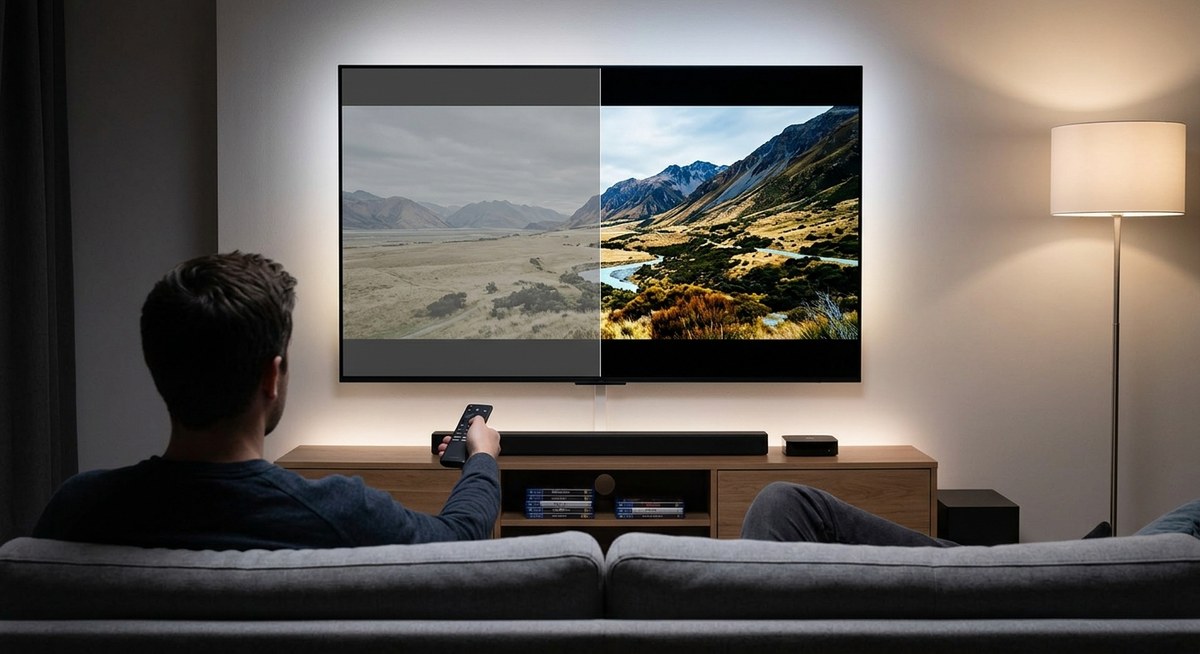
The overall result is a panel that is capable of displaying exceptionally deep, rich blacks even under bright room condition while still yielding superior shadow detail in the darkest parts of the image.

Other improvements include 1080 lines of motion resolution and four times the luminous efficiency compared to Panasonic’s 2007 panel, meaning it requires just one-quarter the power to produce the same brightness level; that is 75% more energy efficient. For this reason, Panasonic was named as the 2010 ENERGY STAR Partner of the Year by the U.S. Environmental Protection Agency (EPA) for its outstanding contribution to reducing greenhouse gas emissions by manufacturing energy-efficient products.

3D Support

3D is the hottest spec for 2010 - at least this is what TV makers want us to believe. And if there is a TV maker that is touting about its 3D TVs is Panasonic. In an attempt to make sure its message gets true during CES2010, Panasonic unveiled the largest 3D TV prototype ever, a 152-inch diagonal 3D TV supporting 4096 x 2160 pixel resolution!

But prototypes apart, Panasonic is presenting two 3D plasma TV series for 2010, the VT20 and the VT25. This is where the new NeoPDP panel advantage comes in. These 3D Panasonic plasma TVs use a 120Hz refresh rate to support the 60Hz frame rate per eye for 3D. Directly related to the higher refresh rate is the use of a high drive speed system, which enables more rapid panel illumination while maintaining image brightness.

In addition, the use of short-throw phosphors on the new panels and faster circuitry allow the red and green phosphors to shorten their decay time by as much as 66% - significantly reducing the overall pixel response time for a 3D picture performance that is practically free from 3D image crosstalk. As explained under our 3D TV section, 3D image crosstalk is a phenomenon where a subtle washed-out image intended for the right eye appears as a halo around the image intended for the left eye and vice versa. This is the biggest advantage of plasma over LCD and LED TVs when it comes to 3D TV viewing.

But there is more to 2010 Panasonic Plasma TVs than just a new NeoPDP panel and 3D...

VieraCast: Available on all premium and flagship Panasonic plasma TVs is the new and much improved VieraCast with its assortment of online content.

For this year, in addition to YouTube, Picasa Web Albums, Bloomberg news and stock information, local weather, up-to-the-minute content from USA Today, and Amazon Video on Demand, it now offers Pandora Internet Radio, movies streamed from Netflix, FOX Sports, and access to Twitter.

Panasonic VieraCast


As part of the new VieraCast, Panasonic has included the option of home video and audio conferencing with Skype; the latter however requires the $150  Panasonic TY-CC10W Skype Enabled communication camera.

A welcome enhancement with Panasonic VieraCast is the possibility to use a USB keyboard for easier tweets.

THX display certification is also available on all premium series Panasonic plasma TVs, namely the G20, G25, VT20, and VT25 when engaging the THX picture mode. The THX mode on the Panasonic offers the best out-of-the-box default picture setting; it is the best picture mode that comes closest to a one-step calibration. THX display certification ensures among others, a picture with the correct gamma, luminance, color temperature, correct black levels, correct HD color standard, correct de-interlacing, clean standard definition upscaling, smooth motion, and minimum video artifacts.

But what makes the new THX mode unique on these Panasonic plasma TVs both with respect to previous implementations as well as the LG competition, is that the new implementation for 2010 comes with a much appreciate enhancement - that of being user adjustable - apart from delivering plenty of light output before any adjustments. LG do not provide a user-adjustable THX picture mode but then makes up for the dimmer setting  of its dim Cinema THX mode by including a second THX mode -termed THX Bright room.

Previous THX display certification implementations have always been non-user adjustable and characterized by a rather dim picture that was only suitable for viewing under the dark room environment of the home theater.

ISFccc Picture Calibration Capability: Reserved by Panasonic for its flagship series, ISFccc allows professional calibration technicians to calibrate an HDTV to deliver the best picture quality for the home theater environment. The ISFccc calibration process includes adjustment for contrast, tint, sharpness and color levels with a high degree of accuracy. Once calibrated, the settings are locked to avoid any accidental changes. Technicians can store their calibration settings as ISF Day and ISF Night modes for best image quality under different light conditions; these ISF Day and ISF Night picture settings are added to the TV preset picture modes.

Despite the enhanced feature set, one feature you would not find on any Panasonic plasma TV series is a picture-in-picture mode as instead is available on Samsung HDTVs; and this applies even to the more expensive series. In a similar manner, you cannot temporary freeze the picture to catch a phone number or some other detail during a commercial as supported by LG's freeze frame function.

Equally missing is a standard analog stereo output on all Panasonic plasma HDTVs; you have to rely on the TV digital audio output to connect these TVs to your AV receiver to enjoy better sound.


Discovering the new Panasonic Plasma TVs - Series by Series

Entry-level 720p Panasonic Plasma TVs: Series X24 and C2

These are bare-bones 720p HDTVs with almost identical specs; the real difference between the two is that the slightly cheaper C2 series does not come with an anti-reflective coating.

Otherwise, common features found on both series include Panasonic 600Hz sub-field drive technology, Viera Image Viewer with jpg file support and SD memory card, Energy Star 4.0 compliant, 20W audio, 2:3 pulldown processing for 24p playback, and Viera Link to control other compatible HDMI connected devices via the TV remote.

Panasonic TC-P42C2 720p plasma HDTV

Panasonic 42-inch
TC-P42C2 - 720p plasma TV

These Panasonic plasma TVs also come with reduced HDMI connectivity - just two inputs though they carry all other standard connections one expects to find on an HDTV - inputting a VGA-style PC input; the only exception here is the missing analog audio out.

Screen sizes covered include the 42-inch TC-P42X24 ($600) and 50-inch TC-P50X24  ($800) for the X24 series; instead, the slightly cheaper C2 covers  three screen sizes, the 42-inch TC-P42C2 ($530), the 46-inch TC-P46C2 ($630), and the 50-inch TC-P50C2 ($700).

It is the cheaper series with sets such as the 42-inch selling online for just $500, that is proving to be the most popular Panasonic entry-level series. This is among the cheapest plasma TV series for 2010. At this price bracket, what most customers look for is getting the largest screen for their money. In this respect, the C2 definitely delivers!

Entry-level 1080p Series: Series U2 and Series S2 Panasonic Plasma TVs

Further up the Panasonic plasma TV line, one finds the U2 and S2 Viera 1080p entry level series. As with the 720p HDTVs, these come with almost identical features with the most significant difference between the two being the presence of Panasonic anti-reflective coating on the S2 series.

Apart from the 1080p resolution, other upgrades over the less expensive 720p series include a Game mode and the addition of an extra HDMI input for a total of 3 and 2 USB ports.

Panasonic S2 Series Plasma TV

Panasonic 50-inch TC-P50S2

These TVs however still fall short by one HDMI with respect to the competition, apart from the missing analog audio output already highlighted earlier on.

Screen sizes covered under the U2 series include the 42-inch TC-P42U2 ($660) and 50-inch TC-P50U2 ($910).

The S2 series covers six screen sizes, the 42-inch TC-P42S2 ($700), the 46-inch TC-P46S2 ($800), the 50-inch TC-P50S2 ($970), the 54-inch TC-P54S2 ($1,200), the 58-inch TC-P58S2 ($1,360), and the first of two massive 65-inch Panasonic plasma TVs for 2010, the TC-P65S2 ($1,995).

The S2 series is the bestselling series within the whole 2010 Panasonic plasma line - thanks to a line of plasma TVs that are among the cheapest within this category of HDTVs. It is thus no surprise that not only the small screen sizes such as the 42-inch and 50-inch that are doing well in HDTV sales, but also the larger screen sizes - the 58-inch and in particular the 65-inch which at less than $2,000, is one of the most affordable massive plasma TV for a leader in the field.

But there is more than just a cheap price with the S2. In terms of features and performance, the S2 is basically an updated version of the 2009 S1 series, offering significantly improved black levels over the already solid blacks of the S1, a brighter image at lower power consumption, and equally important for picture quality, a much better color accuracy. The excellent black levels and the brighter image are mainly the result of the new NeoPDP panel for 2010.

From a picture performance, the S2 comes with a picture quality that is very close to that of the more expensive G20/G25 series. Apart from the presence of Panasonic VieraCast Internet application and the THX picture mode on the G20/G25 Panasonic series, all other picture related features are basically the same, and according to plasma TV reviews appearing on major sites, so is picture quality.

To a certain extent, this is expected because while the G20/G25 series come with a different NeoPDP panel that supports deeper blacks and a higher contrast ratio, yet the resultant improvement in image quality over the already very good black level performance of the S2 series is one that while visible, is perceivable mainly in side-by-side comparisons under the ideal dark home theater environment.

In other words, difference in performance between the 2,000,000:1 contrast ratio rating of the S2 and the 5,000,000:1 of the higher-end series is far less perceivable than these mega numbers seem to imply. As we say in our Contrast Ratio article, it is not contrast alone that makes the picture. It is unfortunate that TV makers are still playing the number game with consumers when it comes to contrast ratio ratings, often using confusing terms and unspecified test methodologies.

Overall... S2 Panasonic plasma TVs form part of the latest greener 'budget-class' 1080p plasma HDTVs from Panasonic that just strike the right balance between affordability and performance.

Main competition from other plasma TV makers at the S2 price bracket is from Samsung Series 5 plasma TVs and LG's PK550 and PK750 plasma series; the LG PK750 however boasts an improved feature spec that is more in line with that of the G20/G25 as it includes among others, THX display certification, LG's NetCast, and LG's TruBlack filter for improved blacks in bright room conditions.

Premium Series G20/G25 Panasonic Plasma TVs

The new 2010 Panasonic G25 plasma HDTV

Panasonic 50-inch TC-P50G25 with THX display certification

Bestselling top-performing 50-inch 1080p Panasonic plasma HDTV


The S2 is definitely the best Panasonic plasma TV series that is most suitable for general home entertainment. Yet it is with the G20/G25 higher-end Panasonic plasma TVs that things start to get really exciting for those looking for the best features.

The G20 and G25 series share an almost identical feature set except that the Viera Link application on the G25 comes with network camera support to help you monitor your house.

The other difference is that the G20 comes in two screen sizes only, the 54-inch TC-P54G20 ($2,000) and the 50-inch TC-P50G20 ($1,500). 

Instead, the G25 Panasonic plasma TV series comprises four screen sizes, the 54-inch TC-P54G25 ($1,430), the 50-inch TC-P50G25 $1,100), the 46-inch TC-P46G25 ($1,100), and the 42-inch TC-P42G25 ($900).

G20 and G25 Panasonic plasma TVs add a few extras to the S2 feature set apart from the slightly more refined styling, with the hottest upgrade being the new VieraCast Internet TV with Skype support.

However, more important for those looking for the best out-of the box picture is the THX picture mode which as highlighted earlier on in this discussion, allows some customization apart from being significantly brighter than previous implementations.

These TVs also include what Panasonic is calling Infinite Black Panel supporting a 5,000,000:1 contrast ratio over the 2 million of the lower series. As expressed under the S2 Panasonic Viera plasma TV series, the improvement brought about in black level performance - while visible - is mainly one that is noticeable only in side-by-side comparisons under the ideal viewing environment.

Like the 2009 equivalents, the new G20 and G25 Panasonic plasma TV series come with a 48Hz refresh rate for 1080p/24 signals but as with the 2009 implementation, suffers from too much image flicker and is useless; you will have to use the 2:3 pull-down which works with both standard and high definition sources. Not much of an issue but 2:3 pulldown processing do not produce the 24p cadence properly.

Overall... The G20/G25 series is the 2010 Panasonic plasma TV series for videophiles and home theater enthusiasts looking for the best picture but that does not care about 3D. Its superior blacks with respect to the competition, accurate colors, and effective anti-reflective screen all helps deliver a solid 2D picture. In addition, it comes with VieraCast and its much improved customization, and for those looking for greener TVs, the new G20/G25 series uses less power than 2010 Samsung and LG plasma TVs.

These Panasonic plasma TVs offer a most tempting mix of features and performance at an equally appealing price. No wonder, sets such as the 50-inch TC-P50G25 and 54-inch TC-P54G25 are at present among the HDTVs most in demand irrespective of brand, and among the top-selling plasma TVs for 2010, surpassing the significantly cheaper Panasonic S2 series.

For our detailed TV review of the G20/G25 Panasonic plasma TV series, please click here.

Flagship Series VT20/VT25 Panasonic Plasma TVs

Top on Panasonic 2010 line, we find the VT20 and VT25 flagship series.

These are Panasonic plasma 3D TVs. Main upgrade over the G20/G25 series is 3D, while the main difference between these two 3D Panasonic plasma TV series is the addition of ISFccc calibration option on the VT25 series; the latter is also the 3D plasma HDTV series that comes with one pair of 3D shutter glasses included as part of the TV pack.

The VT20 covers just one screen size, the 50-inch TC-P50VT20 ($2,500).

The new 2010 VT25 Panasonic 3D plasma TVs

Panasonic TC-P50VT25

50-inch 3D Panasonic plasma TV

Instead, the  VT25 series comprises four screen sizes, the 50-inch TC-P50VT25 ($2,400), the 54-inch TC-P54VT25 ($2,800), the 58-inch TC-P58VT25 ($3,500), and the second massive 65-inch Panasonic plasma TV for 2010, the TC-P65VT25 ($4,400). 

Apart from 3D and ISFccc capability, other additional enhancements over the G20/G25 series include the presence of the 96Hz refresh rate mode for correct handling of 1080p/24 content, and the use of Panasonic superior Infinite Black Pro display panel instead of the Infinite Black panel used on the G series. Complemented by a new anti-reflective coating bonded to the top glass, the end result is superior black-level performance and excellent shadow detail, with a screen that significantly cuts on reflections and do a good job in preserving the blacks under bright room conditions.

These 3D Panasonic plasma TVs deliver highly accurate colors in THX mode and superb color saturation. Overall, they offer excellent 2D image quality and a solid 3D picture with hardly any incidence of what is turning out to be the most dreaded problem with 3D LCD and LED TVs - 3D image crosstalk

Their only real drawback apart from being relatively expensive, is that like 3D plasma HDTVs from Samsung, these 3D Panasonic plasma TVs are significantly less energy efficient than most other 2010 HDTVs especially when in 3D mode. Mind you, these are still Energy Star 4.0 compliant but...

Otherwise... These Panasonic plasma TVs deliver outstanding overall value. Most popular sets within the VT25 series are the 50-inch TC-P50VT25 and the 54-inch TC-P54VT25.

2010 Panasonic Plasma TVs: Full Product Guide

Info covered in this write-up 

Panasonic Plasma HDTV Review: Panasonic Plasma TVs for 2010

Panasonic plasma TVs for 2010 - Part 1: Overview
A comprehensive overview covering Panasonic plasma TV series for 2010 - highlighting the main features while explaining the differences between the different series.

Part 2: Panasonic G20/G25 Premium Plasma TVs in detail
We review Panasonic's best-selling premium plasma TV series for 2010 - Panasonic Viera G20 and G25 HDTVs, to see what is on offer from Panasonic at the more affordable price bracket.

Part 3: Panasonic 3D plasma TVs: Series VT20 and VT25
3D Panasonic plasma TVs are relatively expensive but they promise superior 2D and 3D performance. Are these Panasonic Viera plasma TVs worth their expensive price? More in this plasma TV review.

Should you prefer you can join in our discussion on the latest Panasonic plasma TVs by submitting your opinion to be included on our site.


Plasma HDTV Installation Guides

For a professional installation job!

Where to Place and How to Hang Your Plasma TV: Discover how to select an optimum place for your plasma TV set; explore alternative mounting options, and learn how to mount a TV in its new environment.

Installing a Plasma TV Wall Mount: Are you thinking of wall mounting your plasma television set? Find out all you need to know on how to install a plasma TV wall mount the professional way.

Installing a Plasma TV over the Fireplace Mounting a plasma television over the fireplace is a great way to display your new flat-panel TV. Discover more in this Plasma TV Installation Guide.


For additional details on available flat-panel TV mounts, please check also our Guide to LCD TV Mounts; the information contained in this guide applies to both plasma television sets and LCD/LED HDTVs


Use of Wiring Channels for flat-panel TV Installations: Designed for the home installer with basic DIY skills, wiring channels make for ease of TV installation and a professional looking job.

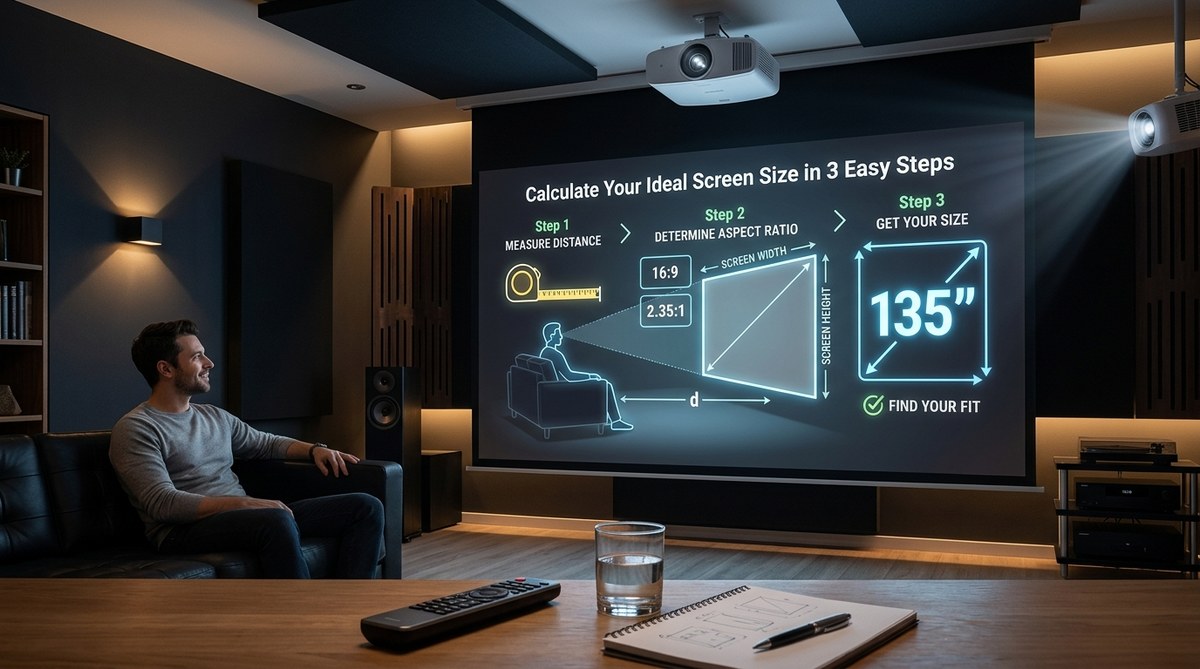
TV Viewing Distance Guide: Discover how the TV screen size and image resolution relate to your viewing distance for a truly immersive viewing experience.

Note: This guide deals with 2D TV viewing; for 3D HDTVs, please refer to our article 3D TV Viewing Explained.

 Home Theater Guides:

Recommended Technical Guides 

Plasma HDTV Guides:

Is a Plasma HDTV still worth considering against the latest LED TVs? The present tough economy seems to have turned out to be good economy for plasma television sales - with the biggest surge ever. But is a Plasma TV still worth considering against the latest LED TVs?

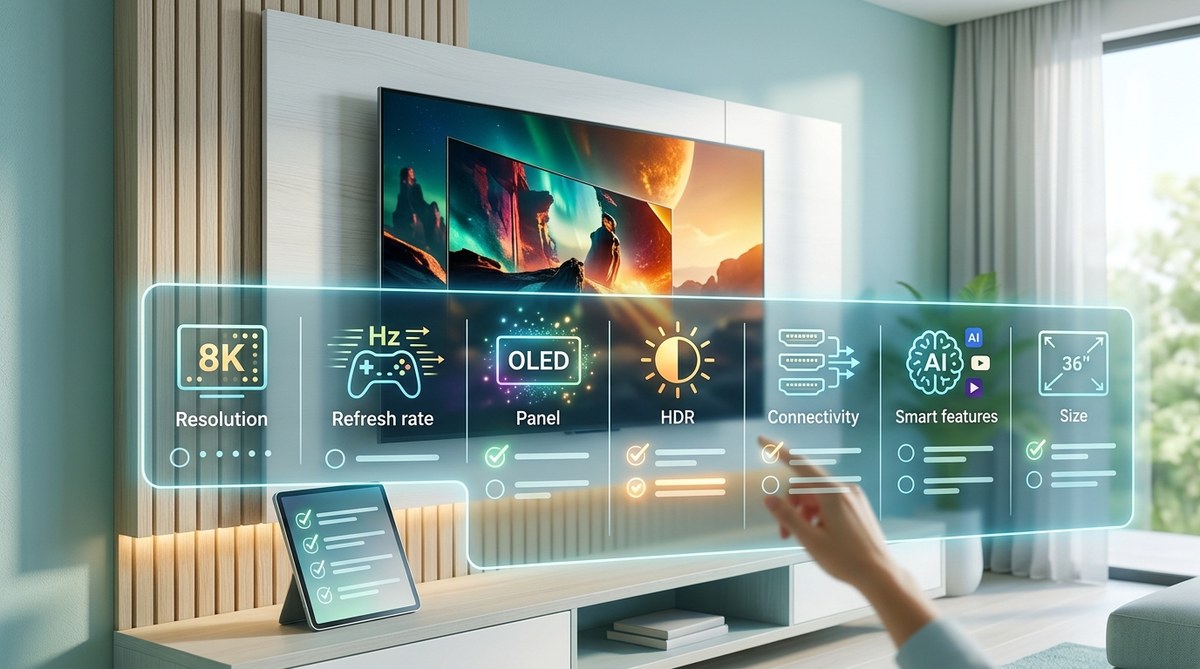
Plasma Televisions: What to look for: Discussing the features to look for when buying a Plasma TV set.

Plasma vs. LCD vs. LED TVs: A detailed comparative guide to choosing between a plasma, LCD and LED TV.

How-it-Works Plasma Display Technology: Describing the principles behind flat-panel plasma displays.

Protecting your Plasma TV Investment: Simple steps you can take to keep your plasma TV unit performing at its best.

Plasma TV FAQs: Answers to a comprehensive list of Plasma Television FAQs, covering use, technology, and even fictions you might have heard or read about.

Miscellaneous Articles

The Smart TV Guide: Smart TV promises a whole new experience in the world of TV entertainment. But what exactly is smart TV? Is it really more than just a PC experience over a big screen? Discover more in this guide to smart TV.

HDMI Cable Guide
An easy-to follow guide that explains all you need to know about HDMI.

3D Television FAQs
Questions always crop up with a new technology. We do our best to answer most of the common questions in this FAQ.

Available Rack Solutions for the Home Theater: AV racks range from industrial style EIA 310-D compliant 19-inch rack enclosures to the more decor friendly rack solutions.

Understanding HDTV formats
Discover the strengths and weaknesses of the different HD formats - 720p, 1080i, and 1080p - in this HDTV Guide.

Contrast Ratio Explained
To what extent high contrast ratios affect the performance of a home theater projector or an HDTV?

Featured 2011 Panasonic Plasma HDTVs

Check out for the latest offers at amazon on Panasonic Plasma TVs

Suggested Wall Mounts & Media Cabinets

Featured solutions at amazon.com

Looking for affordable Panasonic plasma TVs?

We advise to do some research of your own for your plasma television of interest. A good starting point is the customer feedback posted on the amazon site; see what other customers had to say following their purchase about quality, functionality, customer support, etc.
 

You can search the amazon storefront without leaving our site by using the search box below; your search results will appear here under:


Find us on Facebook

Follow us on twitter


Subscribe To This Site [?]

XML RSS

Add to Google

Add to My Yahoo!

Add to My MSN

Subscribe with Bloglines


Please Note:

Double-underline links represent additional info related to the page content supplied by Kontera. To view this info, place your cursor over these double-underline links.


References used in this article:

Panasonic website for the latest technical specs and product manuals for 2010 Panasonic Plasma TVs.
http://www2.panasonic.com

Cnet reviews - TC-P50G25 Panasonic plasma TV review by D. Katzmaier, dated May 12, 2010.
http://reviews.cnet.com

Cnet reviews - TC-P50VT25 Panasonic plasma TV review by D. Katzmaier, dated June 16, 2010.
http://reviews.cnet.com

Home Theater Magazine - Review of the Panasonic TC-P50G20 dated June 2010 by http://hometheatermag.com

Home Theater Magazine - Review of the Panasonic TC-P50VT25 dated July 2010 by http://hometheatermag.com

Plasma TV Buying Guide - Panasonic TC-P50S2 review by Phil Conner Spring 2010
http://reviews.plasmatvbuyingguide.com

Customer feedback posted at amazon, Best Buy, and B&H Video for the different Panasonic plasma TVs.


Next: Panasonic Plasma TV Review Part 2: G20/G25 Series

Back to Article Index

Plasma Section - Main Index

Plasma TV Reviews

Home Page