|
|||||||||||||||||||||||||||||||||||||||||||||||||||||||||||||||||||||||||||||||||||||||||||||||||||||||||||
| Home Page - Plasma TV Reviews - 2009 Panasonic Plasma HDTV Reviews (2) 2009 Panasonic Plasma HDTV Sets - Part 2Entry-level
Panasonic 720p Plasma HDTVs
|
Quick Guide to Home Theater Design An easy-to-follow e-book on how to design and build your Home Theater
by Duncan McClelland
Review Date:
Update: |
||||||||||||||||||||||||||||||||||||||||||||||||||||||||||||||||||||||||||||||||||||||||||||||||||||||||||
|
|
|||||||||||||||||||||||||||||||||||||||||||||||||||||||||||||||||||||||||||||||||||||||||||||||||||||||||||
Panasonic Viera 720p Entry-level HDTVs: TC-PX1, TC-PX14, and TC-PC1 SeriesThe cheapest plasma TVs from a top-brand...For 2009, Panasonic has come up with three 720p entry-level series against the only PX80U 720p HDTVs we have seen for 2008. These are the X1, X14, and the C1. Each of these entry-level series covers two screen sizes, a 42-inch and a 50-inch. The most popular within this entry-level lineup is the X1 series with its 50" TC-P50X1 and 42" TC-P42X1. This rather extended range of 720p HDTVs may appear strange especially when the plasma TV market is shrinking. However, the X14 and the C1 series are just variations of the more expensive X1 series. This in view that X14 and C1 Panasonic plasma HDTVs come with a somewhat reduced feature set. In particular, you get two HDMI inputs against the three found on the X1, though the X14 would then add a VGA-style analog PC input - something which is missing on both X1 and C1 HDTVs. The X14 and the C1 also come with a slightly reduced contrast ratio. This also explains why the C1 comes with the cheapest price-tag from the trio, with a difference in MSRP of around $100 between corresponding X1 and C1 HDTVs. Despite being entry-level plasmas, these Panasonic plasma HDTVs still represent an interesting inexpensive option for home entertainment applications. Main DesignAs with 2008 Panasonic plasma HDTVs, this year entry-level 720p Panasonic Viera TVs come with a similar wedge-shaped pedestal stand that does not swivel. All front controls and inputs are on the sides completely hidden from front view. Similarly, these sets come with down-firing speakers positioned along the bottom and completely hidden away from the front. This is becoming typical on most HDTVs as it helps render for a more compact design. Unfortunately, we find that positioning speakers facing downwards does not really help with the TV sound.
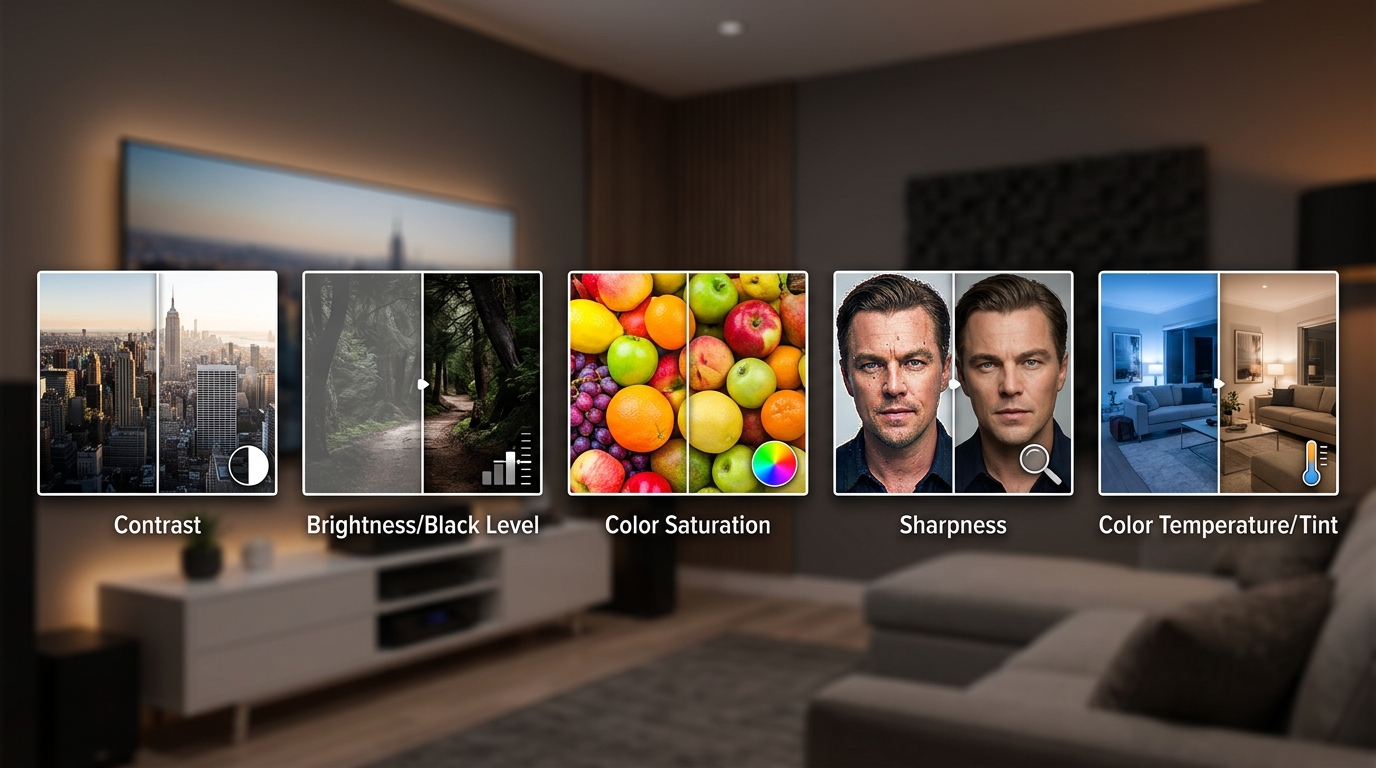
Thanks to Panasonic Viera Link feature, the set remote control can also be used to control other compatible HDMI devices with HDMI-CEC support connected to Panasonic plasma HDTVs. FeaturesAll three series of Panasonic plasma HDTVs come with a G12 Standard plasma display panel supporting a resolution of 1024 x 768 pixels for the 42-inch and 1366 x 768 pixels for the 50-inch sets, and 4096 shades of gradations. Do not be misled by the lower resolution. The human eye is not able to perceive any difference in picture detail with normal program content at the screen sizes involved between 720p and 1080p screens for the same input from normal viewing distances. As indicated in the first part of this series of articles, all 2009 Panasonic panels are built to resist shock. They also come with plasma panels capable of a brighter picture, have a rated lifetime of 100,000hrs, and employ a new anti-reflective coating that can do a very good job under bright lighting. Despite the specs sheets published by Panasonic indicate that all three series use the same G12 panel, yet there are a few differences between these series when it comes to rated contrast ratio. While the X1 series come with a 30,000:1 static contrast and 2,000,000:1 dynamic contrast ratings, the other two series support 15,000:1 static contrast rating. X14 HDTVs also come with 1,000,000:1 dynamic contrast instead of the 2,000,000:1 found on the other series. This lower contrast ratio rating for the X14 brings this series more in line with the 720p PX80U series Panasonic released for 2008 than with the rest of the 2009 lineup. Worth mentioning that despite the 'lower' 1,000,000:1 dynamic contrast rating of X14 Panasonic plasma HDTVs, the contrast ratings involved here are too high for the human eye to perceive any difference in contrast performance between these series. In other words, do not let these large numbers impress you! This is more of a number game originally started by Samsung a couple of years back. Contrast alone does not make the picture. We are not saying that an improved contrast ratio does not make a difference, but... More on contrast ratio ratings can be found in our article: 'The Contrast Ratio Game - Playing with Numbers! As one may expect, these 720p entry-level Panasonic plasma HDTVs come with a rather reduced feature set. You would not get a USB port or picture-in-picture; the latter is not even available on any of the more expensive 2009 Panasonic plasma HDTVs. These sets come with a rather reduced set of user-picture controls, in comparison to similar entry-level sets from Samsung and LG. However, all basic picture controls - Contrast, Brightness, Color, Tint, and Sharpness - are there. There are also four picture modes - Vivid, Standard, Cinema, and Custom - that are all user adjustable. In addition, the 'Custom' picture mode enables you to adjust the settings independent per input. In the case of the X1 series, there is also a fifth mode, termed Game mode, which according to Panasonic should help deliver quicker image response while also producing darker images more clearly. Selecting the game mode will also automatically select that input which has been labeled 'Game' in the input naming menu. However unlike other TV makers, the Panasonic games mode as implemented on these plasma HDTVs is just another picture mode; it does not eliminate any video processing to help minimize delays between the player and the action on the screen. Apart from the above, there are three color temperature presets - Normal, Warm, and Cool, with the warm settings being the one closest to the D65 standard. These sets include five aspect ratio or Format settings for SD and HD content - including a zoom mode that allows the user to adjust both the horizontal and vertical position of the displayed part of the image. As for advanced settings, all three series come with a C.A.T.S. function, or contrast automatic tracking system function. This senses ambient light and optimizes the contrast by adjusting the brightness and gradation on the fly to better match the ambient light level. Video and MPEG noise reduction settings can be set to either on or off, while a black level setting - light or dark - is provided for use when viewing content carried over the HDMI inputs. You would not get neither gamma adjustment nor color management support. However, these Panasonic plasma HDTVs include a 3D color management function - which use a three-dimensional color matrix to optimize hue, saturation, and brightness, and Panasonic Sub-Pixel control originally featured on 2008 Panasonic Viera HDTVs. - Sub-Pixel Control - The latter is said to help improve picture clarity by eliminating jagged or blurred diagonal lines through contour correction at the dot level, i.e. by processing the red, green, and blue color sub-pixels separate rather than together, for a clear, more natural-looking image. All Panasonic plasma HDTV series also come with 600Hz sub-field drive for improved motion resolution supporting up to 720 lines - which is the full supported resolution by the 720p HD standard. This should help render sharper images when displaying fast action content. One should note that here, we could identify a few inconsistencies in the published specs by Panasonic for its entry-level 720p series and in particular with respect to the X14 series. At one point, the specs refer to a 480Hz sub-field drive - this apart from a 900 line resolution for a 720p HDTV! But apart that no 720p HDTV can support 900 lines of motion resolution, the issue with 480Hz or 600Hz is to a certain extent irrelevant; the difference is one that is impossible to discern with the unaided eye. In other words, like the mega contrast ratings, these 'big' numbers are mainly there to help sell the product rather than to help you experience a significant difference in product performance. Panasonic seems extremely mindful about avoidance of temporary burn-in, or as the company calls it, 'image retention' even though such occurrence with today's plasma display panels under normal viewing is no longer an issue. But in any case, in the remote instance that such a need arise, you get a full menu that deals with burn-in in a similar manner to what you get with more expensive plasma HDTVs. There's a pixel orbiter that moves the entire image gradually around the screen, along with an option to set the 4:3 mode to include gray instead of black bars on either side of the picture. Gray has less chance of causing image retention. In the remote chance of a retained image, there is also a scrolling bar feature that sweeps a white bar across a black screen to help erase the retained image. Connectivity is among the most comprehensive for these relatively cheap plasma TVs, with two component video inputs, two composite video inputs, and multiple HDMI ver. 1.3 complete with Deep Color (x.v.Color) support and CEC via Panasonic Viera Link. As indicated earlier on, the X1 series gets three HDMI inputs with one positioned on the side panel; the other two series just do not get the HDMI connection on the side. There is no dedicated VGA-type PC input on both the X1 and the C1 series though you would still be able to connect your PC - should you desire so - via one of the HDMI inputs. Unfortunately, the 3 percent overscan present means that these sets are not ideal for computer use as part of your desktop may end up truncated. Furthermore, the lower resolution of 720p sets does not help with on-screen computer generated text - with small text often rendered not as sharp as one would like it to be for easy viewing. Similarly, you would not get analog audio out on the X1 and the C1 - something which is available on the X14 series of Panasonic plasma HDTVs - though you would still get a digital audio out on all three series. Instead, you get an SD memory card slot as standard to view JPG files on your big screen plasma HDTV thanks to Panasonic Viera Image Viewer. Audio output is 20W total power over the two down-firing speakers; there is no virtual surround sound but these 720p Panasonic plasma HDTVs will still output surround sound over the set digital audio output connection. Energy Star: These Panasonic plasma HDTVs are all Energy Star compliant when engaging the Standard picture mode. But as with most TV makers, the default standard picture mode is too dim for viewing under normal ambient lighting; this is being done by TV makers to ensure that their HDTVs qualify for Energy Star 3.0. Summary of the main specifications for 720p Panasonic Plasma HDTVs:
Update - Feb. 5, 2010: According to a thread on the AVS Forum site, some Panasonic plasma TV owners have experienced a sudden unexplained lowering in the black level performance of their Panasonic plasma TVs. Click here for more information. PerformanceNote: Performance issues discussed hereunder relate to the X1 series. However, we expect X14 and C1 Panasonic plasma HDTVs to perform in a similar manner as these share very similar picture related specs to the X1 series HDTVs. The differences in the rated contrast ratios between these series is not enough to bring about a perceived difference in performance - except in side-by-side comparisons. If there is one characteristic that pops out of the rest within this year line-up of Panasonic plasma HDTVs is their deep shade of black. This is something that emerges in all expert reviews conducted on 2009 Panasonic plasma HDTVs and including the Panasonic 720p HDTV under review in this article. As expected, more expensive plasmas within the Panasonic lineup such as the THX-certified G10 series HDTVs deliver a deeper shade of black. But the deep level of black found on Panasonic entry-level HDTVs by far exceeds that found on most plasmas and significantly more expensive LCDs. Definitely, a picture is more than just deep black levels but a display capable of a deep shade of black helps render dark scenes better while making colors look richer and more saturated under all lighting conditions. Directly related to a set's ability to display deep black levels is the rendering of shadow detail especially during predominantly dark content. In this respect, Panasonic X1 HDTVs are capable of handling subtle detail even in predominantly dark content; most HDTVs fail here. The area where these 720p Panasonic plasma HDTVs fall short of the ideal standard is in color accuracy. Color tests conducted by Cnet in their Panasonic TC-P50X1 review show inaccurate primary colors of green and red - apart from a slight red push in the video processing. Unfortunately, due to the lack of user-adjustable picture settings, there is not much one can do here. In a similar manner, grayscale tends to exhibit a sort of bluish tint. This can be partly corrected by reducing the color control. However, overall grayscale remains consistent - including in dark areas. Video processing is good to average, correctly de-interlacing 1080i video-based content but as with most HDTVs, unable to de-interlace 1080i film-based content correctly. This is not much of an issue if your HDTV source can be set to output content directly in 720p. On the other hand, handling of standard definition material from a DVD source is relatively poor - with a lot of jaggies along the edges of diagonal lines. Noise reduction on X1 Panasonic plasma HDTVs is quite good - with both the Video NR and the MPEG NR settings being effective in removing noise from low quality shots without too much softening of the image. Glare: Panasonic new AR (anti-reflective) coating can do a good job in minimizing reflections off the screen even under a brightly lit environment. Darker parts of the image on these Panasonic plasma HDTVs however tend to wash out somehow when bright lighting shines direct on the screen. Samsung's new Ultra FilterBright anti-reflective coating does better here but then fails when it comes to attenuating reflections. Power consumption is typical of 720p plasma HDTVs; in their review, Cnet quotes 218W in default standard mode for the 50-inch TC-P50X1 Panasonic plasma HDTV. This represents some 20% less power consumption than that of the corresponding entry-level 50-inch S1 1080p Panasonic plasma HDTV, and over 40% less power than a similar size 1080p HDTV using a standard plasma display panel. The reason for this increase in power with 1080p HDTVs is that power requirement in plasma displays increases with an increase in display resolution, or pixel count. These sets do not come with a dedicated 'energy saver' mode as found on most of the competition. They include however a couple of power-saving options and also qualify for Energy Star 3.0 when engaging the standard picture mode with default settings. But as with most Energy Star 3.0 complaint HDTVs, the display is too dim for use under normal lighting in default standard picture mode. ConclusionThese 720p Panasonic plasma HDTVs are relatively inexpensive with an online price that hovers between $850 for the 50-inch TC-P50X1 and $600 for the smaller 42-inch model within the same series. Definitely, at this price bracket, sets such as the 50-inch TC-P50X1 Panasonic plasma HDTV represent an excellent cheap plasma TV option with adequate connectivity for those HDTV buyers looking for the best overall performance to price deal. Overall... These sets are capable of solid black levels and good shadow detail. The inaccurate greens and slight inaccurate reds represent the X1 weakest spot, but as most customers would tell you, these Panasonic HDTVs are still capable of an excellent picture that pops out with lots of depth and well saturated colors. And this... at a price that is a pittance for a big-screen plasma TV from a top brand! Note: All prices quoted in this 2009 Panasonic Plasma HDTV Guide were correct at the time of this write-up. Prices of HDTVs change continuously; we therefore advise to check the respective amazon links for the latest price updates and online offers. Prior to any decision, we recommend to do some research of your own. In particular, look at what other customers had to say about these Panasonic plasma HDTV sets following their purchase. This will give you extensive insight about the product of interest. A good starting point is the customer feedback posted on the amazon site. Just click on the links below to access the respective Panasonic Viera plasma HDTV product page at amazon.com; then follow through the 'Customers Reviews' on the same page: Panasonic Viera 42-inch TC-P42X1 720p HDTV Panasonic Viera 50-inch TC-P50X1 720 HDTV |
Featured Reviews and Product Guides
Panasonic Plasma TVs: Are these having a
problem with their black levels? 2009 Samsung plasma TV Reviews:
Samsung
Plasma Lineup:
Samsung
Series 6:
Samsung
Series 8: 2009 Panasonic Plasma TV Reviews: 2009 Panasonic Plasma HDTV Line-up - full product guide. Review: S1 entry-level 1080p HDTVs - covering also the S14 and the U1 Review: G10 THX-certified Premium 1080p HDTVs - covering also the G15 series The Panasonic V10 in detail - Reviewing the best-rated Panasonic plasma TV for 2009 More 2009 Plasma TV Reviews
Cheap Plasma TV Reviews - 2009 Update: 2009 Best Plasma TVs
- Samsung B860 vs. Panasonic V10:
LG Plasma TVs:
Recommended Technical Guides The Complete LCD TV Guide:
Plasma Television Digital TV
Guide to Digital Satellite TV
The HDMI Cable Guide TV Viewing Distance Should You Opt for a
1080p HDTV? Home Theater
Design:
Check out for the latest offers on Panasonic Plasma TVs at amazon
Cheapest Panasonic plasma HDTV for 2009
Best-selling Panasonic plasma HDTV for 2009
The most affordable 'slim' styled plasma from Panasonic at this screen size.
Rated as the best performing plasma in the post-KURO era
Expensive but extremely stylish - with an inch-thick profile, THX display certification, and wireless HD.
For the full range of
Wall Mounts and Media Cabinets
|
||||||||||||||||||||||||||||||||||||||||||||||||||||||||||||||||||||||||||||||||||||||||||||||||||||||||||
|
[?] Subscribe To This Site
Subscribe
to our free e-zine to remain abreast with the latest additions to our
website.
|
|||||||||||||||||||||||||||||||||||||||||||||||||||||||||||||||||||||||||||||||||||||||||||||||||||||||||||
|
|
Would You like to get the best out of your HDTV? There is no better way to make the most out of your new HDTV then to invest in a set-up DVD. A great calibration disc is the Avia II Home Theater Set-up DVD, an exceptional AV calibration tool for both the novice and the expert.
Another interesting
calibration disc is the
Digital Video Essentials HD For more information, please check our Guide to HT Set-Up DVDs. |
|||||||||||||||||||||||||||||||||||||||||||||||||||||||||||||||||||||||||||||||||||||||||||||||||||||||||
|
|
||||||||||||||||||||||||||||||||||||||||||||||||||||||||||||||||||||||||||||||||||||||||||||||||||||||||||
|
... next: 2009 Panasonic Plasma TV Guide - Part 3: Entry-Level 1080p HDTVs
|
|||||||||||||||||||||||||||||||||||||||||||||||||||||||||||||||||||||||||||||||||||||||||||||||||||||||||||
|
About
Me
|
About the
Site Content
|
Terms
of Use / Disclaimer
|
Privacy Policy
Information on this website represents the author's opinion and does not constitute professional advice; please read our terms of use and privacy policy before using this site. Copyright © - Practical-Home-Theater-Guide.com All rights reserved. |
|||||||||||||||||||||||||||||||||||||||||||||||||||||||||||||||||||||||||||||||||||||||||||||||||||||||||||