left image

Home  


OLED TV – The Future of HDTV Displays

by Jack Smith
(www.OledTVZone.com)


If you want to buy a flat screen HDTV, you have many choices. There’s LCD, plasma, rear projection TVs and projectors. Each type of HDTV has its pros and cons and depending on your personal requirements, one of them is going to be better for you.

All these TV technologies are relatively old. The advantage of being old is that all these technologies managed to overcome initial limitations and are now very affordable.


The Future Looks Promising...

Sony XEL OLED TV

Sony XEL-1 11-Inch OLED Digital TV

Leaving these existing technologies behind for a moment, and looking into the future, we can see something great.

The emerging HDTV technologies promise great advantages. The most popular future HDTV technologies are OLED (Organic Light Emitting Diode), SED (Surface-Conduction Electron-Emitter Display) and FED (Field Emission Display).

From these three, OLED is promising great innovations. It is also the technology that has most chances to make it into mass production.

Though it shared many of the advantages of plasma and LCD displays, OLED is probably going to be immune to many of plasma and LCD problems. On top of that, OLED displays bring something extra to the table.

Advantages of OLED Displays

Though in theory OLED TV is susceptible to burn-in, in practice it is considered that their burn-in resistance will be significantly superior to that of plasma displays.

Fast response times, comparable to those found in plasma TVs, will make OLED ideal for fast moving scenes like sports, action movies, etc. Though for a long time LCD displays had high response times, latest models are pretty good. OLED however, is going to be great from this point of view from the beginning.

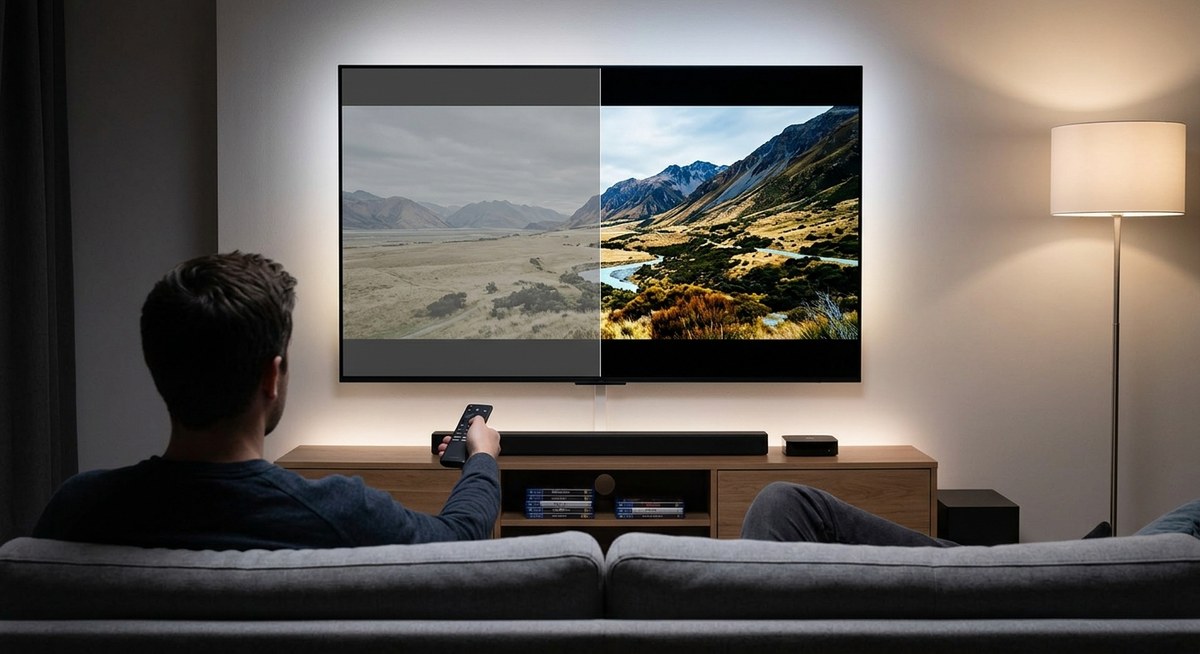
Exceptional colors and wide color gamut. There are both plasma and LCD TV models on the market that feature accurate colors. OLED however will bring something extra – a wide color gamut. That means OLED will be able to display more colors than any other display. People that had the opportunity to look at an OLED TV (including prototypes) said it was like they were looking through a window. The picture looked almost like the real thing.

Exceptional black levels, better than any other display. Very few HDTVs currently available on the market manage to produce almost perfect blacks. The best of the plasma TVs and latest LED backlit LCDs get pretty close to pure blacks. OLED will actually be the first display to produce absolute blacks.

Innovations specific to OLED technology

The most extraordinary feature that OLED displays can bring is flexibility. And I mean that literally. Demos of OLED displays being bent have already been made by some OLED manufacturers. This is going to be the beginning of extraordinary innovation – a TV bent around the corner of the room, or maybe a TV spreading across all the walls in the room or around curved surfaces. An even more useful application, and more realistic as well, is an implementation as a laptop display – instead of a display on one side and keyboard on the other side, OLED will cover the entire surface inside the laptop. That way you can open the laptop and have a display twice the size of the laptop.

 OLED displays are thin. Very thin. Current flat panel TVs are pretty thin, however OLED is significantly thinner. You will be able to hang the TV on a wall and it will be so thin that it will look like a painting. In an era when HDTVs are more and more alike, OLED will offer manufacturers the opportunity to stand out in yet another way.

 Lightweight. Partially because they are so thin, OLED displays are very light.

Low power consumption makes OLED a very 'green' display. Current TVs consume a few hundred Watts. OLED displays, when ready to be marketed, will consume significantly less. The main reason why they consume less is because they don’t have a backlight like LCDs and the pixels actually turn off if they display black.

Unfortunately…

There is only one OLED TV available on the market (the Sony XEL-1 pictured above). A very small (11 inch), and outrageously expensive TV. In other words, OLED is not mainstream technology and it will take a while before we will be able to buy large size OLED TVs at an affordable price. The main reason for the huge price tag is that OLED TVs are not yet produced in large numbers.

If it’s such a great technology why isn’t it produced in huge numbers? Because right now it’s far from perfect. Scientists and researchers are working to address the problems and make large screen OLED TVs reality. The biggest problem right now is the OLED lifespan and reliability for large screens. Plasma and LCD TVs have a lifespan of 60,000 – 100,000 hours. OLED, because of the blue organic element, have a significantly shorter lifespan. On top of that, large OLED screens cannot be manufactured reliably (without defects). We’ve seen that before with LCD – they had dead or stuck pixels.

However, looking back in time at the beginnings of plasma and LCD displays, OLED is indeed a very promising technology. We can expect that in a few years, we will be able to buy a large OLED TV at an affordable price. Personally, I’m looking forward for that day. Meanwhile, if you want to find out more about this technology, check our OLED TV site.

Article date: March 15, 2009


Jack Smith is the editor of www.OledTVZone.com, a website that keeps an eye on the evolution of OLED TVs. OledTVZone.com will also help you see how OLED compares to plasma, LCD or laser TVs as well as which manufacturers have an interest in OLED.


Click here to view other interesting articles from other great home theater sites.

or...

Click here to post comments.

Join in and write your own page! It's easy to do. How?
Simply click here to return to Home Theater Sites
.


Find us on Facebook
Follow us on twitter

Home
HDTV Guides CRT TVs
LCD TV Guide
Plasma TV Guide
3D TV
Flat-panel TV Reviews Plasma TV Reviews
LCD TV Reviews
Best HDTVs
Projection Systems Projection TV
RPTV Reviews
DIY Projection TV
Projector Reviews
Projection Screens
Digital and Satellite Television Digital TV Guide
Satellite Television
Home Theater Audio Surround Sound
AV Amplifiers
Speakers
Wireless Home Theater Wireless Speakers
Headphone Guide
Media Players
Home Theater Guides Home Theater Design
Equipment Racks
AV Cables
HDCP
Set-Up DVDs
Power Protection
Books and Magazines Books / Magazines
Catalogs
Home Theater Ideas! Home Theater Sites
HT Pictures Gallery
Useful Links
Movie Posters MoviePoster Guide
The Poster Store
Shopping Online Price Search
Refurbished Products
Online Store
Website Information About Me
Website Content
Site Use & Dislaimer
Privacy Policy
Advertise
Site Search
Contact  Form
Site BLOG
E-zine Subscription
.

[?] Subscribe To This Site

XML RSS
Add to Google
Add to My Yahoo!
Add to My MSN
Subscribe with Bloglines


Please Note:

Double-underline links appearing on this site represent additional information and special deals related to the page content; this added information is being supplied directly by Kontera.

To view this information, please place your cursor over these double-underline links.


Stay tuned to Practical Home Theater Guide

New content will follow soon!