|
|
|
|||||||||||||
LG LCD TV Lineup for 2010
|
|
|||||||||||||
|
||||||||||||||
Editor's Note: In this first part of this LG LCD TV review, we first introduce the full LG LCD line and then review LG's LD350 and LD450 entry-level series. In the second part, we discuss LG's step-up and premium CCFL-backlit HDTVs, the 120Hz LD520 and LD550, and the 240Hz LD650 Series. Introducing the latest LG LCD TV Sets for 2010LG's new LCD TV lineup spreads over five main series. Entry-level 720p LCD TV series comprise the LD350 while the LD450 series represents entry-level 1080p 60Hz LG HDTVs. Despite being LG's entry-level series, these still come with one of the most exhaustive feature sets at this price bracket. Moving up the LG CCFL lineup, one finds the LD520 HDTVs; these introduce LG to 120Hz TruMotion refresh rate technology. Instead, LG's premium LD550 LCD TVs adds the latest LG NetCast Internet TV entertainment platform to the already interesting feature set of the slightly less expensive LD520 series LCD HDTVs. The LD550 is also the only CCFL LG LCD TV series that comes with a massive 60-inch LCD models, the LG 60LD550 - which at its present reduced online price of $2,000, represents a solid big screen TV option for the home theater. Add 240Hz processing and there you jump on LG's LD650 series. In fact, the only significant enhancement over LD550 HDTVs is LG's 240Hz TruMotion technology. 2010 LG LCD TV Product Evaluation: Part 1 - Entry-level SeriesLD350 Series 720p 60Hz HDTVs
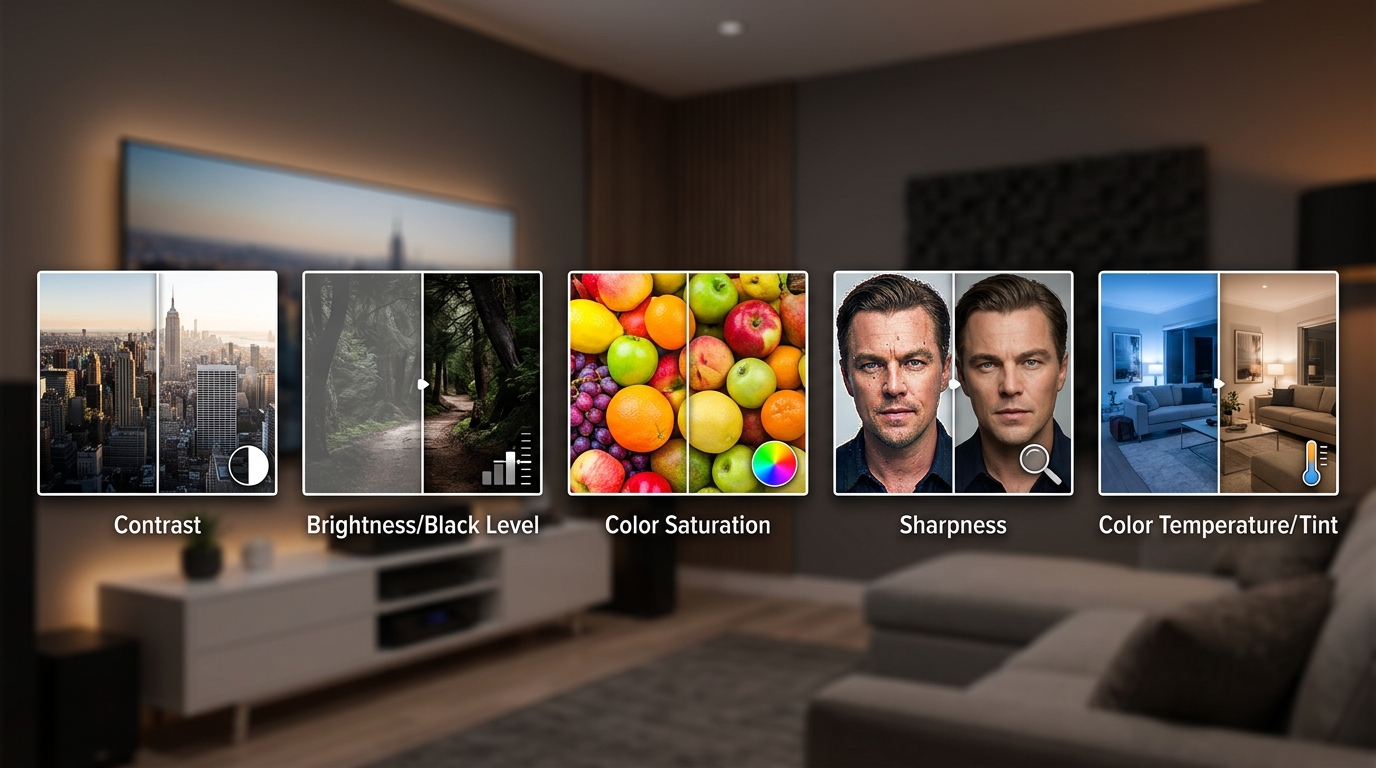
Characterized by a glossy black cabinet and a 'Nobel Titan' trim, the relatively good looking but uninspiring design hides a rather extensive feature set for entry-level HDTVs at this price bracket - one that is not normally associated with entry-level HDTVs. In contrast, Panasonic entry-level equivalents are literally bare-bones sets. Key features on LG 720p 60Hz HDTVs include:1] A screen resolution of 1366 x 768 pixels for all screen sizes. 2] A response time of 5msec for all models except the 32-inch which comes with a slightly improved 4msec pixel response; the latter is more in line with what we find on 120Hz instead of 60Hz LCD HDTVs. 3] A rated dynamic contrast ratio of 50,000:1 for the 19-inch, 22-inch, and 26-inch, and 70,000:1 for the 32-inch LG LCD TV. 4] LG's Picture Wizard II technology, which makes for easy TV picture calibration thanks to on-screen reference points for key picture quality elements, such as black level, color, tint, sharpness and backlight levels. It is like having a built-in calibration DVD. 5] 24p Real Cinema for the correct processing of 24p content and which in the case of the LD350 and the LD450 60Hz LCD TVs uses a 48Hz refresh rate (2:2 pulldown processing) by processing each movie frame twice to eliminate the resultant judder effect associated with the 2:3 pulldown processing; the latter would be otherwise necessary to display 24p film based content over the 60HZ TV refresh rate. 6] LG's XD video engine for improved video processing; 7] ISFccc Calibration option to enable professional calibration technicians to calibrate these LG LCD TVs for the best picture quality in the home theater environment under different ambient light conditions. 8] Smart Energy saving options for improved energy efficiency; options covered include the ability to adjust the screen brightness to pre-set levels as well as a 'video mute' option that switches off the picture while continuing with the sound - like when leaving the room for some time with the TV still on; this drastically reduces power consumption. 9] Audio comes at 7W RMS per channel and includes LG's 'Infinite Sound' for simulated surround sound via the set one-way two speaker system. LG also equipped these HDTVs with its Clear Voice II feature to help differentiate the human sound range from others, thus improving the audibility of the human voice. However, as we always say in our HDTV reviews, these LG LCD TVs are no exception; despite the many nice audio features, you still have to wire your TV to an external sound system if you want to enjoy the best sound. Sound is good especially at low volumes but it soon starts to lose its clarity at higher volumes. 10] Connectivity is typical of what one finds on entry-level HDTVs from other major brands and includes two HDMI inputs ver. 1.3 with x.v.Color and CEC (for use with LG SimpLinkTM to control multiple SimpLinkTM devices via the TV remote) on all sets; the only except is the 19-inch which comes with a single HDMI input. As has been the trend since 2009, these LG LCD TVs miss the S-Video input but otherwise connectivity is complete. Apart from the HDMI inputs, you will find one PC VGA type D-sub 15-pin input, one composite video, one component video, digital audio out, and even a headphone output. The 32-inch version also includes one USB2.0 port for playback of JPEG files; the USB port on the other HDTVs is for servicing only while an RS-232c port is also available on all HDTVs for control purposes. These entry-level LG LCD TVs also come with a most extensive range of user-adjustable picture settings. Included are 3 AV Modes with pre-set picture settings to optimize picture and sound based on Cinema, Sports or Game content; these can be easily set with a convenient button on the remote control. 7 Picture Preset Modes provide out-of-the-box picture settings for practically every situation. These include two isf-ready Expert modes designed mainly for professional calibration and that gives total control to the user; the other five user adjustable picture modes are a relatively dim-by-design Standard mode whose default settings complies with Energy Star, a Vivid mode which is too bright for most home environments, a Sport mode, a Game mode to optimize the TV dynamic picture response and colors for fast action sports and games. and a Cinema mode optimized for watching movies. All these picture modes use independent memories per input to enable the user to adjust these picture modes separate for each input. Other picture settings include: six aspect ratio settings - including a 'Just Scan' mode for 1:1 pixel matching (this makes these TVs also suitable for use as a big PC monitor); three of each color temperature and gamma presets, a 2-point and a 10-point fine color temperature control, adjustments for dynamic contrast, noise reduction, black level setting, color management support for accurate setting of primary and secondary colors through the use of the provided test patterns; and a color filter function that can turn on the red, green, or blue components of the video signal independently to enable the user to set color saturation and hue accurately, as further detailed under our LG plasma TV review article here.
LD450 Entry-level 1080p 60Hz LG LCD TVs
Feature-wise, the LG LD450 entry-level HDTVs are the 1080p equivalents of the 32-inch LD350 LCD TV in that these sets share the same identical features - with only a few minor enhancements that do not impact picture performance. These include an extra composite video input, USB2.0 support for both music and photos (MP3 and JPEG files) instead of the JPEG only found on the LD350 series, improved sound with 10W x 2 total audio power over a 2-way-4-speaker stereo setup, and a slightly improved 100,000:1 dynamic contrast ratio rating. The latter however does not really impact picture quality despite what the difference in numbers seems to imply. While an improved contrast ratio rating do help in delivering a better picture, yet a picture is not made of contrast only. In addition, rest assured you would not be able to perceive the difference between the 70,000:1 of the 32LD350 and the 100,000:1 of the LD450 sets. It is not the scope of this article to go into the issue of contrast ratio and how it impacts picture quality, but if you would like to know more about this issue of contrast rating, read our article The Contrast Ratio Game - Playing with Numbers! In other words, despite the difference in contrast ratio numbers between these two LG entry-level series, LD350 and LD450 HDTVs should basically deliver the same picture quality. LG LD350/LD450 Performance Issues:Consumer reviews posted online show that customers are generally very much satisfied with these entry-level LG LCD TVs - saying the picture is excellent. Both LG TV series deliver a picture that is very much in line with similar entry-level series from other brands, with blacks that look very good and bright whites, relatively accurate colors, and solid overall picture performance. According to a review appearing on TelevisionInfo.com for the LD350, what seems a problem with these LG LCD TVs is a slight inaccuracy in the color of green and blue but in our opinion, the reported inaccuracy does not have any significant impact on the set overall color accuracy. There is also some lack of shadow detail in the darker parts of the image due to what TelevisionInfo.com describes as shallow blacks. The latter is due to a somewhat higher grayscale gamma (2.6) that is slightly above the ideal 2.2 benchmark - causing a more aggressive shift from black to white. This can lead to a loss of shadow detail - making some dark areas look a bit flat. But there again, this slightly more aggressive gamma is generally not too obvious to the unaided eye except in side-by-side comparisons. TelevisionInfo.com also reports a relatively reduced viewing angle with respect to the competition - in particular with respect to Samsung equivalents. This may or may not be an issue depending on your seating layout. If your seating layout calls for a wider angle of view, then a Samsung equivalent would probably be a better choice - otherwise you may very well enjoy the superior feature set of the LG at this price level. The bottom line: Do not expect to get the best picture at this price bracket from these entry-level LG LCD TVs. And as is typical of the latest flat-panel HDTVs, sound quality is simply of mediocre quality at higher volume levels due to these sets small down-firing speakers. But these are the LG HDTVs that deliver the best bang for your buck - with a relatively solid picture after calibration thanks to the set most complete set of user-adjustable picture controls - significantly more than you would ever expect from entry level HDTVs. Bestselling entry-level LG LCD TVs include the 32-inch 32LD350 and the 42-inch 42LD450 which at $360 and $660 respectively are among the most affordable entry-level LCD TVs within their respective category. In particular, the 32-inch 720p LCD TV is proving to be among the top selling LCD HDTVs irrespective of brand and the bestselling LG HDTV for 2010. This is no surprise considering the highly positive customer feedback posted on major sites. Some may skip over this 32-inch LG LCD TV simply because of its 720p resolution. But if feature wise it delivers what you are after, moving on to a 1080p LCD HDTV at this screen size is waste of money. At anything smaller than 50-inch, it would be hard if not impossible to notice the difference in picture detail afforded by the higher pixel count of 1080p HDTVs with broadcast content when seated at normal viewing distance. But more on this in our TV Viewing Distance guide. Competing entry-level models for LG's LD350 and LD450 LCD TVs within this price bracket include the Samsung LNC350/LNC450 series reviewed on our site as well as Panasonic TC-LX2, Toshiba E200U and the Sony Bravia BX300 and EX400 series.
Next:
2010 LG LCD HDTV Review - Part 2: 120Hz and 240Hz
LCD TVs Are you looking for an HDTV?Amazon.com offers an extensive range of HDTVs, often at significantly reduced prices. In addition, the various buying options available are among the best online. However... Prior to any decision, do some research of your own; look at what others had to say about their purchase to get a better insight about the product functionality, customer experience and customer support; a good starting point is the customer feedback posted on the amazon site. A large selection of HDTVs is also available at amazon UK. |
Featured product reviews on PHTG
For a professional installation job! LCD
Television Installation Basics: Guide
to Choosing the Right LCD Mount:
Installing an HDTV over the Fireplace
For additional information on how to install a flat-panel TV mount the professional way, please check also our guide to Installing a Plasma TV Wall Mount. The information contained in this guide applies to both plasma and LCD HDTVs. Use of Wiring Channels for flat-panel TV Installations: Designed for the home installer with basic DIY skills, wiring channels make for ease of TV installation and a professional looking job. TV Viewing Distance Guide: Discover how the TV screen size and image resolution relate to your viewing distance for a truly immersive viewing experience. Note: This guide deals with 2D TV viewing; for 3D HDTVs, please refer to our article 3D TV Viewing Explained.
Recommended Technical Guides LCD/LED HDTV Guides:
Developments in LCD flat-panel Technology:
The LCD Display Panel: How-it-works
LCD Response Time, Image Lag and 240Hz/480Hz LCD
HDTV Sets:
Image Sticking in LCD Televisions:
Plasma vs. LCD vs. LED TVs: Miscellaneous Articles
The Smart TV Guide: HDMI Cable Guide 3D Television FAQs AV Equipment Racks for the
Home Theater: Understanding HDTV formats
Contrast
Ratio Explained A Quick Guide to Home Theater Design Easy-to-follow e-book on how to research,
design your
by Duncan McClelland
Check out for the latest offers on LCD/LED TVs at amazon Sony
Samsung
LG
|
|||||||||||||
|
|
||||||||||||||
|
||||||||||||||
|
|
|
|||||||||||||
|
HOME |
About Me |
Site Content |
Terms of Use / Disclaimer |
Privacy Policy
Information on this website represents the author's opinion and does not constitute professional advice; please read our terms of use and privacy policy before using this site. |
||||||||||||||