Home
E-zine Subscription
CRT TVs
LCD TV Guide
LCD TV Reviews
Plasma TV Guide
Plasma TV Reviews
Projection TV
DIY Projection TV
RPTV Reviews
Digital TV Guide
Projector Reviews
Projection Screens
HT Cables
HDCP
Set-Up DVDs
Home Theater Design
HT Pictures Gallery
Equipment Racks
MoviePoster Guide
The Poster Store
Surround Sound
Headphone Guide
Wireless Speakers
Media Players
Books & Magazines
Catalogs
Power Protection
Satellite TV
Useful Links
Refurbished Products
Price Search
HT Online Store
Advertise on this Site
About Me
Contact Form
Privacy Policy
Site Search
Site BLOG

XML RSS
What is this?
Add to My Yahoo!
Add to My MSN
Add to Google

Step-by-Step Guide to Home Theater Wiring
Home Theater Speaker Wiring


The quality of your home theater wiring will have a noticeable impact on the sound quality of your home theater system.


Surely, you will want to get the best sound out of your home theater system. However, many fail to realize that the quality of your home theater wiring can have a noticeable impact on your speaker performance.  

The greatest speakers will not sound their best with low-quality speaker wire and inappropriate wiring installation. 

Read on for our tips and techniques on selecting and installing speaker wire.

Web page index:

About this article:

Home theater wiring is an integral part of an overall home theater design process.  This article should therefore be seen in the light of the rest of a series of home theater design guides appearing on our site.

Some speaker manufacturers use of non-standard connectors; in these circumstances, use of optional third speaker wire and connectors is not possible.


Speaker Wire Gauge - What is the required wire thickness?

Selecting the correct thickness for your home theater wiring is important as it affects the speakers' performance; it will impact the speakers' ability to deliver the explosive effects in home theater sound.

The thickness of a wire conductive copper part is identified by its Wire Gauge, normally expressed either in AWG (American Wire Gauge) or SWG (British Standard Wire Gauge). The British standard represent a thicker wire for the same wire gauge number. 

In this article, all references for wire thickness are in  the AWG standard; for an on-line wire gauge conversion chart, check here.

Irrespective of the standard you use, a lower the gauge number related to a thicker wire, and a better capacity to pass the amplified audio signal. Good quality speaker wires fall in the range 12 to 16 AWG.

Avoid speaker wire thinner than gauge 16 when installing your home theater wiring unless you are working with very short runs. A major factor is the distance between the amplifier/home theater receiver, and your speakers — long wire runs can cause significant power losses, and thus require thicker speaker cables

Even with short runs, AWG 18 is the minimum thickness you can go.

When choosing speaker wire, consider the quality of your gear. In other words, the build-up quality of the speaker wire should match that of your speakers and amplifier. Ensure also that your speaker wire support the power rating of your sound system.

However that quality comes at an expense; thicker home theater wiring is more expensive; hence keep an eye on your available budget.

...back to page index


Single and Multi-Room Home Theater Wiring


Single room installation: If you are planning a new home theater wiring installation, our advice is to go for the thicker wire you can afford - at least for your primary listening room. 

The thicker wire will help bring out fine musical detail in quality music systems, as well as deliver the explosive effects of surround sound.

In those situations where long speaker wire runs cannot be avoided, thicker wire helps reduce the overall resistance, and therefore amplifier load - leading to lower operating temperatures.

This will result in improved sound quality and long-term stability.

And as stated earlier on, match the build-quality of the selected home theater wire with that of your gear. If you are after setting up a  modestly priced home-theater-in-a-box package, do not go for the more expensive thicker wire unless you plan to upgrade some time in the future; a gauge 16 wire is probably the way to go.


Multi-room wiring: In a multi-room installation, long home theater wire runs are inevitable; the suggested wire gauge to use in your home theater wiring is given below:

Distance from speaker to amplifier/HT receiver

Gauge (AWG)

Less than 80 feet

16

80 to 200 feet

14

More than 200 feet

12


National building safety standards may require the use of specially certified wire for in-wall installations; see In-Wall Installations for further details.

...back to page index


Required Wire length & Speaker Connection Basics

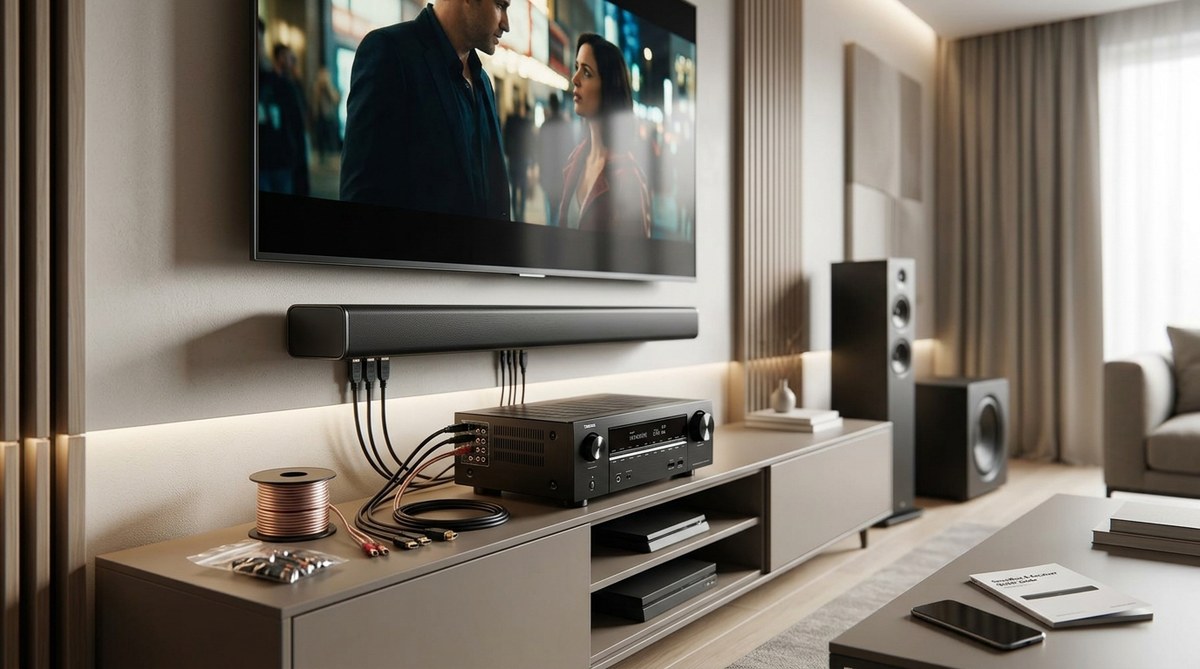
Required speaker wire length: Once you decide about your home theater speaker and equipment placement, it should be a simple straightforward job to figure out how much speaker wire to buy. 

For more information on equipment placement, we suggest that you take a look at our home theater speaker placement and home theater equipment placement guides.

One method to determine the wire length is to run a string from your intended receiver location to each of your speakers, along the path you plan to run the speaker wire. Make sure to add a little bit extra per speaker to allow both for a margin of error, as well as for connection to your gear.


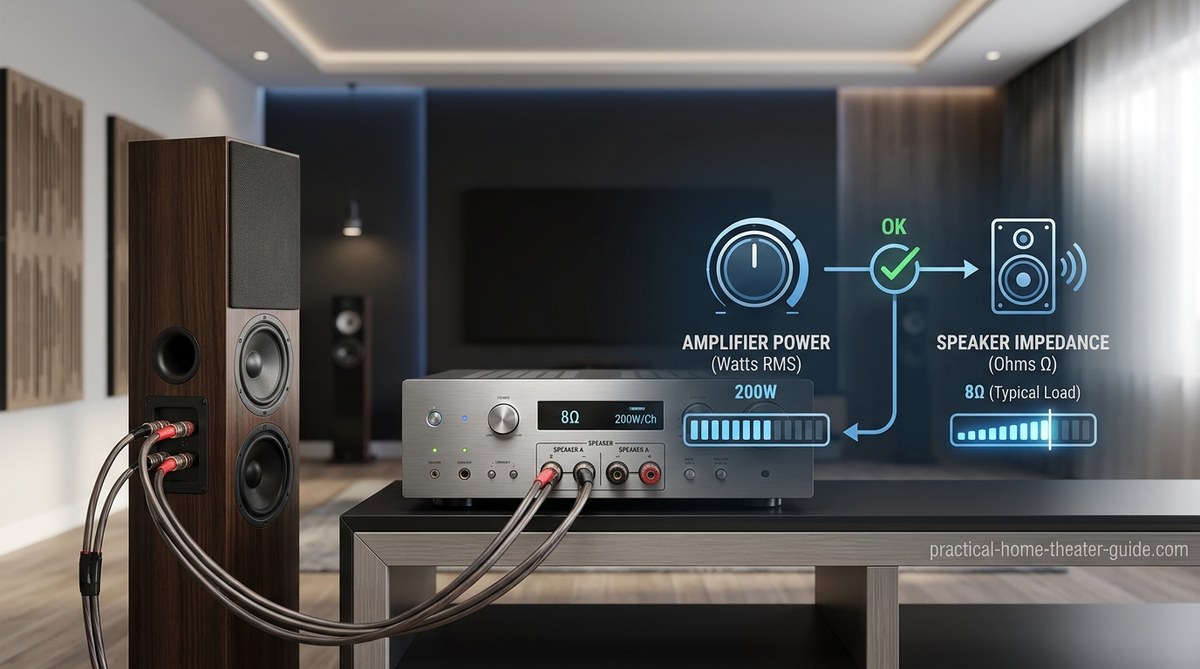
Connection basics: Speakers and amplifiers/receivers normally come equipped with one of two types of connectors - spring terminals or binding post connectors. 

Each speaker connection would have two such terminals marked  (+) and (-) to help you distinguish the two leads. Maintaining the correct  polarity all along your home theater wiring is important. For this reason, speaker wire and terminals are normally color coded black for the -ve terminal and red for +ve side.

Spring terminals will only accept pin connectors or tinned base wire ends. Binding posts may accept many types of connection, including pin, banana plug or spade.

Do not rely on a bare wire connection when connecting speaker wire. Bare wires tend to corrode - leading to a degraded connection over time. For a solid connection, it is recommend to terminate the speaker wire with the appropriate connectors.

Speaker wire connectors also help safeguard against harmful short circuits as a result of loose strands from bare wire positive and negative leads. Short circuits leads may lead from just a simple temporarily amplifier shutdown to a serious and costly amplifier damage.

For the ultimate in home theater wiring, look for speaker cables that come pre-cut from the manufacturer with connectors already attached — they'll reduce the effort required to install the system. Both Better Cables and  Monster Cables (available through amazon.com) provide high quality speaker cables. There are others worth considering as well - so check around for the best price. 

If you order pre-terminated speaker wire, check the type of connectors for compatibility. In addition, order your speaker cables from a reputable source; this is the only way to ensure that you will get the quality you are paying for. 

...back to page index


In-wall Installations for a neater look!

Hiding speaker wire inside walls, under floors, and in the ceiling can be a great option. It leads to a neater look but it can be an expensive option especially if you have to call for professional assistance. Proper planning is therefore important. 

In-wall home theater wiring is the norm for multi-room sound, outdoor speakers, and dedicated home theater room installations.

Can you do it yourself? It all depends on your skill level. It's much easier and less expensive to do during initial construction or renovation than it is in a finished home. 

If you have any doubts about your ability to do it, consult with an electrician or professional installer. And do not forget to find out if your building code calls for a permit and an inspection.

In general, in-wall installations require the use of specially certified wires that comply with national standards for resistance to fire, chemicals, abrasion, and temperature extremes. 

For a more hands-on information on in-wall home theater wiring, please take a look at the recommended links in our further reading list below.

...back to page index


Home Theater Design Guides - suggested further reading:

Did you find this article on home theater wiring helpful? This discussion on home theater speaker wiring would not be complete without reviewing the information contained in the following home theater design guides appearing on our site:

Other important links:

For a hands-on advice on In-Wall home theater wiring installations:

Recommended Home Theater Cable Suppliers:

For a full range of high quality audio and video home theater cables, speaker wire and connectors, please check at:

Better Cables

Monster Cables


More Home Theater Design articles will follow soon. Subscribe to our free monthly e-zine to remain abreast with the latest additions to our site.  Click here for details.

                Last updated on: 26th April 2006

 ...back to Home Theater Design Index


return from HT Wiring Guide

 ...back to Home Page


 Copyright © - Practical-Home-Theater-Guide.com  All rights reserved.