left image


Home Page - Surround Sound - Better Home Theater Sound

Date: 30th March 2011


Comprehensive Home Soundproofing Guide

Comprehensive Guide to Soundproofing Your Home (e-book)

By Craig Williams.

Practical advice on soundproofing your home theater - with inexpensive DIY soundproofing tips for floors, ceilings, walls, windows and doors.

Click here for details.

 
Klipsch HD Theater 1000 - 5.1-channel home theater speaker system - 700 Watt (total) - black

Klipsch HD Theater 1000 - 5.1-channel home theater speaker system - 700 Watt total
(Buy from amazon US)


More Buying options - Klipsch HD 500 500W version: Amazon UK      B&H


Home Theater Sound Easy-to-follow tips for a better sound

Whether you are in the process of purchasing a new set of home theater speakers, upgrading your AV receiver, or wish to make the most out of your present home theater audio set-up, knowing what to do and how to setup your sound system to enjoy a better sound is a basic step towards a realistic and more enjoyable home listening experience.

In particular, achieving the correct sound balance between the different channels in a multi-channel surround sound speaker setup is essential.

This would normally call for an inexpensive sound pressure meter as further detailed in this article, and possibly a home theater calibration disc to assist you in the process.

Directly related with a properly set up home theater sound system is the issue of correct time-delay settings for your surround channels. We cover the subject of delay settings in surround sound systems in our article here.

Time delay adjustments in the latest generation of A/V receivers have become much easier to handle than ever thanks to the presence of automated setup wizards or assisted setup menus that guide the user through a simple step-by-step process. Some of the latest receivers even take into account the room response to automatically adjust the receiver equalization for the best home theater sound.

However, you need to ensure to go through the setup process in the proper manner to get the best results. In addition, it is always desirable to have a proper understanding of how to go about manually setting the different channels to ensure the best results.


But there is more you can do to enjoy a better home theater sound

1] Use Correct Speaker Wiring

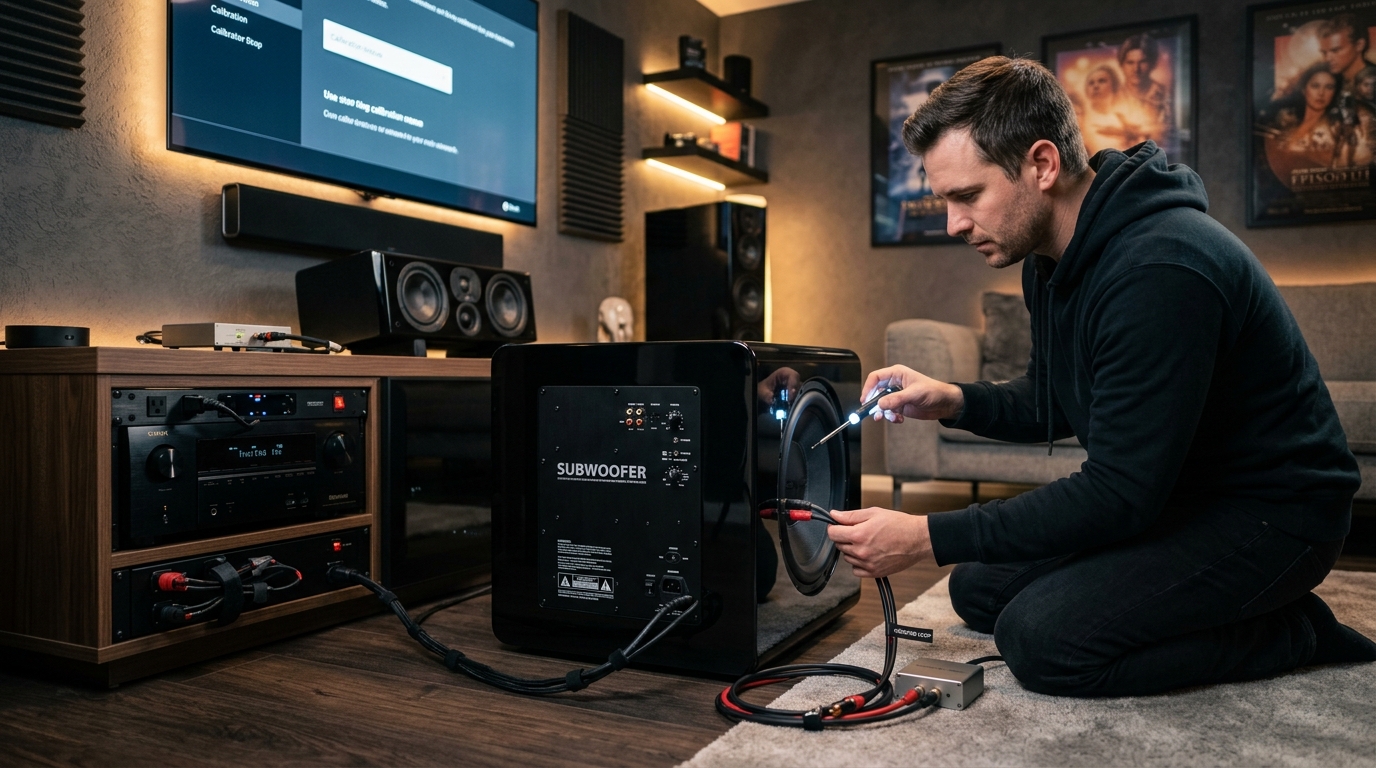
Start by checking that the correct speaker is connected to the correct output on your AV receiver or home theater amplifier. Equally important, ensure that all speaker connections from your home theater sound gear follow through the correct polarity. Mixing up speaker polarity will cause the respective speaker to fire in an out-of-phase with the rest - which may eventually break up the sound field.

Note: You will also be able to double-check for correct speaker connectivity when adjusting the relative balance between the different audio channels using the surround processor built-in test-tone as further detailed under point 2 below.

2] Tweak your Speaker System

If you have never gone through the product manufacturer documentation, or has never navigated through the different menus and speaker sub-menus, then the likelihood is that you have not yet spend time tweaking your AV receiver - speaker system for the best home theater sound performance.

It is important to ensure that your surround sound processor or AV receiver is set to match your home theater speakers. Input the size of your front speakers as small or large. This will determine how the home theater sound processor will route bass to the different speakers (refer to point 4 below for additional information on bass management.) Speakers ranging from 6-inch up to 8-inch qualify as large speakers or woofers while anything larger than and including 8-inch diameter speakers qualify as subwoofers.

If you do not have a center channel, set the surround processor to phantom mode for the center channel.

Ensure that the delay settings for the surround channel speakers are properly set. Correct delay settings are important as otherwise sound from the different speakers will not reach the listener at the same time - leading to a disjoined sound field. How to set the delay settings may differ from one surround processor to another but in most cases, this involves inputting the measured distance between the listener and the speakers. Some older systems required the user to input the delay settings direct in milliseconds; more on this in our guide here, but it is enough to keep in mind here that 1 foot corresponds to approximately one millisecond. Some more advanced systems come with a kit for an automatic setting.

One final important basic setting in a home theater sound system is correct balance between the different audio channels. All channels should be set to the same volume level with respect to each other. All surround sound receivers come with a test-tone; this is sent to each channel in a consecutive manner and helps you set the relative volume of each channel to achieve the same loudness from the listening position.

3] Get an inexpensive sound pressure meter and a calibration audio disc

SPL-8810 Sound Pressure Meter

SPL-8810 by
American Recorder Technologies

While there is nothing wrong in adjusting the relative channel volumes by ear, there is no doubt that for best results in a home theater sound setup, you need to invest in an inexpensive sound meter. Suitable options include the Galaxy Audio CM130 SPL Meter and the SPL-8810 by American Recorder Technologies. Both would both enable you to do a perfect job, however the SPL-8810 is a somewhat better in that it also comes with data hold and max hold features.

And if you are a little bit more ambitious, include also a calibration disc. A great calibration disc suitable for use by both the novice and the expert is the Avia II home theater set-up DVD. Released in 2008, the AVIA II is still one of the best AV calibration setup DVDs ever released.

A somewhat less expensive but equally valid option for both video and audio calibration is the Digital Video Essentials HD Basics disc; it comes in Blu-ray format and was released almost at the same time of the AVIA II.

For more information on the use of home theater setup discs, please check our Guide to Home Theater Set-Up DVDs.

4] Correct Base Management

Proper bass management is important for an enjoyable listening experience. Many have the tendency to simply go for a too loud a subwoofer setting that would literally suppress the sound coming from the rest of the other speakers in the room.

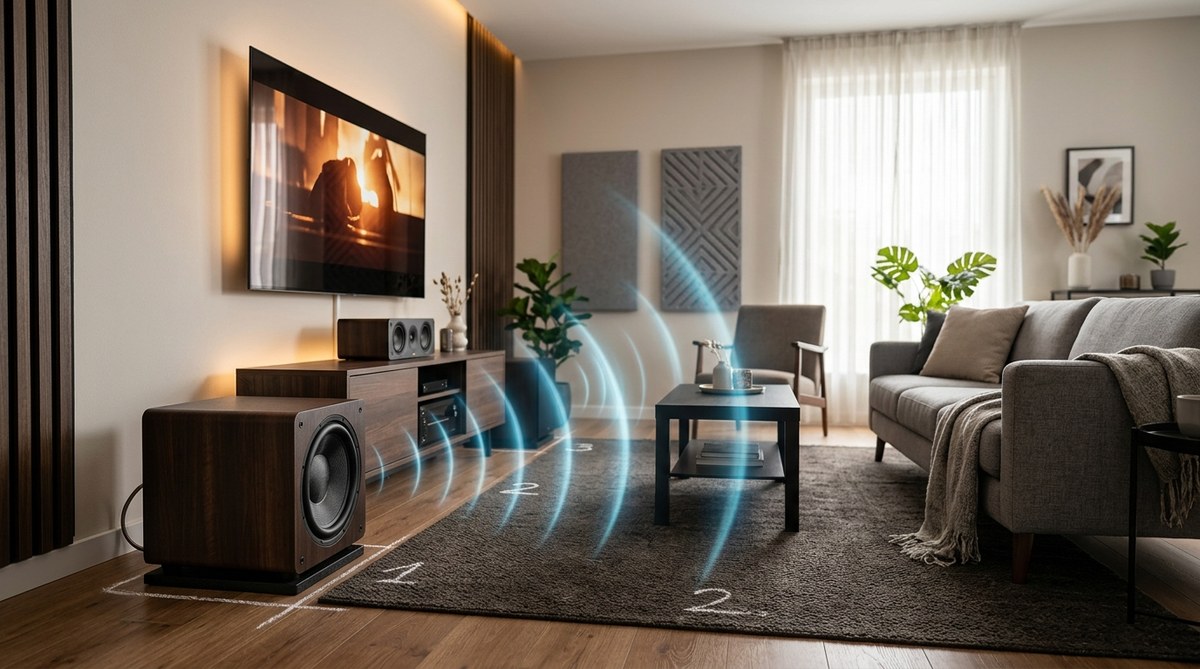
A correct subwoofer setting is one where the bass is felt rather than heard. If your bass sounds boomy and possibly uneven, the likelihood is the volume setting is too high, so lower the volume. A subwoofer placement too close to a wall or corner would also amplify the bass response of a subwoofer; shifting the subwoofer away from the wall or corner will produce a smoother bass.

THX recommend that during initial system setup, all speakers in a home theater sound system should be set to 'small' so that the bass will be routed exclusively to the subwoofer. This helps you set your subwoofer where it sounds best in your room.

Directly related with bass management in a home theater sound system is a correct cross-over setting; this will determine the frequency at which the surround sound processor will route bass from the fronts and surrounds to the subwoofer. With small satellite speakers, the cross-over setting should be set to above its mid-point while with bigger bookshelf and tower speakers capable of producing more solid bass on their own, a much lower setting would work best.

In the case of floor standing speakers with built-in subwoofers, the front left and right speakers should be set to large and the subwoofer setting should be set to off. In this case, the LFE (low frequency effects) channel and bass from all 'Small' channels will be directed to the Front Left and Right outputs (both at the speaker level and line level).

Instead, if you are using both large speakers for the fronts and a separate powered subwoofer, the LFE channel will be directed to the sub out jack along with any bass information from channels you selected as 'Small.'

Home Theater Sound - Advanced Tips

Speaker Stands: Placing your speakers on appropriately positioned wall mounts or floor stands will make a drastic difference to the quality of your home theater sound in the room.

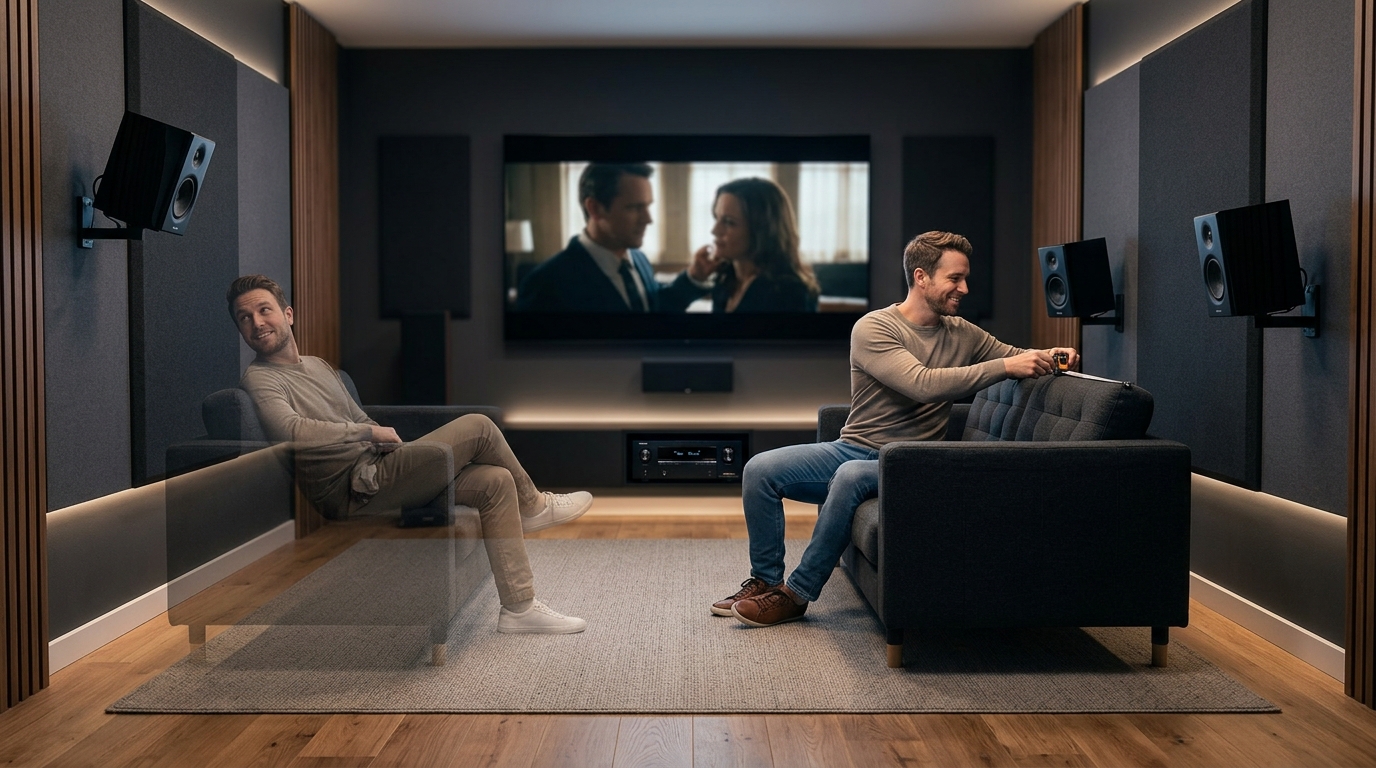
Correct Speaker Placement: Even more important is the correct placement of speakers with respect to the listener. The main requirement is to position the fronts - left, center, and right - at equal distances from the listener and with their tweeters at ear level when seated, while the surround speakers should ideally be placed alongside and slightly to the rear of your main seating position.

For a detailed discussion on correct home theater speaker placement, please refer to our speaker placement guide here.

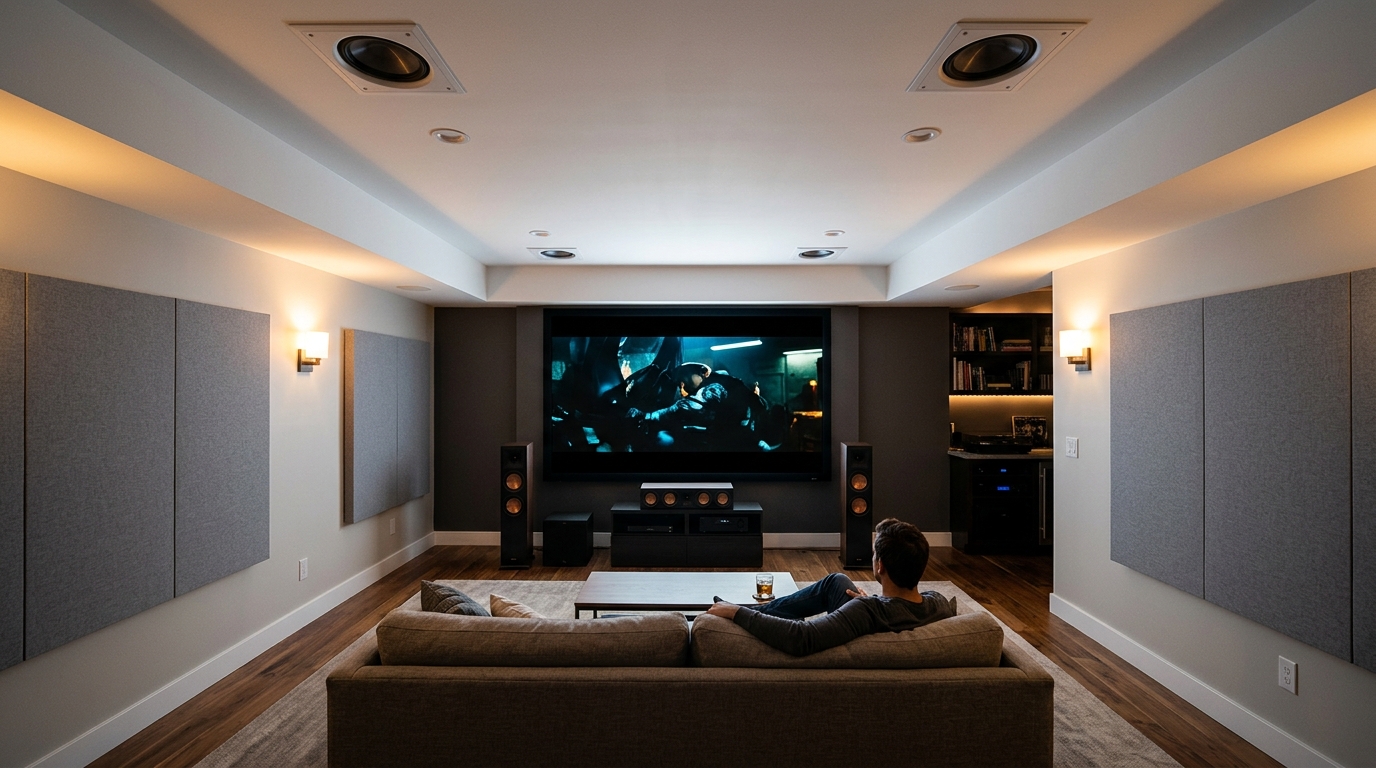
Correct Room Acoustics:  Bare rooms will provide too much reverberation, leading to a home theater sound that is too harsh. Introducing curtains and carpets in the room will do a lot towards a great home theater sound. More information on room acoustics is available in the following Home Theater Room Design guide.

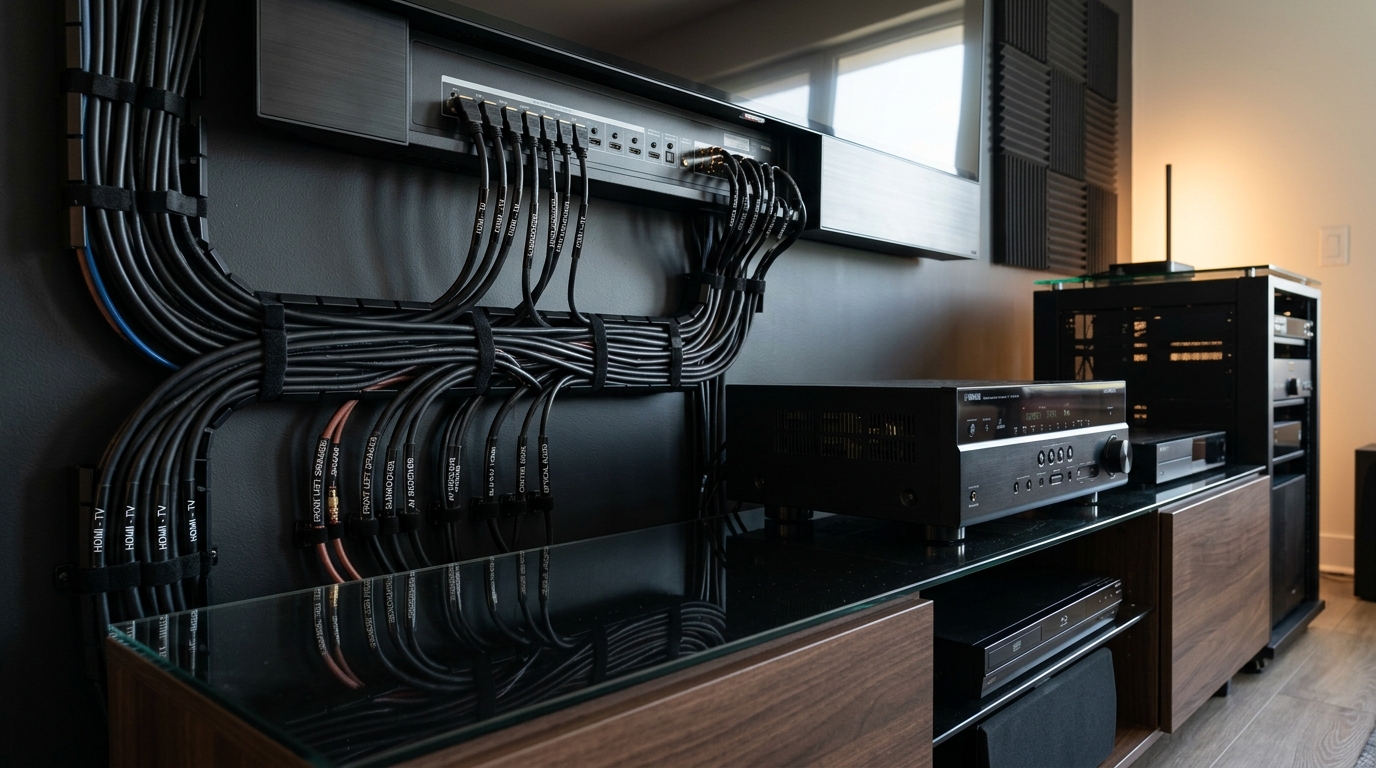
Speaker Cables and Interconnects: Most speaker wires and audio/video interconnects that come with audio gear are too thin to be of any use except for very short runs. Upgrading to thicker home theater speaker cables and better quality audio interconnects can do a great difference in the resulting sound quality. In particular, the use of thicker home theater speaker cables will help reduce the load on your amplifier while delivering more of the amplifier output to your speakers.

It will also help your home theater sound system deliver the fine musical detail audiophile-quality sound systems are capable of, as well as those blasting effects in multi-channel surround sound. For more information on the subject, please refer to our Speaker Cables guide.


Looking for affordable Multi-channel Home Theater Receiver?

Amazon offers an extensive range of AV receivers at significantly reduced pricing. In addition, the various buying options available from the different retailers present on the amazon storefront make amazon one of the most comprehensive online sources in this respect. 

Prior to any decision, we advise to do some research of your own. Look at what other customers had to say about their purchase especially with respect to product quality and manufacturer customer support. A good starting point is the customer feedback posted on amazon. 

You can search the amazon storefront without leaving our site by using the amazon search box below; your search results will appear here under.


Home Theater Sound

Articles covered under this section 

SUBMIT a Home Theater Receiver Review
Would you would like to submit a review of your latest home theater receiver purchase to be featured on our site?

Rest assured that your first-hand experience will be of value to many others.

Click here for details

AV Receiver & Amplifiers

Buyer's Guide to Home Theater Receivers: What to look for when planning an AV receiver purchase.

5.1 vs. 7.1 Home Theater Receivers: Which multi-channel home theater receiver represents the better option?

Understanding Amplifier Specs: How different specs relate to an amplifier's ability to deliver adequate audio power and sound quality.

Amplifier Power: Matching the amplifier power output to your expected level of loudness.

Time Delay Setting in Surround Systems: Correct delay settings are essential for a unified sound-field.

Best AV Receivers: Reviewing the best midrange home theater receivers for home entertainment.

Surround Sound Formats

Dolby Sound formats including High-definition Audio Formats and Virtual Surround Technology

DTS Sound formats including DTS High-definition Audio

High Definition Audio for Music Listening covering DVD-Audio and Super Audio CD - including DualDisc and Hybrid SACD.

Audio Speakers

Home Theater Speaker Basics: An introduction

Selecting Speakers for Multi-Channel Audio: Discussing the different types of speakers and the speaker requirements associated with the different surround sound channels.

Ceiling and In-Wall Speakers Guide: More speaker options for your home entertainment

The Subwoofer Guide: Complete guide to passive and powered subwoofers

Home Theater Speaker Choice: What to look for when shopping for audio speakers for use in multi-channel audio

Speaker Placement in Multi-Channel Audio: Discussing the home theater speaker placement associated with both music listening and movie watching

Understanding Speaker Specs: Explaining the different terms associated with audio speakers.

Additional Articles:

Dolby vs. DTS - Which is better?  Discussing the differences between these surround sound formats.

THX Home Cinema - An Overview: This short guide to THX explains this certification system, together with the different certification logos, and related technology.


 Home Theater Guides:

Recommended Technical Guides 

3D TV in the Home
We experienced 3D in the movie theater; now 3D is coming to your home thanks to the latest 3D HDTVs. Discover all you need to know about the 3D technology in home entertainment.

Equipment Racks:
There is more to equipment racks than a storage space for your system components. More in this informative home theater guide.

TV Viewing Distance
Buying a big screen TV? Care should be taken as you may easily fall into the trap of buying a too large TV.

Room acoustics and lighting
Acoustics & lighting are dependent on the shape, size and layout of your room – a fact often overlooked by many during their home theater design stage...

Home Theater Seating
Don’t underestimate the importance of proper home theater seating - the layout of home theater seats play a determining role in your home theater experience.

Selecting and Installing Speaker Wire
A correct home theater wiring approach is important for your home theater sound. Poor workmanship and low quality speaker wire will surely impact...

HDMI Cable Guide
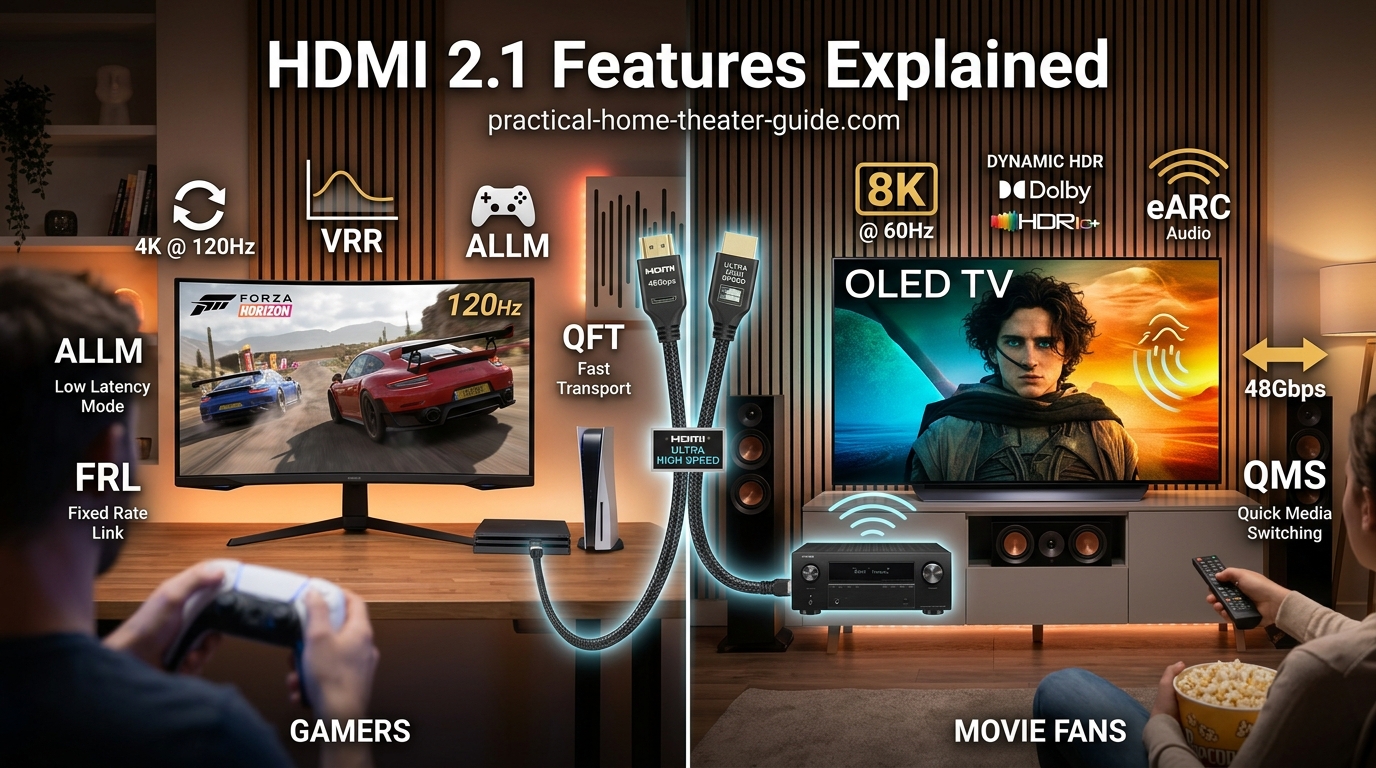
To many, HDMI is still an unfamiliar term. This easy-to follow home theater guide explains all you need to know about HDMI.

 HT Books and Magazines

Recommended Home Theater Reading

Home Theater

Loads of useful information, equipment reviews and buyer's guides.

Home Theater Magazine

Sound & Vision

Provides good reviews on the latest home theater gear.

Sound & Vision Magazine

Practical
Home Theater
Well-written home theater guide - a useful reference to anyone interested in home theater.

Practical Home Theater

Quick Guide to Home Theater Design

How to research, design, and build your Home Theater.

Home Theater Design e-book

by Duncan McClelland
More information HERE


Featured Home Theater  Receivers

Check out the latest reduced pricing  at amazon.com


Find us on Facebook

Follow us on twitter


Subscribe To This Site [?]

XML RSS

Add to Google

Add to My Yahoo!

Add to My MSN

Subscribe with Bloglines


Please Note:

Double-underline links represent additional info related to the page content supplied by Kontera. To view this info, place your cursor over these double-underline links.


Return from 'Tips for a better Home Theater Sound'

Surround Sound - Main Index

Dolby Sound Formats

Home Theater Receiver Guide

Home Page