![]() |
||||||||||||||||
![]() |
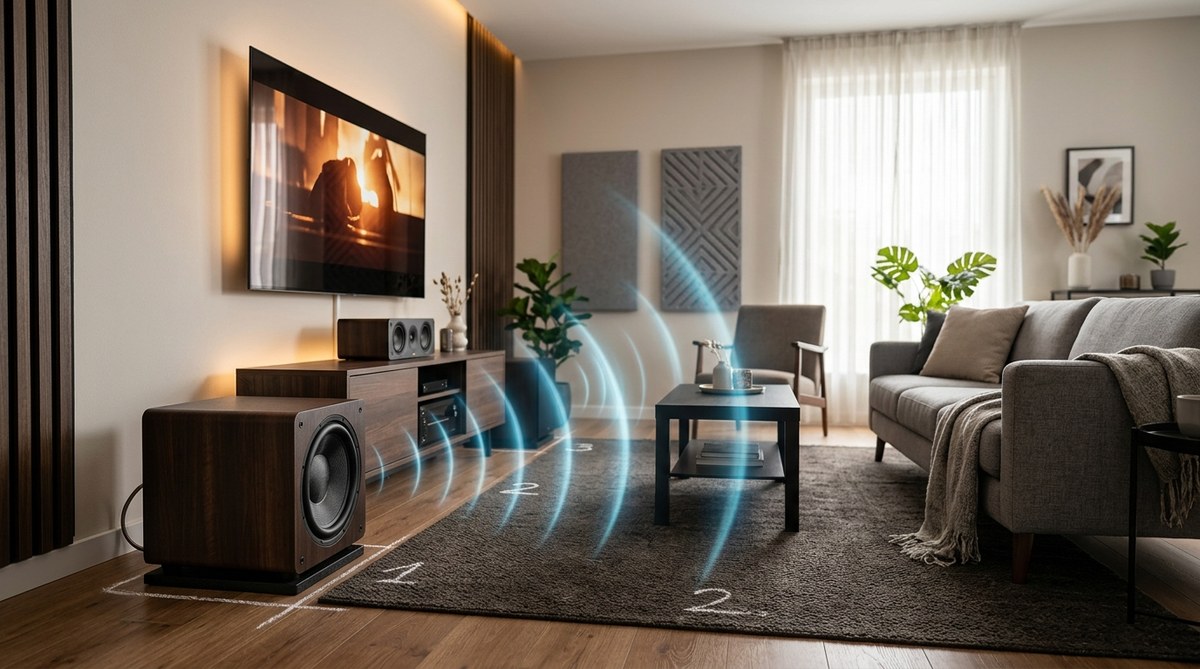
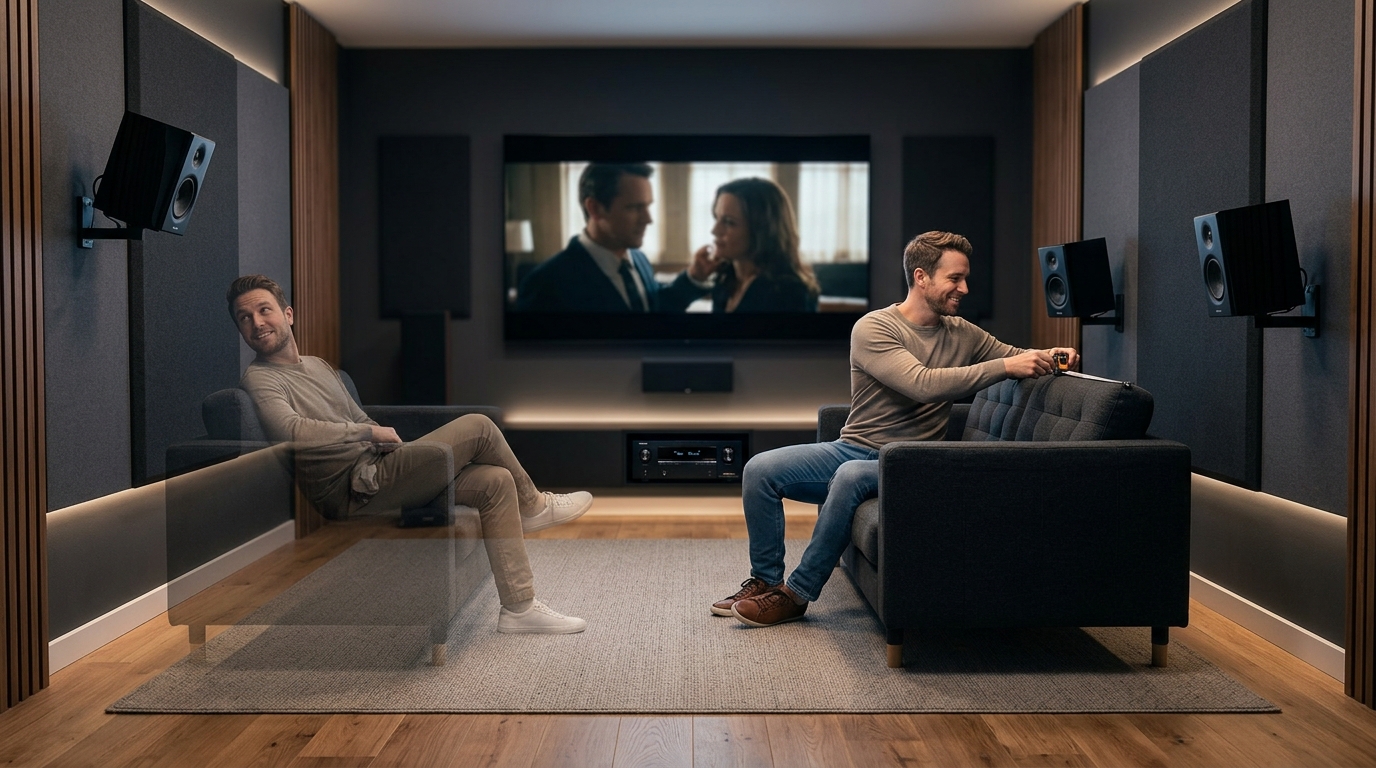
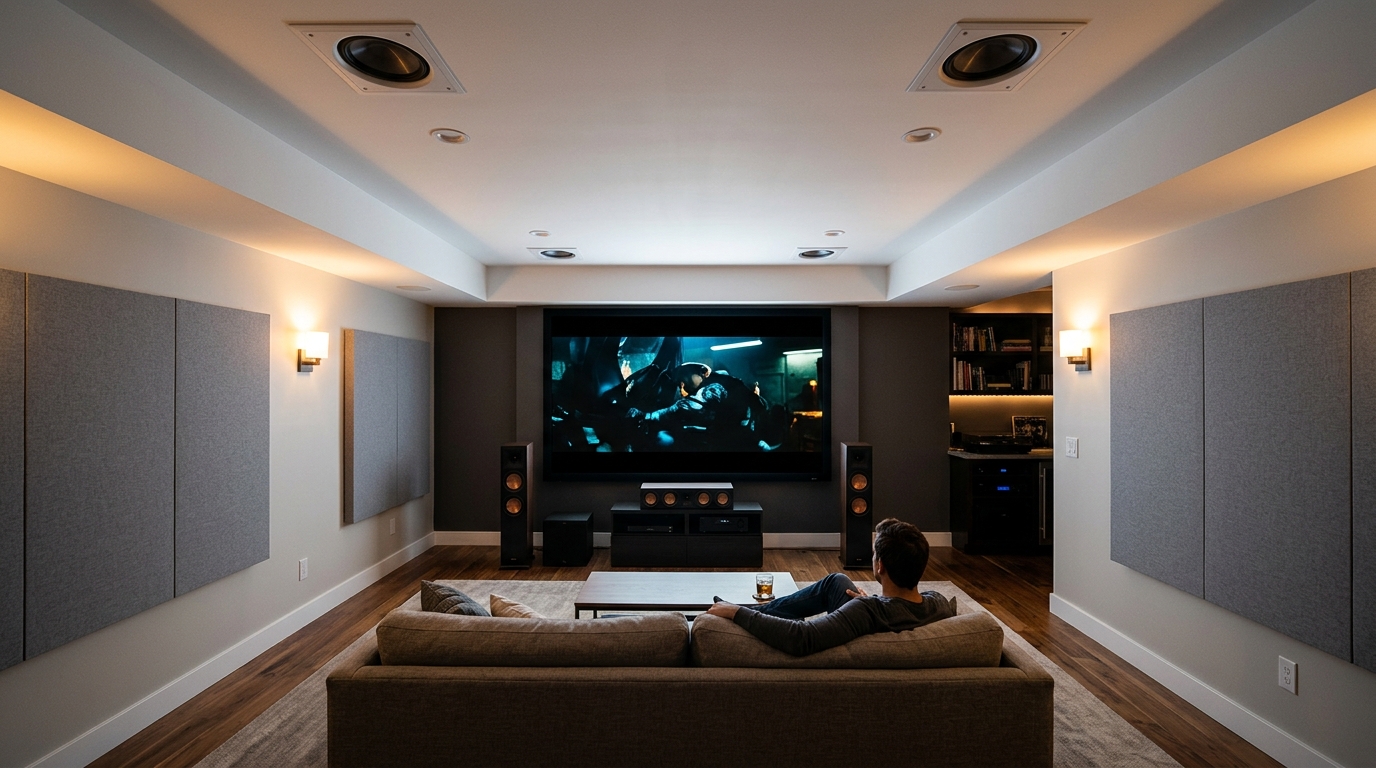
A Movie Theater in Your Living Room or a Dedicated Home Theater Room?Are you planning to install a home theater in a small apartment, possibly sharing a place in your bedroom, a big living room? ...or will you be making use of a bigger dedicated room for your home theater system? The available room space as well as the nature of your room will impact heavily both on your home theater system design as well as on the quality of your home theater entertainment. A dedicated home theater room is the ideal solution as this enables you to design your room around your home theater system - but then it also imposes greater demands, both on your home theater room design efforts as well as on your budget. Before we continue with our discussion on this subject, it is important to realize that having a dedicated home theater room - though ideal - is not a pre-requisite for an enjoyable home theater experience. As expressed in our introductory article on home theater design, one can still build a functional home theater set-up in a shared environment such as a living room or a small bedroom. It all requires careful planning - in particular due to possible room limitations. Unlike the case of a dedicated room where you design your home theater room to suit your system, now you will have to proceed the other way round in that you will have to design your home theater system around your room - due to possible room constraints. Home Theater Room SizeSo here comes another of those major considerations which have to be taken into account in any home theater design - room size, or as referred to in our introduction in this series of home theater design guides, 'available space'. While most of the considerations discussed in this series of articles will always apply, independent of the room size, (e.g. room acoustics, home theater lighting, wiring, etc.), yet some design issues will depend on the nature and size of your room. The nature of your room: For the purpose of this article, this refers to the room main purpose of use - a living room, bedroom, an empty space under the stairs or in the attic, a surrounding hall, a dedicated home theater room, etc. If you are installing your home theater system in a shared environment, you will have to decide at an early stage in your home theater design, what type of design approach you will want to take.
Whatever approach you adopt, you should always aim at fully integrating your system with the rest of your room furniture and decor. Room Size: This will impact mainly the selection of your home theater furniture, seating arrangements, etc. It will also have a major impact on your selection of the various system components - both audio and video. Some home theater components will simply work beautifully in small home theater rooms, but then their use may be totally inappropriate in larger spaces. Our advice when selecting your home theater gear is to search for the appropriate THX certification standard. As indicated in our guide to THX Home Cinema, there are two main certification categories within the ambit of home theater - 'Select' and 'Ultra', (plus their sub-categories Select 2 and Ultra 2). These different certifications have been designed specifically to target different room sizes. In other words, the best way to ensure that the selected system components are most suitable for your home theater room size is to ensure that they comply with the respective THX certifications. But more on THX can be found here. 1. The Small Home Theater - Home-theater-in-a-box SolutionsIf you plan to buy a home theater system for use in a small-shared environment, the simplest way forward would be an all-in-one home theater system complete with a DVD player, surround sound decoder, amplifier, and speakers. Normally, these are referred to as HTIBs, or home-theater-in-a-box solutions. Usually, these packages come complete with a minimum set of audio and video connecting cables - thus simplifying the whole set-up for the non-techie. Note however, that not all HTIB solutions come complete with a sub-woofer, nor do expect that all come up with a full set of 5.1, 6.1, or 7.1 speakers - some just provide a 2.1 speaker setup and rely on virtual surround sound technology to simulate a surrounding soundfield. Further more, a universal DVD player is not always part of the pack. This may or may not be much of an issue - rather, to a certain extent, this can be considered an advantage as instead, you can get a universal DVD player that best suit your needs. Home-theater-in-a-box solutions are optimized for smaller spaces, and place emphasis on ease-of-use and decor-friendliness.
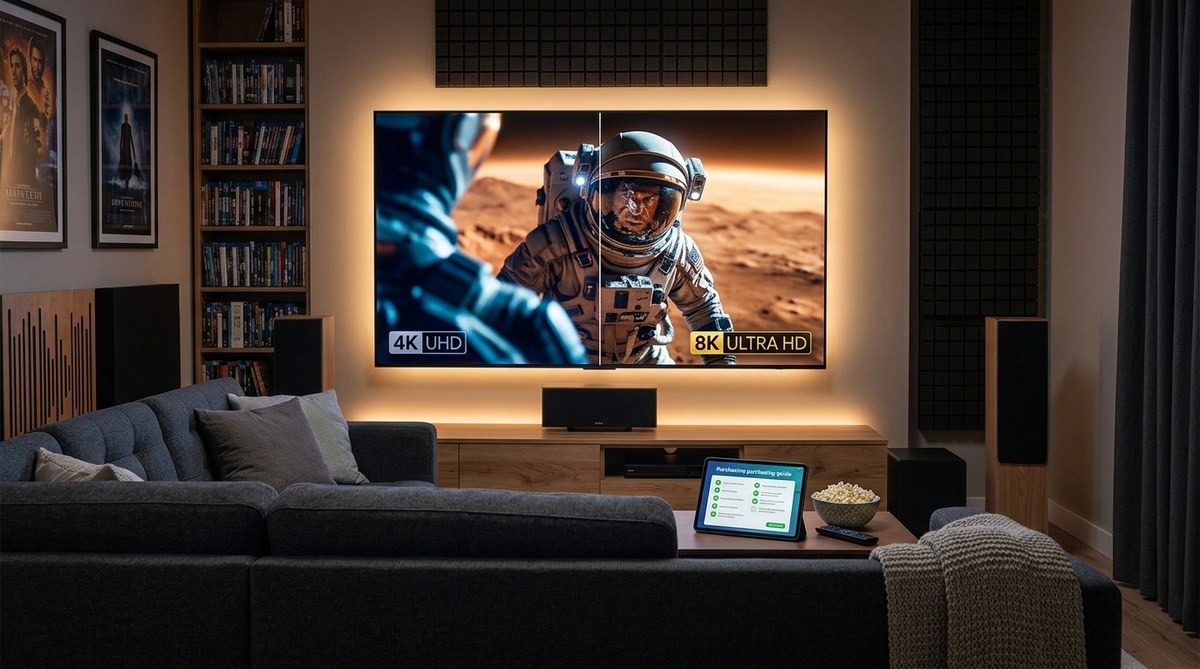
Component video conversion means that it is also capable of converting any incoming composite & S-Video signal all the way to the Component Video found on most HDTVs. Further more, though it lacks HDMI connectivity, yet compatibility with Blu-ray, HD-DVD, or SACD/DVD-Audio players is assured thanks to the inclusion of 7.1-channel analog inputs. In addition, you get solid sound performance that is hard to match by similar priced models, and that would do a great job in any moderately sized-home theater room. An HDMI connection - though not essential in a HTIB solution, would help you avoid having to run both an HDMI and a component video cable from your component rack to your TV or display device. If you want an integrated DVD player with your HTIB, then an alternative option would be the Sony DAV-FX900W 5-Disc DVD 5.1-channel Dream HTIB. The Sony is better styled, is similarly priced to the Onkyo, and includes an HDMI output, but it lacks the sound clarity and detail of the Onkyo HTS990THX. Purists in home theater sound would probably accept nothing that costs less than a few thousand dollars, but as stated in our earlier discussion on home theater design, budgetary constraints are a primary consideration; therefore budget accordingly! The weakest component in these home-theater-in-a-box solutions is usually the speaker pack; that said however, the speakers included with these systems should be adequate for most small to mid-size home theater room applications. When opting for a low-key approach in your home theater room design, pay particular attention to the size of the speakers. Some speakers may be too bulky to integrate well within a small room. Instead, consider compact satellite speakers; these would normally prove less intrusive and usually delivers plenty of sound to fill a small to medium size home theater room. Depending on the space available, larger tower front speakers might be an option worth considering - but first ensure that these would not be too dominant and crowd your seating area. In a small home theater room, the lack of available space may also limit your choice of a television set for your home theater viewing. So watch out for the depth of your TV set if you are using a CRT TV or a rear projection TV set - even slim styled models can turn out to be relatively bulky in the small environment. The latest high definition direct-view LCD and Plasma television systems may be a solution in that they can be mounted on a wall - thus taking zero floor space, while their slim design would integrate well with any room decor. It is true that these displays are somewhat more expensive then their CRT or RPTV counterpart, but today, LCD and plasma have become quite affordable - while delivering larger display panels that will surely transform your home theater experience into something magical. If you would like to know more on direct-view display systems, please visit the Direct-View TV section accessible through the nav-bar. There you will find the relevant installation guides and related information on CRT TVs, LCD Televisions and Plasma TVs. ...wait! There is more to setting up a home theater. Do not go out there and buy the biggest TV screen you can afford - there is more than just an issue of floor space when selecting your big screen TV. The TV screen size should match your home theater room size. In a small room where you need to sit close to the display, you may be able to see the scanning lines or pixels forming the image as well as any other video artifacts, thus distracting your attention and spoiling your home theater experience. In this respect, HDTV displays support a closer viewing distance than standard displays. For more information on selecting the optimum TV screen size for your viewing distance, check our TV Viewing Distance guide.
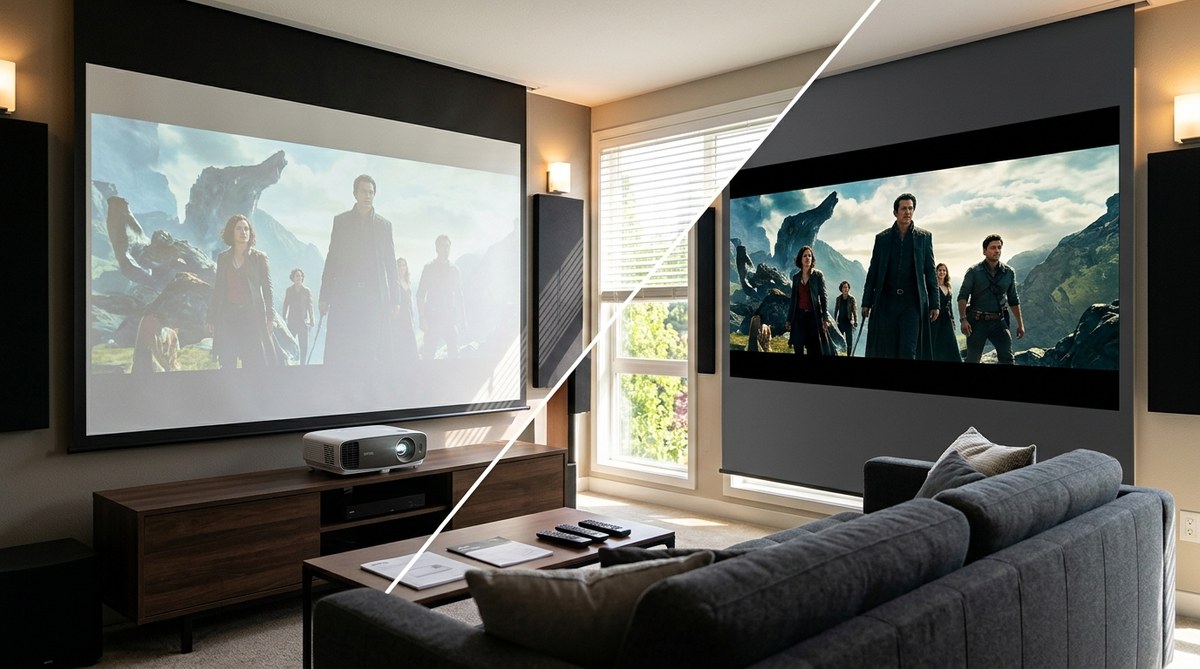
2. Medium to Large Home Theater RoomsSetting up your home theater system in a shared medium-size and larger spaces impose greater demands on your home theater room design - in particular on your home theater audio components; a bigger screen TV would also be required. At the same time, your options are literally wide open. Some may still prefer the all-in-one home theater package but in general, separate system components and handpicked home theater speakers/powered sub-woofers would offer greater performance and flexibility. For the larger size home theater room, definitely consider quality as your primary selection factor for your home theater audio; check that you have enough sound power to fill your home theater space. And as already pointed out earlier on, your best bet would be to ensure that your system components carry the appropriate THX certification. In general, high current power rated A/V receivers are capable of delivering higher sound levels more clearly while rendering your home theater sound more realistic. When shopping for your big screen TV, take into account your viewing distance as well as the number of people that may be watching at any one time. Go for the biggest screen your room layout, viewing distance and budget will allow. Finally, when planning your home theater room layout, ensure that your audience is comfortably seated and without any obstructions in the field of view - especially if you plan to have more than a single row of seats. Moreover, remember that for optimum viewing, your eyes should be level with the center of the screen. More on home theater seating can be found in our guide to Home Theater Seats. 3. The Dedicated Home Theater RoomHaving a dedicated home theater room is the ultimate in any home theater room design - a room specifically designed for your home entertainment, irrespective of whether it is TV and movie watching, music listening, or gaming. Building a dedicated home theater can be truly a rewarding experience. It is also the type of approach that imposes greater demands on both your design efforts as well as your budget - therefore professional assistance is highly recommended. At the same time, a through understanding of the various issues involved is important - independent of whether you will call in expert assistance, or adopt the do-it-yourself approach. The rest of the articles in this series of home theater design guides have been specifically prepared to cover in substantial detail, the various aspects of a dedicated home theater room design. Hence, please view the home theater design article index for the relevant details.
|
Copyright © - Practical-Home-Theater-Guide.com All rights reserved. |
Surround Sound
Formats
Choosing
a Plasma Television
The Complete LCD TV Guide
Projection Television - the center of attraction in home
entertainment
The
Contrast Ratio Game - Playing with Numbers!
Buying Refurbished Electronics - Is
it worth the risk?
Quick
Guide to DVI
The
HDMI Cable Guide
RGB & Component video, or DVI & HDMI - Which is
better?
HDCP and HDTV
Set-up Discs and video calibration solutions
Poster Light Boxes
More
Featured
Our discussion on Home Theater Room Design continues... Even though a lot of info is freely available on the net, yet it is recommend investing in a few home theater books and magazines. Books help you take a more structured approach in your learning process.
A relatively inexpensive book we highly recommend is Home Theater Design, an interesting e-book that takes a step-by-step comprehensive approach to the subject. by Duncan McClelland
Sound & Vision
Great Escapes
Practical Home Theater (2007 Ed.)
Home Theater for Dummies
Featured HTIB Solutions
|
|||||||||||||