![]()
Small Fiber Optic Star Ceiling Lighting Kit by Unlimited Light
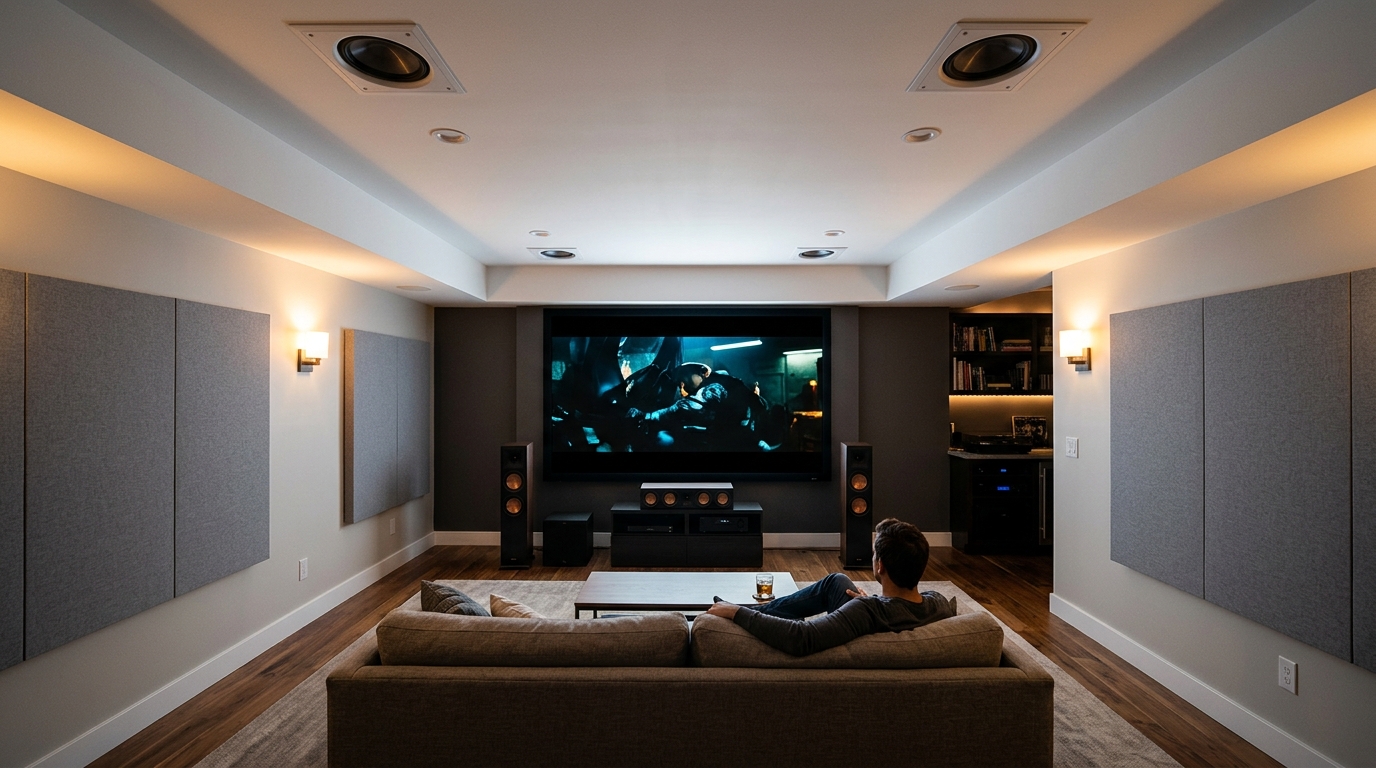
(available from amazon US) Picture: New York Style Home theater by Glen Hoffman as featured in our Home Theater Pictures Gallery. |
Floor Space Requirement for the Dedicated Home Theater
Whatever you will consider for your
home theater room conversion - an under-utilized room, attic space, basement,
etc., the primary consideration should be to determine the room space needed to
house your dedicated home theater.
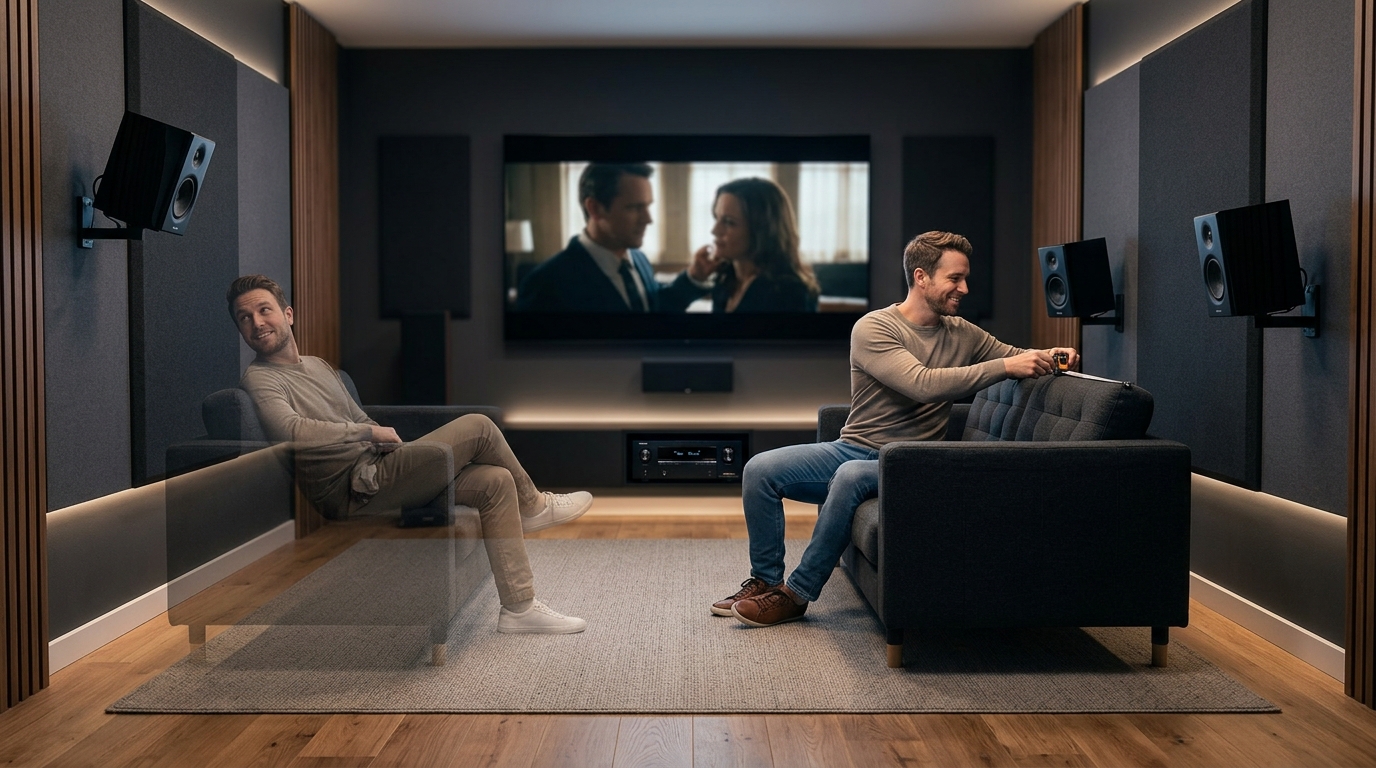
The 'average' dedicated home theater room is normally designed to take from four to six large comfortable seats; the actual number depends on the available floor space.
It is the required number of seats you will want to put together, in conjunction with the size of your big screen TV, that will eventually determine the space needed to house your dedicated home theater room.
Alternatively, if space is an
issue, work backwards; first determine the maximum number of seats that
will fit in the available viewing area of your room. Determine also the screen
size most suitable for your room.
A guiding principle to calculate the required floor area for your seats is to allow for at least 3 feet by 3 feet floor space per seat for overstuffed home seating and recliner sofas; allow for a further two feet clearance between rows. Dedicated home theater seats require a bit less. In addition, leave some 3 feet clearance between the seats and the surrounding walls of your home theater room.
This means that if you plan to put two rows of 3 seats each, your home theater room width should be approximately 15 feet. For more information on home theater seating design requirements, check our Home Theater Seating Guide.
|
|
Combine this with the viewing distance to screen size requirements expressed in our TV Viewing Distance guide, and you will end up with the total floor area required for your dedicated home theater room.
Remember however that the TV viewing distance as detailed in our viewing guide is the distance between the front of your big screen display and the viewer. In other words, if your big screen is a large rear projection TV, then you should also allow for the depth of your big screen TV. This may easily add a further 2 feet even with the latest Mitsubishi slim styled rear projection HDTVs. Do not account for this during your home theater room design and the front row may well end up too close to your big screen.
No such considerations are necessary with flat-panel LCD/LED/plasma HDTVs and with a front projection screen setup, as long as these are mounted in close proximity to your front wall.
What about the required Home Theater Room Height?
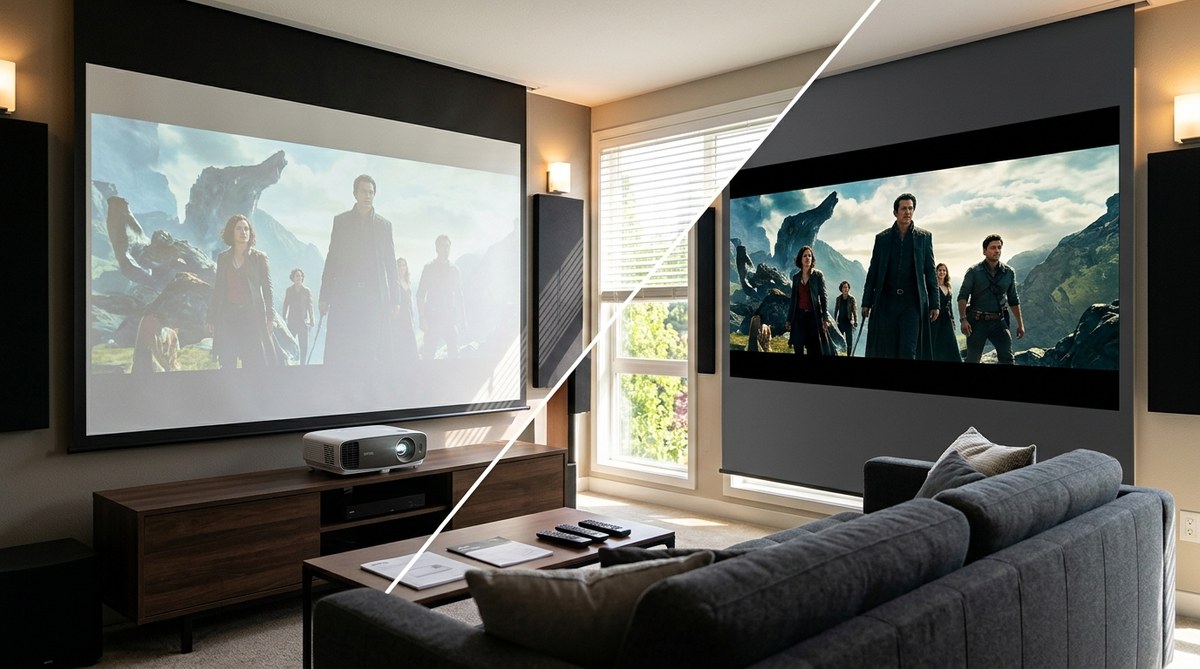
This issue would crop up only when you plan to install a front projection setup in your home theater room, in which case, the required height would depend on the size of your home theater screen. It is unlikely that you would come across concerns of room height with direct view due to their relatively limited size.
As already expressed earlier on, the optimum screen size is directly related to your available floor area. In our TV Viewing Distance guide, we have gone into the necessary detail to show how to arrive at the best screen size for your home theater room. The issue here is how this will impact your home theater room design - in particular the screen placement and the required room height.
There are a number of guiding principles here that can help you in the process:
1] When planning your screen placement, take into consideration the display aspect ratio to determine the screen height. A bit too obvious but if you will be making use of a video projection set-up for your big screen, it's best to base your design considerations to accommodate the 4:3 aspect ratio - this in view that for the same screen width, a 4:3 screen requires more headroom than the 16:9 widescreen format. If on the other hand, you have already decided to opt for a 16:9 home theater screen format, then proceed accordingly with your calculations.
2] The ideal screen position is such that the eyes of the viewer should be level with the center of the screen. In those instances where this is not possible, ensure that your vertical angle view - as measured from the upper most part of the screen - does not exceed the maximum of 35 degrees as recommended by the SMPTE guidelines. Beyond this angle, the viewer will be subject to an increased neck strain - rendering extended viewing tiring and uncomfortable.
3] Ensure that all parts of the screen are easily visible by all viewers. In particular, make sure that the lower part of the screen is visible from all seats. If there is the need, the rear set of seats should be raised on a 6 to 12 inch high platform for better viewing.
This means that in home theaters with one or two rows of seats, the lower part of the screen should usually be set at 30-inches above the floor. Indirectly, this will also limit your maximum screen size.
Based on the above guidelines, a 9-feet high home theater room should be able to accommodate an 8-ft wide 4:3 home theater screen.
Floors, Ceiling, and Walls
You cannot have a dedicated home theater room without thinking about how you will be finishing those walls, ceiling and flooring within the room.
Here comes into play two basic considerations we have already covered in substantial detail in this series of home theater guides - room acoustics and home theater lighting. There is also the issue of home theater room decor, a topic covered under a different article in this series of design guides.
At this point, we would only summaries upon a few basic issues which are fundamental in any dedicated home theater room design; for more details, please check out the respective design guides referred to here.
FlooringCarpeting wall-to-wall is recommended for the floor - especially to cover the space between the front speakers and the listener to absorb the first sound reflections. For best acoustical performance, use a wall-to-wall fitted carpet with a good underlay. The use of a home theater theme carpet such as the one shown here would even help contribute to an improved environment and better ambience during your movie watching. |
Blockbuster Plum Nylon Machine Tufted- Cut Pile Entertainment Rug (available from amazon US) |
Ceiling
No acoustical paneling is required here as long as there is enough absorptive material on your walls and flooring. Rather, the hard surface structure of your ceiling will help transfer the surround sound across your home theater room.
The ceiling should however be painted using a dark color - preferably black, to help reduce any light reflections from your big screen. This is particularly important if your big screen size is such that the upper part of your screen is close to the ceiling.
In addition, any ceiling lights should be on dimmers while the use of fiber optic lights such as the use of a small star ceiling lighting kit with different fiber diameters and LED ceiling lights would do a lot to further enhance your home theater experience.
Walls
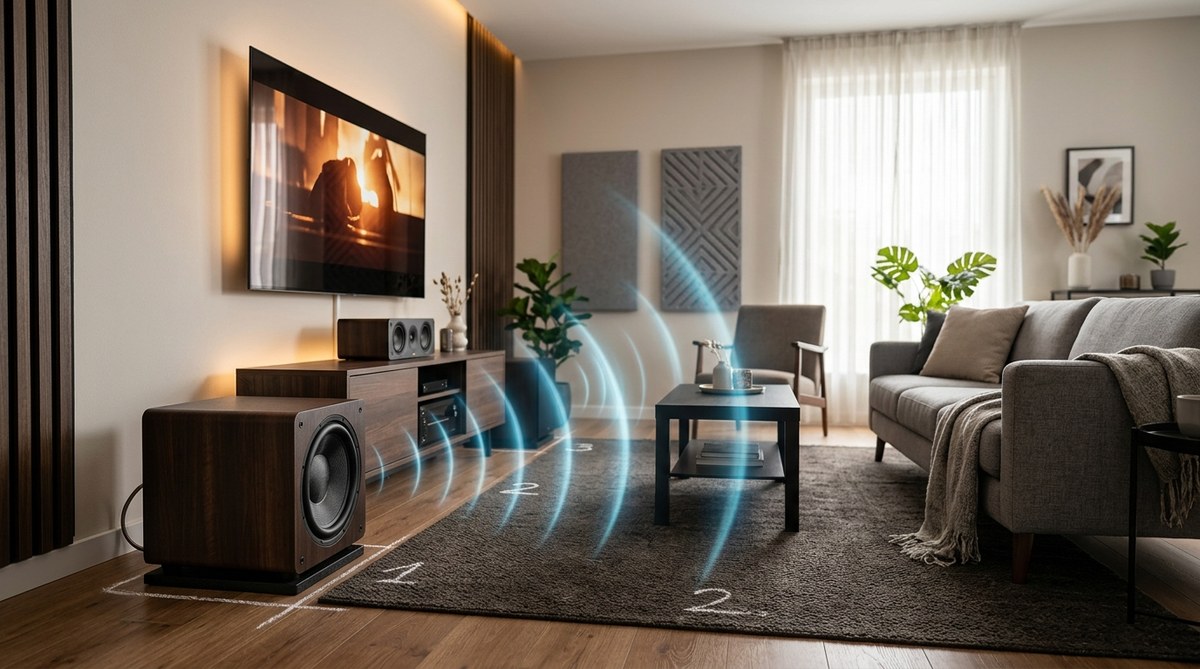
A substantial part of your wall surface area should be covered with curtains and other soft furnishings or acoustic wall paneling to obtain an acceptable level of sound absorption in your home theater room.
As a rule-of-thumb, 50% of all your home theater room surface area - ceiling, floor, and walls - should be absorptive.
Following on our previous considerations, namely that all floor area should be carpeted and that the ceiling should preferably be 100% hard-type surface, would imply that 50% of your wall surface area should include some soft furnishings, curtains, or acoustic absorptive panels.
Do not overdo it however; remember that the presence of any room furniture and in particular your home theater seats, will further contribute to reduce sound reflections.
Achieving an appropriate balance between absorptive and reflective surfaces is important as the presence of too much absorptive material in the room may lead to an acoustically 'dead' home theater room; on the other hand, too much reflective surfaces will lead to echo and extremely poor sound quality.
For more information on home theater room acoustics, please check our article on enhancing room acoustics and soundproofing.