![]() |
||||||||||||
|
[?] Subscribe To This Site
![]() |
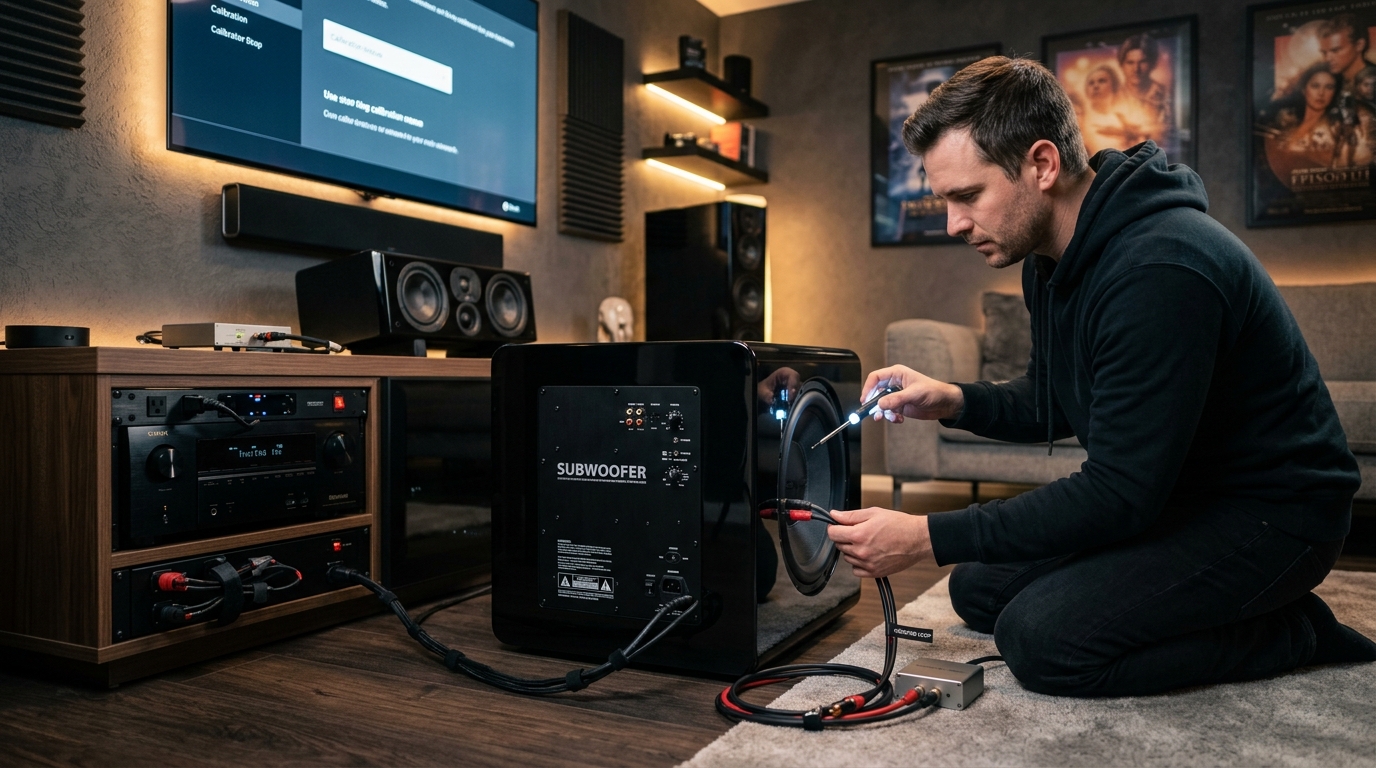
The large number of different home theater connections, as well as the different connectors available for audio/video applications, can make the process of selecting audio video interconnects, to say the least -confusing. Having a basic knowledge of cable anatomy, as well as the various solutions adopted by manufactures in cable design to help improve overall system performance, will surely put you in a better position to determine what to look for when purchasing home theater interconnects. Cable AnatomyCable Basics:In its most basic form, all cables consist of the conductor part, dielectric, shielding material, and end-connectors; each of these components will affect the end quality of the signal.
Cable Conductor:This provides the electrical path along which the signal travels between two or more system components. It is basically a wire - meaning that it can act as an antenna to pick up electromagnetic (EMI), and radio frequency interference (RFI).
Dielectric:Isolation between the internal cable conductor and the shielding material is achieved thought the use of a special insulating material referred to as 'dielectric'.
The set-up is very similar in electric terms to that of a capacitor, with the overall cable forming what is referred to in electrical technology as a 'transmission line'. The type and thickness of the dielectric as well as the conductivity and shape of the cable conductor material and shielding, will have a direct impact on the cable impedance, and therefore, on the load presented to the source. Matching the cable impedance with the source and load is important to avoid signal loss. Shielding:Good quality cables make use of the appropriate shielding to filter out potential sources of radio frequency and electro-magnetic interference - which interference will otherwise result in noise. End-Connectors:Physically, connection with the respective home theater system components is achieved through the use of end-connectors; a tight-fit corrosion free connector is essential for the best results. The use of color coding on end-connectors will facilitate the identification of home theater connections. For details of the actual end-connectors used in audio and video applications, we suggest that you take a look at our articles on audio cables, video cables and speaker wires respectively.
This is an extremely simplified description. As already stated earlier on, high quality cable design is a high-tech area making use of high-precision technology and expensive extra-pure materials. Home Theater Connections - Improving Cable Performance:In order to achieve the highest cable performance possible, industry leaders such as BetterCables.com and Monster Cable feature among others, precision-fit gold plated connectors and pure silver coated oxygen-free copper conductors, all enclosed in a protective strain relief rubber jacket for durability and extreme flexibility. Gold-plating of cable connectors helps prevent corrosion - thus ensuring continued high-quality signal transfer that would not degrade over time, between the interconnect and the equipment. On the other hand, the use of silver-over-pure-copper conductors helps improve conductivity. Silver is the best conductor of electricity; it is even 53% more conductive than gold. However, the real effect of silver in this respect is mainly to ensure a good connection between the interconnect conductor and the end connector (plug/socket pair), to prevent audible cracking and visual artifacts. It should be remarked that contrary to what most cable manufactures seem to imply, the improvement in the conductivity of silver coated pure-copper conductors over standard pure-copper conductors is practically NIL to minimal. It is all a question of the actual thickness of the silver coating over copper - the volume of silver used in the coating will have to be comparable to that of copper for any perceptible effect. With the majority of high quality 'silver' interconnects available on the market, what you really have is a thin plating of silver over the actual copper conductor. When it comes to home theater connections, thin plating over copper would not have any effect on conductivity for audio frequencies, and will only result in minimal effect for video applications even when the 'skin effect' takes over at the higher end of the video spectrum.
Last updated on 13 return from Home Theater Connections - Cable Anatomy to Home Page |
|||||||||||