![]() |
|||||||||||||||||||||
|
[?] Subscribe To This Site
![]() |
Introduction: Both DVI and HDMI are capable of supporting the highest video resolutions possible today, yet the use of small-gauge copper twisted pair instead of coaxial cables, lead to serious constraints vis-à-vis long cable runs. DVI is limited to a maximum of 15 feet (5 meters). HDMI is designed to perform better over longer lengths - up to about 50 feet or 15 meters, but actual performance constraints are similar to DVI. But these maximum cable runs are highly dependent - amongst others - on both the maximum signal bit-rate that one needs to handle as well as the DVI or HDMI cable built quality. As already expressed elsewhere on our site, the problem with twisted pair is that it is not possible to maintain tight control over impedance. Poor impedance control leads to signal reflections along a DVI or HDMI cable between source and sink, interfering with the bitstream originating from the source. There is also the distortion effect of cable impedance on the leading and trailing edges of the transitions in voltage representing the digital data; this distortion increases drastically with distance up to a point where it may be hard for the receiver to reconstruct the original bitstream. In digital standards where no error correction is used, the end result is loss of information. As long as the level of errors is contained, DVI and HDMI cables would still perform in that the display will still be ability to re-constitute the image. However, errors would often show as 'pixel-dropouts', or 'sparkles'. Increase the length slightly further beyond the point at which sparkles start to appear, and you would soon end up with no image at all. But even if you would still get an image, the presence of sparkles and other image degradation artifacts will surely lead to an unpleasant viewing experience. HDTV is 'either all or nothing'; if you arrive at a point with your DVI or HDMI cable where sparkles start to show up on your display, you need to look elsewhere for a solution to extend your HDTV. Extending your HDTV DVI or HDMI Cable Connections
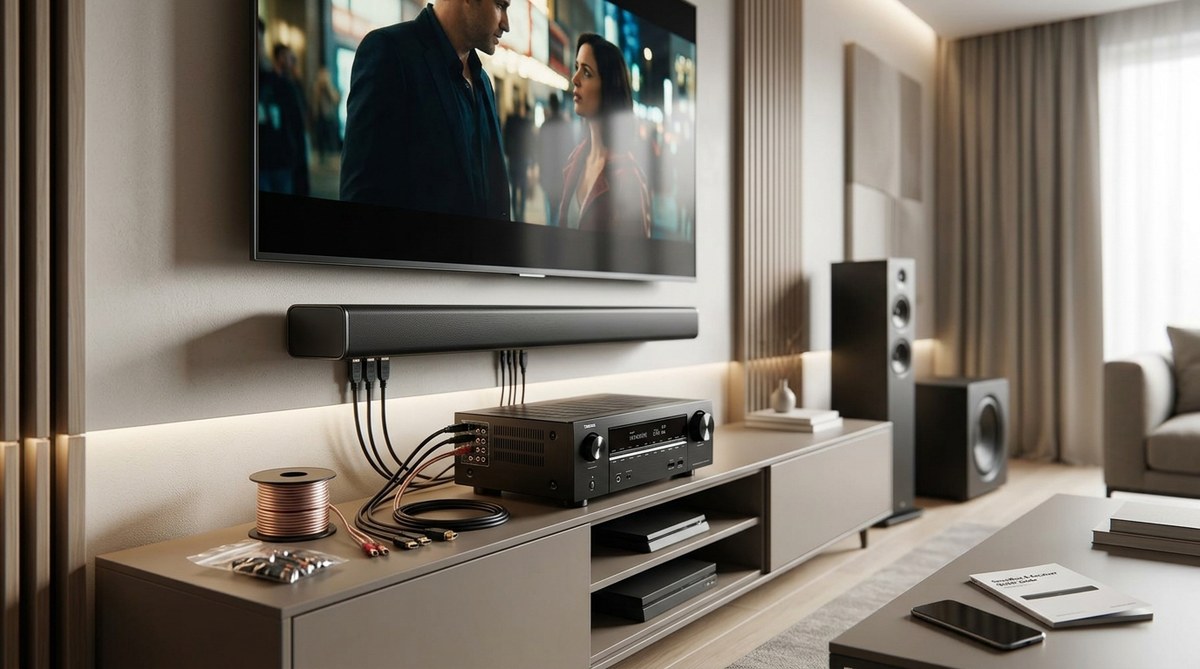
Which method is right for You? There are a number of options to choose from, that are all based on either copper or fiber. Solutions using these technologies, range from DVI and HDMI extenders, or booster amplifiers (repeaters) using standard copper DVI and HDMI cables, to CAT-5 based solutions and fiber optic technology. Both copper and fiber technologies are capable of comparable performance. In other words, there is no one better technology than the other; what would eventually determine your choice is the distance between source and display. Copper Based Solutions Up to 50 Feet: Use of Standard Twisted-pair Copper Cables The use of a continuous standard copper cable of the proper length between source and display is the optimum and cheapest approach. High quality cable prices vary from approx. $150 for a 20 feet HDMI cable, up to $250 for 50 feet. Copper cables are generally not a source of problem until cable lengths are factored in, especially at the high-speeds required for HDTV. Hence, DVI and HDMI cable run limitations would not pose much of a restriction in applications where the display device is an RPTV, plasma or LCD in a same room setup. However, problems may arise with the longer lengths normally required for video projector applications - especially with a ceiling mounted installation. The maximum cable length is highly dependent not only on the built quality of the cable, but also on the maximum bit-rate or data throughput required for the video signal, as well as on the signal strength originating from the source; the 'stronger' it is, the less signal loss will result at the display end. Our recommendation: When buying DVI and HDMI cables, always opt for cables that are guaranteed to operate at least up to the highest 1080p HDTV ATSC standard defined today i.e. 1080p/30, without any errors over the specified cable length. In terms of pixel rate, this corresponds to approximately 71.5 million pixels/second or 2.15Gbps in data throughput. This is the minimum requirement; if you really want to future-proof your expensive HDTV cables, go for cables that are tested at up to 1080p/60 (4.3Gbps). Better still, go for cables that are tested at the maximum 4.95Gbps data throughput/single link, supported by the DVI and HDMI standards. But... Care should be taken with cable bit rate specifications. The problem is that you never really know how manufactures are actually handling data throughput and bit error rate tests. This means that even though an HDMI cable may pass the manufacturer bit rate test at the specified length, in itself, this is no guarantee that it will still perform perfectly well with your source/display combination. Thus, unless you can buy a cable from a manufacturer who offers an appropriate return policy, the best option is to refrain from using standard twisted copper DVI and HDMI cables at the maximum length supported by the respective standard. Instead, limit the use of these cables up to a maximum of 30 feet. Beyond this point, it is best to opt for alternative technology. Up to 100 Feet: Use of DVI and HDMI Boosters and Repeater Amplifiers If you want to extend the cable run between 50 and 100 feet at 1080p/60, the best approach is the use of a DVI or HDMI Booster amplifier (or extender). Boosters sit in between source and display connected with two DVI or HDMI cables of the appropriate length - one between source and booster, and the other between booster and display. Boosters work by regenerating the high definition video and digital audio (in case of HDMI), received from the source and then transmit the amplified signal along to a second cable at the extended display or video projector side. The main difference between Boosters and Repeater amplifiers is that Repeaters may be 'daisy-chained' to achieve greater distances between source and display. Distances up to 150 feet can be achieved in this manner. However, the use of multiple boosters as against possible use of an alternative technology should be weighted against cost and performance implications. Typical prices for booster amplifiers range from $200 to $250 - excluding any interconnecting DVI or HDMI cables. But there are a few limitations:
Up to 150 Feet: Use of CAT-5e Extenders This is an alternative copper-wire based technology that use Cat-5 cables to extend HDTV signals. Short for Category-5, this is an Ethernet cable standard consisting of four twisted pairs of copper wires. Cat-5e is an enhanced version supporting speeds up to 1Gbps over short cable runs (350 feet). With Cat-5, you can extend high definition video up to 150 feet. The setup consists of a sender unit that sits close to the HDTV source and a receiver unit at the display or projector unit. The sender and receiver units are connected using two Cat-5e cables - one for the video TMDS signals and the other for the DCC/HDCP signals. Short HDMI cables (or DVI cables) connect the sender and receiver units direct to your source and display respectively. The use of Cat-5 Extenders represents a cost effective solution to extending a HDTV HDMI enabled-source to a display in another room. A Cat-5 based HDTV extender solution (excluding the Cat-5 cables), would cost around $500; this is cheaper than using multiple HDMI repeaters and interconnecting HDMI cables between the repeater amplifiers and source and display devices. Fiber Optics Based Solutions The use of fiber optic based connectivity in the home theater is a viable option worth considering at the longer cable lengths, especially with the high bandwidth requirements associated with today's HDTV video signals. Fiber Optic solutions give you the possibility to extend a HDTV signal from typically 50 feet up to 1500 feet using multi-mode fiber technology, and up to several kilometers using single-mode fiber. Multi-mode and single-mode fiber technologies are comparable when it comes to signal quality performance; what determines the one to choose depends on distance. Single-mode fiber is substantially more expensive than multi-mode, however, distances in typical home theater installations do not call for the use of single-mode fiber solutions. Up to 330 feet: Fully integrated Fiber Optics DVI and HDMI Cables
Some major manufactures in the field of high definition digital interconnects have come up with an interesting range of self-powered fiber optic based DVI and HDMI cables that incorporate all necessary fiber optic electronics and the DCC signals built into the cable and HDMI (or DVI) connectors. This solution represents an immediate user-friendly approach to extending HDTV over fiber for distances between 50 feet up to 330 feet. These cables do not come cheap especially at the shorter lengths; expect to pay around $500 for a '50 feet fiber optic based' HDMI cable. This is typically twice as much as a 50 feet of standard copper based HDMI cable. However, at cable runs of around 150 feet and over, the unit price per foot of fiber based DVI and HDMI cables is comparable to that of repeater or Cat-5 based technologies. In fact, an integrated fiber solution represent a cost of around $6 per foot while a repeater or Cat-5 copper system would cost between $4 to $5 per foot of cable run. The only drawback with the use of these integrated fiber-optic based DVI and HDMI cables is when it comes to in-wall installations; you will have to use a relatively wide conduit (approx. 1.5 inches) to allow for the end connectors to pass through. Other than this, it is like plugging an ordinary copper HDMI cable! Extending HDTV up to 1500 Feet over Fiber The ultimate in fiber optic connectivity is the use of dedicated sender and receiver units with a 'dark' fiber connection; short HDMI cables are then used to connect the sender and receiver units to source and display respectively. Connectivity between sender and receiver units would normally consists of a number of separate fiber strands to carry the red, green, blue and clock video signals and a Cat-5 cable to carry the HDCP/DCC and other control signals. Price wise, this represents a cheaper fiber based solution at the longer lengths to the integrated self-powered HDMI and DVI fiber based cables. In fact, while a 30 feet fiber run together with sender and receiver units would cost around $800 - that's some $26 per foot! This would immediately fall to around $12 per foot at 60 feet and under $4 per foot at 300 feet. A Few Recommendations Fiber or Copper: Remember that as long as distance is factored in, both copper and fiber based solutions are capable of comparable performance. Future Proofing: High quality DVI and HDMI cables are expensive, irrespective of whether these are copper or fiber. If chosen properly, these may well last more than any other system component. Look at it as an investment that will stay with your home theater system for a very long time. Hence, keep an eye on future-proofing. Your present system may only do 720p or 1080i, but what if within a few years, you upgrade your system to support new standards in this fast changing world of high definition digital video? Try to invest in a connectivity solution that supports up to 1080p/60, over the specified cable length. May be this standard will never be used in the broadcast industry due to bandwidth requirements, but one never knows what technological will bring about, so... Cable Length: We have discussed possible options on how to extend HDTV over a DVI or HDMI cable. At the same time, it is important to note that:
HDCP Compliance: All active components in the HDTV connectivity chain must be HDCP compliant, otherwise you may not enjoy high definition material. This applies both to source and display, and also to all copper and fiber based extender units used to extend DVI and HDMI cables, switchers, repeaters, and even to fully integrated self-powered HDMI and DVI fiber optic cables. Buying DVI and HDMI Cables - Testing and Return Policies: Always check the supplier return policy especially if you are working at extreme cable lengths. Test your cables thoroughly with your source/display combination at the highest video standard your system can support - prior to installing them behind a wall or in conduit. Cable Handling: Cable performance is highly dependent on how it is handled; avoid sharp bends and do not crush, pull, or distort your high definition TV DVI and HDMI cables in any way as this will have a sever impact on image quality.
...back to Section Index
|
Copyright © - Practical-Home-Theater-Guide.com All rights reserved. |
Recommended Cable Guides: High Quality HDMI Cables at Amazon Search by Brand:
|
||||||||||||||||||
|
|