A Guide to DVD-Audio Discs (2)
Connectivity Requirements, Playback Setup and Content Protection
Our
discussion on DVD-Audio continues by looking at the connectivity requirements between DVD
players and AV receivers; we also discuss the correct playback setup for
DVD-A listening.
In the process, we will touch upon a
rather hotly debated issue among Audiophiles -
content protection and the use of 'digital watermarking'.
Connectivity Requirements
between Compatible DVD Players
and AV Receivers
In order to play DVD-A music, you need a
compatible DVD player that can handle DVD-A
discs, and a preamplifier or AV receiver with either six
analogue inputs or an encrypted digital
interconnect.
While DVD-Video audio formats such as
Dolby Digital and
DTS, can be sent via a player's unprotected digital
o/p to a receiver for conversion to analogue
form, this is not the case with DVD-A.
If you try to send DVD-A digital content
over an unencrypted digital
audio link, the content protection mechanism
will force the DVD-Audio player or compatible
DVD-player to downgrade to
ordinary DVD-Video audio quality (i.e. 48kHz sampling
rate), due to concerns
about digital copying.
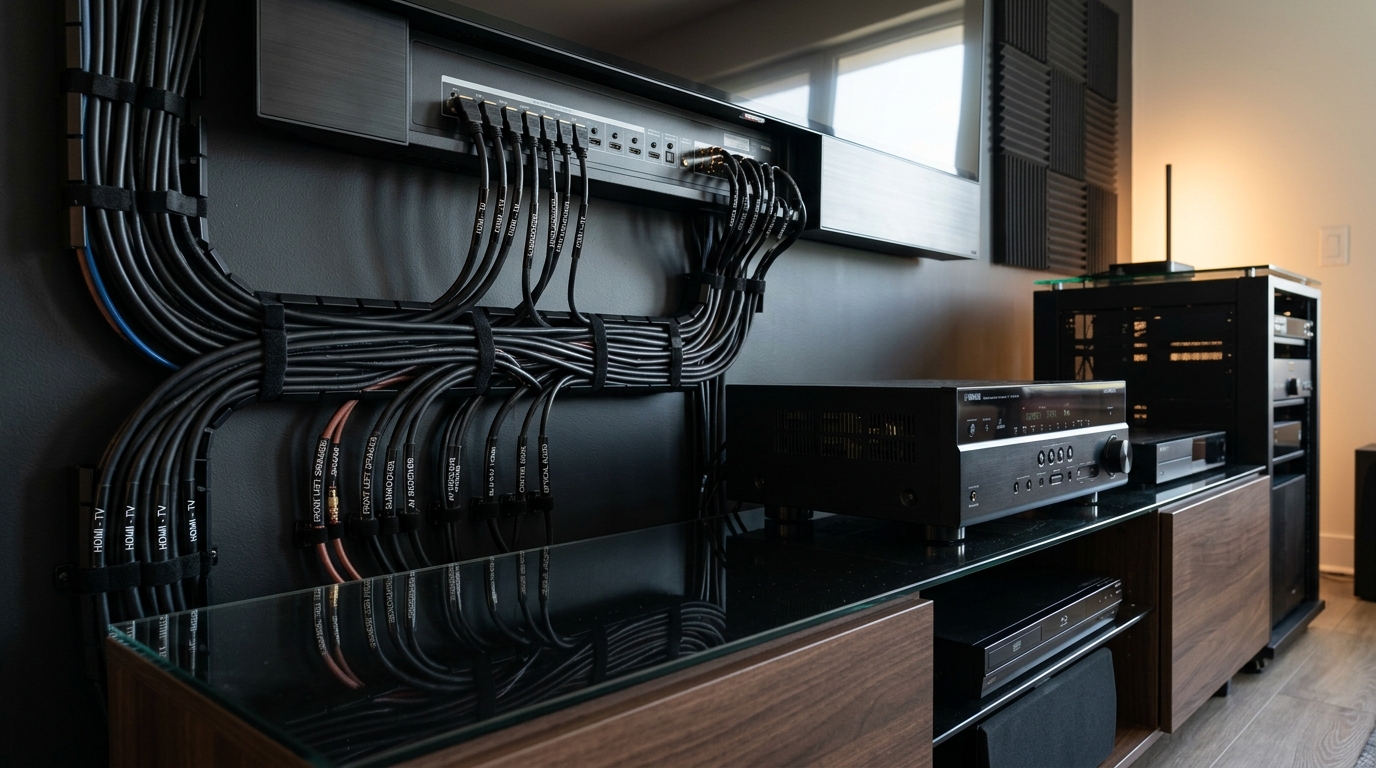
Approved encrypted digital
formats by the DVD Forum include Meridian Audio's MHR
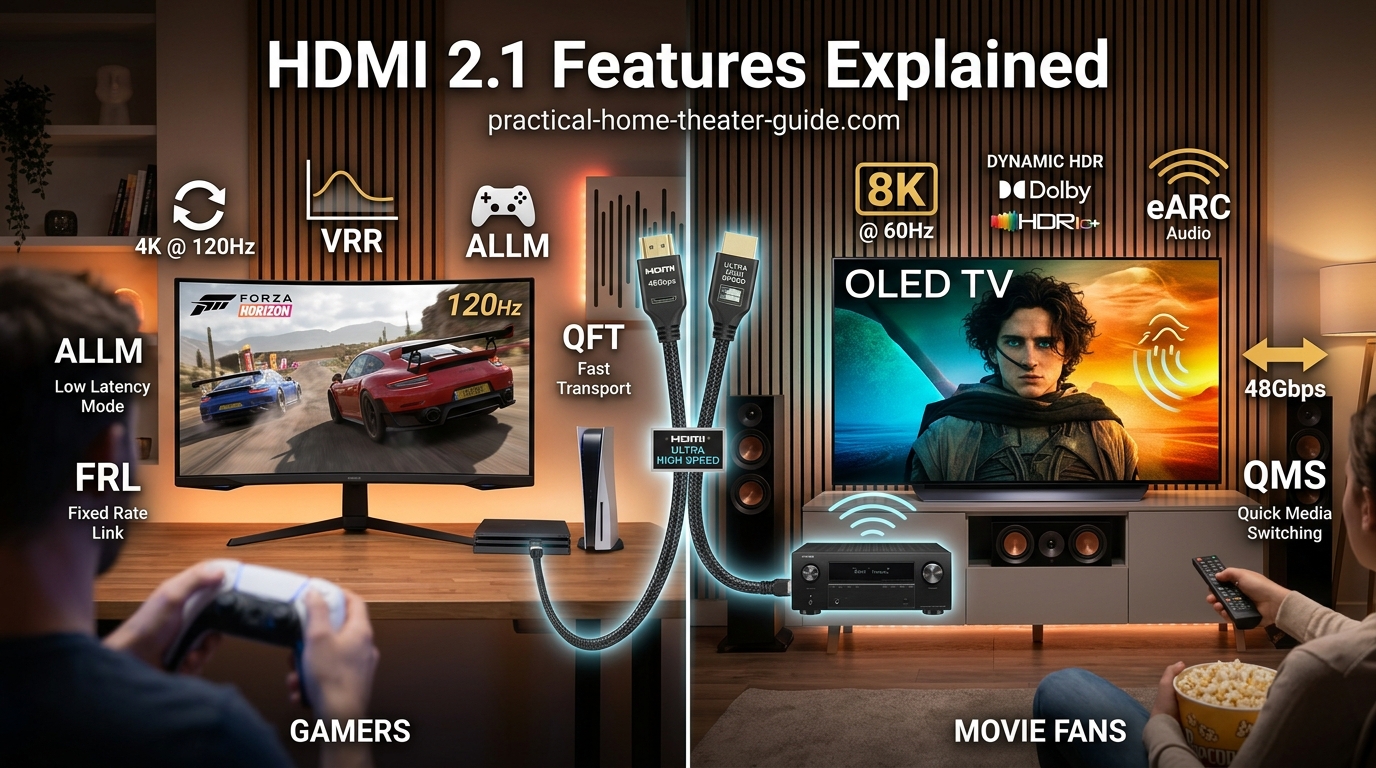
(Meridian High Resolution) and HDMI (High
Definition Multimedia Interface 1.1 or higher).
In view that HDMI encryption is different from
the DVD-A
encryption, the DVD player will have to
decrypt the six audio channels, then
re-encrypted into an HDMI signal. This 'new'
digital signal is then sent over HDMI to the
amplifier or AV receiver which will then decrypt
the digital signal to re-extract the 6 high
definition audio channels.
It should be noted that when working with an
encrypted digital interconnect like HDMI with
HDCP, all devices in
the playback chain will have to be equipped
with a valid decryption key, otherwise, it
would not be possible to play the DVD-Audio
disc. More on HDMI
and HDCP can be found
under the respective sections of the site.
Copy Protection
As already hinted in the previous section, you
would not be able to get an unencrypted digital
out from a DVD-Audio player. The reason is
copyright protection. DVD-Audio discs employ a
copy protection mechanism called
Content Protection for Prerecorded Media
- more commonly referred to as CPPM.
CPPM is managed by the 4C Entity - 'the
four company entity', a consortium
formed by IBM, Intel, Matsushita and Toshiba, to
establish a common platform for digital rights
management schemes.
CPPM
is used to prevent users from extracting
the raw digital audio stream to computers and portable media players.
In other words, it is used to prevent a
bit-for-bit copy of the DVD-Audio digital content. It
is a far superior encryption mechanism than the
content scrambling system originally devised for
use on DVD-Video discs as it makes use of a
media key block (MKB) to authenticate the
DVD-Audio player.
The player must use its own unique
key to decrypt the MKB. If a DVD-Audio player's
decryption key is compromised, that key can be
rendered useless for decrypting future DVD-Audio
discs. This is somewhat similar in concept to
the way the HDCP content protection scheme
works, except that
HDCP is designed to eliminate the possibility of
intercepting digital video and audio data as it
travels between source and display (across
Digital Visual Interface (DVI) and High
Definition Multimedia Interface (HDMI)
connections).
DVD-Audio discs also support the use of digital watermarking technology.
This is optional and is used to deal with analog
piracy by detecting illegal copying
through the analog path. This means that when
used, digital watermarking is audible - though
not necessarily to the human ear - in that it
can be picked up along the analog copy and
detected through the use of appropriate gear.
However, there is a lot of controversy
surrounding the use of digital watermarking in
high resolution audio content in that while
those in favor says it is inaudible to human
listening due to its inherent subtlety, yet
others say that it is detectable under certain
instances.
Audio Playback Setup for DVD-Audio
Having a DVD-audio player or compatible universal DVD player
and an AV receiver is only part of the game. If you
want to get the very best out of your DVD-Audio
listening, then there is the need for more.
As indicated earlier on in our discussion, DVD-Audio
supports a much wider dynamic range than CD sound.
In other words, if you want to get the very best in
music quality when listening to DVD-Audio, you need
to have the appropriate setup, not just a DVD-Audio
player or a universal DVD player supporting DVD-A.
In particular, a good quality
preamplifier/surround sound processor with a signal-to-noise ratio of at least
-110dB/-120dB is desirable.
Further more, if you plan to listen a lot
to DVD-Audio seriously, you will also need to
consider investing in five identical, full-range
speakers. The problem is that from a practical
perspective, it is difficult to make use of a
floor-standing speaker for the center channel if
your audio system also serves as part of your home
theater setup. This in view that in a home theater implementation, the
center speaker is usually placed horizontally
orientated just under or above the TV. This problem
would not arise when making use of a front projection setup and an
acoustically transparent projection screen, in which
case a floor standing center speaker placed
centrally just behind the screen would do a nice job
for both music listening and movie viewing.
However, more important than the center speaker is
having four identical speakers for the left/right
front speakers and the left/right surround speakers.
We are not saying that making use of the same audio
setup used for a home theater implementation would
not suffice; it is just that it is not the very best
setup for DVD-Audio playback. At the same time, one
has to keep in mind that there is also a financial
implication to invest in four or five identical full
range speakers.
Another
issue is speaker placement. As pointed out in our
article on
speaker
placement in the home theater,
speaker placement for music listening differs from
that for movie viewing. We suggest going through our
speaker placement article for the relevant details.
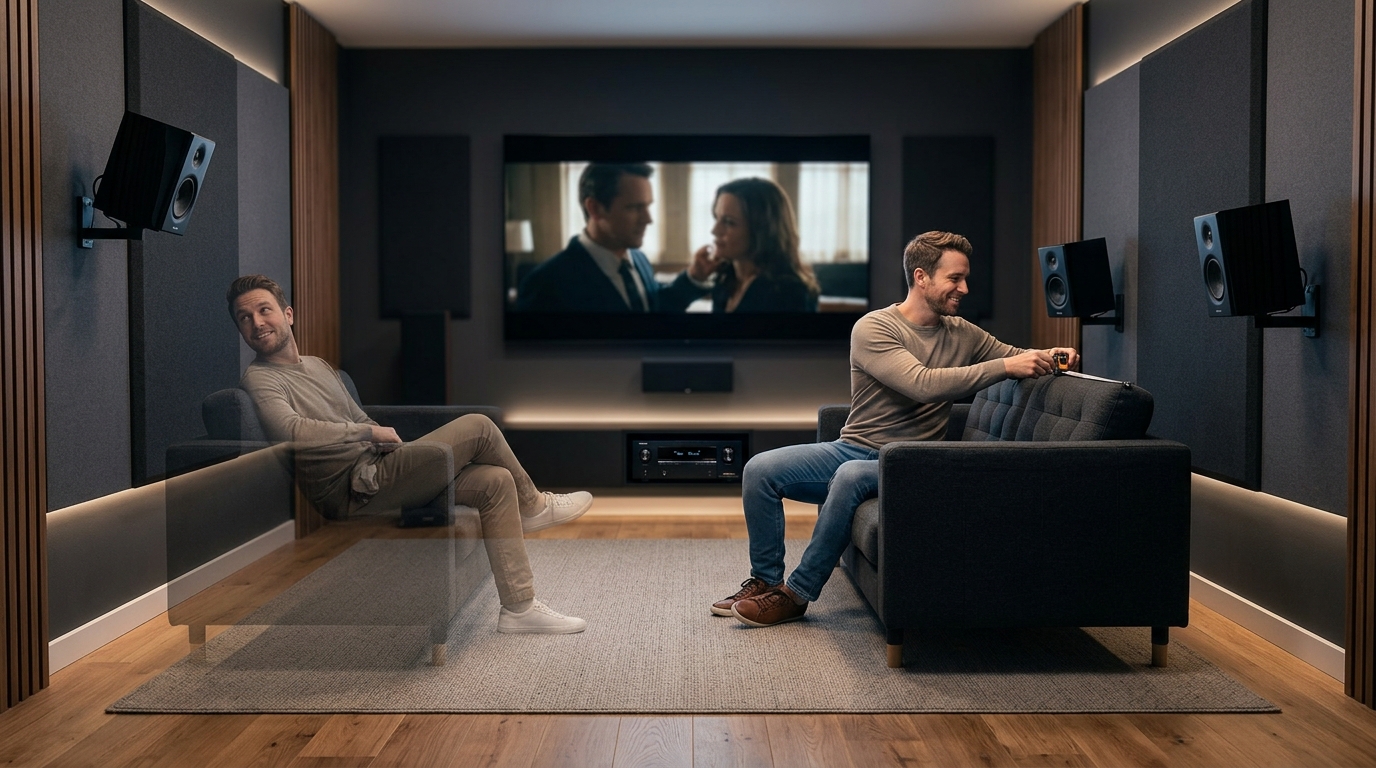
If your audio playback setup will serve you for both
music listening and movie viewing - as is the case
with most home entertainment setups, the best
approach would be to opt for a flexible speaker
mounting solution that would enable you to easily
adjust your speaker placement for both purposes.
What if... for practical reasons, you will
instead be making use of the same 5.1-channel speaker set-up that
you have for your home home theater rather than a set of
dedicated four or five identical full range
speakers?
Sure, you can still enjoy DVD-Audio - just make sure that the
DVD-Audio player has adequate
bass management support that allows you to route the bass
frequencies to those speakers that can handle it
best.
At the same time, keep in mind that such a compromise
is less than ideal for the very best in DVD-Audio
listening experience.
|
More on the DVD-Audio Disc will follow soon. |
Last updated on:
10th
February
2007 |
|
Subscribe to our free
e-zine to remain abreast with the latest additions.
Click here for details. |
|
...Part 3:
DVD-Audio
Titles, CD/DVD packages and DualDisc releases
...back
to
DVD-Audio/SACD Section Index
|