![]() |
|||||||||||||||||
![]() |
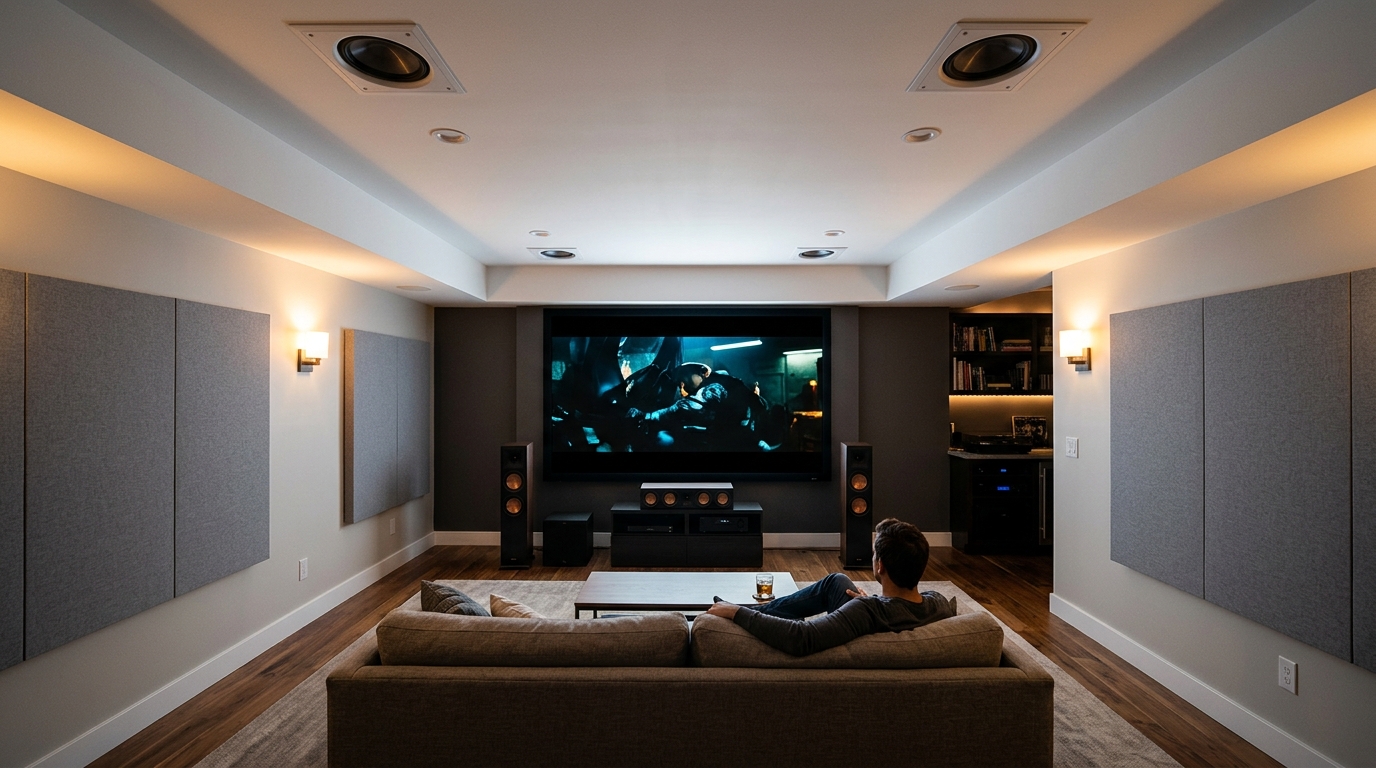
An Introduction:It may seem contradictory - playing a 5.1-channel sound system over an ordinary pair of stereo headphones while enjoying 'practically' the same immersing experience of a multichannel sound system. But when you start thinking about it, there isn't anything contradictory in the whole idea. After all, we only have two ears through which we capture all sound information - irrespective of the different number of sound sources present at any time. What is Dolby Headphone™ Technology?Dolby Headphone™ is a powerful digital signal processing (DSP) algorithm introduced in 2001. This headphone technology simulates over an ordinary pair of headphones, the same enveloping soundstage created by a 5.1-channel home theater surround sound loudspeaker system. Potentially, any multichannel sound source - Dolby Digital, Dolby Surround, or DTS Surround Sound - can be used in conjunction with Dolby Headphone, to be converted into a special 2-channel Dolby Headphone soundtrack. In very simple terms, the resultant encoded two-channel Dolby Headphone soundtrack contains manipulated audio signals with sonic spatial cues by applying varying delays and phase-shifts between the different channels. The Dolby headphone process combines this with other ambient information - like the typical characteristics of a Live Concert Hall - in order to trick the ears into believing that we are listening to a real multichannel home theater loudspeaker system. The result is that sound no longer appears to be coming from inside your head, but rather from in front and around you in a similar manner to what you experience with a five-speaker sound setup. What are the benefits of Dolby Headphone?To understand the benefits associated with this virtual surround headphone technology, one needs to first understand the major limitation associated with the use of an ordinary pair of stereo-headphones.
Exposure to this unnatural sound effect for an extended period may eventually lead to what is referred to as 'listener fatigue'. This is a state of mental fatigue caused by the cognitive dissonance the mind experiences. In other words, this creates a feeling of uncomfortable tension in the mind as a result of the conflict between what the mind knows and what instead appears to be. In contrast to this headphone listening experience, when we listen to sound originating from a set of speakers, we hear sound coming from the speakers' positions as well as sound reflected off any side or rear of the room. The combined effect of direct and reflected sound is unique for each speaker in the system, and is dependent on the speaker and the listener's position, as well as the room acoustic characteristics. This means that by the time sound from a specific speaker reaches the ear, it acquires a unique acoustical signature. These direct and reflected sounds provide spatial information to the brain about the speaker location, room dimensions, as well as other ambient information. A correct speaker placement can provide enough spatial cues to the brain as a result of direct and reflected sounds, to enable the exact location of sounds in the horizontal and vertical planes. This creates what is referred to as a three-dimensional soundstage. This three-dimensional soundstage provides a far richer sound experience than when hearing sound from just two distinct locations of the speakers, which is basically the case with the standard stereo headphone. In the case of a 5.1 multichannel home theater speaker system, the soundstage is further enhanced by the addition of the extra channels. These enable the listener to precisely locate any sound in practically any location in the home theater room. In other words, when we listen to a system of home theater loudspeakers, we hear the sound coming from various directions: front, from the left, from the right, from either side, or from somewhere in the middle of the room. This contrasts heavily with the in-the-head effect produced by ordinary stereo headphones. Dolby Headphone technology makes use of powerful digital signal processing techniques. The aim is to manipulate the audio signal from a multichannel sound source - so that when it is reproduced by a pair of headphones, the resultant sound imaging appears as though one is listening to different virtual loudspeakers in a virtual room. This leads to a more natural 'out-of-head' effect that allows the listener to enjoy a more complete three-dimensional soundstage. The result is an enjoyable headphone listening experience that is much easier on the mind and hence less likely to result in 'listener fatigue'. How it Works - Dolby Headphone Encoding?As already indicated earlier on, the whole process makes use of powerful digital signal processing algorithms as defined by Dolby Headphone™. It takes a multichannel audio source (up to 5-channels), and adds to it the necessary spatial and ambient information effects through simulated direct and reflected sounds, and outputs a special two-channel encoded audio signal that is reproduced through a pair of conventional stereo headphones. These deliver to each of the listener's ear - through the use of conventional stereo headphones - a unique mix of direct and reflected sounds from each of the five virtual speakers. This means that by exploiting this differential effect between the various audio channels, Dolby Headphone technology is able to re-create a virtual acoustic environment of a 5-channel loudspeaker home theater environment over a two channel stereo headphone pair. The result... a more nature out-of-the-head sound effect! Dolby Headphone in Stereo Mode
This yields a wide and detailed soundstage that appears in front of the Dolby Headphone listener - very much like performers and instruments spread across a stage in a live performance. This works with virtually any 2-channel program source, such as audio CD, tape, MP3-encoded file, and WMA-encoded file (Windows Media Audio). We discussed only the 5-channels in a 5.1 home theater sound setup simply because 'sound imaging' is not much of an issue with low bass frequencies as these are direction independent. In a Dolby-encoded Headphone sound track, the low frequency effect channel - also referred to as the [.1] - is simply superimposed over the Dolby Headphone sound track. Different Simulated Acoustic EnvironmentsDolby DSP based technology for headphone listening caters for up to three possible simulated environments or 'listening room' options: DH1: The 'Reference Room' Setting
This recreates the acoustic environment of a small, well-damped room that is ideal for a home theater.
It is provided on all Dolby Headphone technology equipped systems and is most
appropriate for both movies and music-only recordings. DH2: Live "Wet" Room This setting simulates a medium-sized live (or 'wet') room, which is most suited to music listening. DH3: Large Room This setting is designed to simulate the acoustic environment of a large, commercial movie theater.
It must be noted that not all Dolby Headphone systems will cater for these three different settings. By default, those systems with no setting adjustments provide only the 'reference room', or DH1 mode. With Dolby Headphone technology, you always have the best seat! What you hear is independent of variables such as room acoustics, listening position, etc. ...to 2nd part of this Dolby Headphone Technology Guide
...back to Headphones -
Section Index
|
Copyright © - Practical-Home-Theater-Guide.com All rights reserved. |
|||||||||||||||
|
Review Date:
Lots more info at Practical Home Theater Guide Suggested Further Reading: Speaker Placement in multichannel Audio Correct home theater speaker placement plays a critical role towards achieving that seamless ‘enveloping’ sound so important in the overall home theater experience.
Time Delay
Settings in Surround Systems
Surround Sound
Formats
THX Home
Cinema - An Overview
Wireless Home Theater: A buying guide to Wireless
Speakers Systems A Quick Guide to A complete e-Book on how to research, design and build your own Home Theater. by Duncan McClelland Wireless Headphones with Dolby Headphone Technology @ AMAZON
|
|||||||||||||||||
|
|
|||||||||||||||||