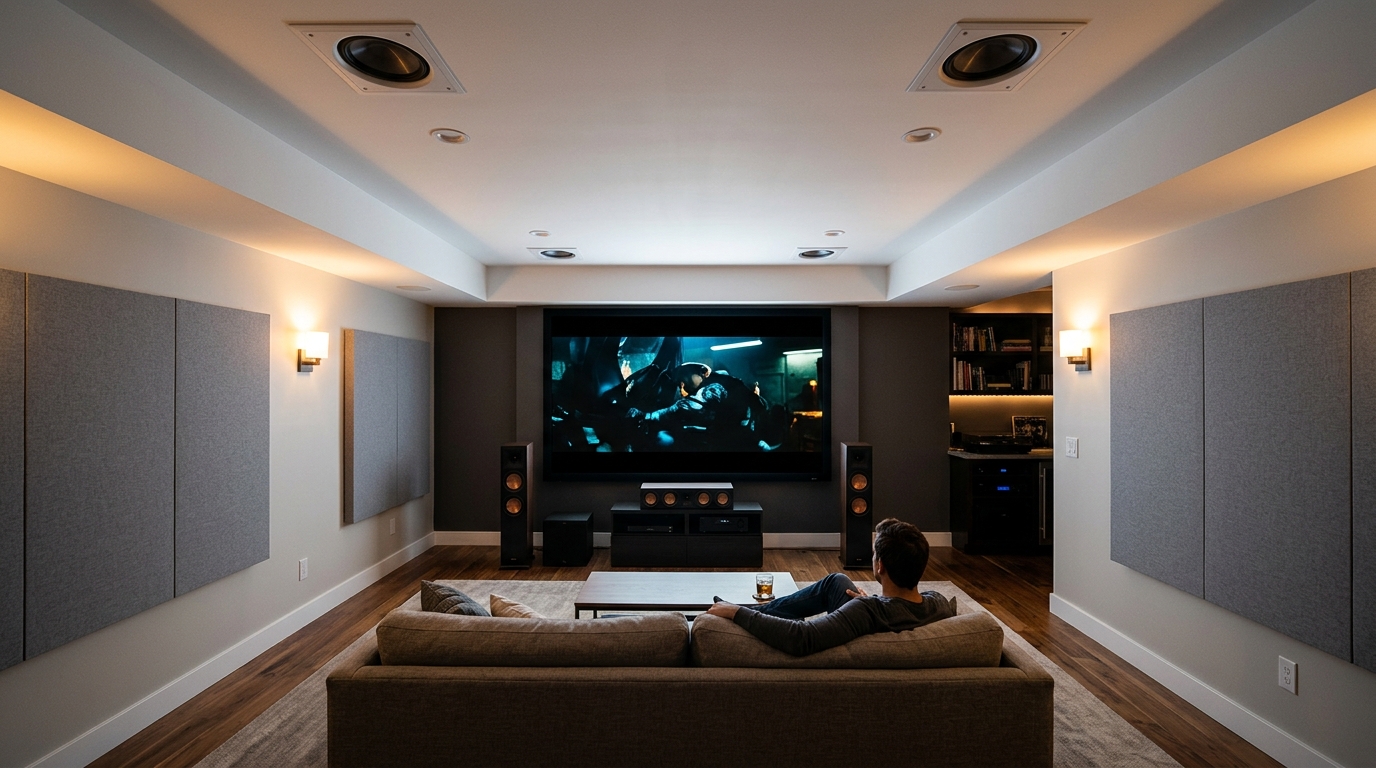
left image

Home  


Creating an Entertainment System
That Is Right for You

by Thomas Kossler
(Berkley, MA - US)


Most consumers want help when it comes to creating an entertainment system that is right for them and their home.

This article will provide some insight into the basic planning for a home entertainment system. 


Where to Start

You will need a starting point which usually consists of the overall budget. What will the entertainment system cost and is it within my budget.  This is a very difficult question for two reasons:

First, there are for all practical purposes, no boundaries to the amount of money that may be spent on an entertainment system, from a 'Theater in a box' for a few hundred dollars, to custom theaters costing in excess of $500,000.  Needless to say, most of us would be looking to spend somewhere in between.

Second, is that everyone wants value for their money. Whenever, we ask a customer how much they would like to spend, more often than not, the answer does not include a dollar amount.

The important thing to keep in mind is balance; each component of the system should provide a similar level of performance.

Over the years, industry experts have tried to provide formulas to describe the relative cost of each component in a balanced system. The problem is that rarely do any two experts agree; and the technical advances in equipment performance insure that today’s ideal formulas are obsolete tomorrow.

With this in mind, then what should you do?  We offer the following guide to assist you in deciding what percent of your budget should be suitable for each component of your entertainment system:

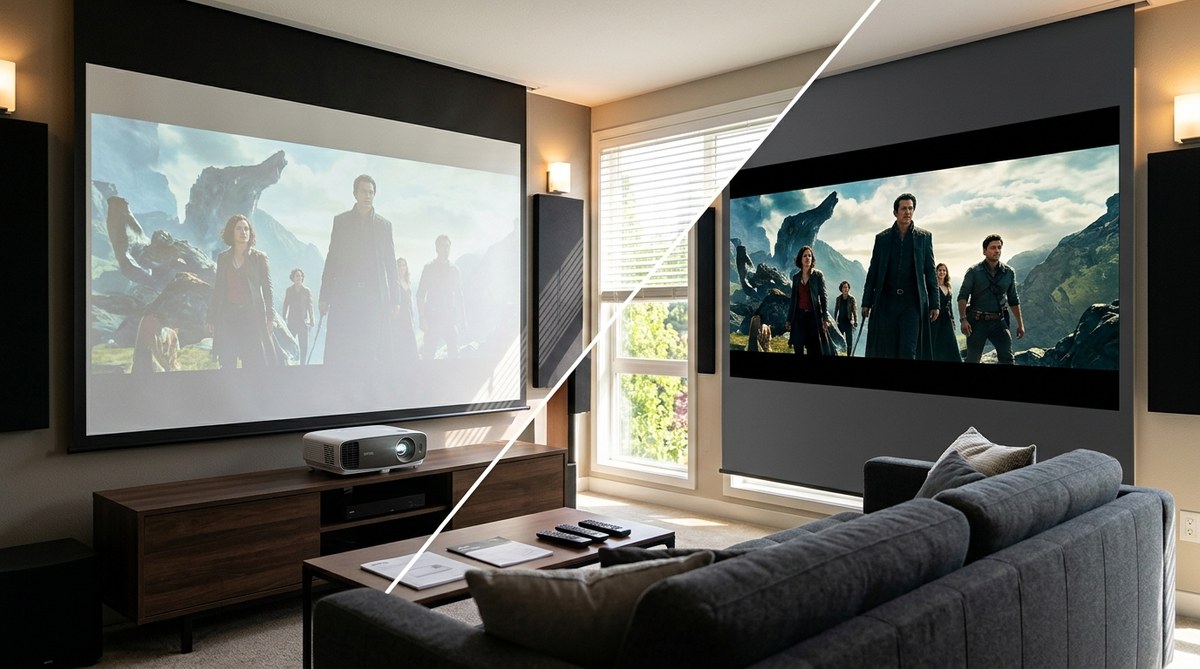
Display (flat panel LCD, plasma, projector and screen):30%
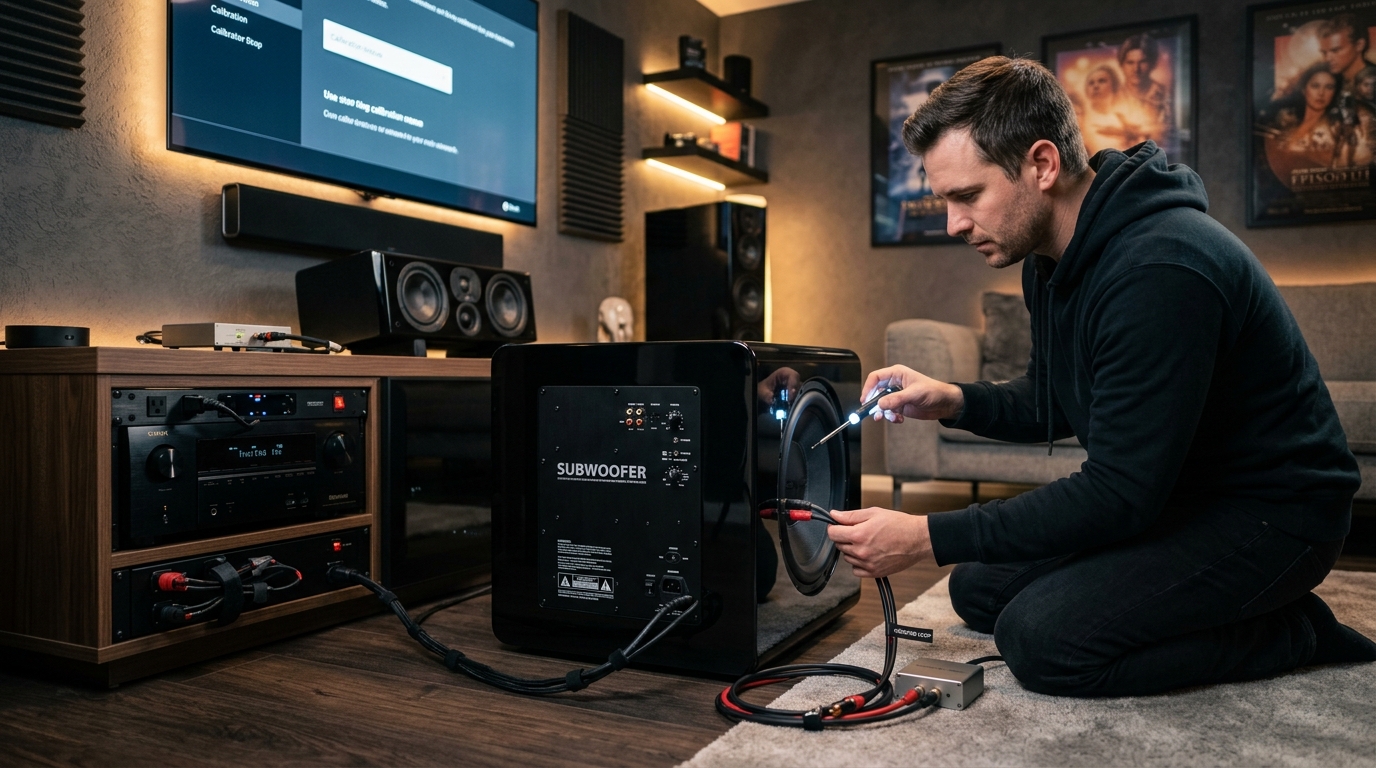
Speakers (three in the front, two surrounds, and a subwoofer):40%
Electronics (receiver, DVD player, etc.):20%
Cables and Accessories:10%

Additional Considerations

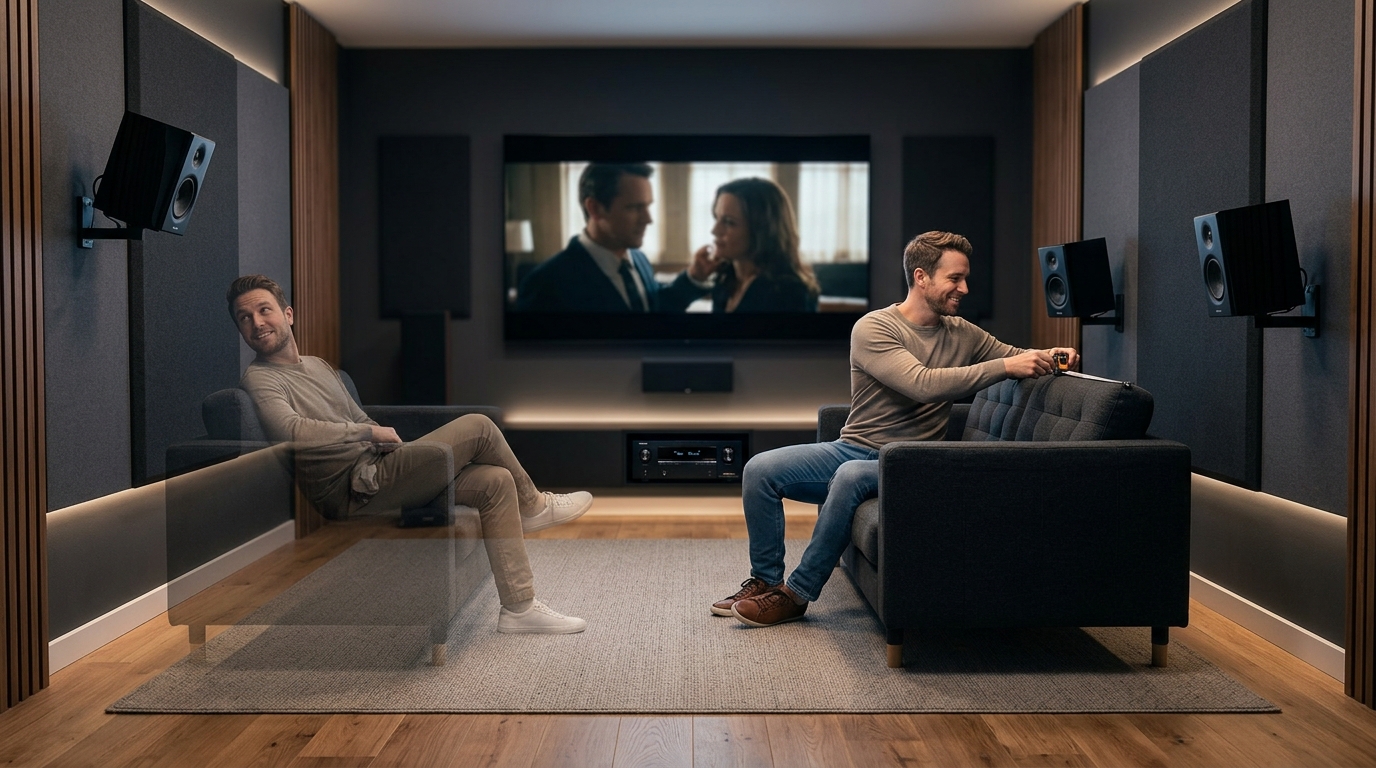
In addition to your budget, one should consider the size of the major components. Size should be a primary consideration for the two sensory components – the display and the speakers.

The size of the display is proportionate to the distance from the display placement to the primary seating position. The speaker size is dependent on the overall volume of air in the room.

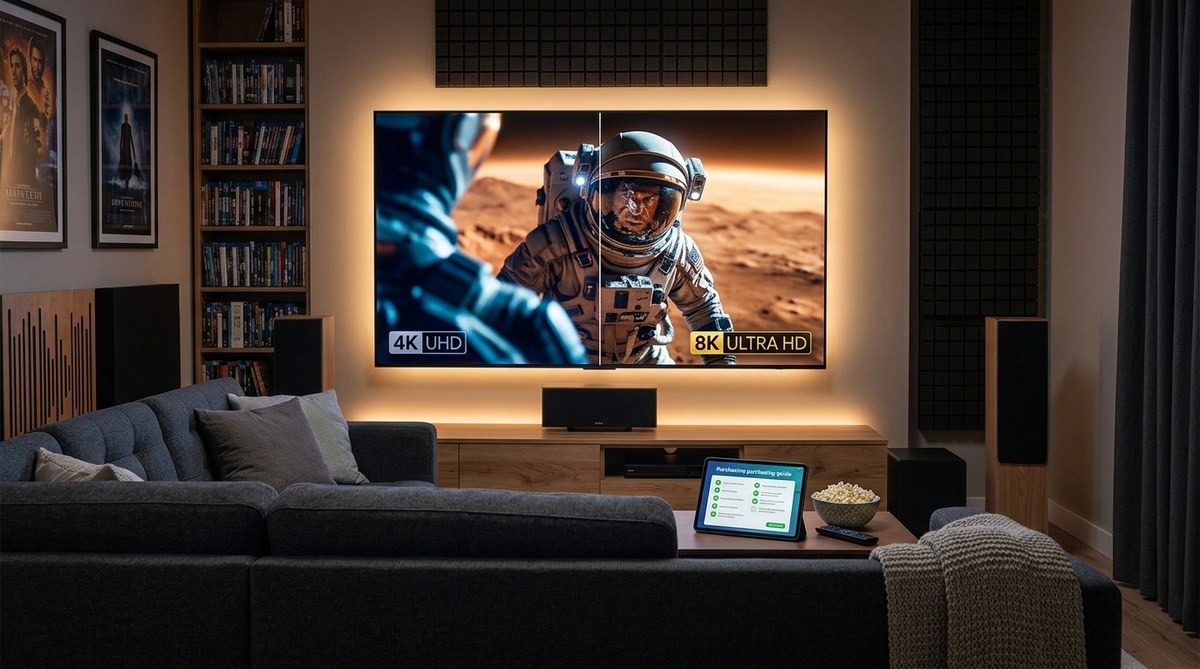
When sizing a display for a theater room, the key focus should be on creating for the audience a viewing experience that is “immersive”.  To achieve this in a 16:9 “HDTV format; the viewer must be seated in a position that is 1.5 to 2 times the display width away from the actual display.  However, if the room has multiple uses (e.g. family room) the distance from the display to the primary seating position now becomes 2 to 2.5 times the display width away (so the display does not dominate the room).  Please refer to the chart below:

TV viewing distance chart

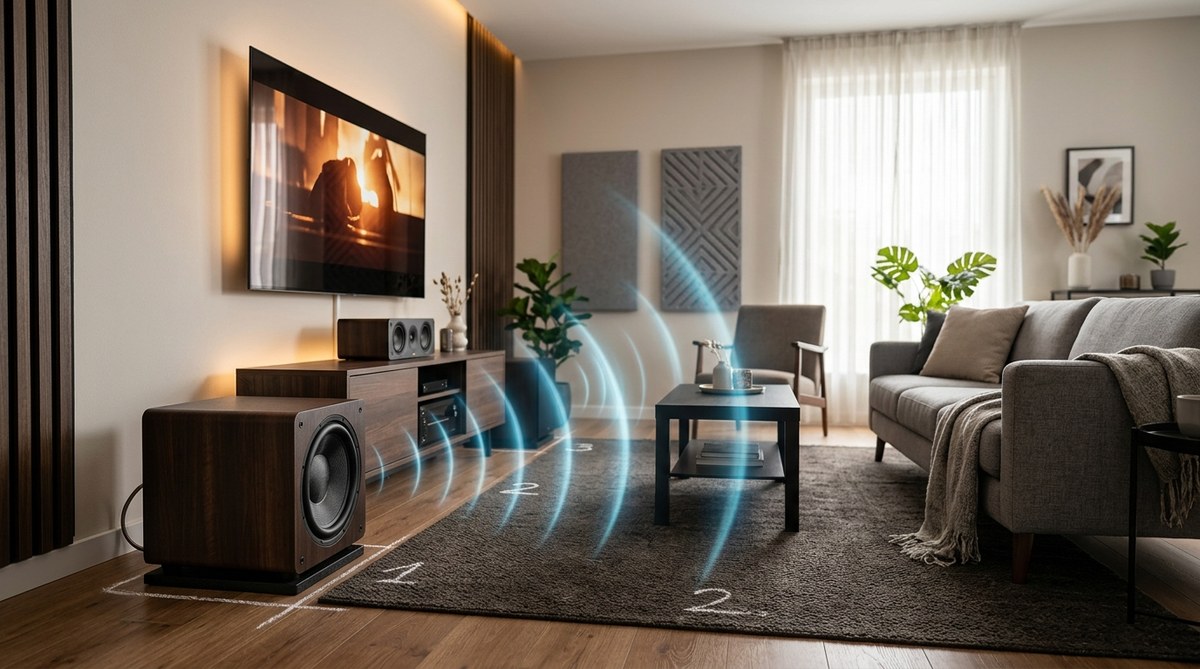
Speaker sizing is somewhat more subjective; there are a number of design characteristics that are not related to the size that have an impact on the output of the speaker.  Therefore, for the purpose of this discussion, we will assume that we have well built speakers from a reputable manufacturer.

Each speaker has one or more drivers.  The following is in reference to the largest driver diameter; the room size is expressed in cubic feet – length x width x height.

Small room (less than 1800 cubic feet) – the driver diameter should be 4” – 4.5”

Medium room (1800 to 2500 cubic feet) – the driver diameter should be 5.25” – 6.5”

Large room (2500 to 5000 cubic feet) – there should be multiple drivers with a diameter of 6.5” to 8”


We hope you found this information helpful.  As always, this information is intended as a guide, not a rule.

Article date: October 6, 2008


Article submitted by Thomas Kossler from Creative Entertainment Systems, Inc., a custom electronics integration company that designs and installs dedicated home theater rooms, high quality surround sound home entertainment systems, and single/multi room solutions.

For more information, please visit Creative Entertainment Systems website at www.cesberkley.com, or call: 508-824-0212.


Click here to view other interesting articles from other great home theater sites.

or...

Click here to post comments.

Join in and write your own page! It's easy to do. How?
Simply click here to return to Home Theater Sites
.


Find us on Facebook
Follow us on twitter

Home
HDTV Guides CRT TVs
LCD TV Guide
Plasma TV Guide
3D TV
Flat-panel TV Reviews Plasma TV Reviews
LCD TV Reviews
Best HDTVs
Projection Systems Projection TV
RPTV Reviews
DIY Projection TV
Projector Reviews
Projection Screens
Digital and Satellite Television Digital TV Guide
Satellite Television
Home Theater Audio Surround Sound
AV Amplifiers
Speakers
Wireless Home Theater Wireless Speakers
Headphone Guide
Media Players
Home Theater Guides Home Theater Design
Equipment Racks
AV Cables
HDCP
Set-Up DVDs
Power Protection
Books and Magazines Books / Magazines
Catalogs
Home Theater Ideas! Home Theater Sites
HT Pictures Gallery
Useful Links
Movie Posters MoviePoster Guide
The Poster Store
Shopping Online Price Search
Refurbished Products
Online Store
Website Information About Me
Website Content
Site Use & Dislaimer
Privacy Policy
Advertise
Site Search
Contact  Form
Site BLOG
E-zine Subscription
.

[?] Subscribe To This Site

XML RSS
Add to Google
Add to My Yahoo!
Add to My MSN
Subscribe with Bloglines


Please Note:

Double-underline links appearing on this site represent additional information and special deals related to the page content; this added information is being supplied directly by Kontera.

To view this information, please place your cursor over these double-underline links.


Stay tuned to Practical Home Theater Guide

New content will follow soon!