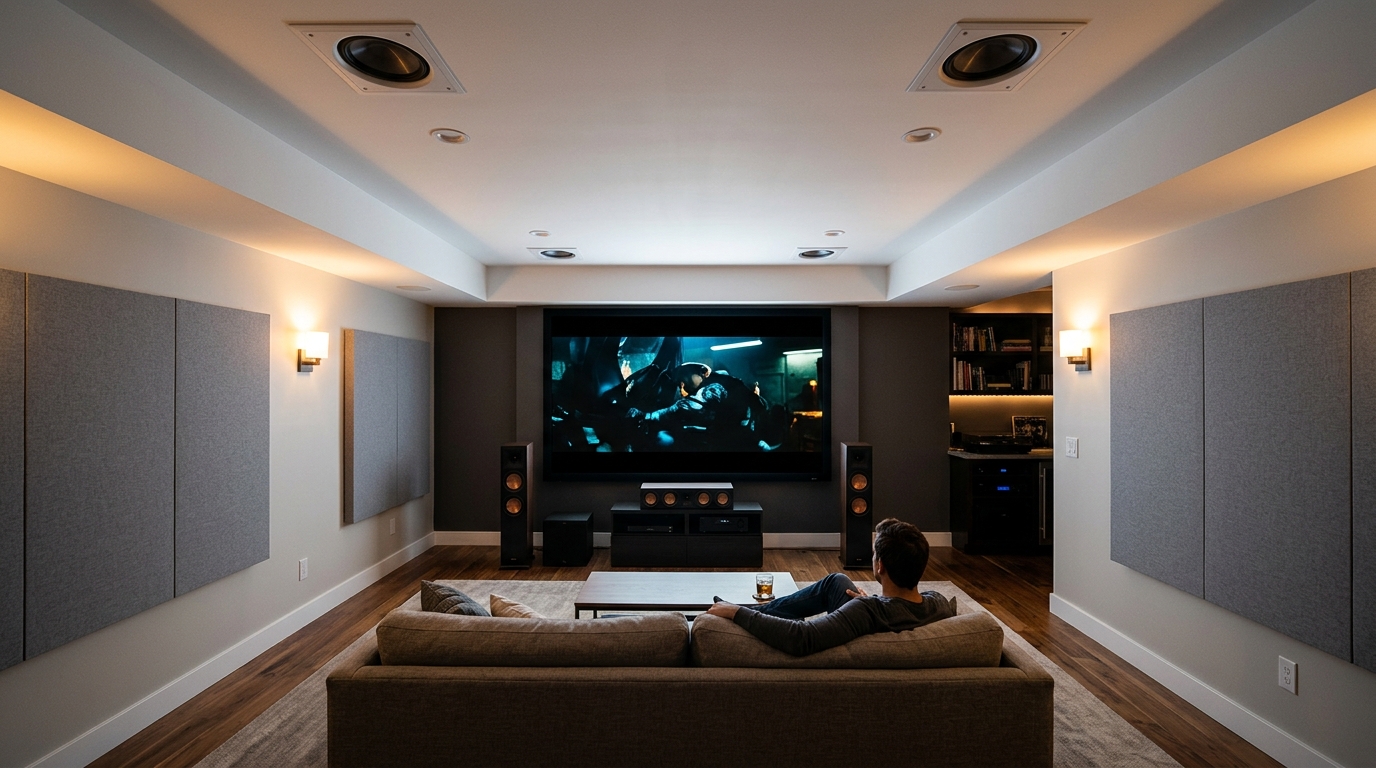
What's the big deal about direct-view big screen television systems?
Whether it is a big screen CRT, LCD, or plasma, direct-view
systems are still relatively expensive in comparison to their
projection TV counterpart for the same screen size.
The truth is that if it is just for the big screen TV experience, you can
enjoy a 100" picture using a front projection setup at the same price of a
comparable 50" plasma TV.
However, direct-view TV systems do carry a number of advantageous over a
projection setup.
In this short article, we will try to:
Identify the pros and cons
of direct-view versus projection TV. However, first we will try to
define a few terms associated with video display systems.
Discuss the main
direct-view technologies - conventional CRT displays, LCD
panels, and the latest plasma display screens.
Present a
step-by-step guide to
selecting your direct-view big screen TV.
We are dealing with relatively expensive
systems - resenting a big screen TV purchase would be truly unfortunate.
We therefore hope that the information
contained in this guide will lead you through the process and help you make
a more informed buy
you feel confident about.
A Few Definitions:
Big Screen TV, Direct-view
Displays, and Projection Systems
What
qualifies as BIG Screen TV?
There are no strict and fast rules here; typically, any video display device with a diagonal screen size of 34
inches or more, is normally considered to form part of the so-called
big screen TV
category. Some stores tend to list smaller TV sets as well - namely any TV
within the 27" to the 34" screen size - as part of the 'big
screen' category.
This is however debatable in that it all depends on what you are after. Here we are dealing with Home Theater. A big screen
television is a most crucial element for a great home cinema experience. In
our opinion, even a 34-inch screen may turn out to be a bit too small a size
for a truly immersion movie experience, least image a smaller screen size.
Big screen TVs fall within two main display categories:
Direct-view
video displays:
These are video displays in which the light produced by a display
device is viewed directly without first bouncing off a screen. CRT, LCD,
and plasma televisions are direct video displays.
Direct view displays are best suited for brightly lit environments in that
these have the greatest light output as compared to projection displays.
Projection display systems:
Unlike their direct-view counterparts, a projection display setup relies on
the projection of an image onto a screen for viewing purposes. Front and
rear projection systems fall within this category of video displays; the
main difference between these two processes is that front projection
utilizes a reflective screen surface while rear projection makes use of a
transmissive screen surface.
Projection displays work best
in a dimly lit environment. In particular, a front projection setup requires
a darkened room - similar to a movie theater - for the best results.
Direct-view Big Screen TV
systems - Pros & Cons
Since the first days of
television, conventional direct-view cathode ray tube (CRT) devices
have been used almost exclusively to display a video image. The technology is proven and there is a
large base of satisfied customers. It is estimated that over 85% of all TVs
in the world are tube televisions, while analysts predict that CRT TV sets
would still account for some 70% of all TVs by end 2008.
Up to a few years ago, the
CRT was the only display technology you could choose for your TV. In
reality, you had no choice. You had hundreds of models of TVs on the store shelves, but... inside they were more or less the same
- a cathode ray tube as your TV display device.
This is no longer the case.
LCD technology used extensively in laptop screens, is readily available on
stores shelves in screen sizes up to 50 inches and above, with the largest
commercial available LCD TV set being the
Sharp LC-65D90U 65" LCD HDTV.
At the same time, at the larger
end of the spectrum, plasma technology is allowing for really big screen TV
sets - the latest
prototypes boost a screen size of over 100 inches diagonal at just 4 inches
deep. In contrast, a 36-inch CRT TV is typically 24-inches in depth though
lately, we have seen some super slim tube sets from Samsung that are
typically 30% slimmer than conventional CRT TVs. (For more info on the
Samsung SlimFit series of CRT HDTV sets click
here.)
These new emerging
flat-panel display technologies are extremely thin - at under 4-inches deep,
meaning that these big screen TV systems can literally be hang
on a wall - just like a picture!
The availability of new
direct-view display technologies implies that now you have the possibility to
choose the most suitable technology for your requirements.
This is however subject to
your available budget - Plasma and LCD display technologies do not come
cheap, meaning that depending on your requirements, a projection TV set-up
may at times provide a more appropriate and cheaper alternative that is also surely worth
considering.
Video
Display Technologies - Main Characteristics:
The summary list detailed
below points out the main characteristics associated with the various display
technologies. Its main purpose is to
serve as a guide to help you determine which of these direct-view video
display technologies is most suitable for your requirement.
We are also listing the main
characteristics associated with video projection technologies. This should
help you better identify the pros and cons of direct view displays versus alternative
technology.
Note: What follows is more of a checklist - but it should be
enough to help understand where the respective video display technology fits
best when it comes to choosing your big screen TV. Once you identify the right video technology for your needs, we
recommend that you would follow through the respective technology guides
available on our for a better understanding of the pros, cons, and usage;
links are given at the end of this article.
Direct-view Technology
Cathode Ray Tube
(CRT): (standard, HDTV) 27" to 36"
-
Relatively inexpensive up to around 32-inch
- especially standard definition models. Price starts to shoot upwards as
you approach the 34-inch screen size.
-
Proven technology: Expected half-lifetime:
20,000hrs
-
Picture quality is among the best you can
get from a direct view device. In reality, not even the latest plasmas can
rival conventional cathode ray tube displays for black depth and contrast,
while nothing beats a high-resolution flat-screen CRT display tube for
picture clarity.
-
Bright crisp pictures - can be viewed in bright
ambient light conditions.
-
CRT big screen TV systems are bulky and
very heavy though the latest super slim CRT TVs would take almost the
same depth as an equivalent screen size LCD TV placed on a table stand.
LCD Display Panels: (HD-ready,
HDTV) 10" to 65"
-
Clear bright high resolution pictures
-
Display panel is only a few inches thick
-
LCD displays tend to exhibit a color shift
as the viewing angle changes though new developments are addressing this
problem.
-
LCD response time and image lag may be an
issue with some models.
-
Typical expected half-life time: 50,000 to
60,000 hours.
-
Most expensive of all direct view big
screen TV technologies especially as you cross the 50-inch screen size.
Plasma screens: (HD-ready,
HDTV) 37" to 65"
-
Clear bright high resolution pictures with
very deep blacks
-
Display panel is only a few inches thick
-
Support a viewing angle of up to 175
degrees with no color shift - similar to a CRT.
-
Reliable technology with an expected
half-lifetime of around 50,000hrs.
-
At the smaller end of the scale - 37" to
42", plasma displays support a lower resolution than an equivalent
screen size LCD screen.
-
More expensive than similar size rear
projection TVs but cheaper than LCDs especially at the larger screen
sizes.
It is relatively easy to
determine if in effect, CRT is really the best display option for your
needs. Things are not that straight forward when it comes to choosing
between plasma and LCD. For a detailed comparative
analysis between Plasma and LCD TV display technologies, we suggest that you
follow through our article here:
Plasma vs.
LCD TV - A Comparative Guide
Projection Display
Technology
Rear Projection: (standard,
HD-ready, HDTV) 42" to 73"
-
Good picture quality
-
Easy set-up offering an immediate solution
to getting a bigger TV
-
Relatively bulky and heavy
-
Affordable - much cheaper than direct-view
systems for the same screen size.
-
Relatively expensive replacement projector
lamps costing a few hundred dollars every 3000 to 4000 hours of use.
-
May exhibit degradation in picture
quality with a change in the viewing angle.
Front Projection:
(Standard and High Definition) Theoretically up to & greater than 150"
-
Very good picture quality but highly
dependent on type of projection screen.
-
Projector is small and lightweight.
-
Affordable - offer the best dollar to
image size ratio.
-
Relatively expensive replacement projector
lamps costing a few hundred dollars every 3000 to 4000 hours of use.
-
Best when viewed in total darkness
-
Front projection is the closest you can
get to the movie theater magic.
Detailed Information and
System reviews
As already
stated, the video display characteristics checklist detailed above should
put
you in a better position to determine which of the different display
technologies is most suited for your big screen TV needs.
If you think that
direct-view is not an option, we suggest that you take a look at our
Projection TV section; there you will find
a series of guidelines and product reviews covering both front and rear projection
TV
systems.
If Direct-View
represents a solution to your big screen TV requirement, we recommend that you
visit the links listed below for additional information on the respective
display technology.
Included in the list of
links below, you will also find a
Big Screen TV Buying Guide, that highlights the features
to look for when planning a big screen TV purchase, and an Online Buyer's
Guide; the latter should lead you towards a more educated online buying
experience should you opt to purchase your direct-view big screen TV online.
-
Big Screen TV Buying Guide:
A step-by-step guide to help you identify the features to look for
when choosing your big screen direct-view TV.
-
CRT TV Guide:
The latest low prices on flat-panel TVs seem to imply
that the CRT TV days are over. However, is it really so? CRT
still offers unsurpassed picture quality, and the new
slim type tubes offer even more…
-
The Complete LCD TV Guide:
LCD HDTVs are turning out sharper, bigger, better, and
cheaper. Discover all you need to know about LCD TV sets
in this series of articles on LCD televisions.
-
Plasma Television ...the primary choice in home
entertainment
Complete Guide to Plasma Television: Discover the basic
operational principles, find out the pros and cons of
plasma vs LCD TV, and identify the features to look for
when making a plasma TV purchase.
-
An Online
Buyer's Guide:
Shopping online is a way to save big money on your plasma, LCD HDTV,
or in that case, anything you can think of. But is it safe and secure?
Discover how you can manage the risks while still enjoying big savings
when buying your gear online.
-
For the
full range of Big Screen TV sets at amazon, click here:
Big Screen Televisions