|
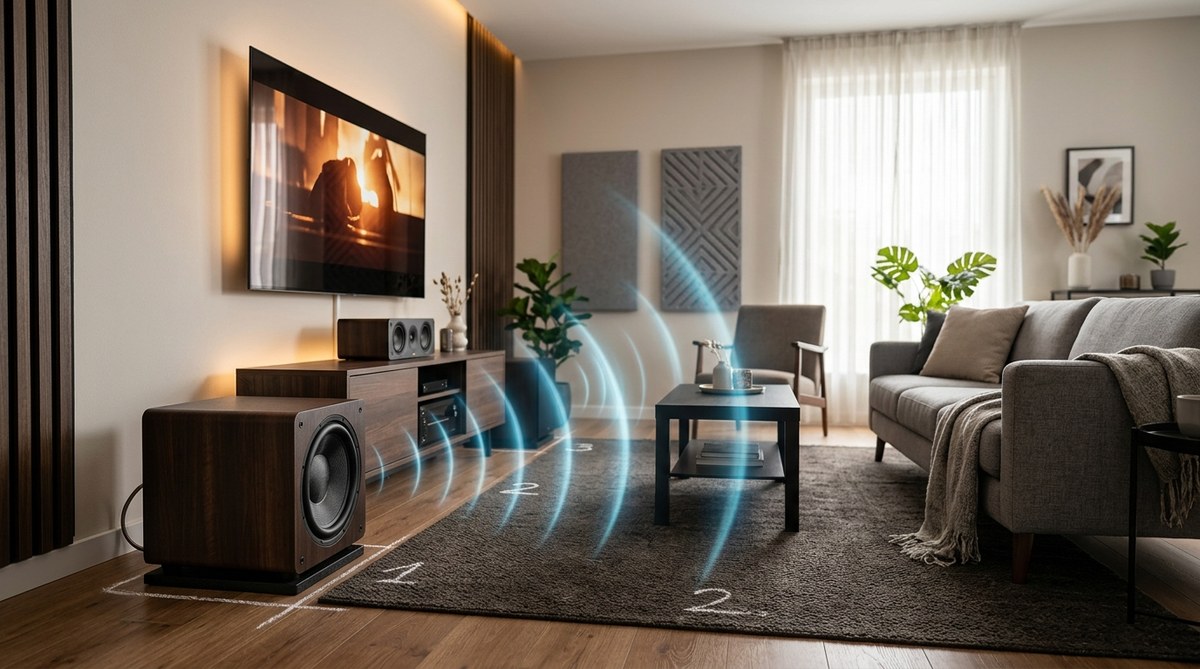
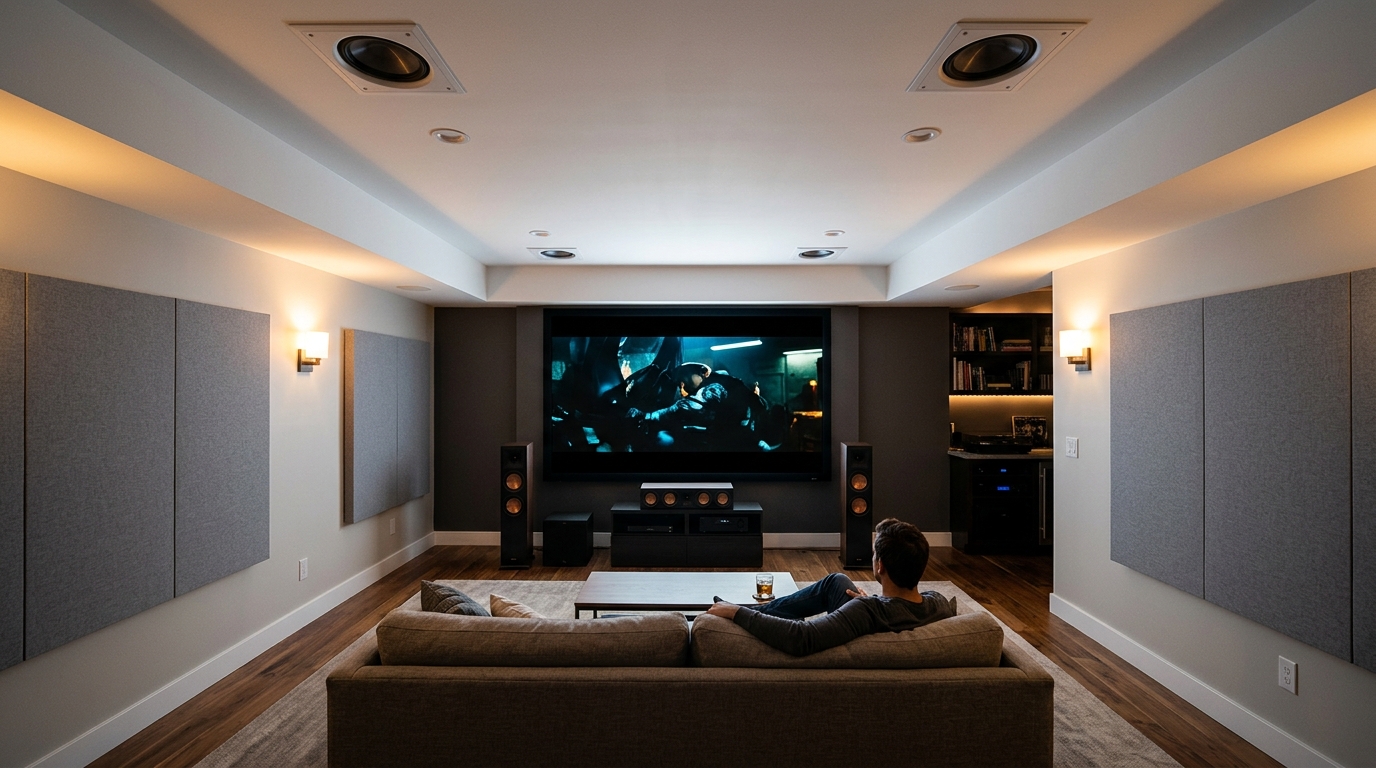
KEF KHT5005.2 Home Theater Speaker System This KEF comes with 3-driver aluminum satellite speakers and a 250W dual 10-inch powered subwoofer. It is one of the few speaker systems that combine excellent sound with a refreshing lifestyle-type design. (Buy from amazon US)
Also available from Amazon UK |
First, a few Audio Speakers Basics... Speaker Configuration choice in surround sound
Audio speakers are what transform the electrical energy from your AV receiver into sound energy.
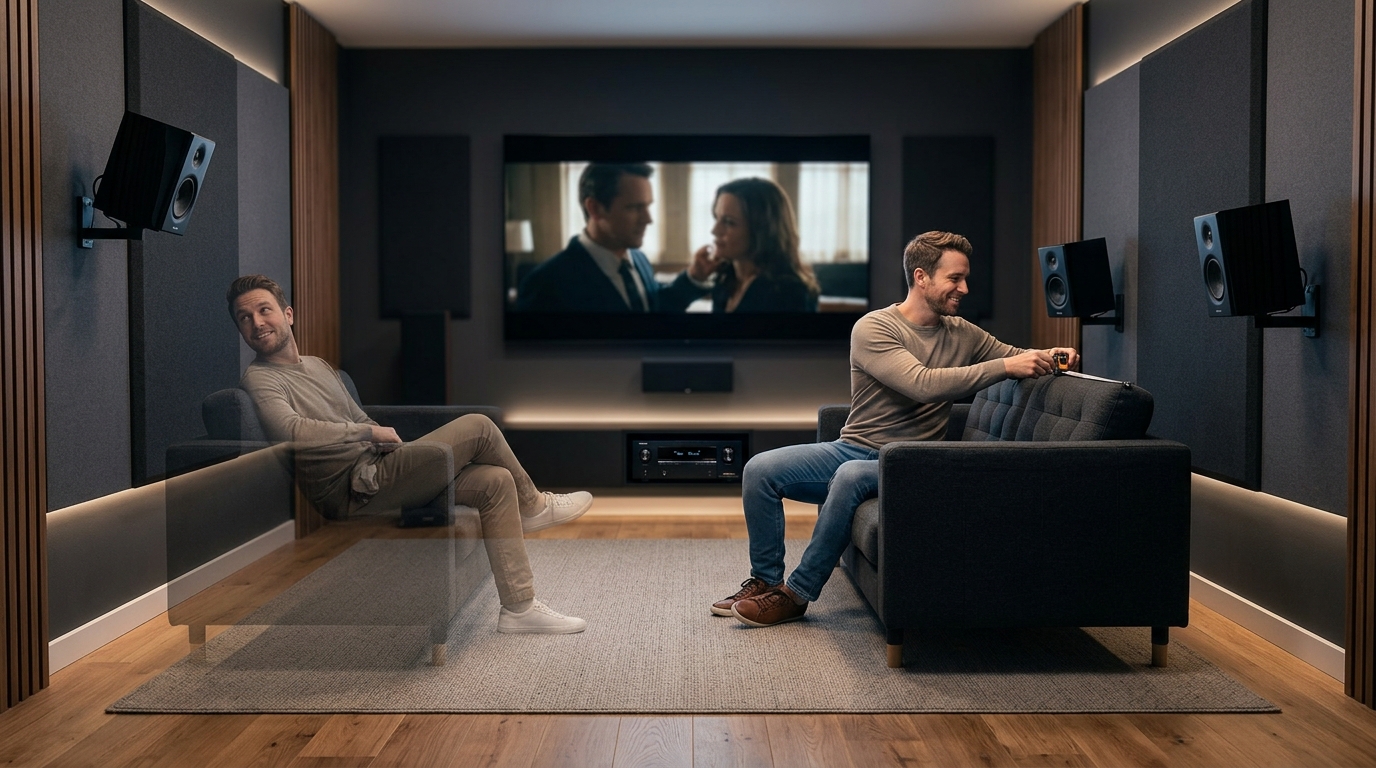
In the case of a surround sound set-up, multiple home theater speakers - fronts, center, and surrounds - work together to create a unified soundfield. Within this basic surround sound setup, it is possible to opt for a number of valid multi-channel audio speaker configurations.
For example, you may choose to anchor your sound stage to two full size left and right tower speakers complete with built-in subwoofers to enhance the overall sound quality, and then use three or more identical satellites for the center, surround and back speakers while doing away with an independent subwoofer unit.
The purists among home theater enthusiasts prefer to use a center channel speaker identical to the main fronts and then use bipolar/dipolar speakers for the rear surrounds.
At the same time, one cannot ignore the fact that there are many other equally valid audio speaker options for multi-channel surround sound. One such possible option is the use of a horizontal speaker for the center channel; in the case of a relatively small room you may even opt to dispense with the center speaker and run your AV receiver or surround sound processor in a center-phantom mode. Another possible option is the use of identical subs for all channels complemented by an active subwoofer.
|
|
But...
While speaker choice and speaker configuration in a multi-channel audio speaker setup are more a matter of personal preference, yet it is important to take all factors into account when making a speaker purchase.
For example, while most brands and models of home theater speakers will be able to do a great job in reproducing sound, yet this is no guarantee that different speakers from different brands, or in that case, even different models from the same brand, will be able to work effectively together to produce a unified soundstage. In other words, you cannot just buy any speaker you like!
In a similar manner, a speaker designed for a small room would not produce good sound in a large room; the smaller speaker driver and smaller enclosure of a typical speaker designed for the small room will not be able to 'move' the larger volume of air in a bigger room. And the same holds true with a large speaker in a too small a room - with a sound that is either too loud even at relatively low sound volumes, or with treble and bass that do not sound good at low volumes.
Furthermore, issues like speaker frequency response, speaker sensitivity, enclosure size, and power rating, are all important considerations that need to be taken into account when selecting home theater speakers; these parameters are easily identified through the speaker specs sheet. Hence, matching say the speaker power handling capacity with that of your home theater receiver is just a matter of matching the power rating numbers of your speakers with that recommended for your AV receiver or home theater amplifier.
Still, there is more to choosing home theater speakers for a correct surround sound setup... In particular, speaker timbre matching and speaker construction are basic considerations that need to be taken into account to achieve a truly unified soundstage. We discuss the relevant issues in further detail below.
Audio Speaker Choice - Article Index:
Home Theater Speaker Matching in Multi-Channel Audio
Speaker Construction - Speaker drivers and enclosures
Audio Speakers Buying Tips - Shopping for the best speakers
Speaker Matching in
Multi-Channel Audio:
As we have noted in our introduction, not all audio speakers will be able to work together to produce a solid unified soundfield. You need to match the 'tonal quality' of the different audio speakers used in a surround sound set-up; this is also referred to as 'voice-matching' or timbre-matching. Tonal matching means that the different channel speakers should share the same harmonic characteristics in their sound response.
Tonal quality of a speaker depends on a number of factors such as speaker enclosure material and design, speaker driver construction, and even speaker response; the latter depends on the driver itself. These all work together to produce the final sound characteristics.
Often overlooked by many, tonal speaker matching is the key to an effective home theater soundstage as it leads to a more unified sound-field. In other words, ensuring that the different home theater speakers for the different surround sound channels come with matched tonality leads to a more seamless soundfield for a more immersive and convincing listening experience.
Failure to use matched speakers in a surround sound set-up leads to an unnatural, disjointed sound as sound travels from speaker to speaker.
Unfortunately, tonal quality is an extremely difficult-to-define speaker characteristic and therefore, one that you would not find listed in a speaker's specification sheet. The best test to ensure you get matched speakers is your ear. But if it is not possible to listen to different speakers, a good way to get timbre-matched speakers for a multi-channel surround sound set-up is to stay within the same brand and choose speakers from within the same family or series of speakers.
In other words, part of your job when purchasing a set of home theater speakers is to research the entire speaker line available from your selected manufacturer to find what options are available, as well as what matches best with what; in particular, it is extremely important to match driver sizes and especially driver materials.
And this applies especially when it comes to the center speaker. We have already stated that in an ideal surround sound setup, the center speaker should be identical to the main left and right speakers.
Admittedly, this is not always practical especially if your main fronts are full size tower speakers. However, more compact audio speaker systems such as the excellent KEF KHT5005.2 featured above can still do a remarkable job in delivering one of the best home theater sounds despite their compact package.
But whatever audio speaker system you opt for, ensuring that at least the center speaker share one or more driver sizes and driver material with the left/right fronts would do a lot towards achieving a unified soundfield. The real critical requirement here is to use identical tweeters for all three fronts - left, center, and right - while midrange and woofers should at least be very similar in construction. This helps ensure a more unified sound field.
Speaker Construction:
Look for audio speakers that come with relatively heavy, solid braced enclosures made from rigid materials like MDF as this will help cut down on internal resonances as a result of enclosure vibration. Braced speaker enclosures include a specially designed structure inside that helps prevent the cabinet walls from vibrating. Enclosure vibration adds undesirable coloration to sound especially at the resonant frequency of the enclosure - leading to a less accurate sound response.
Equally important is the use of powerful magnets. These give the speaker greater control for a more precise sound - one that performs well irrespective of the type of music or movie soundtrack you are listening to.
And look for stronger speaker driver materials. As further explained in our article on Understanding Speaker Specs, by speaker driver, we refer to the moving part of a speaker assembly; this consists mainly of the speaker diaphragm or cone, inner suspension, and the voice coil. The driver is the heart and soul of any speaker system. Choosing stronger materials will ensure your speakers will be able to stand up to years of use.
At the same time, it is important to understand that different driver materials produce different speaker tonalities. This explains the need to closely match speaker drivers both in material and construction when it comes to speaker tonality matching. What you choose here will depend largely up on your personal tastes and preferences. For example, a reinforced silk speaker diaphragm will produce a softer sound than an aluminum or titanium one.
Home Theater Speakers Buying
Tips
We have already highlighted what to look for when selecting individual speakers for the different channel in multi-channel audio in our 'Selecting Home Theater Speakers' guide.
What follows here should therefore be taken in the light of our earlier discussions on the subject. However, there are a few issues that relate specifically to the process itself of shopping around for audio speakers:
1] There is no better way to shop for your home theater speakers than to listen to a broad range of audio speakers in a non-echoing environment at your local electronic retail store; try to listen to both high-end and budget class - from full-size powered towers to bookshelves and satellite/subwoofer setups, driven by an equally varied range of amplifiers/AV receivers - irrespective of your home theater budget. This type of approach will give you a clear idea of what good sound is like and what is possible to achieve with the different speakers at different budgets.
The main problem in this type of approach is that not everyone has local access to a well-equipped store, nor can you expect that your local retail store will be willing to spend so much time on your listening tests. But whatever your local AV shop has to offer, it is always advisable to spend time listening to different speakers even if you will ultimately be ordering online.
2] Take with you some DVD or CD to play during these listening tests. Listening to a piece of music or movie soundtrack you know will tell you a lot about the sound quality of different speakers.
3] Be aware that listening conditions vary - and are very much subject both to the listening environment as well as to the amplifier or home theater receiver used to drive the speakers. This means there is no guarantee that those audio speakers will sound the same in your home. But if they sound good in the showroom, you know that they have the potential to sound good in the home.
4] Be aware of sales rep tricks. Sales reps know very well how to make you think that one competing brand is better than another.
For example, playing one set of speakers at a slightly lower volume than another may easily make you think that the one played at a higher volume is better. We hear bass and treble much better at higher volumes and so speakers played at a high volume will always sound better - even if the difference in loudness is hardly noticeable to the listener.
5] Take notes. Finally, always take notes during your speaker listening tests, highlighting your very first impressions about how different models did sound to you - dull, performed well, etc. Taking short notes during your listening will help make the short-listing process much easier.
Does this mean you should not buy your speakers online?
Audio speakers listening tests are a must as they tell you more on speakers than a sales rep or a detailed specs sheet would ever do. But this does not mean you should not buy speakers online.
What we are saying is that before taking your final speaker purchasing decision, you need to spend time listening to your audio speaker of interest. Once you have heard your audio speaker, whether you buy from your local Electronics brick and mortar retail store or online to enjoy a better deal, is more a matter of personal preference.
Rather, the possibility is that you will find a much wider choice and enjoy better deals when shopping online; just check carefully the return policy when buying online to ensure you can return the audio speaker if it does not sound good to your ear.
If you are planning to shop for speakers online, here are few tips to shopping online worth following to better manage any possible risks while enjoying the many benefits.
In Conclusion
Do not just buy the first set of home theater speakers you come across or try to save on your home theater expense by opting for cheaper speakers. Remember, a set of good quality speakers that sounds good to you today, will most probably still sound good in ten to fifteen years time. In the process, you will be replacing your expansive 3D HDTV or AV receiver, but it is unlikely that you will be replacing a good set of audio speakers.
In other words, the extra effort invested in your audio speaker selection process will surely more than pay for itself through an enjoyable sound listening experience in the many years to come.
Looking for affordable Multi-channel Audio Speaker Systems?
Amazon offers an extensive range of home theater audio at significantly reduced pricing. In addition, the various buying options available from the different retailers present on the amazon storefront make amazon one of the most comprehensive online sources in this respect.
Prior to any decision, we advise to do some research of your own. Look at what other customers had to say about their purchase especially with respect to product quality and manufacturer customer support. A good starting point is the customer feedback posted on amazon.
You can search the amazon storefront without leaving our site by using the amazon search box below; your search results will appear here under.