|
The
Practical-Home-Theater-Guide.com E-zine
Issue
# 030:
What's New
Date: 11th July 2007
The Practical HT Guide Update brings you the latest additions in a
series of informative home theater design articles, unbiased system reviews,
practical guidelines and free advice.
If you like this e-zine
,
please do a friend and me a BIG favor and pay it forward. If
a friend DID forward this to you, and if you like what you read, please
subscribe by visiting
The Practical HT Guide Update subscription page.
July
2007: Welcome to Issue 31 of the Practical HT Guide Update
In this issue:
Hiding Connecting Cables:
A Wiring Solution for Flat Panel
TVs
Are you
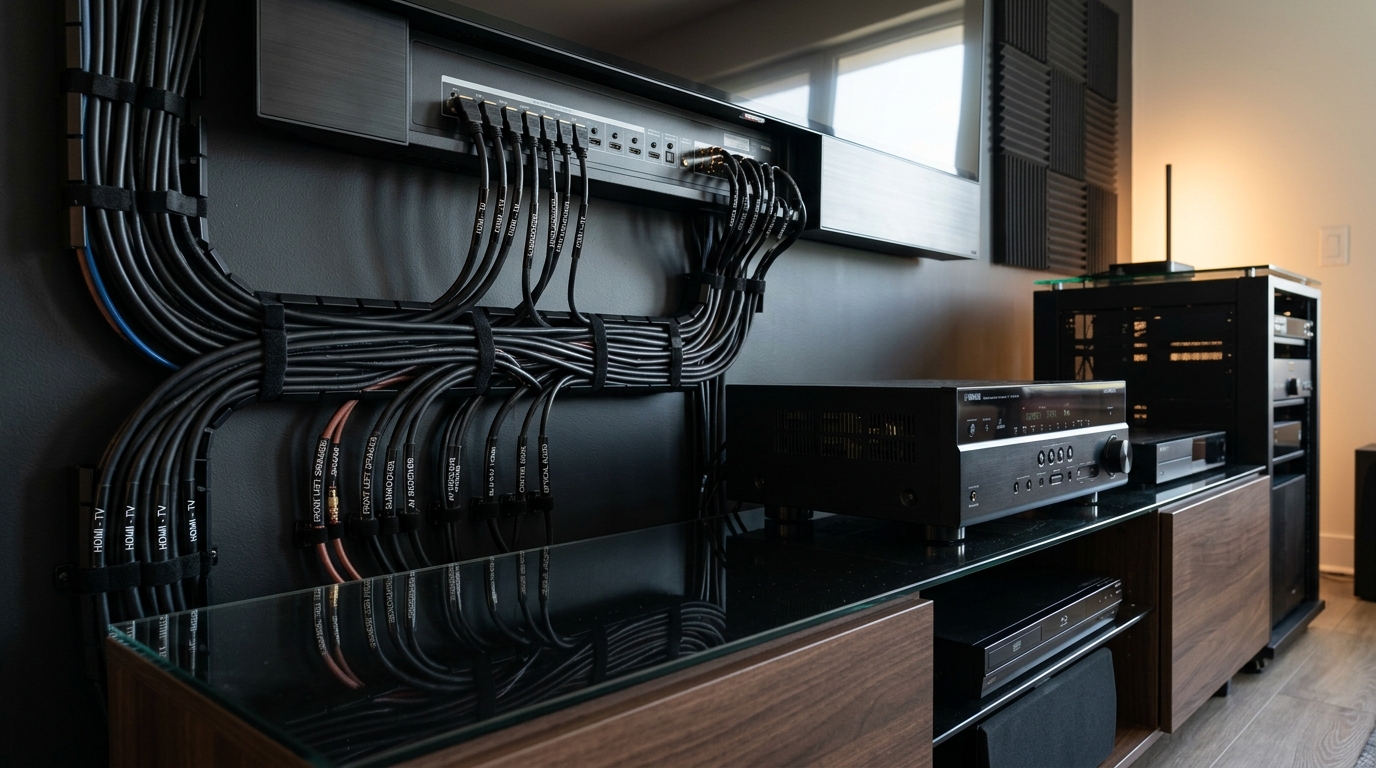
looking for a DIY wiring solution
that
can help you hide those unsightly looking audio/video and power cables when wall
mounting a flat panel LCD or plasma television?
Well, the ‘Superb Home
Theater’ cabling channel system created by furniture designer
Anthony Lozano promises simple to fit. The concept is ‘easy home theater
installation’, and is designed with the DIY home installer in mind.

'Superb Home Theater' Wiring Channels:
Everyone would agree that a
wall-mounted flat panel LCD TV or plasma television looks at its best
when all connecting power and A/V cables are completely hidden.
However, most often, there isn't any pre
in-wall ducting through which to pass A/V cables and power cords between the
TV and the interconnecting gear.
And if there is any empty conduit buried in
walls, this is probably the ¾-inch (20mm) diameter type used by electricians
in domestic installations. This is too small to carry the larger diameter audio and
video cables.
One
should keep in mind that any wiring solution for audio and video cables
should take into account that these cables have limited pull strength with respect to
electrical wiring, and come with pre-installed connectors. In other words,
you need a relatively large diameter conduit to pass audio and video cables
when concealing cables in walls.
Aesthetically, running cables
through a wall yields the best results. Yet from a practical
perspective, this requires substantial DIY skills, and a lot of effort
especially when retrofitting a room. Furthermore, should you decide to hire
a
professional installer, the whole job can turn out to be pretty expensive -
costing several hundred dollars - and often complicated
to manage.
In addition, once cables
are installed in walls and access holes closed, it would not
be easy to replace any faulty cables, nor pass extra cables later.
Equally important, burying
cables in walls as a wiring solution is invasive in nature. It requires expensive patching should the day come when
you decide to move that flat panel TV elsewhere.
Moving to a surface mounted wiring solution would do away with all these
difficulties and installation expense. Up to now, most inexpensive
wiring solutions
intended for the DIY
installer consisted of nothing more than PVC trunking. It is true that these are
available in various shapes and colors, but these wiring solutions
with their cheap plastic feel, do not complement the stylish look of
most modern flat screen TVs.
But… don't despair!
Luckily, things are starting to change thanks
to the availability of a few 'stylish' wiring solutions on the market
targeting the DIY home installer. One such solution we have
come across is a wiring solution kit from 'Superb Home Theater'. It
is well
thought-out, easy
to install, relatively inexpensive, and once installed, has the custom look of an
in-wall installation without the permanence and expense associated with buried wiring.
More information on
the Superb Home Theater Wiring solution is available at our site at:
A Wiring Solution for
the DIY
Getting Rid of the Tangle &
Clutter of Messy Wires:
The Rocketfish Wireless Speaker System

A wireless speaker system is a great
choice for anyone to get rid of unsightly and cumbersome wires trailing
around the perimeter of a room between the receiver and the rear speakers in
a surround sound installation.
They also provide a simple alternative to
in-wall wiring when extending that second pair of speaker outputs (Zone-B speaker
outputs) on an AV receiver to a set of extra speakers elsewhere in the house.
Yet, up to not long ago,
performance of low cost wireless speakers has been rather disappointing.
Problems related to powerline-induced hum, limited signal to noise ratio,
limited audio frequency response, and signal dropouts due to
interference from WI-FI networks, cordless phones, and microwave ovens,
have often hampered the use of wireless speakers in the home.
Besides,
these systems would often introduce a perceptible latency delay between the
front and the rear speakers that would throw out of synch the sound from
the different channels.
However, things have started to change,
and they are changing rather fast! Thanks to advancement in wireless
technology, wireless speaker systems have become more affordable
and are getting better every day.
It is partly for these reasons that they are becoming more popular with consumers. Modern
RF-based systems
use better transmitters and receivers to decrease the interference. Sound
quality has improved to the point that it is close to CD-quality. In addition, setting up
one of these systems is just a few minutes job - often all that it entails is
to take them out of the box and turn them on.
Admittedly, not all
wireless speaker systems perform, and not all systems that perform come with
an affordable price tag. The Rocketfish Wireless Speaker System
reviewed here is an affordable
wireless rear speaker kit that comes with a specs
list that promises a lot for the price.
So we decided to take a closer look...
To read the full review of
the Rocketfish Wireless Rear Speaker Kit
- including details of a simple fix required with the original version of the
product to solve a hum issue, please visit Practical Home Theater Guide at:
RocketFish Wireless Speaker System
PC/Home Entertainment
Integration through Wireless Media Players
Wireless Media Players and WI-FI enabled HT systems take home entertainment to a new level. Now,
even average PC users can experience their entire collection of digital
content - music - videos - photos - in full glory without being tied to
a PC.

All coming together as One!
The
concept of wireless integration in home entertainment is more than just
adding a set of wireless speakers in a secondary room.
Rather, it
encompasses access to all form of digital content present on your PC, or
accessible online via an internet connection.
The scope is to enjoy this same content on your home entertainment system.
In other words, a wireless home entertainment setup gives you the possibility to enjoy
your digital media in its full glory over a big screen and a proper surround
sound system.
The good news
is that wireless technology is no longer exclusive to technically
proficient users. Rather, thanks to the use of wireless media players, Wi-Fi
enabled music centers, etc., it has become fairly easy to expand wireless networking from
a simple home-office, to a fully integrated home entertainment
solution.
There are quite a number of relatively simple and inexpensive options that
will help bring together your PC, internet connection and you home
entertainment system.
This type of home entertainment integration
gives you the possibility to enjoy the best of both worlds. The PC makes it easy to browse, download, and
manage digital media, while your home entertainment system gives you
the possibility to enjoy the very best in picture and sound.
You just need a decent computer, a broadband
internet connection, and a wired or wireless home network. You would also require a
wired or wireless media player, or a Wi-Fi enabled home entertainment system, plus a
few hours of setup time.
Even
if you have a computer with Windows XP Media Center,
Vista Home Premium or Vista Ultimate edition, you can use your
Xbox 360 or a
Media Center Extender , to stream TV, digital audio and video,
photos, and more.
For a complete guide
to wireless media players in home entertainment systems, vide our
article
Wireless Home
Entertainment Systems.
For a product guide
covering a few of the very best in wireless digital media players presently
available on the market, please visit our
Wireless Home Entertainment Systems review page.
Wireless Security Issues in
Home Entertainment
Wireless Security is
becoming more critical as the use of wireless technology is increasing in
popularity. This security issue applies irrespective of whether it is a
laptop connecting to a wireless network, or setting up a wireless digital media player as part of
a home entertainment system.
Wireless Security Basics
You
will want to set up a wireless media player or put in place
a wireless-enabled entertainment system because of the various
advantageous associated with wireless connectivity. In particular, there is
the added convenience and flexibility when doing away with interconnecting
cables.
At the same time, you do
not want hackers from tapping into your home network to steal
personal information or damage your system.
Unfortunately, the
level of security associated with wireless networks is inherently less than
that of wired systems.
Wired-LANs are
somewhat protected by the natural access constraint of their structure - in
particular, if all parts of the LAN resides inside a building protected from
unauthorized access.
Wireless LANs,
being over radio, do not have the same
physical access constraints. This renders wireless LAN more vulnerable to tampering
than wired LANs.
For
this purpose, a number of security protocols were devised to provide an
acceptable level of wireless security when transmitting data over radio, by
encrypting the data contents over the wireless link.
All wireless network gear - whether this being a home
router, a wireless media player, etc., supports various wireless
security protocols intended to make it more difficult for network hackers to tap
into your home network. We are saying 'difficult' rather than 'impossible' simply because for the
experienced hacker, tapping into someone else network is not impossible; it
is true that it can be time-consuming but...
We suggest to read the full
article on our site for detailed information on wireless security basics.
The article covers the basics of wireless security from WEP, WPA, and WPA2
encryption protocols.
We also list a few simple steps you can take to help better secure your
wireless networking activity.
More Info at:
A Guide to Wireless
Security Basics
Hope you will enjoy
and profit from these additions to our site. More new content is
available on our site. We suggest to subscribe to the Practical Home
Theater Guide RSS feed for an immediate update once new content is
available.

  
Stay tuned to
Practical Home Theater Guide!
Take care,

Please feel free to send
your comments, suggestions, remarks, using the website feedback form at
http://www.practical-home-theater-guide.com/feedback-form.html
To visit the Practical
Home Theater Guide Homepage,
click
here.
A
practical-home-theater-guide.com publication. © 2004 - 2007 All
rights reserved.
|