|
The
Practical-Home-Theater-Guide.com E-zine
Issue
# 028:
What's New
Date: 22nd December 2006
The Practical HT Guide Update brings you the latest additions in a
series of informative home theater design articles, unbiased system reviews,
practical guidelines and free advice.
If you like this e-zine
,
please do a friend and me a BIG favor and pay it forward. If
a friend DID forward this to you, and if you like what you read, please
subscribe by visiting
The Practical HT Guide Update subscription page.
Welcome to the December 2006 issue of
Practical HT Guide Update
In this issue:
Home
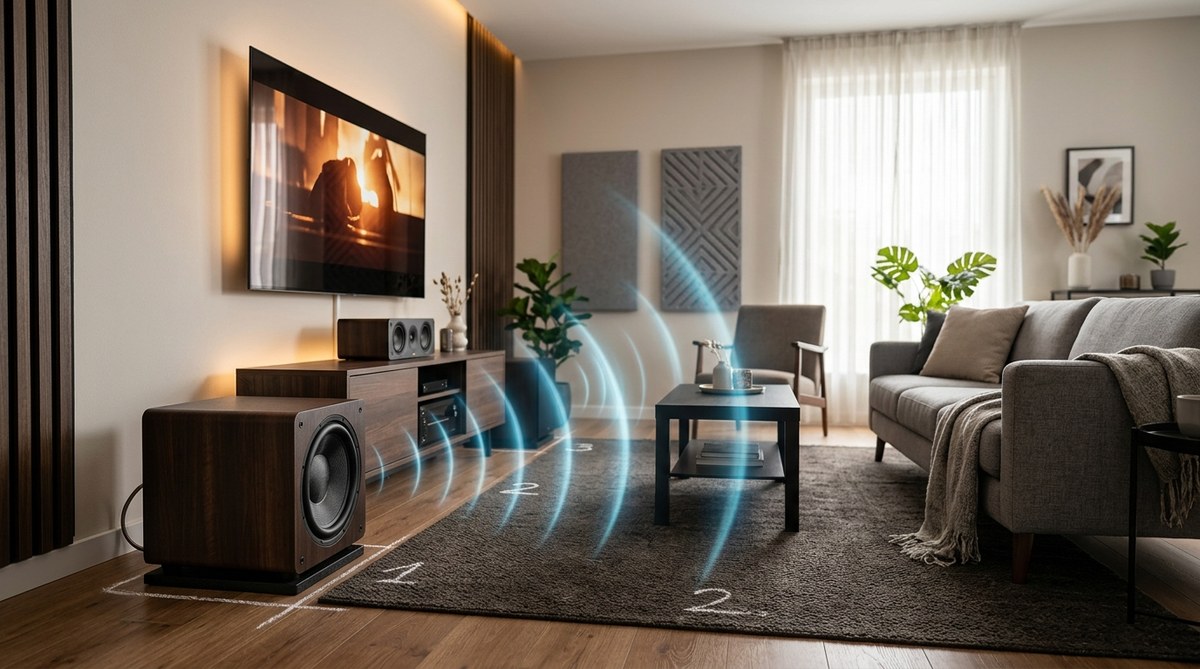
Theater Speaker Placement:
Time Delay Settings in Surround
Sound Systems:
Home Theater Surround Sound Formats
THX Home Cinema - An Overview
Speaker Placement in Surround Sound
Systems
Home theater is not just watching movies - it
is the experience of being immersed into the movie action itself. This would
not be possible without the enveloping atmosphere created by surround sound.
Home theater sound systems
require at least five main speakers plus and a
sub woofer, hence the
reference to a 5.1 speaker playback setup.
More advanced audio playback systems may feature six (6.1 setup) or seven
(7.1 setup) full-range audio channels for greater realism.
Surround
sound requires that the various sounds produced by the different speakers
originate from specific positions within your home theater room. Knowing
these requirements will help re-create the sound producers intended it to
be.
Further more, very few are
aware of the fact that there are distinct differences in speaker placement
requirements between multi-channel music listening and watching movies.
More on correct speaker
placement can be found in our
Home Theater Speaker Placement
article at our site. This article takes a detailed look at the role of the
individual speakers in a surround sound setup. This should lead to a better
understanding of the different speaker placement requirements in
multi-channel audio. We also explain the different speaker placement
requirements between home theater sound and multi-channel music.
More info here.
Time delay settings in Surround Sound
A correct
home theater speaker placement is just one aspect of home theater sound, or
in that case of any multi-channel audio set-up.
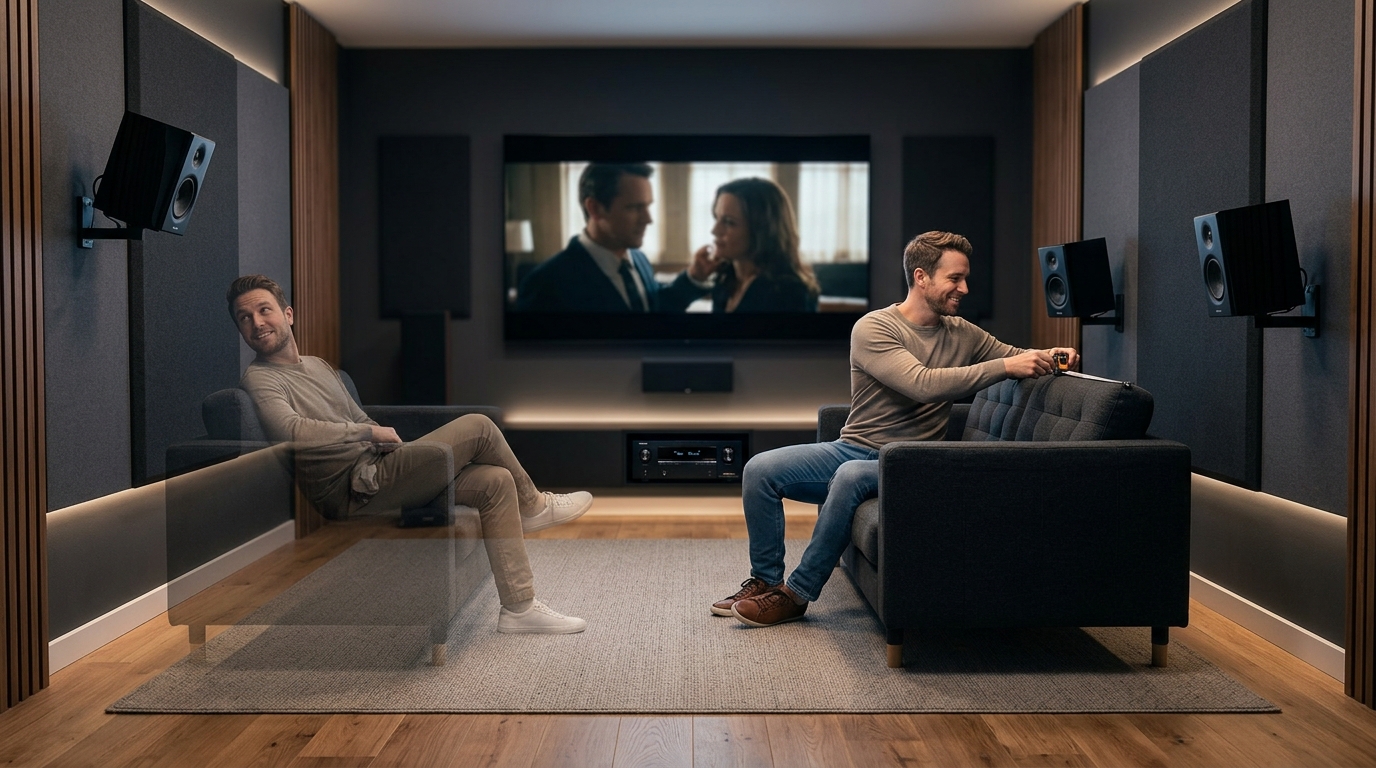
For a
correctly set home theater surround sound system, the sound from the
different speakers should reach the listener's ears exactly at the same
instant. This also explains why the
main front left and right speakers, and the center speaker, should all be
set at exactly the same distance from the listening position.
Surround
speakers in home theater systems are usually closer to the viewer than the
front speakers.
For this
purpose, Dolby Digital and Dolby Surround Pro Logic playback based systems
apply a split-second delay in the order of a few milliseconds for the
surround sound channels.
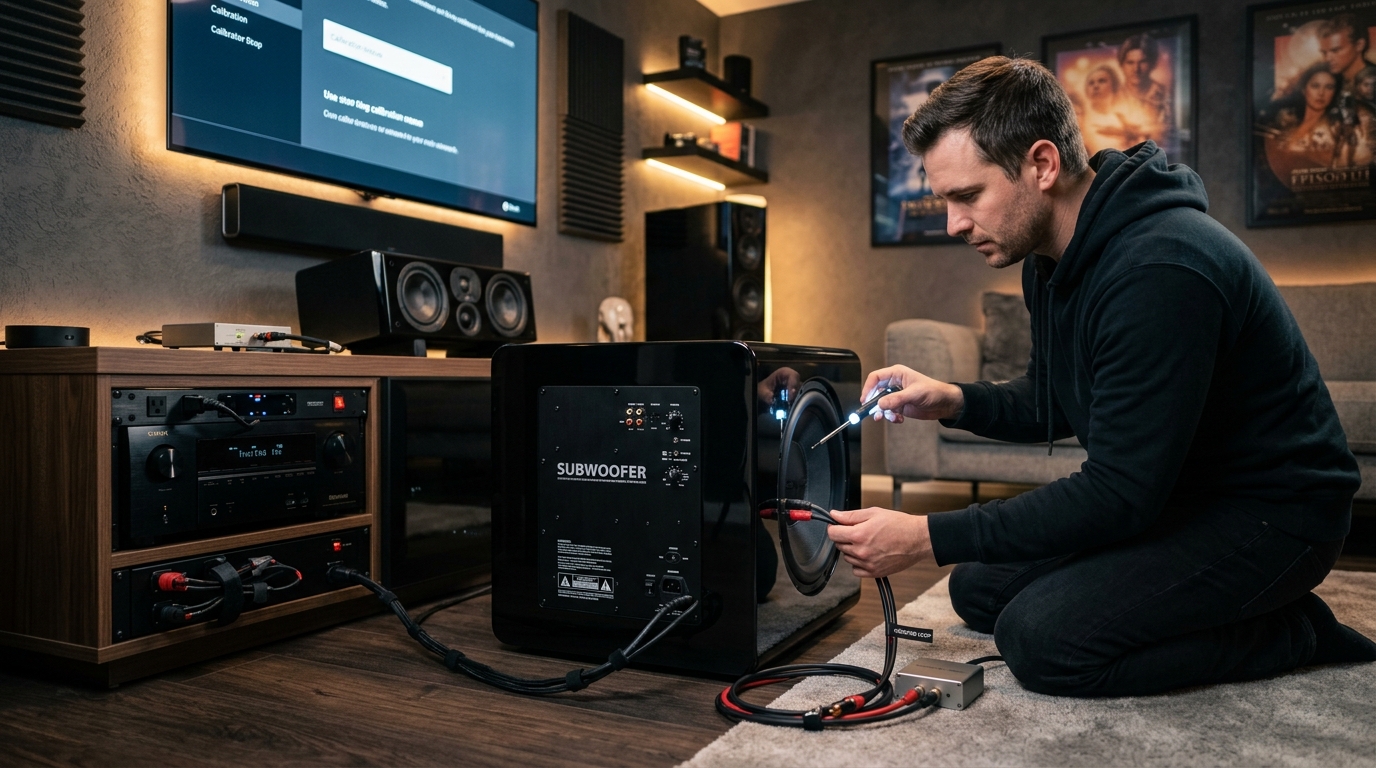
Setting the time delay in a
surround sound system would effectively adjust the soundfield between the
front and rear channels to ensure that simultaneous sounds from each speaker
arrive at the listener's ear at about the same time.
Dolby Pro-Logic surround
sound systems have a second reason for applying this split-second delay,
namely to reduce the so-called 'Haas' effect, and therefore improve
the channel separation between the front speakers and the surround.
It is true that some of the
latest A/V receivers incorporate a smart and easy-to-use user interface that
would either make use of an auto calibration process, or require that the
user simple key in the distances between the different speakers.
Unfortunately, not all
surround sound systems do provide such a friendly user interface as detailed
above. Some systems still require that the user will have to key directly
the delay settings in milliseconds. So how do you arrive at the right values
for these delay settings? More info can be found in our article on
Time Delays setting in Multi-channel
Audio Systems
Surrounding Yourself with Sound!
Up to the mid-50's, home audio was still the good old single channel - or
mono - format. The first multi-channel audio appeared in the 60's with
stereo sound. While this represented considerable improvement over monaural
sound, yet it still lacked the ability to envelope the audience during movie
watching or music listening.
In other words, it still lacked that surround soundfield so important to
help you feel immersed into the middle of the movie action or concert.
The first surround sound playback systems appeared in the late 80's with the
advent of Dolby Surround - a 4-channel matrix-encoded format that provided
for the first time, a surround sound channel (in addition to an extra front
speaker) encoded over the two main left and right channels.
It is the addition of this single rear surround channel played over two
identical speakers placed on either side of the listener that made it
possible for this format to surround the audience with sound.
Dolby
Surround was eventually to mark the first of a never ending list of home
theater surround sound formats that soon followed in the process.
Most of today's surround formats incorporate a
minimum of six discrete rather than matrix channels, meaning that each
channel is unique and independent of the rest.
Extended surround sound formats make use of
additional speakers e.g. 8 speaker channels in a 7.1 audio playback setup.
Unfortunately, the world of surround sound has
become a bit too complicated for the end user, with a never ending list of
terms and brands - DTS, Dolby, THX, etc.
Help is on the way! Our guide to
Surround Sound Formats should
help clear up the confusion by bringing out the main differences and
characteristics. It also discusses the latest high definition audio formats
designed to match the video quality on HD-DVD and Blu0ray discs.
More info here.
THX Home Cinema - An Overview

Not a
standard by itself, THX Home Cinema aims at delivering cinema-quality
picture and sound to the home.
THX. Ltd was established in
1983 by George Lucas company. It started out as a program to correct
inadequacies in film playback, ensuring that surround sound in theaters
meets the standards set by filmmakers. It then expanded into the home
theater arena through its THX Home Cinema with product certification that
makes it possible to implement Dolby and other surround sound formats in a
uniform manner in the home.
The THX Home Cinema
program, like its cinematic counterpart, ensures that the home entertainment
consumer, experience movies as the director intended.
In other words, THX Home
Cinema is not some surround sound format, but a quality assurance program
that works in conjunction with the different surround sound formats, to
deliver superior-cinema experience via quality picture and sound
presentation, in the home.
Many home theater
enthusiasts do not have a true understanding of what the THX certification
system and related technology is all about, nor what the different logos
found on home theater THX certified gear really mean, yet to the 'everyday
consumer', the 'THX' label signifies that the highest standards have been
used.
More information is
available in our article on
THX Home Cinema. There you
will find an easy-to-follow explanation of the THX certification system and
related technology as well details on the different THX logos that you may
encounter on THX certified gear.
More info here.
Hope you will enjoy and profit from these
additions to our site. More new content will follow soon, so...
Finally, this
news letter would not be complete without...
 |
I wish you all a Blessed
Christmas and all the best for the New Year 2007. May God shower on you
health, happiness, and abundant
happiness. |
 |
Stay tuned to
Practical Home Theater Guide!
Take care,

Please feel free to submit
your comments, suggestions, remarks, using the site feedback form at
http://www.practical-home-theater-guide.com/feedback-form.html
To visit the Practical
Home Theater Guide Homepage,
click
here.
A
practical-home-theater-guide.com publication. © 2004 - 2006 All
rights reserved.
|