![]() |
||||||||||||||||
![]() |
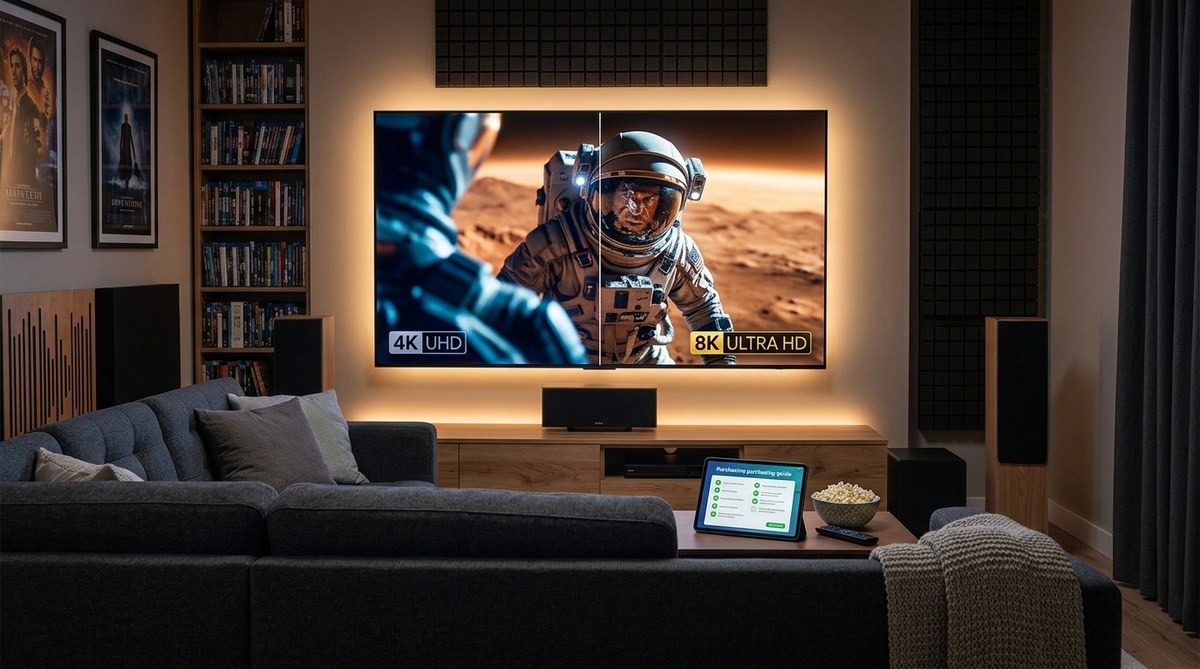
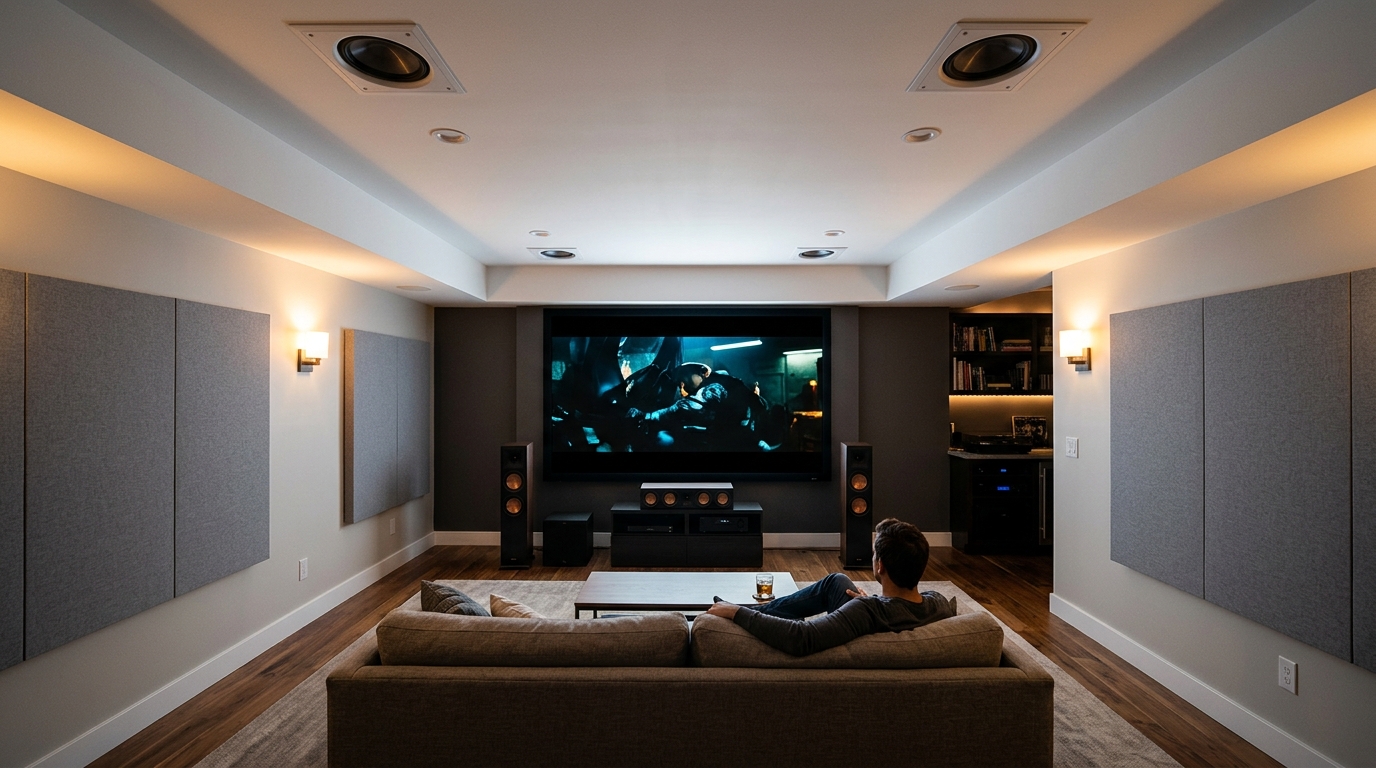
BIG Screen Television - An essential element in any Home Theater setupYour big screen TV is crucial to a great home theater cinematic experience. Whether it is a direct-view TV or a projection television, big screen TV systems do not come cheap. It is true that prices have come down considerably, but these are still relatively expensive beasts. You simply cannot afford to make the wrong choice. Regretting your big screen purchase is surely not an option. The info contained in this television buying guide should help you avoid costly mistakes when opting for a direct view TV solution. Great care should be taken in your search, and ultimately your choice of a big screen TV in order to ensure that you get the features and functionalities you want. However, the issue here is not just limited to a set of features and functionalities. Complete integration of your big screen television with the rest of your home theater setup is also essential for a truly immersive cinematic experience. This Direct-View Television Buying Guide identifies the basic issues one has to consider when searching for a new direct view big screen television set. This buying guide is not some sort of systems reviews - rather it presents a set of guidelines to assist you in your selection of a most suitable direct view TV system that may best suit your needs.
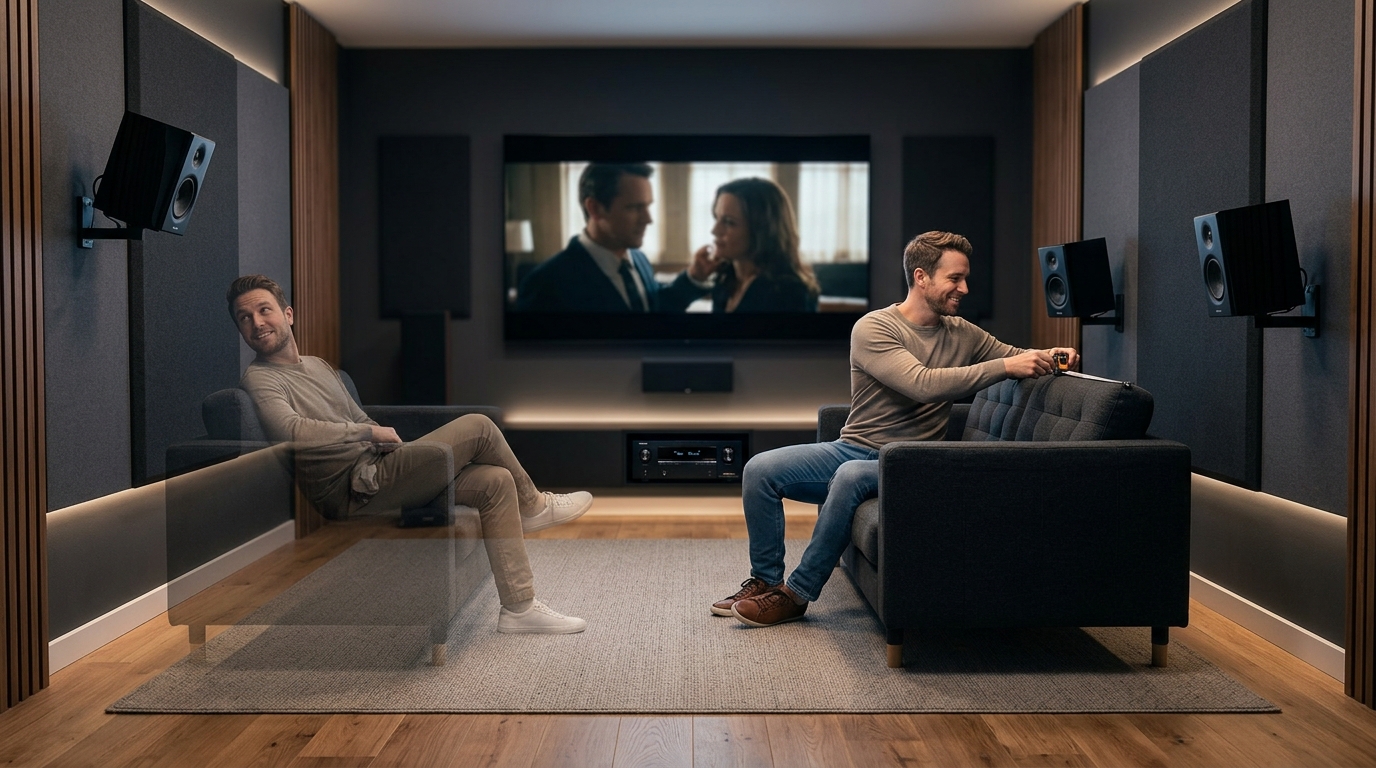
Direct-View Television Buying GuideWhile some of the issues that we will be discussing in this Television Buying Guide are independent of the display technology, and therefore apply to both direct view and projection TV systems, yet others are specific to the type of display technology itself. For completeness shake, we will be dealing with all the relevant issues to present a complete Television Buying Guide covering direct-view systems. Hence, those who have already gone through our Projection TV Buying Guide would soon realize that some of the issues raised in this Direct-View Guide, apply to both. Points to Consider:TV Image Size:You have to keep both the size of your room in mind and the number of people watching at the same time. Having a life size display is impressive and contributes to get more immersed into the movie action, but if you end up sitting too close to your big-screen TV, you will be able to see the flaws in the picture; this can be extremely distracting. At the same time, sit too far away, and the impact will be lost. Choosing the right size in particular is extremely important with a fixed screen size display system - as is the case with all direct-view and rear projection television. As a rule of thumb, the TV viewing distance between you and your big screen TV should be twice to three times the screen width, while the furthest distance being no more than five times this size. This however depends on whether you are watch standard or HDTV. This rule does not represent the ideal viewing distance but rather the range within which your TV viewing will be out of the trouble zone. More specifically, the TV screen size for home theater use should ideally occupy a minimum of a 30 degrees field of view for the audience. It is not the scope of this Television Buying Guide to delve further into the issue of view distance; for those who would like to know more, we suggest that you visit our TV Viewing Distance guide under the Home Theater Design section of the site. As to the number of people, no fast rules here but it is important that your audience will be comfortably seated and without any obstructions within the field of view. In particular, make sure that the lower part of the video display will be visible from all seats. This also means that care should also be taken with respect to the placement of the video display. In home theaters with only one or two rows, the lower part of your video display should be positioned approximately 36" above the floor. Indirectly, this will be limiting your maximum display size, as these 36" have to be deducted from the available room height. Based on the above, a typical 50-inch plasma or LCD TV should easily accommodate a group of six persons at an average viewing distance of 10ft to 16ft.
Strictly speaking, here we are again shifting to realm of home theater design. It
is being mentioned in this Television Buying Guide to raise your awareness re. the need
to choose the correct display size when buying a big screen TV. For full details on
home theater design and room layout, please visit our
Home
Theater Design section.
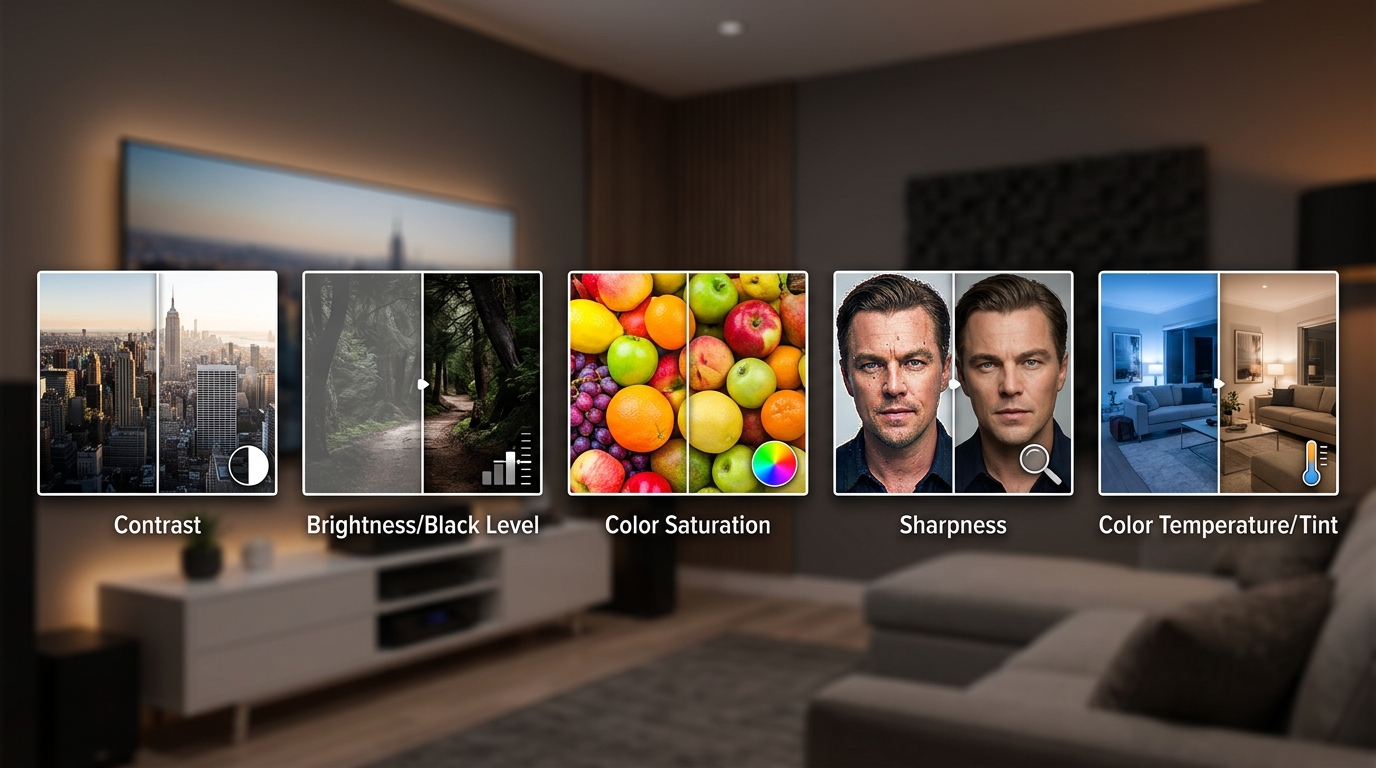
This is different from 'picture resolution'. Resolution defines the detail level while image quality is a mix of contrast, color, brightness and image illumination; the latter two are not so much of an issue with direct-view systems since in general, CRT, LCD and Plasma TV sets are all capable of displaying bright clear images. More important picture quality attributes when it comes to direct-view systems are, contrast level and color dept.
With CRT displays, this is more a question of the video bandwidth that determines the supported picture detail as here we are dealing with analog signals. In the case of LCD and plasma displays however, display resolution is determined by the number of pixels on the display itself. The higher the resolution, the less visible will be each pixel - in particular as the display size increases. Wide-screen Plasma and LCD panels supporting HDTV resolution (16:9 format) would require:
With direct view display systems, there is also the issue of Dot Pitch - a measurement that indicates the diagonal distance between like-colored picture elements or dots on a display screen. It is a sort of measure of the smallest physical visual component on the display. Measured in millimeters, the dot pitch is one of the principal characteristics that determine the quality of display monitors - the lower the number, the crisper the image. In the case of a tube based CRT display with a shadow mask, the dot pitch is the distance between the holes in the shadow mask. The shadow mask is a perforated metal sheet filled with tiny holes through which the three electron beams pass before reaching the color phosphor dots on the screen. Its main purpose is to ensure that the electron beam hits only the correctly colored phosphor dot and does not illuminate more than one dot at a time. In principle, it 'masks' the electron beam, thereby forming a smaller and more rounded point that can hit individual phosphor dots. Through the process, the mask absorbs those electrons that are directed at the wrong color phosphor as a result of which, it heats up causing the metal sheet to expand and deform slightly. Hence, using metals with a low coefficient of expansion is essential to minimize possible image distortions on the screen as a result of shadow mask expansion. This is even more important when it comes to flat-screen CRTs. For this reason, the metal mostly used for shadow masks is INVAR, an alloy of iron and nickel with an extremely low coefficient of expansion. An alternative to the shadow mask, which is less prone to distortion, is the aperture grille. This makes use of a slotted form of mask that was first included in the Trinitron series of Sony CRT TVs, first developed in 1968. Other Key Factors: This section of our Television Buying Guide covers a number of additional key factors, which have to be factored in when planning a big screen TV purchase.
The information contained in this Direct-view Television Buying Guide should be seen in the light of additional information available on our site in which we discuss the different direct-view display technologies. For detailed information, please check out the follow section links:
...back to Direct View TV
|
Copyright © - Practical-Home-Theater-Guide.com All rights reserved. |
Lots more information at Practical Home Theater Guide
Recommended Technical Guides
A Quick Guide to A complete e-Book on how to research, design and build your own Home Theater. by Duncan McClelland
HDTV Sets Sharper Better Bigger CHEAPER Check out the latest reduced price offers on BIG screen TV sets at Amazon CRT TV Sets
LCD HDTVs
Plasma Televisions
For a full range of BIG Screen TVs at amazon, check out the following link: |
|||||||||||||