left image


Home Page - Rear Projection TV Reviews - LCD Panasonic Projection TV Review

Review Date: 13th July 2005


Visit Practical Home Theater Guide at Google Plus  Visit us at Google Plus

Editor's Note
May 2012

For information on the latest rear projection DLP Mitsubishi HDTVs, please refer to our
Rear Projection TV Reviews 2012 Update discussion page


Mitsubishi 73-inch WD-73642 3D DLP HDTV

Mitsubishi WD-73642 3D DLP TV

This 2012 Mitsubishi DLP rear projection HDTV represents the most affordable 3D 73-inch HDTV presently available on the market.

It is true that what you get with this Mitsubishi DLP rear projection TV is a reduced feature set; you would not even get a USB port as the one available serves for servicing only. But the WD-73642 gives you a massive 73-inch 3D TV for a more immersive 2D and 3D experience than you can ever enjoy with a similarly priced 50-inch LED TV.

More on 2012 Mitsubishi DLP HDTVs can be found in our rear projection TV review page here


Introducing the Panasonic PT-xxLCX65 and PT-xxLC14 ranges of LCD Rear Projection Televisions

Panasonic are considered as one of the top leaders and their products have always been synonymous with top-quality and reliability.

The selected Panasonic rear projection TV product ranges reviewed in this article are no exception to all this. Both the PT-xxLCX65 and the PT-xxLC14 series of projection TVs come loaded with similar features and specifications.

The smallest in the range is the 43" PT-43LC14 Widescreen HD-Ready LCD TV, an ultra-slim model which at 12.8" in depth, surely represents a cheaper alternative to Plasma.

The largest rear projection model is the 61" PT-61LCX65 HDTV. This comes complete with built-in ATSC/QAM/NTSC tuners and CableCARD slot.

Products within the same Panasonic projection TV series i.e. series LC14 and series LCX65, come with identical technical specifications; the only difference is the screen size.

In total, there are six models as part of these series of LCD Panasonic projection TV sets, with sizes ranging from 43-inch to 61-inch.


Main Features and Difference between the LC14 & the LCX65:

The real significant difference between the LC14 and LCX65 Panasonic projection TV series is that the latter comes with a built-in HDTV tuner and a digital CableCARD slot.

The HDTV tuner and the CableCARD slot on the LCX65 series of Panasonic projection TVs give you the possibility to receive both over-the-air HD broadcasts as well as premium cable channels like HBO and Cinemax - if supported by your cable company - without the need to spend a few hundred dollars in an external decoder to feed in high definition signals. These features are not available on the LC14 series; instead, the two built-in tuners on the LC14 range of Panasonic rear projection TV sets are standard analog NTSC.

PCMCIA Card slot: This is present only on the LC14 series of projection TV products. Though both series come with a built-in digital camera memory reader to view your digital camera pictures direct on your HD screen, yet this is only compatible with SD and Multi-Media memory cards. The PCMCIA card slot on the LC14 series gives you the possibility to use a PCMCIA memory card reader - through which you can plug in a different type of memory card e.g. Compact Flash, Smart media, etc.

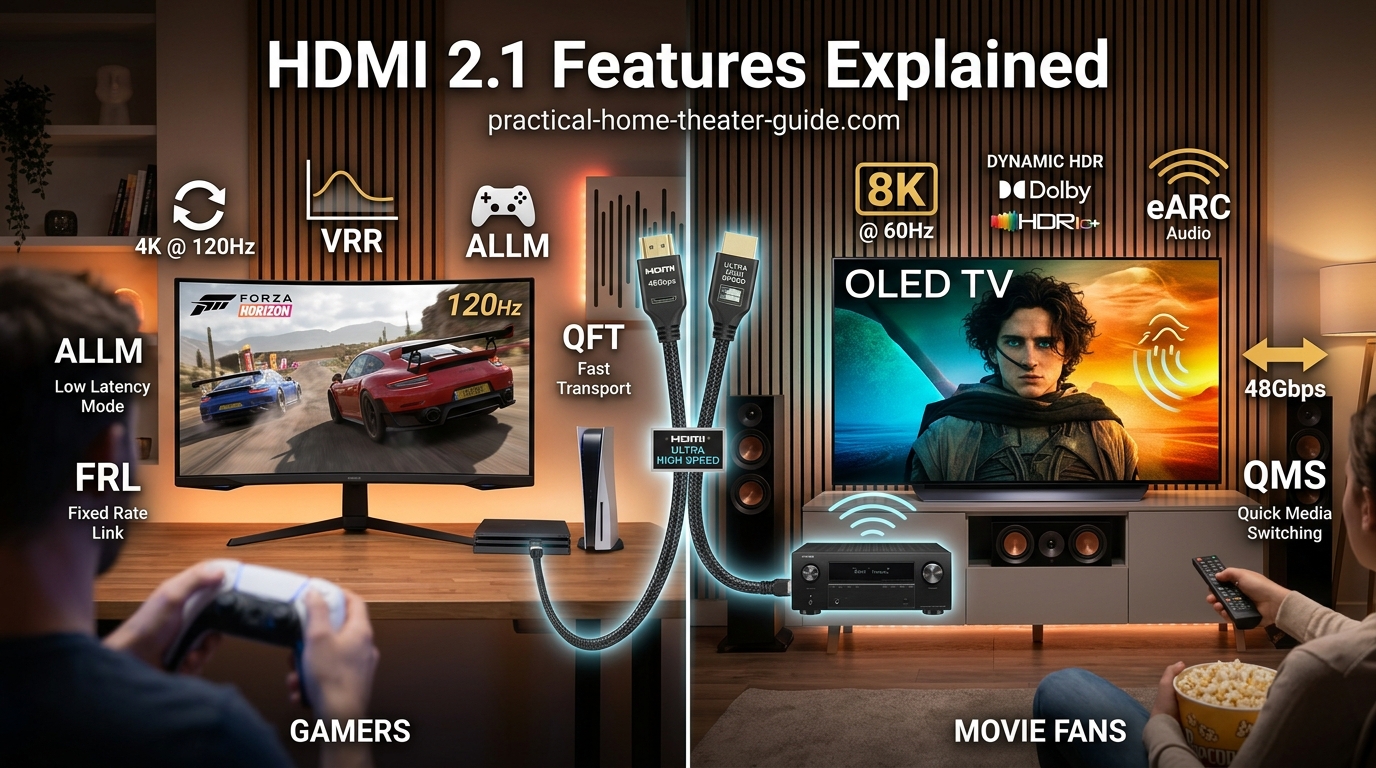
HDMI: All Panasonic projection TV models referred to in this article include an HDMI interface.  HDMI stands for High-Definition Multimedia Interface; it is a lossless uncompressed, all-digital audio/video interface that enables the user to link the set with any audio/video source (such as a set-top box, DVD player, or AV receiver.)

HDMI supports standard-definition (SD), enhanced definition (ED), or high-definition (HD) video, plus multi-channel digital audio - all using a single cable. It transmits all ATSC HDTV standards and supports up to 8-channel digital audio, with bandwidth to spare to accommodate future enhancements and requirements.

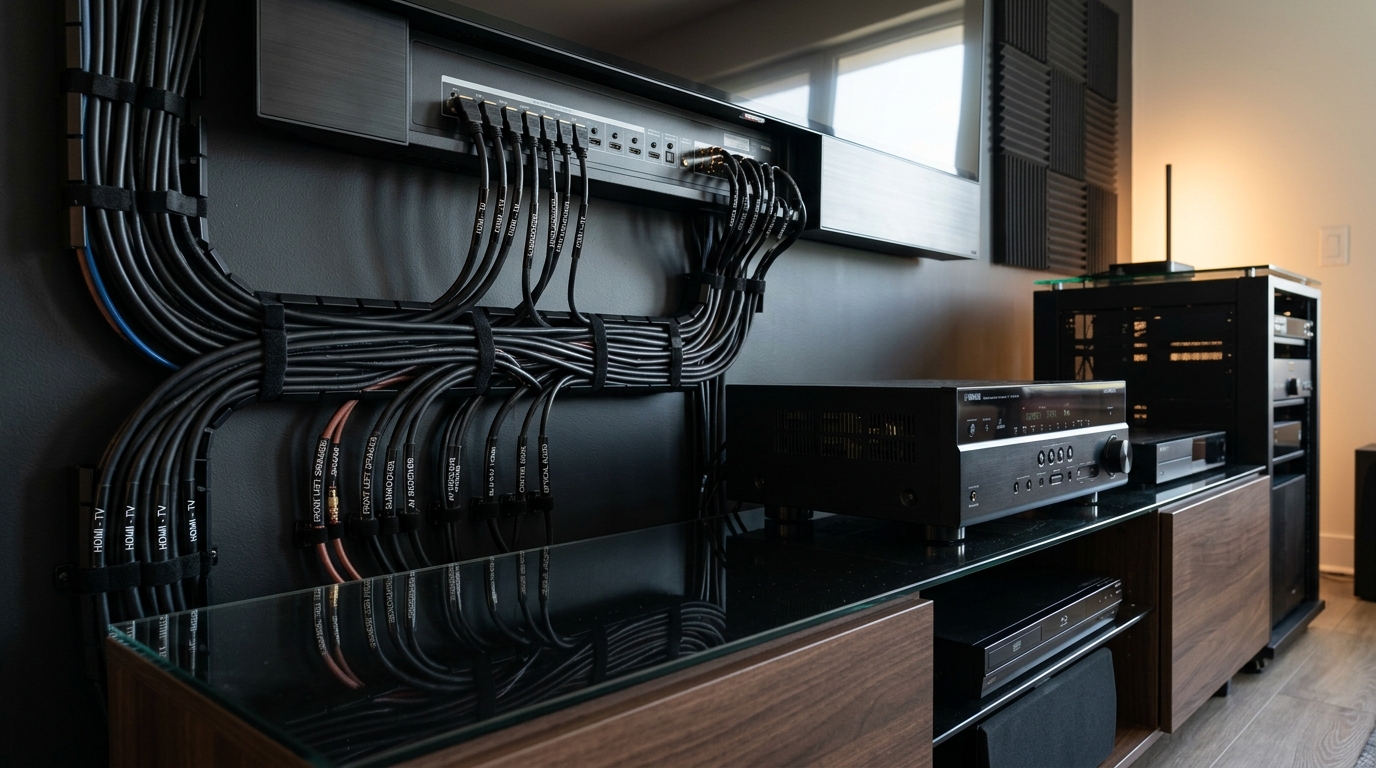
The video portion of the HDMI interface is backward compatible - through the use of a special cable adapter - with DVI-HDCP devices. Surely, this single cable interface is a big bonus in any home theater setup as it reduces the pile of cables on the floor behind the set!

Latest LCD Technology: These Panasonic projection TVs make use of the latest LCD micro-display projection technology. The Panasonic light engine uses a three-LCD panel setup - supporting a native resolution of 1280 x 720 for a total pixel count of over 2.7 million. It is this high pixel count that enables these LCD Panasonic projection TVs to produce exceptional smooth detailed images especially when feed by a HDTV signal. OK, this is not as high as that of the Sony Grand WEGA range of LCD rear projection TVs, but still it is one of the highest presently available.

Price wise, there is minimal difference between the LC14 and the LCX65 series of Panasonic projection TV models; in fact, the 60" PT-60LC14 and the 61" PT-61LCX65 models are practically selling online for the same price.  This means that if you still need to invest in a set-top-box for your HDTV receiver and cable decoder, then the LCX65 series may be a better option.

It is worth pointing out here that these Panasonic projection TVs compete well with similar products from other brands. In particular, these Panasonic rear projection TV products are in direct competition with the Toshiba HM94 series of DLP HDTV sets.

The 43"/44" Panasonic models are presently selling online at around $2,000 while the 60"/61" models are selling at amazon.com for approx. $2,800. Not cheap but still relatively inexpensive considering the specifications list.

What's more, at 12.8" depth for the 43" model to a maximum of 18.44" in depth for the largest 61" wide screen set, these Panasonic projection TVs surely represent a cheaper flat-screen option to Plasma TV.

What's on offer for the home theater?

Panasonic 61-inch PT-61LCX65These Panasonic projection TVs come loaded with an interesting list of specifications, features, and enhancements. There is no doubt that these high-definition liquid-crystal projection TV sets are among the best high definition 16:9 flat-screen televisions for any home theater.

Both the PT-xxLC14 and the PT-xxLCX65 support full compatibility with standard-definition 480i, enhanced-definition 480p, and high-definition 720p and 1080i signals.

The high pixel count as well as their high brightness and high contrast levels ensure vivid, exacting images from DVD players and HD programming. In addition, these Panasonic projection TV sets incorporate Panasonic proprietary progressive scan 'Doubler' that will up-convert standard interlaced (non-progressive) broadcast and auxiliary signals to flicker-free, 480p resolution.

Panasonic LCD Light Engine

These Panasonic LCD rear projection TVs make use of three (one for each RGB color component) 0.7-inch poly-silicon TFT LCD high resolution panels, each having a native resolution of 1,280 x 720 pixels.

This calls for a more complex optical setup but at the same time, it gets rid both of the color wheel found in most DLP sets - often associated by some with the rainbow effect, as well as of any misconvergence and flicker problems typical of their CRT counterparts.

The use of LCD technology also means that these Panasonic projection TV sets do not suffer from burn-in, typical of all phosphor-based displays such as CRT and Plasma TVs. The light source is a high brightness 100-watt HID (High Intensity Discharge) lamp; lamp replacement is a few minutes job and can be easily carried out by the user.

Black-level performance, or rather their ability to accurately render black and very dark picture areas, is very good; still it is not exactly on par with some of the best CRT-based rear projection TVs, but surely better than most competing LCD and DLP rear projection TV sets.

Video

A whole suite of proprietary video processing circuitry is used in these Panasonic projection TVs to ensure the best possible results:

Wideband Video Amplifier: These Panasonic projection TV sets feature a wideband video amplifier and a 10-Bit 60Mhz A/D conversion processor with a high definition image enhancer.

3:2 Pulldown: Panasonic 3:2 pulldown detection and reversal is a handy feature for watching progressive-scan movie programs in their native 24-frame format. Digital video mastering introduces a common distortion when adjusting 24 frames-per-second movies to 30 fps video; 3:2 pulldown digitally corrects this distortion by removing the redundant information to display a film-frame-accurate picture.

Motion Adaptive 3D Digital Comb Filter - this is the best type of comb filter available today since in addition to separating the Y (luminance or black and white) and C (chrominance or color) elements of a video signal, a 3D Y/C filter also performs two additional key functions - that of comparing three consecutive horizontal scan lines within a single video frame, and also of analyzing each frame in advance. In this manner, a 3D Y/C filter is able to ensure the best possible picture.

Horizontal/Vertical edge correction: This helps sharpen the edges of objects in the picture. Horizontal edge correction works in conjunction with the dynamic sharpness control and velocity modulated scan to help produce clean, crisp television images and reduce the unwanted effects of video noise. The vertical edge correction circuit works in conjunction with the digital comb filter to sharpen the horizontal edges of objects in the picture.

Inputs/Outputs

Surely, these Panasonic projection TV sets are not lacking in this respect in that all models come with an interesting mix of inputs and outputs.

In particular, the PC inputs on these LCD Panasonic projection TVs make them ideal for use not only as a TV but also as large multimedia monitor - simply connect your PC or laptop and experience web browsing or gaming over the set's high definition large screen display.

There is a slight difference in the total number of inputs and outputs between the LC14 and the LCX65 product ranges. However both the PT-xxLC14 and the PT-xxLCX65 series of Panasonic projection TVs offer multiple component-video inputs (4 on the LC14 and 3 on the LCX65), a HDMI digital video input for a direct-digital connection with a DTV set-top box, as well as a PC input (2 PC inputs are available on the LC14 series) supporting VGA, SVGA, and compressed XGA resolutions.

Audio

These LCD rear projection TVs come with a 2-way stereo speaker system that is capable of delivering a total of 15 watts total per channel. The sound system makes use of BBE ViVA HD 3D surround sound processing technology.

BBE ViVA is a new High Definition 3D Sound technology that is capable of creating authentic-sounding 3D effects from stereo speakers with exceptional sound-stage imaging. Unlike ordinary 3D sound effects, which often tear the stereo image down the middle, resulting in centrally staged audio material, such as dialogue, becoming fuzzy or even disappearing, BBE ViVA delivers crystal clarity for solo vocals and movie dialogue.

This is possible through the use of true linear phase correction and dynamic amplitude compensation, thus improving speech intelligibility and the dynamic range of musical passages, giving music a realistic, 'live' presence.

Other audio features include Artificial intelligence sound that automatically adjusts the volume level on your TV to prevent wide variations in sound both between different TV stations or between different programming sources, and support for Multi-channel Television Sound (MTS) standard for stereo sound with Dolby noise reduction, and SAP (secondary audio programming) for receiving a second audio track in another language.

Convenience Features:

Built-in SD Memory card media slot allows quick, easy viewing of digital photos (JPEG images) right off your digital camera as well as digital photo slide shows and playback of MP3 audio files.

Two-tuner split-screen: This is not exactly PIP but it lets you view 2 programs at once by dividing the screen in half down the middle. Each program is shown at full height, with one program on the left side and the other on the right.

Trilingual On-Screen Display in either English, Spanish or French.

V-Chip Program Lock Out (USA/Canada) to block out specific program content that may be inappropriate for certain viewer e.g. children.

Video Input Picture Memory: This allows you to select from three pre-configured picture settings namely Standard, Cinema, or Vivid, and save the setting which looks best to you for the various input video sources.

Energy-start compliant: Yes

Product Dimensions and Weight:

The table below lists the respective product dimensions and weight for each of the Panasonic projection TV sets referred to in this review article:

 Series PT-xxLC14

Width

Height

Depth

Weight

 PT-43LC14 - 43" HD-ready RPTV 49.6" 31.3" 12.8" 68lbs
 PT-50LC14 - 50" HD-ready RPTV 55.7" 35.5" 15.3" 84lbs
 PT-60LC14 - 60" HD-ready RPTV 64.4" 41.3" 18.1" 101lbs


 Series PT-xxLCX65

Width

Height

Depth

Weight

 PT-44LCX65 -  44" rear projection HDTV 41.25" 30.25" 14.75" 68lbs
 PT-52LCX65 - 52" rear projection HDTV 48.25" 35.19" 17" 77lbs
 PT-61LCX65 - 61" rear projection HDTV 56.1" 40.5" 18.44" 93lbs


Are you looking for a DLP Rear Projection 3D HDTV?

Search for 3D DLP HDTVs at amazonAmazon offers a most complete range of RPTVs, often at significantly reduced prices.

However, prior to any decision, we advise to do some research of your own; look at what others had to say following their purchase with respect to quality, functionality, customer support, etc.

A good starting point is the customer feedback posted on the amazon site.


HDTV Reviews

HDTV reviews published on Practical HT Guide

new
Rear Projection TV Reviews
2012 Update
:
If you thought rear projection TVs are dead, you are in for a surprise! DLP rear projection is the still the only TV technology that can deliver massive 70-inch to 92-inch HDTVs at a most affordable price.

In this 2012 update, we first discuss the rear projection market to see if it is still worth investing in this technology when the industry is actively pushing the more expensive 60-inch+ LED TVs. We then look at available Mitsubishi RPTV options for big screen home entertainment.


new
Plasma TV Reviews 2012 Update:
We have updated our plasma  TV review page to cover some of the latest and best 2012 plasma HDTVs presently available on the market.

In the process, we also discuss each of the lineups from Panasonic, Samsung and LG.


new
LCD TV Reviews - 2012 Update:
We have updated our LCD TV review page to cover what at present are some of the most appealing LED HDTVs for 2012 both at the premium end and budget-class LCD TV categories.

 Home Theater Guides:

Recommended Technical Guides 

The Complete LCD TV Guide:
LCD HDTVs are turning out sharper, bigger, better, and cheaper. Discover all you need to know about LCD TV sets in this series of articles on LCD televisions.

Plasma Television
Discover all you need to know about plasma TVs - from the features to look for when purchasing a plasma television, to installing and protecting your plasma TV investment.

Projection Television
A complete guide to projection systems - from rear projection HDTVs to video projectors and more.

Guide to Digital Satellite TV
Covering satellite TV basics - with a special emphasis on satellite TV decoder choice and satellite dish installation.

Guide to Digital TV
A complete guide to Digital Television - DTV converters, TV antennas, and DTV transition.

TV Viewing Distance
A big screen TV for your home theater? Do not fall into the trap of buying a too large TV!

Contrast Ratio - Playing with Numbers!
To what extent high contrast ratios affect the performance of a home theater projector or a video display device?

Guide to Digital Satellite TV
Covering satellite TV basics - with a special emphasis on satellite TV decoder choice and satellite dish installation.

Dolby vs. DTS - Which is better?
Many argue that DTS can deliver better sound. We discuss the differences between these surround sound formats to help you understand why this Dolby vs. DTS controversy prevails.

HDTV Formats Explained
Discover the strengths and weaknesses of the different HDTV formats and see when it is worth opting for the more expensive 1080p HDTV set.

The HDMI Cable Guide
To many, HDMI is still an unfamiliar term. This easy-to follow home theater guide explains all you need to know about HDMI.

Feel the Shake!
Bass Shakers, Buttkickers... Add the sensation of tactile sound and discover a whole new world in home entertainment.

Home Theater Design:
A series of articles covering all aspects of a home theater from design to realization.


Would you like to get the best out of your Samsung LED TV?

There is no better way to make the most out of your new HDTV then to invest in a set-up DVD.

Disney World-of-Wonder HD Home Theater Set-up Disc

Interesting calibration Blu-ray discs include Disney WoW and Spears & Munsil High-Definition Benchmark. Disney WoW is one of the easiest to use and one of the most complete calibration discs for beginners and intermediate users while Spears & Munsil is more for the expect user.

For more information, please check our Guide to HT Set-Up DVDs

Featured 1080p Rear Projection HDTVs:

Larger, better, and more affordable than ever...

Check out the latest offers atbuy from amazon

Support Bases for Rear Projection HDTVs:

Suitable for 73-inch and 82-inch rear projection HDTVs


Return from: this Panasonic Projection TV review...


Projection TV Guide

Rear Projection TV Reviews

Home Page