|
Samsung UN46D6400 46-Inch 1080p 120Hz 3D LED HDTV With an-inch thin design and an ultra-slim bezel, the latest affordable 3D LED TV from Samsung is all set to becoming one of the biggest 1080p HDTV sellers for 2011. (Available in the UK as UE46D6100) Available from Amazon US and amazon UK. |
1080p HDTV... the hot spec in HDTV formats!
In 2007, the Electronics Consumer Association had estimated that there were 60.6 million HDTV sets in US households. This represented an HD penetration of 36%. At that time, it was estimated that a third of these HD households had multiple HDTV sets - with the second or third set being a 1080p TV.
A lot has changed since then and the number of 1080p HDTVs surpassed 720p TVs; 1080p sets have become almost the 'de facto' standard at anything above and including 32-inch.
It is the drastic fall in price of HDTV sets during the last years that has led to a sharp increase in the presence of HDTVs, and in particular of 1080p TVs.
Even more significant is that despite the industry has been pushing the presence of 3D TVs, what is really hot in TV sales are the latest affordable 1080p LED HDTVs - mainly thanks to their appealing ultra-slim design.
This trend has been brought about despite the higher price associated with 1080p HDTVs - in particular of 1080p LED HDTVs, and the non-availability of broadcast programming in 1080p! In fact, the only commercially available 1080p video content comes in the form of high-definition discs from Blu-ray.
The irony is that the increase in the presence of HDTV sets in the home has not brought about a better consumer understanding of high definition television. Surveys have constantly shown that having an HDTV set does not imply the consumer has a basic understanding of HDTV. Rather, many HDTV owners do not even know if they are watching HD programming or not!
Unfortunately, TV makers and retailers are taking a ride over this lack of consumer understanding by pushing ahead the more expensive 1080p HD sets even at screen sizes where difference in picture detail between a 720p and a 1080p image is unperceivable.
|
|
There is a very simple reason for this: 1080p sets carry a higher price and yes... a higher profit margin. Yet, production costs are only marginally higher than those of 720p HDTVs even though the average retail price difference between 720p and 1080p sets seems to imply the contrary. This also applies to the latest 1080p LED HDTVs.
To justify this move, TV makers and retailers profess that 1080p HDTV sets deliver better resolution and improved performance than 720p HDTVs. In addition, 1080p sets are often bundled with a more appealing feature set irrespective of whether these features are of any use in everyday viewing - to help sell 1080p HDTV sets at an even higher price!
The average TV consumer does not have an understanding of the differences between the different HDTV formats, and therefore is ready to pay the higher price associated with 1080p HDTVs to get the 'better TV'.
It is true that a 1080p HDTV delivers improved picture resolution, but...
|
|
Does the additional picture detail afforded by 1080p sets always imply a better picture than a 720p HDTV? |
|
|
And how does 1080i relate to 1080p when it comes to picture performance? |
Editor's Note May 2011:
This article was originally published in mid-2005 when the first 1080p HDTV sets started to appear on store shelves. It was a time when you had to spend an extra $1000 to jump onto what represented the gold standard in HDTV. And this to get a 1080p HDTV that did not even support a 1080p input!
Technology has changed. Not only all present HDTVs irrespective of format support 1080p input, HDTV sets have become much better, bigger, and equally important, significantly cheaper.
And what started as 1080i vs. 1080p is now 720p vs. 1080p; rather in most case, it is just 1080p because 720p sets have become a minority in most manufactures' HDTV lineups.
This new updated article reflects this changing environment in the HDTV world.
HDTV Formats: It is all an issue of 'Image Resolution'
There are currently a number of different HDTV formats as adopted by the Advanced Television Systems Committee (ATSC), based on 720p, 1080i, and 1080p - using refresh rates that vary between 24 Hz and 60 Hz.
The basic difference between these HDTV formats is mainly one of image resolution. Image resolution in fixed-pixel displays is a very HOT topic with HDTV buyers. For many, the obvious choice is to opt for the latest 1080p HDTV, also referred to as ultra-HD, full-HD or higher HD by some manufacturers.
720p is on the lower-end of the scale with an image resolution of 1280 pixels by 720 lines. The other two formats both support 1920 pixels horizontally by 1080 lines vertically. In other words, both 1080p and 1080i HDTV formats support the same theoretical image resolution.
However, there is a significant difference in the way the 1080i (interlaced) and the 1080p (progressive) formats build up the image - a difference that may render the lower resolution 720p format more suitable to display certain image content than the higher resolution 1080i format.
So... do not simply jump to the conclusion as to which HD format is best; each of these formats has its strengths and weaknesses.
1080i HDTV
Up to a few years ago, this was considered as the reference standard in HDTV. Nearly all first-generation HDTVs were rear-projection sets that supported this standard. This format boasts a picture resolution of 1920 pixels by 1080 horizontal lines that are painted on the screen in two interlaced halves (hence the 'i' in the '1080i' format). It first paints all 540 even-numbered lines on the screen (referred to as the even-field), and then proceed with the painting of all 540 odd-numbered lines (or odd-field). These two fields together form a single image frame of 1080 lines.
This process is repeated 60 times per second - each time painting only half of the lines per frame. This means that the entire image is painted on the screen in two separate passes, 30 times every second.
Because of the way the interlaced process paints the screen, all picture information contained in adjacent odd and even lines in an interlaced image is 1/60th of a second out-of-synch with the next or previous line. The image difference between the two halves of the picture would show up in what are referred to as 'interlaced artifacts'. This is not an issue with slow-moving or static content, but these artifacts would become more pronounced with fast moving objects. In other words, this impacts the type of image content that is best viewed on an interlaced display.
720p and 1080p HDTV
In contrast, all progressive-scan formats - 480p (Enhanced-DTV), 720p high definition TV, and 1080p HDTV - display each individual line sequentially in a single pass to build up the complete frame. This means that in progressive scan video, image information between adjacent lines is displayed in a timelier manner. This makes progressive scan capable of delivering a smoother, cleaner image, especially with sports and other fast-changing motion-intensive content.
Effective Resolution: Which is the best HDTV format - 720p, 1080i, or 1080p?
720p vs. 1080i
TV stations would normally broadcast only in either 720p or 1080i but not both; the predominant format is 1080i. This in itself is not an issue; all present HDTV sets can display pictures in any HDTV format by up-converting or down-converting to the set native format, i.e. the one in which the set is designed to display the image.
Theoretically, from a pixel-count perspective, 1080i supports better spatial resolution than a 720p HDTV. In fact, 1080i supports a pixel count of over 2 million pixels as against the 0.92 million pixels supported by 720p HDTV but...
In reality the situation is somewhat different when it comes to an interlaced format. As expressed earlier on, the differences between the two halves of an interlaced image lead to interlaced artifacts. To reduce the visibility of these artifacts, filtering is applied to the vertical resolution of an interlaced signal. This reduces the real image vertical resolution to some 60% of the number of scan lines supported by the 1080i interlaced format. Furthermore, 1080i material is limited to around 1440 pixels horizontally to reduce transmission bandwidth requirements; this reduces the overall effective resolution of the 1080i format to around 0.93 million pixels.
It is thus clear that the actual difference in effective resolution between 720p and 1080i is almost negligible. And this apart from the fact that a 720p display is capable of a better flicker-free picture when dealing with fast action movie scenes and sports.
Yet there is another issue against interlaced video, that of digital compression of images. Digital image compression is more efficient with progressive video at the source than interlaced video. High definition digital TV broadcast uses the same 6MHz maximum allocated broadcast bandwidth as with standard definition analog TV. This means that it is necessary to apply compression to make high definition images fit into the space allocated for a broadcasting TV channel.
What about the 1080p HDTV Format?
The situation with 1080p HDTV is totally different. The horizontal resolution of 1080p HDTV content is equal to the number of scan lines since there is no need to reduce this as in the case of interlaced material. This means that 1080p supports the full 2.07 million pixels (1920 x 1080 pixels) as against the effective 0.93 million pixels in 1080i video and 0.92 million in 720p HDTV. And this apart from the added advantage that 1080p enjoys over 1080i in that all 1080 lines are displayed in a single pass.
In other words, the 1080p HDTV format enjoys the best of both worlds - it has the spatial resolution of 1080i HDTV material and the smooth stable image of a progressive scan format. It is a case where if you want the very best in high definition television, 1080p HDTV is the way to go, but...
As things stand today, there is no 1080p HDTV broadcast and there is little chance that broadcasters will jump to 1080p any time soon due to bandwidth limitations. Even high-definition games on the Xbox 360 and PlayStation 3 are usually 720p, though the user can upscale these to 1080i or 1080p in the console user settings. The only way to enjoy true 1080p HDTV commercially available content - apart from hooking your PC to your HDTV set, is via an HD disc - using a Blu-ray player.
Apart from CRT, interlaced formats are not an option with fixed-pixel displays, namely microdisplay based DLP rear-projection systems, plasma and LCD/LED HDTVs. All microdisplay based TVs are essentially progressive-scan technologies; when presented with interlaced video (480i or 1080i), these have to convert it to progressive-scan to be able to display the content. This explains why manufacturers shifted away from 1080i and instead moved directly from 720p to 1080p.
Yet there is another important issue here specific to fixed-pixel displays. These displays have to convert all incoming video - irrespective of format or resolution, to the screen native resolution. The process involves upconverting or downconverting the video resolution to match that of the display; in the case of interlaced video, it also involves deinterlacing. These processes introduce errors that are often overlooked by TV buyers despite impacting picture quality.
Unfortunately, how well an HDTV set scales an image or deinterlace video content is not something one can put in the set specifications list.
1080p HDTV Sets have become readily available but... what about 720p sets?
As already indicated earlier on in this article, 1080p HDTV sets have become more widely available than their 720p counterparts as manufactures are mainly focusing their TV line-ups on 1080p sets. In particular, this is true with LCD and LED HDTVs where major TV makers have shifted almost completely away from 720p HDTVs for anything larger than 32-inch.
![]() Samsung PN51D450 51-inch 720p plasma HDTV (Available from Amazon US) |
In other words, if you want to enjoy the price advantage of a 720p TV at the larger 40- to 50-inch screen size, your only present option is a plasma TV. The price difference between a 50-inch 720p set and a corresponding 50-inch plasma 1080p HDTV stands at around $400. This is the present price difference on the amazon storefront between the 51-inch Samsung PN51D450 720p HDTV and its corresponding 51-inch PN51D550 1080p HDTV from within the 2011 Samsung plasma TV lineup. |
It is true that apart from the higher resolution, the 1080p HDTV model comes with slightly improved connectivity and the presence of Samsung AllShare feature. But these are features that are there mainly to help justify the higher price of the 1080p HDTV set. This higher price becomes even more significant when considering that the Samsung 720p HDTV is selling online at under $720, almost 60% cheaper than the 1080p model!
The Bottom Line: Should you opt for a 1080p HDTV... if a 720p version is available?
The whole issue is: When is a 1080p TV worth the extra expense?
Well, there is no straight answer here. It all depends on what are your requirements, yet there are a few facts you should know before making any decision:
|
|
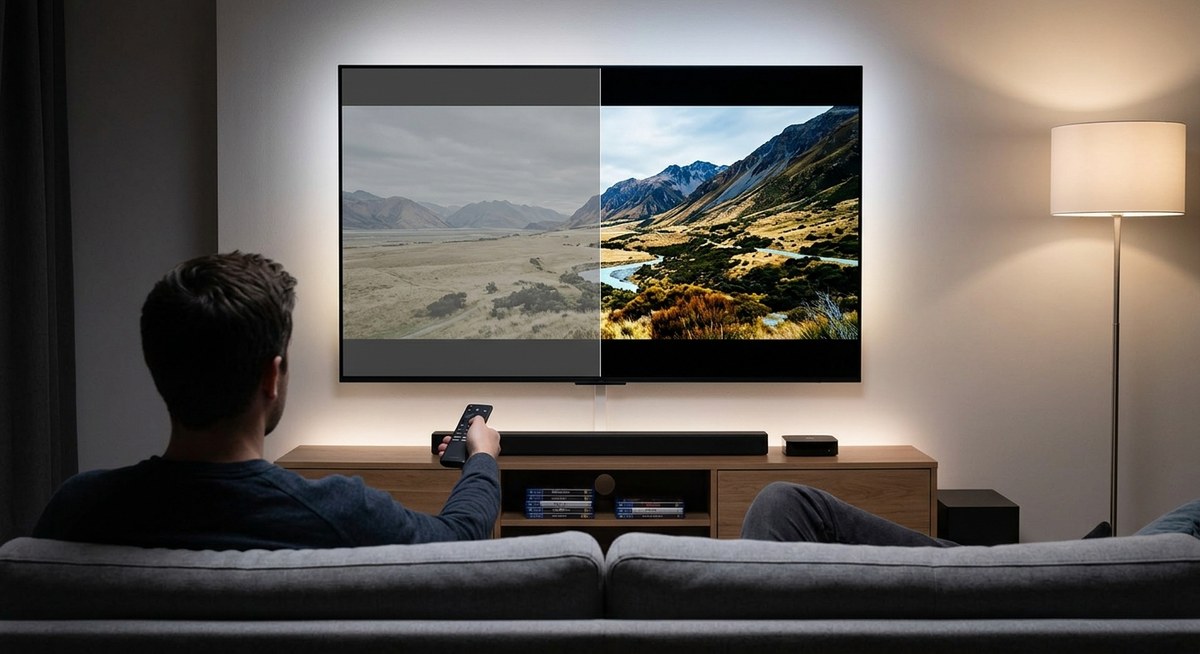
Image Detail: It is true that 1080p sets are capable of producing spectacular results with ultra sharp images. But it is extremely unlikely you will be able to see any difference in image detail when viewing 1080i HD broadcast content over a 720p television and a 1080p HDTV set - especially on the smaller sets. This is mainly in view of the limitations associated with the 1080i broadcast format detailed earlier on. |
|
|
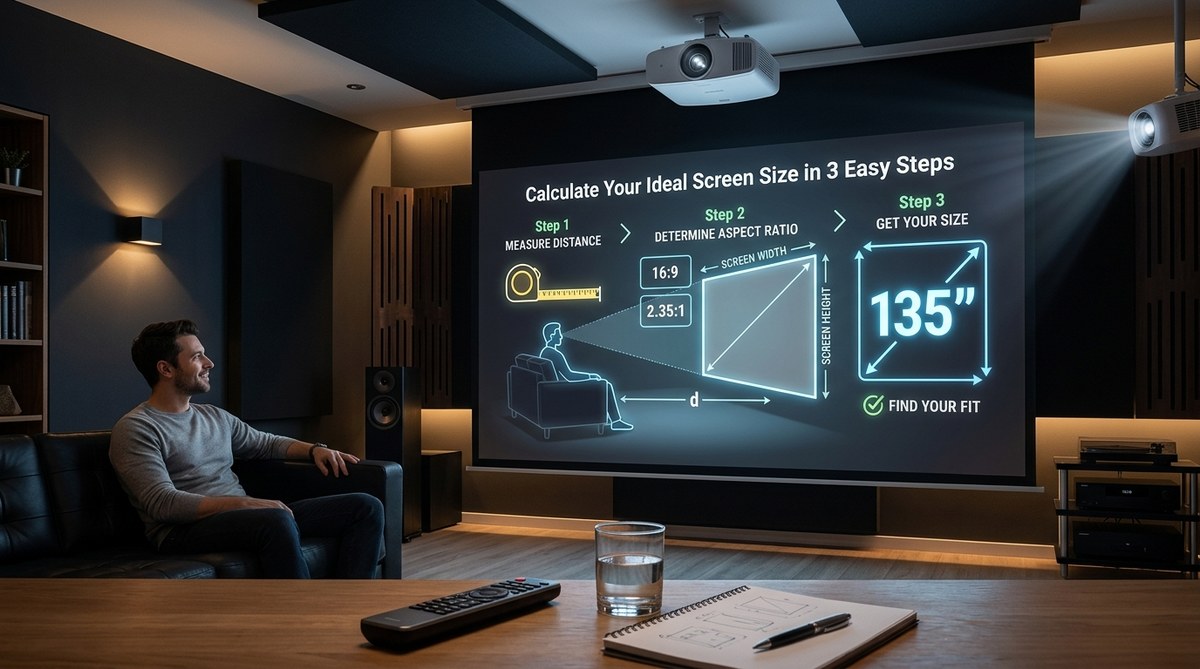
Viewing Distance: Surely, you will not perceive any difference in image detail between 720p and 1080i broadcast content on anything less than and including 50-inch 1080p sets from 10 feet away. You would need to go really big for the extra image resolution to make any difference. You will also have to sit at close to 1.5 times the screen width and feed your 1080p HDTV set with a very good quality 1080p encoded source to start seeing any difference. More on 'TV viewing distance' can be found in our guide here. |
|
|
Availability of 1080p Content: Keep in mind that at present, apart from HD discs, true 1080p HDTV encoded material is almost non-existent. What's more, none of the major networks has announced 1080p broadcasts - and it is unlikely they will make such a move in the near future considering the bandwidth requirements. |
Nevertheless, the whole equation in favor of 1080p HDTV sets is changing fast. The present marginal difference in price between 720p and 1080p HDTV sets has already made 1080p HDTV sets more of a real option - especially if you want to have the latest and best in HDTV.
And the 1080p option would make even more sense if you plan to go really big. Consider a 1080p HDTV for anything bigger than 52-inch - especially if you have a good quality 1080i or 1080p HD source and plan to sit closer to your TV than twice the screen width to enjoy a wider angle of view.
Similarly, go for a 1080p HDTV if you plan to use your TV as a big computer monitor. Though icons and text may appear too small on a 1080p TV, and you may have to re-scale the desktop to fit, yet a 1080p set gives you some added flexibility when it comes to computer connectivity.
If none of these issues represent a priority, or you are on a tight budget, then you may very well do your bank account a favor and get a 720p HDTV if available at the screen size you are looking for; high definition content will still look great!
Looking for 1080p HDTV Sets?
Check out the Amazon storefront for a vast choice of products at significantly reduced prices. You can search the amazon storefront without leaving our site by using the amazon search box below; your search results will appear here under.
While at amazon, we advise to do some research of your own; see the customer feedback posted on the amazon site to learn what others had to say about their purchase especially with respect to product quality and manufacturer customer support. This should give you a better insight about the product of interest.